What is the cheapest way to get to Antarctica?
The cheapest way to get to Antarctica is by flying from Punta Arenas (PUQ airport), Chile to St.George Island (TNM airport) one way, then the opposite way taking a cruise over five days. The minimum total cost from Punta Arenas is about USD$5000 on the
Antarctica Express Air Cruise.
Do you need a passport to go to Antarctica?
Yes, you need a passport to enter Antarctica in addition to the country you access Antarctica from. Most travelers pass through
Argentina or
Chile before arriving at the Antarctic continent and you likely will need a visa in addition to a passport to enter those countries depending on what nationality you are.
Can I travel to Antarctica?
Yes, you can. About 90% of all travelers arrive in Antarctica by a cruise ship and the remaining 10% arrive by air. The vast majority of travelers aboard a ship designed for polar navigation in the world's southernmost city of Ushuaia, Argentina. Few highly-privileged individuals have the opportunity to visit the white continent. In the 2018-2019 season, the total number of people who visited Antarctica was about 55,500 with the majority coming from the United States, followed by China, Australia, the United Kingdom, and Germany.
How do I decide what boat to choose?
If you have specific departure dates in mind, these may guide your decision, as availability for Antarctica cruises can be quite limited. If not, then you will want to consider the following factors, among others:
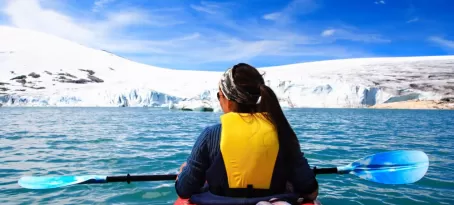
Size of the vessel - Some travelers prefer the intimacy of small group travel that often means more time with the guide, more efficient embarkation/ disembarkation, and a cozier feel on board. Boats with fewer travelers (50 or less) also tend to offer more adventure options such as scuba diving, kayaking, and camping. Other travelers prefer the relative spaciousness (cabins still tend to be small on most boats!) and added facilities (Jacuzzi, gym, pool, etc) of the larger boats. Often, though not always, the larger boats tend to have more luxury amenities and also be more expensive for similar itineraries.
Itinerary - Many of the yachts offer a similar range of itineraries. However, some offer more diversity than others. If you have a special interest such as visiting South Georgia, crossing the circle, or traveling to the Falklands, let our trip coordinator know.
Cost - The cost of Antarctica voyages varies tremendously. If you are working within a specific budget, let our trip coordinators know so that we can match you with the very best cruise. Size of cabins, length of itinerary, facilities on the boat, etc. can all impact the cost. Once we know your priorities, we can help you find the best option!
Special interest - Some vessels offer special cruises for divers, kayakers, climbers, campers, photographers, etc. If you have a special interest, please let us know.
Do I need a converter/ adapter for the electricity?
Each ship has its own type of electrical outlets, depending upon the country where it was built. Many of the ships are originally from Russia and use 220 volts, 50 cycle electricity with two round prongs. Ask your Operations Coordinator for details on the vessel you are taking.
What are the fitness/ health requirements?
Although you do not need to be in excellent fitness to join an
Antarctica cruise, you do need to be in overall good health. These remote areas do not have access to modern medical facilities. You should not join an Antarctica cruise if you have a life-threatening condition or one that requires extensive medical attention. That said the trip does not need to be physically demanding. You may opt-out of the shore excursions and choose instead to view the wildlife and landscape from the deck. Onshore, most vessels offer at least one easy walk that allows participants to experience the destination without going far from the landing site.
What are the typical demographics of other passengers on board?
Travelers come from around the world, though most speak English fluently. They may range in age from children to seniors, with most travelers aged the 30s-60s. Some vessels do not permit children under age 12, and families should not expect many children on any of the departures.
Are these trips suitable for kids?
It depends. Some vessels have minimum age requirements ranging from 6 to 12. Other vessels leave it up to the parents to decide whether or not the cruise would be appropriate. The dramatic landscapes and unique wildlife can be fascinating for children. However, the long voyages at sea can become tiresome for even the most hearty child traveler. It is unlikely that there will be other children onboard for your kids to play with so be sure to bring plenty of entertainment options along - books, arts and crafts projects, etc. You may also want to consider upgrading to a larger room or suite to give kids more room to spread out. Since there is no access to medical facilities, children with chronic conditions such as severe asthma, diabetes, etc are not advised to visit.
Are these trips a good choice for solo travelers?
Absolutely! Most vessels have special single rates or can arrange a shared room at no additional cost. The majority of Antarctica visitors still travel as couples or families so these trips can be a bit lonely for some solo travelers. However, the relatively small groups and long voyages onboard allow travelers to easily meet others with shared interests. Solo travelers should also take a look at our exclusive
Solo Traveler Departures. Do tour rates include international flights?
Tour rates do not include international flights unless indicated. We find that it is usually less expensive for travelers to book these separately and this also allows you the flexibility to choose the schedule and routing that is most convenient for you. You are welcome to book these on your own, or we can certainly help you arrange these flights with an airfare consolidator who specializes in South America flights.