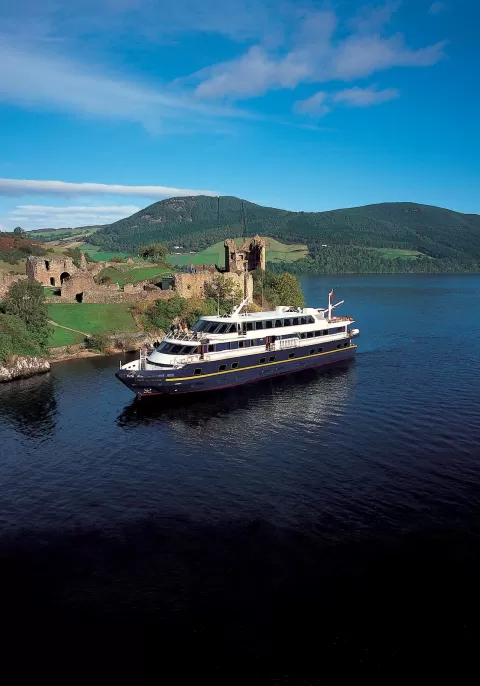
Rising from a chain of lakes near the western edge of the Andes, the mighty Amazon is an awe-inspiring 2.5 million square miles comprised of river, basin, and rain forest. The river holds two-thirds of the world’s flowing water, as well as 15,000 of the known animal species. People have long been drawn to its wild waterways and dense forests, from northern tribesmen who escaped to the Amazon from the last Ice Age to spice traders and rubber-seeking industrialists. Embark Clelia II in colonial Belem to explore the tropical channels of the Lower Amazon, including possible visits to Rio Pucurui, a tributary known for its birding, and Boca de Valeria, home to the local caboclo people. In Manaus, enjoy a touch of modern civilization, including historic mansions and the famed Teatro Amazonas opera house. Then spend five full days in the Upper Amazon visiting Indian villages, attending ritual ceremonies and possibly making nighttime excursions into the jungle before concluding in Iquitos with a renewed respect for the delicate balance that exists between Man and Nature.
Day 1 BELEM, Brazil
Arrive in Belem, transfer to the Hilton Hotel and spend the rest of the day at leisure. A vibrant port situated near the mouth of the Amazon River, Belem was founded by Portuguese explorers in 1616. Over the next 200 years, Belem prospered as a center of the spice trade and then as a rubber boomtown in the 19th century.
Day 2 BELEM | EMBARK
In the morning, explore Belem, including the 18th-century Cathedral with its marble altar and fine paintings; the Basilica de Nazare, built in 1909 from rubber wealth, which contains one of the most worshipped images in Brazil, beautiful Moorish designs and stained glass windows; the Emilio Goeldi Museum, with its botanical exhibits and zoological gardens; and Ver-O-Peso, the city’s main market, where stalls sell aromatic oils, traditional crafts and other exotic products. In the afternoon, board Clelia II and begin our voyage.
Days 3-7 THE TRIBUTARIES OF THE LOWER AMAZON
Spend the next five days exploring the Amazon, concentrating mostly on its tributaries,which hold the richest variety of birds and wildlife. Among the places we may explore are:
• RIO GUAJARA, a beautiful area rich in birdlife, where we may also spot Amazon River dolphins, with their characteristic pink hue.
• RIO CURUA-UNA, which forms a large floodplain lake at its confluence with the Amazon. The marsh grasses and tall trees house a variety of birds and wildlife, including Orange-fronted Yellow Finch; Hoatzin; Snail Kites; Chestnut-fronted Macaws; and Red-handed Howler Monkeys.
• SAN MIGUEL, a small community on the Rio Tapara, which runs a conservation program for the famed Pirarucu, the largest scaled fish of the Amazon, which can reach a length of nearly seven feet.
• ALTER DO CHAO, on the clear Rio Tapajos, for swimming at one of the most beautiful river beaches in Amazonia, and a visit to the Center forthe Preservation of Indigenous Art, with its sizable collection of artifacts from the tribes of Amazonia.
• ARAPIUNS ECO PARK, on a verdant island with rich wildlife at the confluence of the Rio Tapajos and the Aruă and Arapiuns tributaries.
• CAJARI TRIBUTARY, an enchanting narrow channel where we may observe squirrel monkeys, green short-tailed parrots, Toucans, Amazon parakeets, and numerous other birds.
Day 8 MANAUS
As the ship approaches Manaus, we will witness the “Wedding of the Waters,” a swirling mixture of the silt-laden Rio Solimoes and the clear, dark waters of the Rio Negro. Located 1,100 miles from the Amazon delta is Manaus, a former colonial boomtown whose fortunes were made from the export of rubber in the late 19th century. For a short time in the early 20th century Manaus was considered the richest city in the world; today it is a bustling city and the headquarters of an international team of scientists dedicated to preserving the flora and fauna of the Amazonian rain forest. In Manaus, visit the famed Teatro Amazonas Opera House, built in the Italian Renaissance style in 1896; the Indian Museum, dedicated to the art and culture of native life within the region; and historic colonial-period mansions.
Days 9-13 THE UPPER AMAZON
Cruising along the Upper Amazon, sail through a vast and virgin wilderness area, visit isolated villages and take hikes into the rain forest. Our exploration allows us to experience the Amazon River and surrounding rain forest most visitors miss. Guided by naturalists aboard Clelia II’s fleet of landing craft, we venture into a labyrinth of tributaries. In addition to the intense display of flora and fauna, our daily excursions allow us to meet the people of the river, who derive their survival from this watery world. Setting out in the early mornings and late afternoons, when the wildlife is most active, we will be guided into the hidden heart of the Amazon where, in some places, the thick spreading canopy prevents sunlight from passing through. Along the way, we may spot the bright flash of a toucan, hear the screech of howler monkeys and view herons skimming the water’s surface.
As we travel upriver from Manaus to Iquitos, the Amazon narrows. Our exact itinerary will depend on fortune and the weather, but the captain and expedition leader will plan our daily landings, which may include the following stops:
• Rio Badajos, a black water tributary we explore aboard our Zodiacs. We search for forest birds such as macaw parrots, the beautiful queztal and the rare scarlet ibis. Also see the unusual Victoria amazonica water lily, one of the world’s largest flowers and a rare botanical species whose leaves can exceed seven feet in diameter and have sharp hook-like spines on the underside to deter predators.
• Cuxui Muni, a traditional village where we learn about local farming methods used in the area’s manioc and bean fields. We also hope to spot three-toed sloths that live in the nearby forest, as well as squirrel monkeys, bush babies and other rain forest inhabitants. Here, the understory swarms with butterflies, such as satyrs and morphos. Colorful frogs scramble along the forest floor, and the air vibrates with the sounds of wildlife.
• Lago Uara, an Amazon lake, where we will have an opportunity to explore one of the region’s most unusual and exciting habitats. Its mirror-like waters are home to over 1,300 different species of fish, including the unusual giant Amazon catfish, piranha, colorful cichlids and the sociable, pink freshwater dolphin. Along the banks of Lago Uara live several colonies of hoatzins—strange, primitive-looking birds that build their nests over water. We anchor along the lake’s mouth and board our Zodiacs for our expedition. While passing the jungle-lined banks filled with rubber trees, Brazil nut trees and walking palm and heliconiacs, we might see the red eyes of the alligator-like caiman and other creatures of the night.
• Rio Jutai, a pristine stretch of river ideal for birding. Our birding expedition will be in search of pied lapwing, large-billed tern, spotted sandpiper and collared plover.
• The Sustainable Development Reserve of Mamiraua, a unique protected area where the locals have been allowed to remain, and in turn contribute to the sustainable use of the area’s natural resources. Venture into this beautiful reserve teeming with wildlife and see for yourself this innovative model of rain forest conservation.
Day 14 TABATINGA, Brazil | LETICIA, Colombia
Leaving the Brazilian sector of the Amazon at Tabatinga, we call at Leticia, Colombia’s only Amazon port, where we explore this busy and colorful town, known for its handicrafts.
Day 15 RIO AMPIYACU, Peru
From remote Rio Ampiyacu, we visit villages of the Huitoto and Bora Indians for a closer look at typical traditional Peruvian life.
Day 16 IQUITOS | DISEMBARK | LIMA
In the morning, Clelia II arrives in Iquitos, deep in Peru’s Amazonia. Disembark and transfer to the airport for flights to Lima to connect with flights to the U.S.
Deposit & Payment
Initial deposit is $1,000 per person, and most travelers will call our office and pay the deposit with a credit card. We accept Visa, Mastercard, and Discover. Alternatively, you can send a check to our Missoula, Montana, office or register online at: https://www.adventure-life.com/mail/fourways.php
Final payment is due 100 days prior to departure, and most travelers will pay the final balance with a check, money order, or bank transfer. You can also pay the final balance by credit card, but please note there is a 3% convenience fee assessed to all credit card-not-present final payments.
Booking last minute? No problem! Please contact one of our trip planners, and we can get you on your way if booking less than 100 days prior to departure.
Click here to see a copy of our Terms and Conditions.
Cancellation Policy
| Days Prior to departure | Fee |
|---|---|
| 91 days or more | $500 per person |
| 61-90 days | 55% trip cost |
| 60 days or less | 100% trip cost |