Scott and Shackelton’s Antarctica Ross Sea - 2013
« All Orion cruise options


| Dates | Deck + Cabin Type | |||||
| Cat B - Oceanview Stateroom | Cat A - Oceanview Stateroom | Junior Suite | Deluxe Suite | French Balcony Suite | Owner | |
| Deals, Discounts... Savings! | ||
|---|---|---|
| Savings | Dates | |
| 40% | All Departure Dates | |
| These special offers are applicable only to new bookings. Discounts are subject to availability, so contact us for more details. | ||
A passenger booking with two additional adults saves 50% off the fare, children aged 2-15 with two adults save 75%.
Day 1 Hobart, Tasmania, Australia
Set on the River Derwent, Hobart is very much a city of the sea with views of the Derwent estuary appearing around every corner. Historic 19th century waterfront warehouses remain, still bordering the commercial fishing harbour, though today it is easier to feast on seafood at one of the restaurants they now house. Hobart is the finishing line for the famed blue water Sydney to Hobart Yacht Race and its deep harbour precinct once bustled with whalers, soldiers, petty bureaucrats and opportunistic businessmen. A walk through the town will reveal that the city has resisted the pressure to move with the times, having retained and preserved old buildings such as the Parliament built by convicts in the 1830's.
Days 2-3 At Sea
At Sea
Days 4-5 Macquarie Island
Often described as one of the "wonder spots" of the world, the sub-Antarctic island of Macquarie has been said to rival South Georgia in its magnificence, scenic diversity and prolific wildlife. Designated a wildlife sanctuary in 1933 and a World Heritage Site in 1977, Macquarie now operates a full-time manned station where biological and meteorological research is conducted. The station, located on the isthmus at Buckles Bay, is from where you will collect the Tasmanian Parks & Wildlife rangers who will be your guides.
Sandy Bay, situated halfway down the island's eastern seaboard, is the planned landing site. The Zodiacs will traverse breakwaters of giant kelp before reaching rocky beaches where landing conditions can best be described as "wet and challenging". Once ashore you'll find the bay, with its rugged backdrop of mountains and tussockcovered headlands, is home to 20,000 breeding pair of royal penguins, king penguins, rock hopper penguins, gentoo penguins and elephant seals. This profusion of wildlife wasn't always so protected, the rusting remains of machinery used by whalers being stark reminders of the exploitation which took place on the island during its early history.
Days 6-8 At Sea
Days 9-14 Ross Sea Region
This southernmost expanse of the Pacific Ocean was named after James Clark Ross who first explored the area in 1841 with two ships, Erebus and Terror.
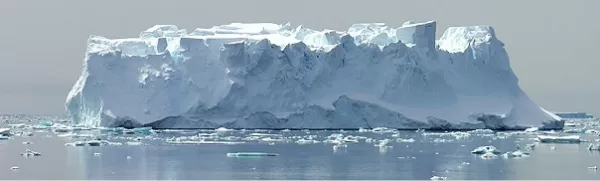
As seas go, this one is quite shallow and is bounded in the east by the coastal mountains of Victoria Land and in the south by the Ross Ice Shelf. The shelf is a flat topped body of snow covered glacial ice about the size of France which largely floats except along the coastlines. The southern part of the Ross Sea is not navigable for some 9 months of the year and over the summer season between January and March very few ships venture here, and those that do principally supply the various scientific stations.
The Ross Sea coast extends from the ice shelf northwards until it reaches the very tip of Victoria Land and Cape Adare. During our time in the Ross Sea Region we will attempt a variety of opportunistic landings, subject to weather conditions. These may include -
Cape Hallett - Wet landing
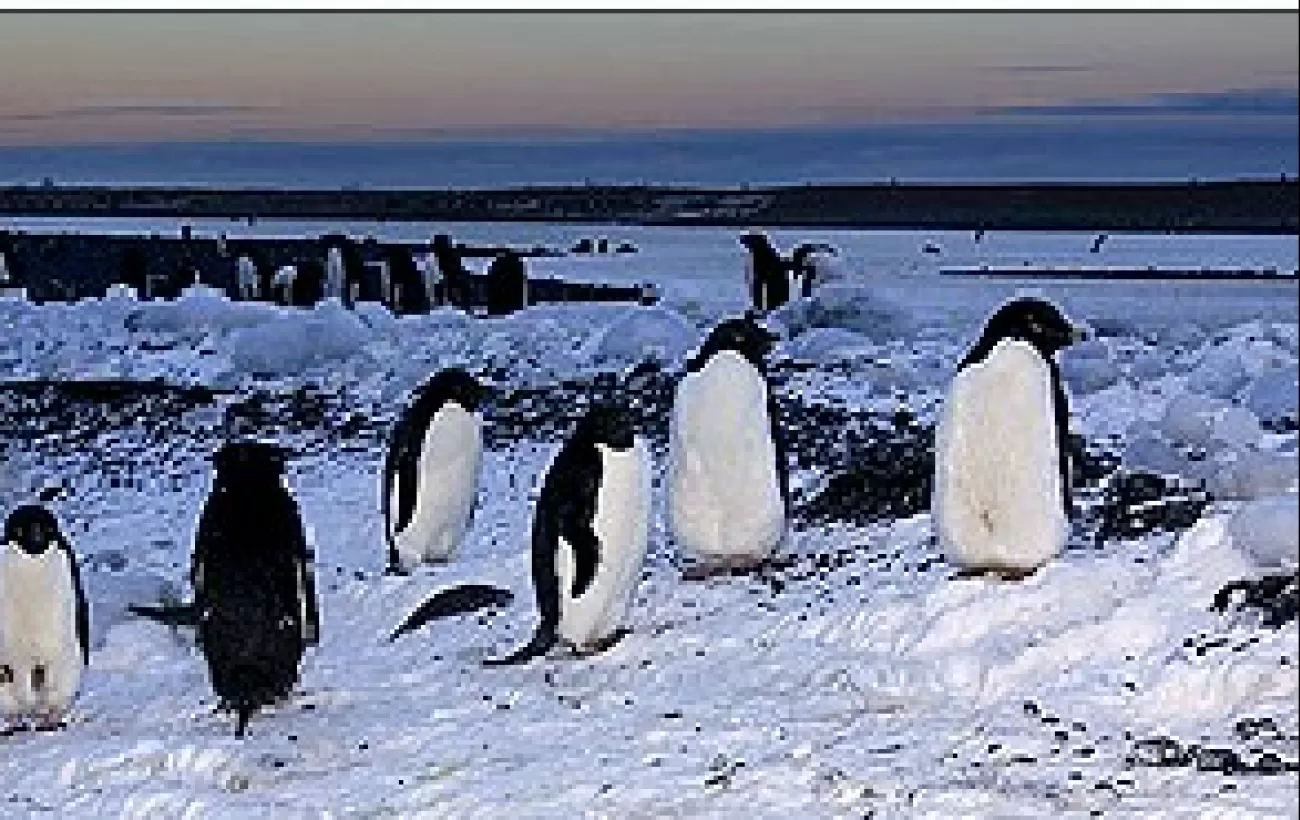
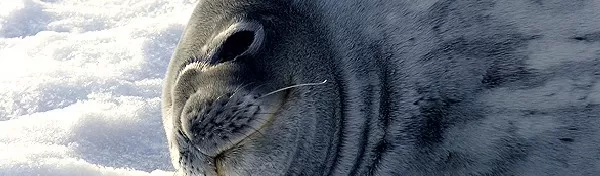
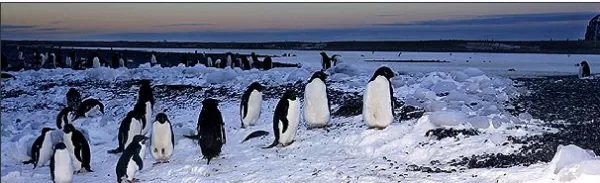
Following an intricate approach to Cape Hallett through thick pack ice, we land to inspect the site of an abandoned US/New Zealand base established during the International Geophysical Year in 1957-58. It is a magnificent area with giant glaciers and surrounding mountains of over 4,000 metres. Weddell Seals and Adelie Penguins abound.
Cape Terra Nova Bay - Wet landing
First discovered by Scott during his 1901-1904 expedition, the site is now occupied by an Italian base which operates a summer research station. If permission is granted, we hope to visit the base. It is then intended to cruise by the massive Drygalski ice tongue, which extends 70km out into the Ross Sea as part of the David Glacier.
Inexpressible Island – Wet landing
Home to a small Adelie Penguin rookery this low bleak Island is the site of an amazing story of survival where Scotts Northern party were forced to over-winter in a snow cave. Two plaques mark the site of the cave were the men suffered until their departure on the 30th September 1912 for Ross Island across the sea ice. This is a rarely visited site which is challenging to access but if a visit is successful it is not hard to imagine why the men called this place “Hell with a capital H.”
Cape Evans - Wet landing
Scott's 1911 Terra Nova Hut is the largest historic building in Antarctica. Used in the 1910 to 1913 British Antarctic Expedition, it served as the base for extensive scientific research and surveys as well as Scott's journey to the South Pole. Much of Scott's equipment is well preserved and it is hoped we can enter the hut with guides. Shredded seaweed sown into Jut quilting is used as an insulating layer between the inner and outer cladding of the wood hut. Ten men of Shackleton's ill-fated imperial trans-Antarctic expeditions were marooned here in 1915 after their ship Aurora was blown out to sea and unable to return. Two of Aurora's anchors remain to this day on the beach in front of the hut. Entering the hut provides a window into the historic age of Antarctic exploration and discovery.
Cape Royds - Wet landing
Shackleton's hut at Cape Royds was constructed during the British Antarctic Nimrod Expedition in 1907-1909. Unable to land at King Edward VII Island, he then entered McMurdo Sound. Ice conditions prevented him reaching Hut Point, the site of Scott's hut, so he selected Cape Royds for winter quarters. Adelie Penguins are slowly reclaiming the site which is the world's southernmost penguin rookery. The New Zealand Antarctic Heritage Trust conservation program has successfully conserved a substantial number of fascinating artifacts in this hut, in such a way that at first sight the hut appears to have only recently been abandoned.
Possession Islands - Wet landing
Subject to sea and ice conditions, we hope to make a landing at the rarely visited small and craggy Possession Islands. One of these, Foyn Island, is covered with Adelie Penguins. The islands were discovered by James Clark Ross and Francis Crozier in 1841 during their expedition to locate the south magnetic pole.
Cape Adare - Wet landing
Cape Adare was discovered by Captain James Ross in 1841. We plan to visit Borchgrevink's Hut from the British Southern Cross Expedition, the first to ever spend winter in the Antarctic, in 1899. Up to 1,000,000 Adelie Penguins have reclaimed the site, which is spectacular, surrounded by black volcanic hills. High above the huts is the lonely grave and cross of Borchgrevink's biologist.
Days 15-17 At Sea
At Sea
Day 18 Campbell Island
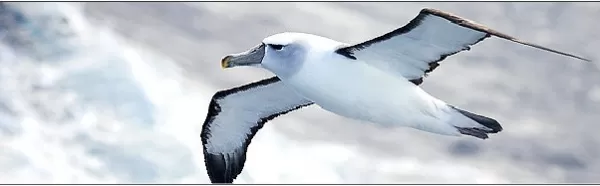
Campbell Island was first discovered in January 1810 by Captain Frederick Hasselburg, master of the sealing brig, Perseverance. He named the island after his employers Robert Campbell and Co. of Sydney and sadly drowned later that year after a boat capsized in Perseverance Harbour. Campbell is a volcanic island with fascinating rock formations. 50 years ago, between 2 and 3 million Rock Hopper Penguins were nesting on the island but since then 90% have been decimated by bacterial infection. Less than 20 pairs of Wandering Albatross nest are found here. Approximately 8,500 pairs of Royal Albatross and about 74,000 pairs of Black Browed Mollymawk also call the island home. Over 40 other breeds of birds including the Southern Royal Albatross have also been observed on Campbell Island.
Day 19 Aukland Islands, New Zealand
Sites in Port Ross may be visited including an abandoned Maori settlement, a German expedition observation point at Terror Cove and a WWII coast watching station at Ranui Cove. In Carnley Harbour castaway depots at Camp Cove, are marked by an A frame building built in 1887 by the crew of the Awarua, inscribed with the names of people from the French Bark Angou wrecked in 1905. We may cruise to Victoria Passage, a dramatic opening at the end of Carnley Harbour. The birdlife of Auckland Island is profuse.
Day 20 Snares Islands
Two small rocky islands, North East and Broughton, comprise The Snares, the closest sub-Antarctic islands to New Zealand. The islands are covered with heavy tussock grass and wind-beaten forests of tree daisies. Weather permitting we'll launch our Zodiacs for an exploration of the sheltered eastern coastline as the island's wildlife protection program precludes landings. The Snares are home to huge numbers of breeding birds, 99 recorded species including albatross, Antarctic Terns and Snares Crested Penguins.
Day 21 Bluff (Invercargill), New Zealand
The largest urban centre in New Zealand's Southland is Invercargill, a city of 49,000 people. Visitors come to admire the elegant Victorian and Edwardian buildings, gardens and landscaped parks. The fishing port of Bluff is a half hour drive south from Invercargill and is home to the famous Bluff oyster and a lively annual seafood festival. From Bluff, visitors can catch a ferry to Stewart Island - a haven for native bird life and the only place in New Zealand where you can readily see kiwi in their natural habitat.
For guests embarking in Bluff we offer a complementary transfer from Invercargill to Orion on the day of Orion’s departure. The transfer is from the city centre departing at about 2pm. Subject to minimum numbers we will also offer a transfer from the Invercargill airport at times to coincide with flight arrivals. If we are able to confirm an airport transfer this will be advised on your travel documents, otherwise a taxi from the airport to the city centre is about $15.
For guests disembarking in Bluff we offer a complementary transfer from Orion to Invercargill on the day of arrival. The transfer is to the city centre, or to the Invercargill airport.
Itinerary Notes
CRUISE FARE – WHAT’S INCLUDED: Included in your cruise fare are accommodations as booked, cruise transportation, all meals onboard, 24-hour room service, entertainment and educational programmes, use of ship's sporting equipment and facilities, port & handling charges, Zodiac excursions and tender transfers, access to the ship's library, Govt. Fees & Taxes. Fares also include the services of 75 experienced crew.CRUISE FARE – WHAT’S NOT INCLUDED: Fares do not include airfare and items of a personal nature, including but not limited to: travel and medical insurance, laundry charges, shopping onboard, bar expenses, hair dressing and massage treatments, optional shore experiences, medical treatment, telephone and internet charges.
Although this itinerary to the extreme sub-Antarctic and Antarctic regions is based on many years of collective experience, prevailing weather and ice conditions in this area of the world are unpredictable, mother nature dictates our course. These are not cruises they are true expeditions to what can be the most inhospitable region on earth. Bring with you a spirit of adventure and flexibility.
Deposit & Payment
Initial deposit is 30%, and most travelers will call our office and pay the deposit with a credit card. We accept Visa, Mastercard, AmEx, and Discover. Alternatively, you can send a check to our Missoula, Montana, office or register online at: https://www.adventure-life.com/forms/fourways.php
Final payment is due 100 days prior to departure.
Final payment by Visa, Mastercard, Discover, or AmEx.
Booking last minute? No problem! Please contact one of our trip planners, and we can get you on your way if booking less than 100 days prior to departure.
Click here to see a copy of our Terms and Conditions.
Cancellation Policy
| Days Prior to departure | Fee |
|---|---|
| Antarctic Cruises | |
| 121 days or more | $1200 per person |
| 120-91 days | Deposit |
| 90-0 days | 100% trip cost |
| Other Cruises | |
| 91+ days | Deposit |
| 90-0 days | 100% trip cost |
Orion


- Ship Highlights
- Passengers : 106
- Luxury Expedition Ship
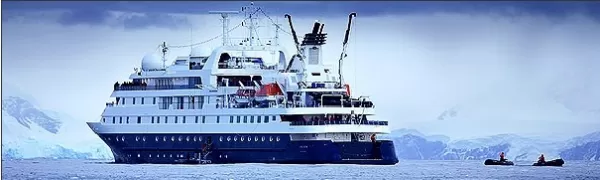
Technically and aesthetically, Orion is arguably the most sophisticated vessel in its class. The Berlitz Ocean Cruising and Cruise Ships guide describes her as "the latest in the quest to build the ideal expedition cruise ship". Constructed by the world-leading Cassens Shipyard in Emden, and launched in November 2003, she boasts a host of advanced design features including technology that sets new standards in sustainable marine environmental practices.
Although custom-made for expedition cruising, Orion is the epitome of elegance. No expense has been spared when it comes to the quality of fittings and furnishings, and the range and calibre of onboard recreational facilities are nothing short of five-star. Orion's luxurious appointments means she is more mega-yacht than cruise ship and her guests are few; around just 50 couples, all cared for in 5-star comfort by a crew of 75. Chart your own path less travelled.
Facilities:
Boutique
Open daily when the ship is at sea, the Boutique offers a wide range of gifts ranging from signature clothing to the most beautiful pearls in the world from Paspaley. A limited supply of sundry items is available.
Elevator
Orion has a glass elevator, centrally located in the atrium for ease of access. It services all stateroom decks and Deck 6, where you will find the Galaxy Observation Lounge and Cosmos Lecture Theatre.
Gymnasium
Located on Deck 6 with sweeping ocean views, the gymnasium is equipped with the following LifeFitness equipment: a step machine, a treadmill, a cross trainer, 2 bicycles, free weights and exercise mats.
Hair and Beauty Salon
Our hair stylist is available by appointment, offering a range of services from a simple shampoo and blow dry to a complete make-over including manicure and pedicure.
Hospital & Infirmary
Orion has a doctor on board at all times and consultations should be arranged through the Reception Desk. A very limited range of pharmaceuticals is maintained on board so please be sure to pack sufficient quantities of medicines for your journey. Please note the Australian Medicare system does not extend to Orion and consultation fees will be charged to your stateroom account.
Internet
A laptop is available in the Library with internet connection. Internet access is also available in your stateroom using your own laptop. If your laptop is wireless enabled you may use it anywhere in the Galaxy Observation Lounge or the Leda Lounge. Two laptops are available for loan from the Reception Desk. Internet access cards can be purchased for A$30.00 (60 minutes) or A$50.00 (125 minutes). Communications at sea are subject to satellite connections.
Jacuzzi
A Jacuzzi spa is located on the Sun Deck, Deck 6. In warmer climes you'll find the spa affords a cool dip, doubling as a plunge pool.
Lecture Theatre
Our state-of-the-art lecture theatre with surround-sound is the scene for themed presentations by our Expedition team and Guest Speakers. All guests are comfortably accommodated in arm-chair style seating.
Leda Lounge and Cocktail Bar
Centrally located on Deck 4, the Leda Lounge and Cocktail Bar is the hub of social life aboard Orion, comfortably seating all guests at once. Tour briefings are held here before dinner and a duo plays for your entertainment later in the evening.
Library
Our library is well-stocked with a wide variety of informative books and journals on our destinations, and both novels and games are also available. You'll also find a laptop here for internet access.
Marina Platforms
You'll embark the Zodiacs from either the Stern Marina Platform (accessed by the rear stairs from the Outdoor Café) or the Portside Embarkation Platform (accessed via the Mud Room on Deck 2). Cruise staff will direct you to the platform in use each day.
Mud Room
Located on Deck 2, this is a "wet area" allowing you to wash down boots after returning to the ship, thereby minimising the risk of cross-contamination between pristine locations ashore, such as those found in Antarctica. You may also use this room to store your snorkel and flippers in designated lockers.
Observation Lounge
Located high atop Orion on Deck 6, the intimate Galaxy Observation Lounge affords stunning 270º views. Early Riser breakfast and Afternoon Tea are both served here.
Outdoor Café
The Delphinus Outdoor Café, located aft on Deck 4, offers al fresco dining for buffet breakfast and lunch. On balmy evenings you may book a table outdoors for dinner enjoying the same menu and service as presented in the restaurant.
Outdoor Bar
Located high on the ship adjacent to the Sun Deck Jacuzzi spa on Deck 6.
Reception Desk
Manned 24 hours a day, the Reception Desk is your 'first port of call' for all administrative matters.
Restaurant
The Constellation Restaurant offers guests a relaxed yet sophisticated environment for breakfast, lunch and dinner. Dining aboard Orion is a leisurely experience with a single, open sitting allowing you to choose when and with whom you dine. Special signature menus designed for us by Sydney's Serge Danserau of 'The Bathers' Pavilion' fame complement our other alternatives.
Sporting Facilities
Orion is equipped with a fleet of 10 inflatable 2-man kayaks and when in warmer waters you are welcome to borrow goggles, snorkels and fins for the duration of your stay with us.
Sun Deck
You'll find padded teak steamer chairs on Deck 6 beside the Jacuzzi spa affording you a relaxing spot to read a book or simply doze in the sun. You'll find an ample supply of large blue beach towels close by.
Vega Health Spa
The Vega Spa offers a uni-sex dry sauna, the gymnasium is equipped with cardio vascular exercise machines and a range of massage/spa treatments are available.
Technical Information
Length: 103 metres
Beam: 14.25 metres
Draft: 3.82 metres
Hull: Ice-reinforced for voyages in the Arctic and Antarctic
Ice Class: E3 (Germanischer Lloyd)
Gross Tonnage: 4,000
Engines: Mak; 8M25; 3,265HP
Speed: 12.5 knots
Stabilisers: Blohm & Voss, retractable fin stabilisers
Manoeuvrability: Bow and stern thrusters
Built: 2003
Delivery Date: November 2003
Builder: Cassens Shipyard-Emden, Germany
Staterooms and Suites: 53
Guest Capacity: 106 (twin occupancy). 19 additional guests may be accommodated in convertible sofa or upper Pullman beds.
Elevator: Yes
Classification: Germanischer Lloyd
100 A5 E3 Passenger Ship MC E3 AUT
Regulations: Orion is built according to the latest international safety regulations, including those of the U.S. Coast Guard, U.S. Public Health, Canadian Arctic Shipping, and St. Lawrence Seaway.
Additional Craft: 10 Zodiac Heavy Duty MK5, 10 Kayaks
Communications: Direct-dial satellite telephones; fax; e-mail; Internet access; internal telephone system
Registry: Bahamas
| Cabins | |
|---|---|
![]() | Cat B - Oceanview Stateroom Outside Staterooms with oval window and sitting area. Deck 3. 175 sq. ft. #301, 322, 323. |
![]() | Cat A - Oceanview Stateroom Outside Staterooms with oval window and sitting area. Deck 3. 180 sq. ft. #302-312, 314-321. |
![]() | Junior Suite Outside Junior Suites with rectangular window and sitting area. Decks 4 & 5. 218 sq. ft. #401-412, 414-419, 512. |
![]() | Deluxe Suite Outside Suites with large window and living room. Deck 5. 230 sq. ft. #511, 515. |
![]() | French Balcony Suite Outside Suites with French balcony and living room. Deck 5. 230 sq. ft. #501, 503-506, 508. |
![]() | Owner Outside Grand Suites with French balcony, separate bedroom and living room. Deck 5. 345 sq. ft. #502, 507, 509, 510. |