USA Today Logo New York Times Logo Outside Magazine Logo Conde Nast Traveler Logo National Geographic Traveler

Ross Sea Antarctic Odyssey

« All Ortelius cruise options
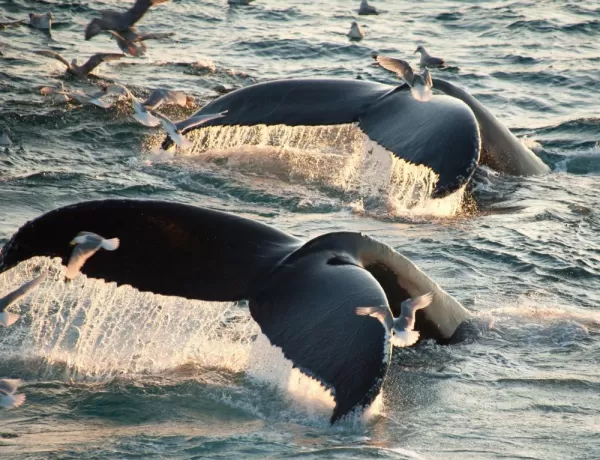
A humpback whale breaches the polar watersBrilliant white Mount ErebusVisit Peter I Island on your Antarctic cruiseSoak in the silence of the Ross Sea ice shelf The remote and alien-like Dry Valley
Dates Deck + Cabin Type
Quadruple Porthole Twin Porthole Twin Window Superior Suite
- Please note: There will be an additional fuel surcharge of US $25 per passenger per night on Antarctic voyages for the 2012-13 season.
- Rates are quoted in U.S. dollars and represent costs per person, double occupancy.
- Cabins are available for single occupancy at 1.7 times the double occupancy rate.
- Due to the extreme nature of itinerary destinations, travel insurance is mandatory for all cruises aboard the Ortelius - including medical, accident and repatriation/evacuation insurance.
Deposit & Payment

Request More Information

First Name
Last Name
Email
Phone
Tell us more. We will customize a brochure to your preferences.

Day 1 Embark in Ushuaia, Argentina

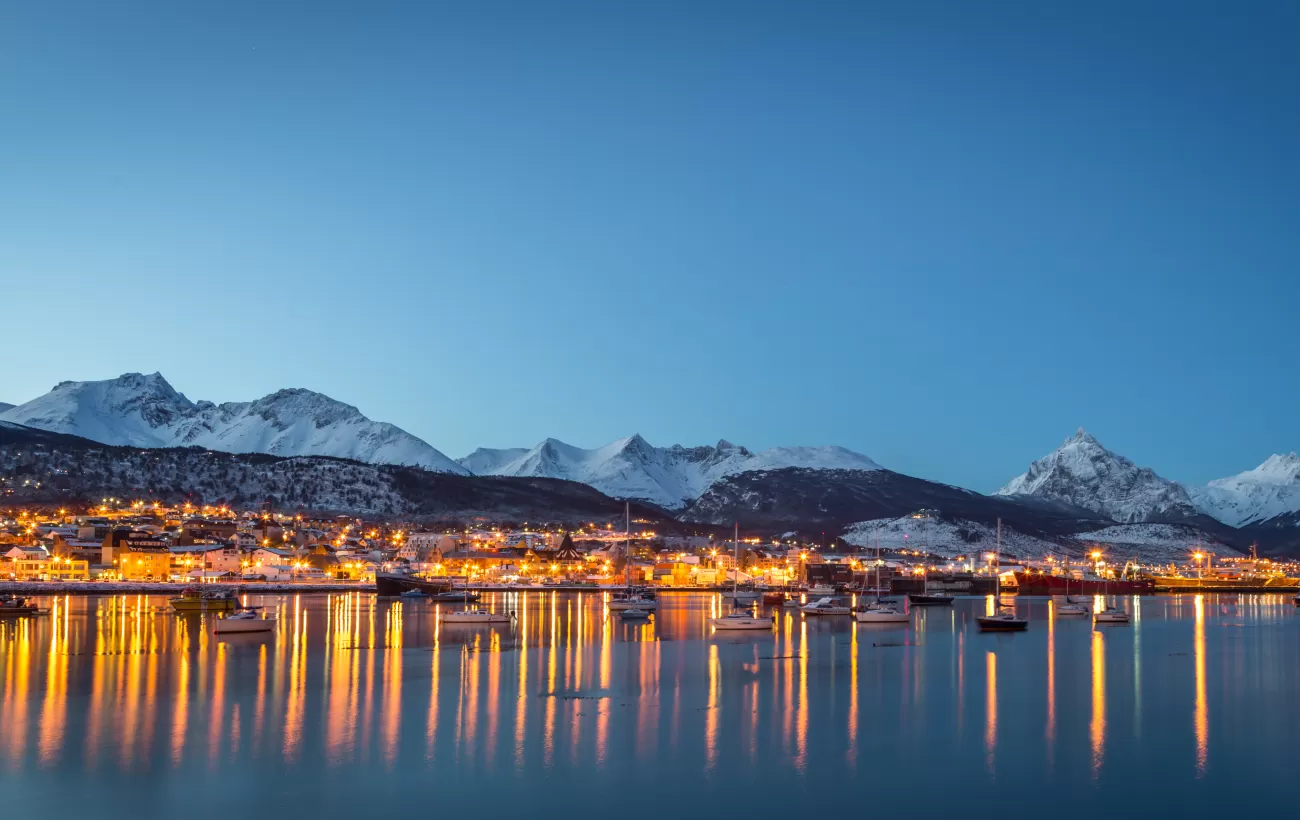
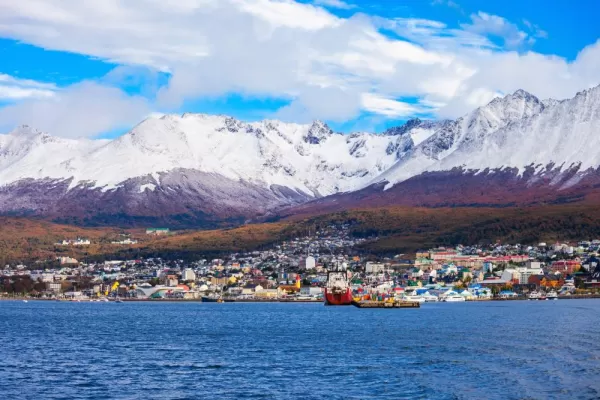
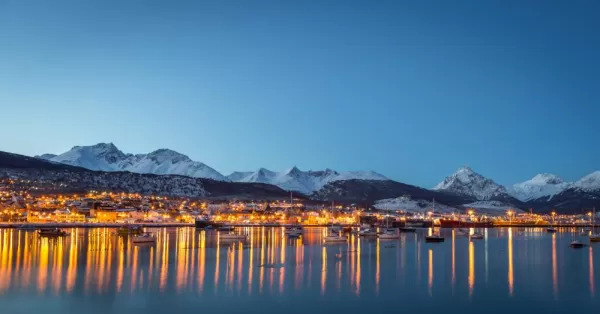
In the afternoon, embark in Ushuaia, Tierra del Fuego, Argentina, the southernmost city in the world located at the Beagle Channel and sail through this scenic waterway for the rest of the evening.

Days 2-3 At Sea

Crossing the Drake Passage.

Day 4 Antarctic Peninsula

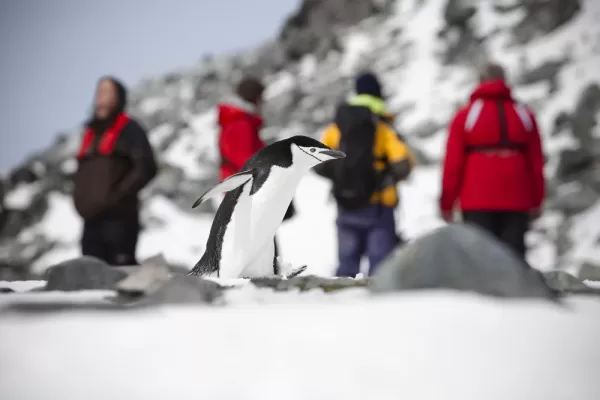
Arrive in the Antarctic Peninsula and sail in the early morning through the spectacular Lemaire Channel and land on Pléneau Island, where Elephant Seals haul-out on the beaches. Gentoo Penguins, Kelp Gulls and South Polar Skuas are confirmed breeders. Pléneau Island was first charted by the French Antarctic Expedition of 1903-05 of Jean-Baptiste Charcot and was named after his expedition’s photographer Paul Pléneau. We will also visit Petermann Island with colonies of Adélie and Gentoo Penguins and Imperial Cormorants (Blue-eyed Shags). Petermann island was named after the German geographer August Petermann who was a member of a German Expedition in 1873-74.

Day 5 Polar Circle / Fish Islands

Sailing south through the Penola Strait, cross the Polar Circle and arrive at the Fish Islands. The small islands lying east of Flouder Island are called the Minnows, first charted by the British Graham Land Expedition (1934-37) of John Rymill. Detaille Island was discovered by the French expedition of Charcot (1903-05) and named for a share holder in the Magellan Whaling Company. From 1956 till 1959, The British Antarctic Survey had their “Station W” located on Detaille Island. On both locations you may observe Adélie Penguins and Blue-eyed Shags.

Days 6-7 Bellingshausen Sea

Bellingshausen Sea, where you may see your first pack-ice.

Day 8 Peter I Island

Peter I Island or in Norwegian Peter I Øy is an uninhabited volcanic island (19 kilometres long ) in the Bellingshausen Sea. It was discovered by Fabian von Bellingshausen in 1821 and was named after the Russian Tsar Peter I. It is claimed by Norway and considered a territory by its own. It is sporadically visited by passenger vessels. On earlier landings groups of Elephant Seals and colonies of Southern Fulmars and Cape Pigeons were seen.

Days 9-14 Amundsen Sea

These days sail through the Amundsen Sea along and through the outer fringes of the pack-ice, which - depending of ice-conditions - will give us glimpses of the Antarctic Continent, while your ship will take advantage of the west-going Antarctic coastal current. The sailing along and through the ice is very lively, with sightings of single straggling Emperor Penguins, groups of seals on ice-floes, and also Orca's and Minke Whales along the ice-edge, often accompanied by different species of fulmar petrels. If the sea-ice allows, try to land on Shephard Island in Marie Byrd Land among colonies of Chinstrap Penguins and South Polar Skua's. Shephard Island was discovered by the US Antarctic Expeditions (USAS) of 1939-41 and was named after one of the promoters of this expedition: John Shephard.

Day 15 Ross Ice Shelf

Approach the Ross Ice Shelf, a floating mass of land-ice, with a front of 30 meters high. In the Bay of Whales at the eastern side of the shelf, close to Roosevelt Island (named by the American aviator Richard E. Byrd in 1934 for President Franklin D. Roosevelt), Roald Amundsen gained access to the Shelf and ventured to the South Pole, where he finally arrived on 14 December 1911. For us it is perhaps a chance to climb on the shelf as well.

Day 16 At Sea

Along the Ross Ice Shelf sail to the west.

Days 17-21 Ross Sea

In the Ross Sea your captain intends to visit Ross Island, guarded by Mount Erebus, Mount Terror and Mount Bird with all the famous spots which played such an important role in the dramatic British expeditions of the last century such as Cape Royds with the cabin of Ernest Shackleton. The goal is to visit Cape Evans with the cabin of Robert Falcon Scott; from Hut Point Scott and his men set out for the South Pole. Further attempts will be made to visit the US-station McMurdo and Scott Base (New Zealand). If ice and weather conditions are favorable, the helicopters will be used to offer landings.

From Castle Rock you will have a great view across the Ross Ice Shelf toward the South Pole. Have a view into Taylor Valley, one of the Dry Valleys, where on the planet you are closest to the conditions on Mars. For the Dry Valleys the helicopters will be utilized. This is just one example of helicopter use during this epic voyage.

Days 22-23 West Coast of Ross Sea

Sailing northward along the eastern west coast of the Ross Sea, pass by the Drygalski Ice Tongue and the Italian Station in Terra Nova Bay and further cape Hallet.

Day 24 Cape Adare

Cape Adare is the place where people for the very first time wintered on the Antarctic Continent. The hut where the Norwegian Borchgrevink stayed in 1899, is surrounded by the largest colony of Adélie Penguins in the World.

Day 25 At Sea

At sea, as your ship works her way through the sea-ice at the entrance of the Ross Sea.

Day 26 Balleny Islands

Sail along the Balleny Islands, discovered in 1839 by the British captain John Balleny.

Days 27-28 At Sea

Day 29 Macquarie Island

Macquarie Island is aTasmanian State Reserve and became in 1997 a World Heritage Site. The Australian Antarctic Division has its permanent base on “Macca”. The Australian Frederick Hasselborough discovered the island during a voyage, searching for new sealing grounds. The fauna on Macquarie is fantastic with colonies of King and Gentoo and Southern Rockhopper Penguins. The Royal Penguins (almost one million breeding pairs!) and Macquarie Shags are endemic species. Elephant Seals are also present, as well as various fur seals species such as the New Zealand Fur Seal.

Days 30-31 At Sea

Day 32 Disembark / Invercargill, New Zealand

Arrive in Invercargill (New Zealand) where passengers depart for their homebound journey.

Itinerary Notes

Special note: crossing the Date Line:
Both departures have a total duration of 31 nights/32 days. However, looking at the starting and ending dates of the voyages, it “seems” that the January 16th departure has duration of 32 nights and the February 18th of 30 nights. This is explained by the fact that you will cross the “date line” at 180 degrees longitude. Those traveling on the January departure and crossing the International Date Line results in a day being added and the February departure results in a day being subtracted. In any case, the duration of the voyage is still 31 nights/32 days for both voyages.

Fares include:
• Voyage aboard the designated vessel as indicated in the itinerary.
• All meals throughout the voyage aboard the ship including snacks, coffee and tea.
• All shore excursions and activities throughout the voyage by Zodiac.
• Ship-to-shore helicopter transfers (with no specific amount of helicopter time guaranteed).
• Program of lectures by noted naturalists and leadership by experienced expedition staff.
• All miscellaneous service taxes and port charges throughout the program.
• Comprehensive pre-departure material.

Not included:
Any airfare whether on scheduled or charter flights; pre- and post land arrangements; transfers to the vessel; passport and visa expenses; Government arrival and departure taxes; meals ashore; baggage, cancellation and personal insurance (which is strongly recommended); excess baggage charges and all items of a personal nature such as laundry, bar, beverage charges and telecommunication charges; and the customary gratuity at the end of the voyages for stewards and other service personnel aboard (guidelines will be provided).

Helicopter Transfers:
These departures will transfer passengers ashore by zodiac. But, the two helicopters onboard will be operated if zodiacs can not be used. Potential candidates for helicopter transfers are Peter I Island, The Ross Ice-shelf, the Dry Valleys, Mc Murdo Station, Cape Evans (hut of Scott) and Cape Royds (hut of Shackleton). In theory the goal is five helicopter based landings, but a specific amount of helicopter time can not be predicted. No guarantees can be given and in no event will claims be accepted.

Please note: It is agreed that if world fuel prices will reach or exceed US Dollar $90 per Barrel Brent 90 days prior to departure the Ortelius reserves the right to levy a fuel surcharge of US $25 per passenger per night.

Deposit & Payment

Initial deposit is 25%, and most travelers will call our office and pay the deposit with a credit card. We accept Visa, Mastercard, AmEx, and Discover. Alternatively, you can send a check to our Missoula, Montana, office or register online at: https://www.adventure-life.com/forms/fourways.php

Final payment is due 70 days prior to departure.

Final payment by transfer, check or Visa, Mastercard, Discover, or Amex. Credit Card payments subject to variable credit card fee.

Booking last minute? No problem! Please contact one of our trip planners, and we can get you on your way if booking less than 70 days prior to departure.

Click here to see a copy of our Terms and Conditions.

Cancellation Policy

Days Prior to departureFee
90 days or more25% deposit
89-60 days55% trip cost
59-0 days100% trip cost

Ortelius

The Ortelius|^|Elke LindnerEnjoy the bar of the Ortelius on your polar expedition cruiseAsk for a tour of the Bridge while crusing the polar watersConverse with fellow travelers in the Ortelius dining roomChoose from a wide variety of read material and relax in the Ortelius reception area
    Ship Highlights
  • Passengers : 106

The ice-strengthened vessel “Ortelius” is an excellent vessel for Polar expedition cruises in the Arctic and Antarctica, providing us with possibilities to adventure remote locations such as the Ross Sea and Franz Josef Land.

“Ortelius” was built in Gdynia, Poland in 1989, was named “Marina Svetaeva”, and served as a special purpose vessel for the Russian Academy of Science. The vessel is re-flagged and renamed “Ortelius”. As Plancius, Ortelius was a Dutch / Flemish cartographer. Abraham Ortelius (1527 – 1598) published the first modern world atlas, the Theatrum Orbis Terrarum or Theatre of the World in 1570. At that time, the atlas was the most expensive book ever printed.

The vessel has the highest ice-class notation (UL1 equivalent to 1A) and is therefore very suitable to navigate in solid one-year sea ice and loose multi-year pack ice. “Ortelius” is a great expedition vessel for 100 passengers with lots of open-deck spaces and a very large bridge which is accessible to the passengers. The vessel is manned by 34 highly experienced Russian nautical crew, 15 international catering staff, including stewardesses, 6 expedition staff (1 expedition leader and 5 guides/lecturers) and 1 doctor.

”Ortelius” offers a comfortable hotel standard, with two restaurants, a bar/lecture room and a sauna. Voyages are primarily developed to offer our passengers a quality exploratory wildlife program, trying to spend as much time ashore as possible. As the number of passengers is limited to approximately 100 on the “Ortelius”, flexibility assures maximum wildlife opportunities.

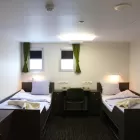
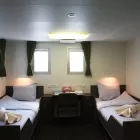
The vessel offers basic but comfortable cabins and public spaces. The cabin lay-out is as follows: 5 quadruple cabins with bunk beds and private facilities (these can also be used as triple or twin cabins); 23 twin cabins with portholes, private toilet and shower and 2 single lower berths; 10 twin cabins with windows, private toilet and shower and 2 single lower berths; 6 superior cabins with double beds, private toilet and shower and a separate day room, and 1 suite with a double bed, private toilet and shower and a separate day room. All cabins are spacious outside cabins with a minimum of two portholes or windows per cabin.

Cabins
Relax in your cabins aboard the OrteliusQuadruple Porthole
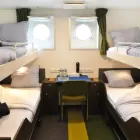
5 quadruple cabins with bunk beds and private facilities (these can also be used as triple or twin cabins). Spacious outside cabins with a minimum of two portholes or windows per cabin
Twin Porthole
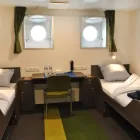
23 twin cabins with portholes, private toilet and shower and 2 single lower berths. Spacious outside cabins with a minimum of two portholes or windows per cabin.
Twin Window
10 twin cabins with windows, private toilet and shower and 2 single lower berths. Spacious outside cabins with a minimum of two portholes or windows per cabin
Cruise along in comfort aboard the Ortelius in your Superior cabinSuperior
6 superior cabins with double beds, private toilet and shower and a separate day room. Spacious outside cabins with a minimum of two portholes or windows per cabin
Suite
1 suite with a double bed, private toilet and shower and a separate day room. Spacious outside cabins with a minimum of two portholes or windows per cabin.

Request More Information

First Name
Last Name
Email
Phone
Tell us more. We will customize a brochure to your preferences.

Newsletter

Questions about a tour?
Contact us with your questions.

Technical Problem?
Contact the webmaster
for assistance.

Are you a Travel Agent?
Click here to Contact us.

Call Us
800-344-6118 (Toll-free)
406-541-2677 (Outside US)
406-541-2676 (Fax)

Adventure Life
712 W Spruce St., Suite 1
Missoula, MT 59802

Share