Birding Down Under
« All Spirit of Enderby cruise options


- Day 1 Arrive at Invercargill
- Day 2 Depart Port of Bluff
- Day 3 North East Island
- Day 4 Enderby Island
- Day 5 Carnley Harbour
- Day 6 At Sea
- Days 7-8 Macquarie Island
- Day 9 At Sea
- Day 10 Campbell Island
- Day 11 At Sea
- Day 12 Antipodes Island
- Day 13 The Bounty Islands
- Day 14 Pyramid Rock
- Day 15 South East Island (Rangatira)
- Day 16 Chatham Islands
- Days 17-18 At Sea
- Day 19 Dunedin
| Dates | Deck + Cabin Type | |||||
| Heritage Suite | Mini Suite | Superior Plus | Superior | Main deck | Main Deck Triple | |
| Nov 14 '13 |
$15,000 | $14,500 | $14,000 | $12,990 | $11,550 | $10,500 |
| Landing fees: $650 | ||||||
- Single clients are matched with a sharer of the same sex in a twin-share cabin. Payment of a single supplement guarantees a single cabin. The single supplement is 1.8 times the price of the voyage with the exception of the suites which are double the single rate.
- Included in the cruise fare is a pre-departure hotel night, group dinner as well as breakfast the next day prior to embarkation.
Day 1 Arrive at Invercargill
Arrive at Invercargill, New Zealand’s southernmost city. Established by Scottish settlers, its wealth of rich farmland means that sheep and dairy farms predominate. On arrival please make your own arrangements to transfer to the Kelvin Hotel in the city center. A detailed program will be available to you when you check in at reception. Dinner is at the hotel, providing an opportunity to meet fellow expeditioners.
Day 2 Depart Port of Bluff
Take breakfast at your leisure in the hotel dining room, then enjoy a visit to the Southland Museum to view the Subantarctic display before transferring to the Port of Bluff, 27 kilometers to the south of Invercargill, and board the Spirit of Enderby. Settle into your cabin and then join Expedition Staff and the Captain for orientation and a welcome on board. Once the ship has cleared customs set sail for the Snares Islands.
Day 3 North East Island
The Snares are the first of the Subantarctic Islands you will visit and the largest of the group is North East Island. It is an amazing place – more birds nest on this one island than there are seabirds in all of the British Isles. Arrive early in the morning and cruise by Zodiac (there are no landings permitted) along the sheltered eastern side.
Cruising in bays, you should see the endemic Snares Crested Penguin, Tomtits and Fernbirds. Cape Pigeons, Antarctic Terns, White-fronted Terns and Red-billed Gulls also abound. There are an estimated six million Sooty Shearwaters nesting in the Snares Islands and Buller’s Albatross breed here from early January onwards.
Day 4 Enderby Island
Enderby Island forms part of the Auckland Island group and it’s a great place to view birds and wildlife. The plan is to land at Sandy Bay, the main breeding ground for the New Zealand (Hooker’s) Sea Lion. You’ll also have a chance to observe the following species: Southern Royal Albatross, Northern Giant Petrel, Auckland Island Shag, Auckland Island Teal, Auckland Island Banded Dotterel, Auckland Island Tomtit, Bellbird, Pipit, Red-crowned Parakeet, Yellow-eyed Penguin and Light-mantled Sooty Albatross.
There may be a very good chance of seeing the Subantarctic Snipe. Other more common species you will see include the goldfinch, song thrush, blackbird, European Starling, Red-billed Gull and Redpoll. On Derrycastle Reef there is a good chance of seeing the Bar-tailed Godwit, Turnstone and perhaps other migratory waders.
Day 5 Carnley Harbour
This morning cruise to Carnley Harbour in the south of the Auckland Islands chain. There will be an opportunity for the more energetic expeditioners to climb to the Shy Albatross colony on the Southwest Cape. Gibson’s Wandering Albatross nest above the colony amongst the tussocks, and you should obtain good views of these birds, as they will be nesting at this time. Those passengers remaining on board will have an opportunity to cruise by Zodiac along the coastal forest with a chance of seeing the New Zealand Falcon and enjoy close encounters with other bush birds. Depart the Auckland Islands mid-afternoon and head southwest to Macquarie Island.
Day 6 At Sea
At sea you will have a series of lectures supported by videos on the biology and history of the Subantarctic Islands and the Southern Ocean. The Subantarctic Convergence Zone is usually very close to the area we sail through, so you should expect the birdlife to reflect this your ship approaches Macquarie Island. You will be at sea all day: another great opportunity to see pelagic species including Wandering Albatross, the Royal Albatross, Shy and White-capped Albatross, Light-mantled Sooty Albatross, Grey-headed Albatross, Black-browed Albatross, White-chinned Petrel, Mottled Petrel, White-headed Petrel, Cape Petrel, Diving Petrel, Grey-backed and Black-bellied Storm Petrel.
Days 7-8 Macquarie Island
Arrive at Macquarie Island, the only place in the world to see the breeding Royal Penguin – and there is an abundance of these here. King Penguins are also found in large numbers and two other penguin species breed on Macquarie Island - the Gentoo and the Rockhopper. Along the coast you will see the Imperial (Macquarie) Shag; Redpolls can often be spotted, as can the European Starling along the cliff edges. Plan landings at both the ANARE base and at Sandy Bay and will also cruise Lusitania Bay by Zodiac, where there is a huge King Penguin colony. Continue your exploration of Macquarie Island and then depart for Campbell Island on the afternoon of your second day.
Day 9 At Sea
At sea en route to Campbell Island, see a broad range of species, such as while traveling to Macquarie Island from the Auckland Islands.
Day 10 Campbell Island
Arrive at Campbell Island in the morning and spend the day exploring on foot from Perseverance Harbour. Campbell Island is truly magnificent. Rats have recently been successfully removed, producing an encouraging increase in small bird numbers, most notably the New Zealand Pipit. There are some great birding and photographic opportunities on this island, especially the Southern Royal Albatross and the early flowering mega herbs. During the day ashore see the Southern Royal Albatross, Light-mantled Sooty Albatross, Northern Giant Petrel, Campbell Island Shag, Southern Skua, Red-billed Gull, Black-backed Gull, Antarctic Tern, Redpoll, Dunnock and New Zealand Pipit. The regeneration of the mega herbs since the removal of the sheep in the 1970s and ‘80s is a spectacle to behold.
Day 11 At Sea
At sea en route to the Antipodes, it is a day for pelagic birding. Species commonly seen in this area include Wandering Albatross species, Southern Royal Albatross, Black-browed Albatross, Campbell Island Albatross, Light-mantled Sooty Albatross, Salvin’s Albatross, Grey-headed Albatross, Northern and Southern Giant Petrel, the Sooty Shearwater and the Little Shearwater. This region of the Southern Ocean is one of the few places where the Fairy Prion, Fulmar Prion and Antarctic Prion occur together, providing a good opportunity for comparison. Other species to be on the lookout for include the Soft-plumaged Petrel, Mottled Petrel, White-headed Petrel, Grey-faced Petrel, White-chinned Petrel, Grey-backed Storm Petrel, Wilson’s Storm Petrel, Black-bellied Storm Petrel and the Common Diving Petrel.
Day 12 Antipodes Island
Antipodes Island is one of the most isolated, least known and rugged of New Zealand’s Subantarctic Islands. Landings are not permitted, so plan to cruise along the coastline by Zodiac where you will have a good chance of seeing the Antipodes Island and Reischek’s Parakeet, a strong subspecies. You may also see the Antipodes subspecies of the New Zealand Pipit. Enjoy good views of both Erect-crested and Rockhopper Penguins breeding on the coastline and there are also usually a good number of Antarctic Terns and Kelp Gulls.
Day 13 The Bounty Islands
Arrive in time for an early morning cruise by Zodiac, at the incongruously-named Bounty Islands: inhospitable granite knobs lashed by the southern ocean. Erect-crested Penguin, Fulmar Prions and the endemic Bounty Island Shag feature on our list for this morning; after the cruise depart for the Chatham Islands. This afternoon you should see Wandering Albatross species, Northern Royal Albatross, White-capped Albatross, Salvin’s Albatross, Northern Giant Petrel, Cape Petrel, Antarctic Fulmar, Mottled Petrel, Soft-plumaged Petrel, Broad-billed Prion, Fulmar Prion, White-chinned Petrel, Sooty Shearwater, Little Shearwater, Grey-backed and Black-bellied Petrels as well as Wilson’s Storm Petrel. There is a possibility of seeing the Chatham Island Petrel, and keep a close watch for the Magenta Petrel.
Day 14 Pyramid Rock
As the Spirit of Enderby continues toward the Chatham Archipelago, there are excellent opportunities for pelagic birding. In particular, look out for the Chatham Island Petrel (it has been seen on this leg of the voyage before) and also the very rare Chatham Island Taiko or Magenta Petrel (which has also been seen in the environs). This afternoon arrive at the spectacular Pyramid Rock – the only breeding place of the Chatham Island Albatross.
Day 15 South East Island (Rangatira)
At South East Island (Rangatira), one of the world’s greatest nature reserves, cruise by Zodiac (landings are not permitted) and should obtain good views of the very rare Shore Plover and the Chatham Island Oystercatcher. See the Pitt Island Shag, Tui, Tomtit and Red-crowned Parakeet. This afternoon cruise past Mangere and Little Mangere Islands and relate the story of how the endemic Black Robin was rescued there in the 1970s when the total population consisted of only six birds. This evening sail across Pitt Strait to the main Chatham Islands and past the Tuku Valley where the Magenta Petrel breeds.
Day 16 Chatham Islands
Today land at Waitangi, the main settlement on the Chatham Islands; near the landing area you should see the endemic Chatham Island Shag. Local buses and Land Rovers will transport you down the South Coast to the Tuku Reserve. Here on private land, and guided by the local people, enjoy a bush walk in the hope of seeing the Chatham Island Warbler and Chatham Island Pigeon. Much of Chatham Island has been developed for farming, and many introduced European birds can be seen in this area. Return to the Spirit of Enderby in the early afternoon in order to depart for Dunedin.
Days 17-18 At Sea
En route to Dunedin cross what is known as the Chatham Rise. It is a relatively shallow area of water, compared with the rest of the surrounding ocean, and it is also one of the best places for pelagic watching with an overlap of both northern or more temperate species and birds from southern latitudes. Expect to see Wandering Albatross species, Royal Albatross species, Black-browed Albatross, White-capped Albatross, Salvin’s Albatross, Northern Giant Petrel, Cape Petrel, Westland Black Petrel, White-chinned Petrel, Great-winged Petrel, Cook’s Petrel, Flesh-footed Shearwater, Buller’s Shearwater, Sooty Shearwater, Little Shearwater, Fairy Prion, Broad-billed Prion, Grey-backed Storm Petrel, White-faced Storm Petrel, and Diving Petrel. There could well be other species in addition, so it is a good time to be out on deck.
Day 19 Dunedin
Arrive in the Inner Harbour at the Port of Otago, Dunedin. After completing formalities with Customs and Agriculture, you are free to disembark. There will be central city and airport drop-offs. (Note: Please do not make reservations to travel out of Dunedin before midday.)
Itinerary Notes
Not included in cruise fare:Government landing fees, which are additional per person.
Landings at the Subantarctic Islands are by permit only as administered by the governments of New Zealand and Australia. No landings are permitted at Snares, Antipodes and Bounty Islands and South East in the Chatham Island group.
Heritage Expeditions is committed to providing the highest quality natural history expeditions and specialize in remote regions and difficult to see species. As part of our expeditions we have for many years used the practice of chumming and/or oiling to give people the opportunity to see species that they are unlikely to see otherwise or appreciate aspects of seabird ecology such as impacts from interactions with fishing vessels. Heritage Expeditions believes that chumming has an important part to play in a successful seabird watching expedition but it is a tool which is used with moderation and always for a specific purpose.
Circumstances may be encountered during our voyage which will make it necessary or desirable to deviate from the proposed itinerary. These circumstances include poor weather and opportunities for making unplanned excursions. Your Expedition Leader will keep you fully informed during the voyage.
Deposit & Payment
Initial deposit is 30%, and most travelers will call our office and pay the deposit with a credit card. We accept Visa, Mastercard, AmEx, and Discover. Alternatively, you can send a check to our Missoula, Montana, office or register online at: https://www.adventure-life.com/forms/fourways.php
Final payment is due 100 days prior to departure.
Final payment by bank transfer, check or Visa, Mastercard, Discover, or Amex. Credit Card payments subject to 3% convenience fee and maximum $15,000 charge.
Booking last minute? No problem! Please contact one of our trip planners, and we can get you on your way if booking less than 100 days prior to departure.
Click here to see a copy of our Terms and Conditions.
Cancellation Policy
| Days Prior to departure | Fee |
|---|---|
| 180 Days or more | $950 per person |
| 179-91 days | Deposit |
| 90 days or less | 100% trip cost |
Spirit of Enderby


- Ship Highlights
- Passengers : 48
- Ice Breaker Ship
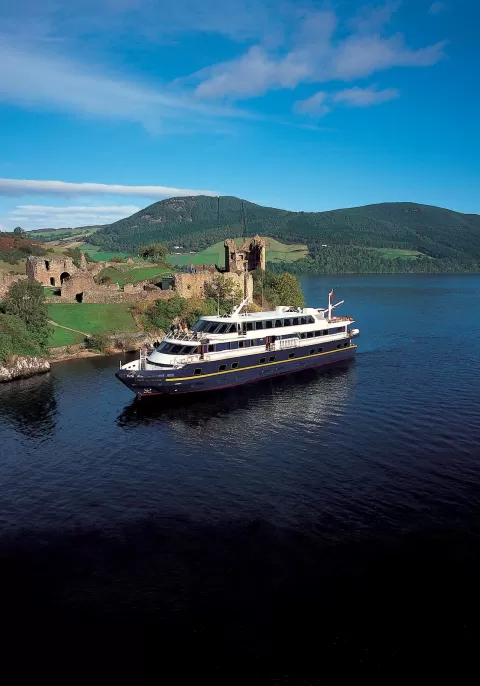
The Spirit of Enderby is perfect for expedition travel. It carries just 48 passengers in very comfortable accommodations with semi-private and private bath facilities. The cuisine is excellent and is prepared by top New Zealand and Australian chefs. The Spirit of Enderby measures 72 meters in length and is fully ice-strengthened. Powered by two 1,560 horse power diesel engines. It is capable of speeds of up to 12 knots.
The real focus and emphasis of every expedition aboard the Spirit of Enderby is getting you ashore as often as possible for as long as possible with maximum safety and comfort. Expeditions are accompanied by some of the most experienced naturalists and guides, who have devoted a lifetime to field research in the areas that you visit. The ship is crewed by a very enthusiastic and most experienced Russian Capitan and crew.
Life onboard Spirit of Enderby
The Spirit of Enderby was designed and built as a Research Vessel and still undertakes some research work when not involved with passenger cruises. Ship amenities and services include:
The Bar: ‘Globe’
Situated on the Middle deck aft (400 level cabins), enjoy the range of beverages available (beers, wines, soft drinks and spirits). Opening hours are variable, depending on the activities of the day onboard (e.g. lectures, landings). Opening hours are indicated on daily program.
Dining Room: ‘Ice Culture’
Australian and New Zealand chefs will delight you with international cuisine, prepared with the freshest products available. The chefs onboard can prepare food according to your special dietary needs (providing this information in advance of departure date, specified on the booking form). The Spirit of Enderby regrets to inform that Kosher, Halal and Vegan meals are NOT available onboard.
Expedition Equipment:
Carried on the Spirit of Enderby is a fleet of RIB’s, (rigid inflatable boats) sometimes referred to as zodiacs. These extremely safe and stable craft will land you at some of the most amazing places. Also, specially designed and built Hovercraft give you unprecedented capability in Antarctica, allowing you to land in places that are inaccessible to other ships.
Library:
A well stocked library is located on the Middle Deck. Guests are welcome to use it at any time. The Library carries card and board games and is equipped with electricity outlets to facilitate the use of laptops, video cameras and digital cameras.
Lecture Room:
This room has seating for all the passengers to attend lectures and films screened during the voyage. It is well equipped for Power Point presentations, slide shows, video films and similar. It is located below the Lower Deck.
Medical Service:
The Spirit of Enderby carries a Medical Adviser and a well-equipped medical clinic situated on the Middle Deck. The medical adviser is available 24 hours a day.
Communications:
The Spirit of Enderby is equipped with the Iridium satellite phone for phone calls and for receiving and sending emails.
Accommodations aboard the Spirit of Enderby
Heritage Suite
Large lounge area, separate bedroom with double bed, single bed in the lounge, writing desk, wardrobe, drawers, and fridge. There is a private bathroom with shower, toilet and washbasin. Large forward and side facing windows with great views.
Mini Suite
A small bedroom with a 3/4 bed and a single bed in the lounge, wardrobe, drawers, a desk and a private bathroom with shower. toilet and washbasin. This suite has windows.
Superior Plus
Cabins have two lower berths, wardrobe, drawers, a desk and a private bathroom with shower, toilet and washbasin. These cabins have windows.
Superior
Cabins have one bunk (an upper and lower – two), wardrobe, drawers, a desk, a private bathroom with shower, toilet and washbasin. These cabins have windows.
Main Deck
Cabins have two lower berths, wardrobe, drawers, a desk, washbasin. The nearby showers and toilets are shared with other Main deck cabins.
Main Deck Triple
This cabin has one bunk (one upper and one lower) and one lower berth, wardrobe, drawers, a desk and washbasin. The nearby showers and toilets are shared with other Main deck cabins.
The History of Spirit of Enderby
The name Spirit of Enderby honors the work and the vision of the Enderby Brothers of London. The Enderby Captains were at the forefront of Antarctic exploration for almost 40 years in the early 1800’s. It also celebrates Enderby Island, arguably the greatest Sub-antarctic Island in the world.
| Cabins | |
|---|---|
![]() | Heritage Suite Upper Deck, large lounge area, separate bedroom with matrimonial bed, private bath facilities and panoramic windows |
| Mini Suite Upper deck, small bedroom with a 3/4 bed and a single bed in the lounge, private bath facilities and windows | |
![]() | Superior Plus Upper and Middle Decks, two lower berth accommodations with private bath facilities and window |
| Superior Middle Deck, upper and lower berth accommodations, private bath facilities and window | |
![]() | Main deck Main Deck, two lower berth accommodations with shared bath facilities. |
![]() | Main Deck Triple Main Deck, triple accommodations with shared bath facilities. |