
Have questions? We're here.
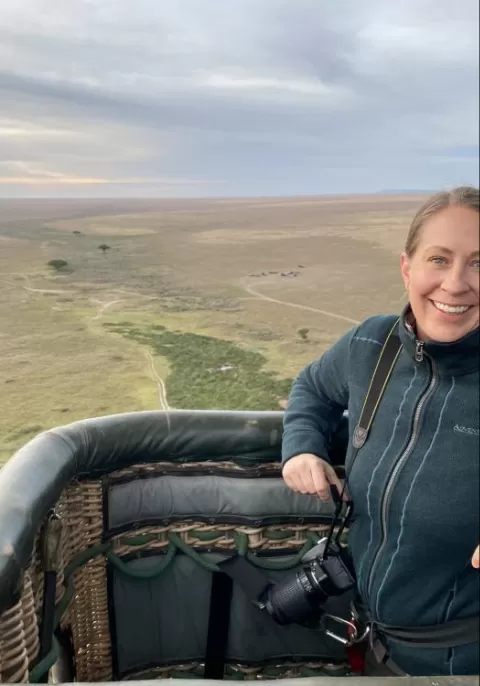
We are travelers with a passion for sharing the world. Discover the authentic character of your chosen destination with our tailored approach. By attentively listening to your travel goals, we curate an itinerary that matches your unique style and preferences. Our team is well-versed in travel, from Africa to the polar regions; we not only visit these places, but some of us have even lived there. With over 111 years of combined travel experience on more than 650 trips worldwide (and counting!), our knowledgeable team ensures an extraordinary and personalized adventure awaits you.
1999: Company Founder and CEO Brian Morgan set out to share his passion for travel by offering three guided trips to Peru and Ecuador with a paper pamphlet. By the end of the year, he had expanded to the Galapagos Islands.
2001: Bolivia, Costa Rica, and Belize scheduled group tours are added to the list of options and a website is created. The company receives its first New York Times mention.
2005: Adventure Life becomes a founding member of the Rainforest Alliance's newly launched Tour Operators Sustainability Projects (TOPS). This was designed to help tourism businesses in Latin America adopt sustainability best practices.
2006: By this time, the company had expanded to offer Argentina, Chile, Guatemala, Panama, and Antarctica. Worldwide Expedition Cruises are launched as a second website alvoyages.com, which is later merged with the main website.
Adventure Life launches a donation-match program to benefit grassroots grants in the Galapagos Islands through IGTOA, the International Galapagos Tour Operators Association. Funds collected assist habitat preservation and wildlife restoration efforts locally in the islands. Adventure Life continues its funding and involvement in IGTOA efforts, sitting on the Board for years to come and donating over $240,000 towards conservation efforts in the islands.
2009: Founder Brian Morgan is featured on the cover of Inc. Magazine, and the company earns its first of many awards for "Best Places to Work" by Outside Magazine.
2010: The company takes a major shift away from guided group tours and toward tailor-made, customizable tours with its rebranding to 'Inspired. Authentic. You. Travel Made Your Way.' Over the next few years, more destinations would be added, including Asia, Africa, Europe, Mexico, Nicaragua, the Arctic, and other regions.
Adventure Life launches a microgrants program, sponsoring projects on the ground that contribute to habitat restoration, local community building efforts, and conservation efforts. See past sponsored projects here. The program is retired after 2019 due to the COVID pandemic.
2011: Adventure Life's founder, Brian Morgan, receives the company's first inclusion on the Travel + Leisure A-List.
2016: A complete website redesign is launched, and a new robust search tool is created that allows travelers to filter and sort trip options to find their perfect match.
2018: Adventure Life launches its own proprietary quoting and travel services management platform, which can combine various packages, rates, and currencies from travel options around the world into one seamless trip itinerary builder for the traveler. Adventure Life receives additional Travel + Leisure A List Agent awards for two specialists on staff.
2019: Adventure Life records its largest year pre-COVID, sending 6,503 travelers around the globe on adventures.
2020: COVID causes the company to shrink down to core staff only. The company devotes all its energies to finding adequate solutions for affected booked travelers in light of the travel pause. Adventure Life shifts to become a fully remote company, hiring qualified Trip Planners from all over the world.
2021: After 13 years of working in operations, Sales, Marketing, and as a manager at Adventure Life, Monika Sundem takes over as CEO for Brian Morgan.
2022: Adventure Life sets its sights on expanding to more destinations by expanding Product Development efforts.
2023: Adventure Life records this as its first full recovery year post-COVID, sending 6,833 travelers on adventures around the globe. Conde Nast Top Specialist Awards are received by three Trip Planners this year, the first of many to come.
Adventure Life joins the ATCF, Adventure Travel Conservation Fund, instead of reopening its own grants program. This organization, comprised of many adventure travel companies, is committed to funding microgrant projects through local efforts and partners.
Adventure Life adds new land itineraries in the following destinations this year: Malawi, Mozambique, Croatia, Greece, Italy, Nepal, Turkey and Jordan. Unique polar land tour packages in Northern Canada are offered this year.
2024: Adventure Life continues to expand current destination offerings and designs new land trips and packages in New Zealand, Tahiti, Greenland, Egypt, Indonesia, Dominican Republic, Kenya, France and Alaska. Antarctica land-based programs are first offered this year.
2025: Adventure Life launches new tour options in Japan, Morocco, Albania, the Maldives, France, the Philippines, Madagascar, Namibia, and British Columbia. New self-drive land trips in Iceland are added this year.
2026: Adventure Life receives awards for two new Conde Nast Top Specialists, bringing their total to six awardees.
Coming 2026: We are expanding land tour options in Australia, the UK, Scandinavia, and on Svalbard and possibly Mongolia. Our team of avid explorers is always researching ways to deliver exceptional experiences. Where can we help you go next?









Our team is waiting and ready to talk with you about your next adventure. So go ahead and book an appointment with one of our specialized trip planners.
Let's Chat
We're not tied to any one operator, so you get honest, personalized recommendations—not a sales pitch. Our deep expertise helps you make smarter decisions and get more value from your trip.
Get direct access to Trip Planning team - no endless phone trees, no AI answering services. Just real humans helping humans.
Secure your 5% Past Traveler Rewards on your next trip, applicable across a variety of operators, brands, and worldwide destinations.









No cost, no commitment. Talk with our experts about your dream trip.
Share your travel style—we match you with the right itinerary or create one just for you.
Lock in knowing every detail is handled and you’re fully supported.
Enjoy a seamless journey—and unlock 5% off your next adventure.