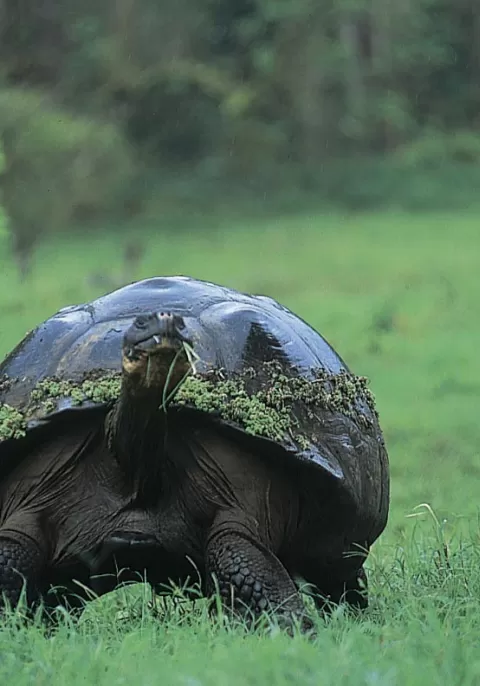
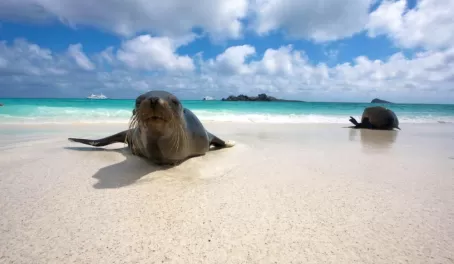
The Galapagos Islands have evolved unique species of fauna and flora found nowhere else on earth. In 1835, young Charles Darwin visited the islands, and what he learned helped inspire his theory of natural selection. In 1978, the Galapagos Islands were designated a UNESCO World Heritage site, signifying their "outstanding value to humanity." Today, they are a living laboratory of evolution and one of the world's premier ecotourism destinations. They are indeed a priceless world heritage. Like other isolated island groups, however, the Galapagos Islands face serious challenges for the long-term survival of their marine and terrestrial ecosystems. Some of these challenges are summarized below, as well as ideas for how visitors can make a difference.
Introduced Species
From pirates and whalers to modern visitors, humans have introduced plants and animals from the outside world. Goats, for example, were introduced in the 1850s and immediately began to take food from tortoises and iguanas. On the island of Isabela, there are more than 200,000 goats, which are extremely adaptable and hard to exterminate. The Park now uses helicopters to locate them. Other invasive species cause similar damage: cats kill young iguanas and bird chicks; dogs eat turtle eggs and hunt adult iguanas; pigs destroy bird nests; donkeys devour vegetation; rats consume giant tortoise eggs. Insects and invasive plants are equally threatening.
Because these species are interconnected—cats eat rats, dogs kill cats, pigs disturb vegetation that hides other species—removing one at a time is not practical. Instead, the islands require integrated, well-designed programs. Eradicating introduced species and preventing new arrivals is a never-ending and enormously costly struggle, but it remains a critical part of conservation.
Galapagos Residents and Migration from Mainland Ecuador
Humans themselves are an introduced and invasive species, and the islands have seen dramatic population growth in recent years. Settlers from mainland Ecuador have moved to the islands in search of better opportunities. This population pressure causes serious problems for conservation. With only three percent of the islands set aside for human settlement, there is little room for people and agriculture. Fishing is one of the few livelihoods available, which sometimes leads to conflict between local fishermen and the National Park authorities.
Despite restrictions on new immigration, the population continues to grow. Ultimately, the people of the Galapagos will be the best stewards of their natural heritage. Those who live in the Galapagos Islands must share in the benefits of Galapagos ecotourism, which provides sustainable employment opportunities. Access to housing, education, health facilities, and conservation-related jobs is vital for the islands’ future.
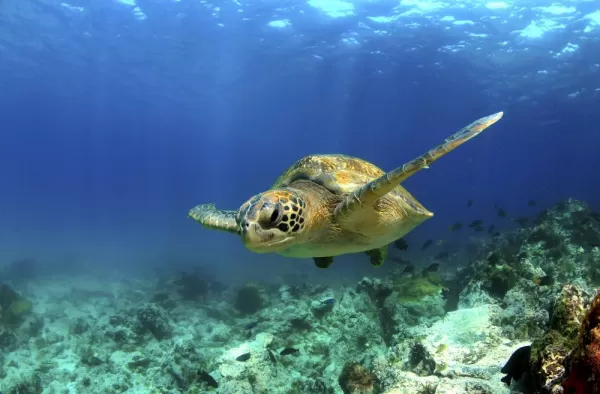
Green sea turtle swimming
Fishing in the Galapagos
Illegal industrial fishing and overfishing by locals threaten the marine ecosystem. Sea cucumbers and lobsters have been harvested at dangerous levels, far exceeding limits recommended by scientists. International fishing fleets routinely enter the marine reserve illegally, targeting sharks for their fins. Of particular concern is longline fishing, a method that uses hundreds of baited hooks on a single line. This practice often results in large amounts of bycatch, unintentionally capturing seabirds, turtles, and other marine wildlife.
In response, hundreds of scientists have called for stronger protections, warning that the Galapagos Marine Reserve is at risk of collapse if longline fishing is allowed to expand. The situation highlights the urgent need for strict regulation and the global importance of ecotourism in the Galapagos Islands as a sustainable alternative to exploitative practices.
Irresponsible Tourism vs. Ecotourism
Ecotourism Galapagos Islands initiatives have brought great economic benefits to Ecuador and remain the only practical way of supporting the Galapagos National Park. The low-impact tourism model developed here has become a leading example for conservation worldwide. Yet, when tourism is not managed responsibly, it creates challenges: contamination from boat engines, oil spills, overuse of sites, increased demand on freshwater, and the introduction of new species from the mainland.
To preserve the delicate ecosystems, tourism must remain at sustainable levels. This means limiting visitor numbers, restricting certain types of development, and carefully monitoring tourist impacts. Well-managed Galapagos ecotourism ensures that the islands benefit economically while safeguarding the fragile environment.
Governmental Support
The Government of Ecuador has played a critical role in protecting the Galapagos Islands and should be commended for its efforts. However, lapses in financial support, law enforcement, and planning have occurred. A landmark achievement, the Special Law for the Galapagos, was created through collaboration between governmental agencies and conservation organizations. Yet, its implementation and enforcement remain ongoing challenges that require vigilance and resources.
Make a Difference When You Travel
Adventure Life continually seeks ways to support conservation in the Galapagos. By deciding to visit, travelers become part of the solution. Tourism dollars encourage local communities to pursue sustainable employment while sending a powerful message to the Ecuadorian government that preservation matters to people worldwide.
Upon returning home, travelers can extend their impact by sharing their experiences, raising awareness, and supporting conservation programs. Organizations such as the International Galapagos Tour Operators Association (IGTOA) provide avenues for visitors to contribute to research and community initiatives through programs like the Galapagos Traveler Funding Program.
Through responsible ecotourism in the Galapagos Islands, travelers help ensure that these remarkable islands—and the unique wildlife they support—continue to inspire future generations.