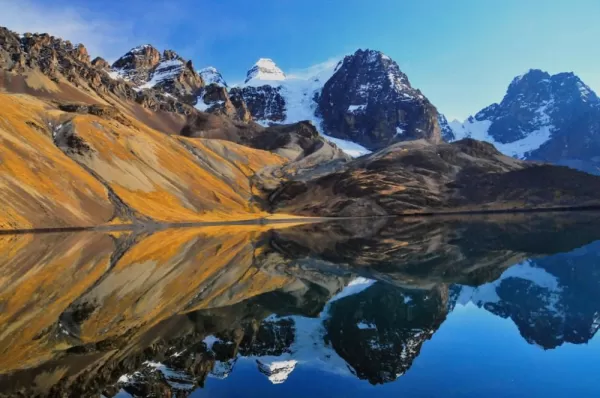
Gorgeous reflections on the Bolivia trek (Kassandra Magruder)
The only predictable thing about Bolivia weather is that it can change quickly, because Bolivia has very different landscapes. From high mountains to tropical rainforest, the climate can feel completely different depending on where you are. Which is why, many travelers are surprised that it’s cooler than they expected, especially in high-altitude cities.
Even the warm Amazon is not safe from sudden cold fronts. A weather pattern called the surazo can bring chilly winds up from southern Argentina, dropping temperatures unexpectedly.
Bolivia’s Two Main Seasons
Bolivia generally has:
Dry season: May to October
Wet season: November to April
But here’s the important part: the Bolivia weather varies a lot by region.
Bolivia Weather by Region (La Paz, Sucre, Potosi, Uyuni)
The Andean highlands follow the dry season pattern more clearly.
Dry Season (May–October)
Little rainfall
Bright, clear skies
Most popular time to visit
Pleasant daytime temperatures in cities like La Paz and Sucre
Cool to freezing nights, especially at higher elevations
In places like Uyuni andPotosi, it can feel cold even during the day. At night, temperatures often drop below freezing.
What to Pack
Light fleece or windbreaker for daytime
Warm jacket for evenings
Layers (very important)
Hat and gloves for higher elevations
Even if the sun feels warm in the afternoon, nights can be cold.
Weather in the Amazon Region
The Amazon is completely different. Here, you can expect:
Hot temperatures year-round
High humidity
Frequent rain
Average daytime temperatures: 30–32°C (85–90°F)
Average night temperatures: Around 20°C (68°F)
Why You Need to Be Prepared
Bolivia can give you:
Freezing mountain nights
Sunny highland afternoons
Hot and humid rainforest days
Sudden cold winds
Ready to plan your Bolivia trip? Contact one of our trip planners today and let’s create a trip that matches the weather, your interests, and your travel style.
Bolivia’s weather varies by region, but the country generally has two seasons: a dry season (May to October) and a rainy season (November to April). The Andes and Altiplano are cooler, especially at night, while the valleys are mild and the Amazon region stays warm and humid most of the year.
How cold does it get in Bolivia at night?
It can get very cold at night, especially in high-altitude areas like La Paz and the Altiplano. Temperatures can drop close to freezing during the dry season, even after warm, sunny days. In lower regions like the Amazon, nights stay warm and humid. If you’re visiting the mountains or salt flats, pack warm layers.
Erin C.
Bolivia
Chat Bolivia with a specialist
Our team is waiting and ready to talk with you about your next adventure.
So go ahead and book an appointment with one of our specialized trip planners.
What a gift to experience Bolivia's Cordillera Real in such a guided and supported way. From the buzz of La Paz to the staggering heights of Huayna Potosi, we were well taken care of. With our guide, we had access to remote and untouristed trails, and for most of the trek, it felt like we had the world to ourselves. Would definitely recommend this to big mountain lovers who are prepared for some serious altitude and startling beauty.
Cynthia
1 year ago
Amazing follow-through by Eric!!! Quick to response to all my questions and concerns. Made me feel this coming journey is safe at the same time exciting! Looking forward to this new adventure with (yes, Adventure Life!) Eric you are definitely an asset to the company and thank you 🙏
COSIO/MARIATHERESA DELAPENA
1 year ago
I had to reschedule my trip due to a running injury, and Ghezzel and Claudia worked with me.
Katie Dahlman
1 year ago
Claudia Corona was very helpful and professional. She answered all my many questions in a very timely manner and really worked with me to taylor-make my trip. Very good experience.