Have questions? We're here.
| Species | Islands Best Viewed | Class | Characteristics |
|---|---|---|---|
| Galapagos Rice Rat | Santa Fe | Endemic | Small brown rat with bat-like ears. Live in holes, under rocks and in Opuntia cacti. |
| Black or Ship Rat | Widespread | Pest | An introduced species to the Galapagos that is a serious threat to the ecosystem. A dark brown/black rat. Tail is longer than the body. |
| Galapagos Bat | Santa Cruz, San Cristobal | Endemic | A close relative of the Red Bat in South America. Roosts in dense shrubs and mangroves during the day. |
| Hoary Bat | Santa Cruz, San Cristobal | Resident | Has rust colored fur, cream colored throat and a very distinctive call. Also widespread in North America |
| Species | Islands Best Viewed | Class | Characteristics |
|---|---|---|---|
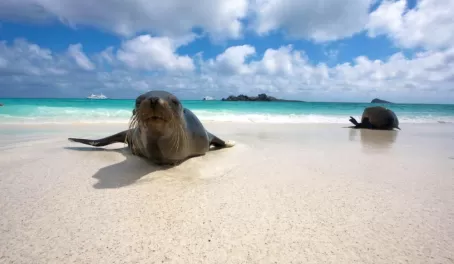
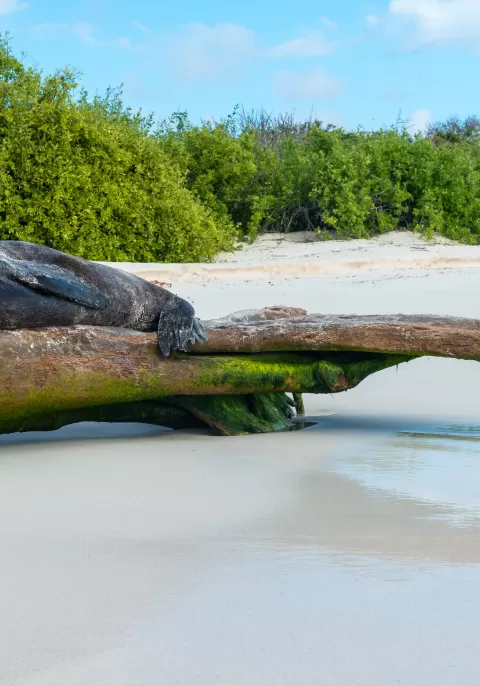
| Galapagos Sea Lion | Widespread - coasts | Resident | Largest animal found on the Islands. Male is much larger than female. Pups are very curious and commonly swim with humans. |
| Galapagos Fur Seal | Widespread - rocky coasts | Endemic | Smaller than sea lions with a short snout and bear-like head. Prefer shady spots on rocky cliffs where deep water is easily accessible. |
| Bryde's Whale | Surrounding waters | Visitor | Is known to approach boats and is the most likely seen variety of baleen whale. |
| Minke Whale | Surrounding waters | Visitor | Has distinct white patches on the flippers. Also approaches ships, but is less common than the Bryde. Begins blowing underwater - full spout is only seen when it breaches. |
| Humpback Whale | Surrounding waters | Visitor | White underbelly, with a distinctive knobby head and humped back, and very long flippers. |
| Sperm Whale | Surrounding waters | Visitor | Very large square head. Body is dark gray and often scarred - reminders of deep sea battles with giant squids. Can dive a mile into the depths of the ocean. |
| Shortfin Pilot Whale | Surrounding waters | Possible Resident | Often seen in groups of 30-40, and in the company of dolphins. All black with a rounded head that is easily seen when it breathes. |
| Orca | Surrounding waters | Possible Resident | A frequently viewed toothed whale. Primarily black with distinctive white marks on the belly and near the eyes. Very tall dorsal fin. |
| Bottle-nosed Dolphin | Surrounding waters | Possible Resident | The most commonly viewed dolphin in the islands. Enjoys riding the waves near the bows of ships. Generally travel in groups of 20 to 30. |
| Common Dolphin | Surrounding waters | Visitor | Travels in large groups of several hundred dolphins. Smaller than the bottle-nosed with elaborate coloring of dark and light grays. |

By submitting your email address, you are agreeing to opt in to marketing communications. We hold your information private and do not share it with third parties.


Our team is waiting and ready to talk with you about your next adventure. So go ahead and book an appointment with one of our specialized trip planners.
Let's Chat