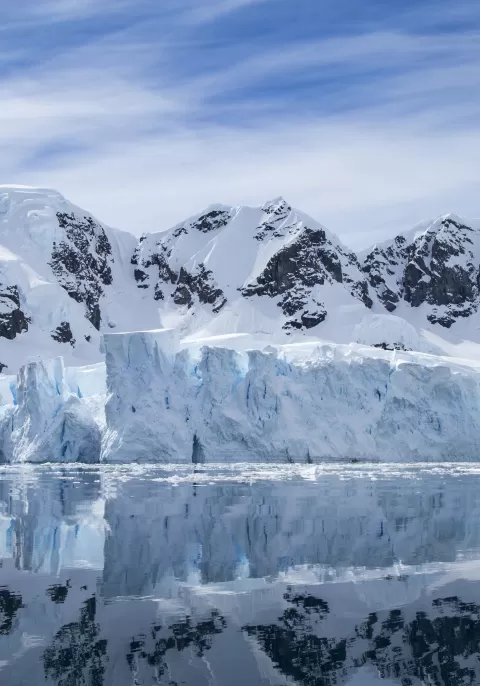
No travelers visit Antarctica during the winter when polar ice blocks ship traffic, and temperatures plunge into the negative degrees, even along the relatively warmer coasts. Most vessels offer tours from November to March.
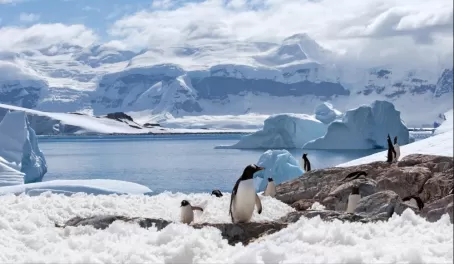
November: The month of November (late Austral spring and early Austral summer) undoubtedly offers the most adventurous time to visit the Peninsula. This is the time to see Antarctica at its most undisturbed form. As the season goes on, the landing areas become impacted and muddy. Some operators tend to discourage November voyages as temperatures tend to be colder, and polar ice is still breaking u,p so access to some areas may be limited. However, the cold temperatures also offer the most impressive ice sculptures, pristine snow, and breathtaking scenery. Wildlife is not as plentiful as later in the season, but it is a good time to see the penguins mating. There are fascinating courtship displays in the penguin rookeries, and travelers can see the penguins at work building their nests.
December to Early February: December and January have the most sunlight (up to 20 hours a day), penguins begin hatching, and vessels are typically fully booked many months in advance. Wildlife, especially penguin chicks, is most plentiful during this time, typically.
Mid-February and March: Late summer, February, and early March is the best times to spot whales, though you are taking the risk that other wildlife may already be gone out to sea. Cruises tend to be less crowded so often there is less waiting time for Zodiacs and station tours. This time of year you are also likely to have better access to areas further south as polar ice melts.
Many vessels have different rates for the same itinerary at different times of the year. Travelers are most likely to fine good deals on cruises at the very beginning or end of the season, but wildlife and access to the continent itself may also be more limited during these times.
Orcas! (Susan King)
2. How do I decide what boat to choose?
If you have specific departure dates in mind, these may guide your decision, as availability for Antarctica cruises can be quite limited. If not, then you will want to consider the following factors, among others:
Size of the vessel - Some travelers prefer the intimacy of small group travel that often means more time with the guide, more efficient embarkation/ disembarkation, and a cozier feel on board. Boats with fewer travelers (50 or less) also tend to offer more adventure options such as scuba diving, kayaking, and camping. Other travelers prefer the relative spaciousness (cabins still tend to be small on most boats!) and added facilities (Jacuzzi, gym, pool, etc) of the larger boats. Often, though not always, the larger boats tend to have more luxury amenities and also be more expensive for similar itineraries.
Itinerary - Many of the yachts offer a similar range of itineraries. However, some offer more diversity than others. If you have a special interest such as visiting South Georgia, crossing the circle, or traveling to the Falklands, let our trip coordinator know.
Cost - The cost of Antarctica voyages varies tremendously. If you are working within a specific budget, let our trip coordinators know so that we can match you with the very best cruise. Size of cabins, length of itinerary, facilities on the boat, etc. can all impact the cost. Once we know your priorities, we can help you find the best option!
Special interest - Some vessels offer special cruises for divers, kayakers, climbers, campers, photographers, etc. If you have a special interest, please let us know.
3. Do I need a converter/ adapter for the electricity?
Each ship has its own type of electrical outlets, depending upon the country where it was built. Many of the ships are originally from Russia and use 220 volt, 50 cycle electricity with two round prongs. Ask your Operations Coordinator for details on the vessel you are taking.
The Akademik Ioffe! (Kassandra Magruder)
4. What are the fitness/ health requirements?
Although you do not need to be in excellent fitness to join an Antarctica cruise, you do need to be in overall good health. These remote areas do not have access to modern medical facilities. You should not join an Antarctica cruise if you have a life-threatening condition or one that requires extensive medical attention. That said the trip does not need to be physically demanding. You may opt out of the shore excursions and choose instead to view the wildlife and landscape from the deck. On shore, most vessels offer at least one easy walk that allows participants to experience the destination without going far from the landing site.
5. What are the typical demographics of other passengers on board?
Travelers come from around the world, though most speak English fluently. They may range in age from children to seniors, with most travelers aged 30s-60s. Some vessels do not permit children under age 12 and families should not expect many children on any of the departures.
6. Are these trips suitable for kids?
It depends. Some vessels have minimum age requirements ranging from 6 to 12. Other vessels leave it up to the parents to decide whether or not the cruise would be appropriate. The dramatic landscapes and unique wildlife can be fascinating for children. However, the long voyages at sea can become tiresome for even the most hearty child traveler. It is unlikely that there will be other children onboard for your kids to play with so be sure to bring plenty of entertainment options along - books, arts and crafts projects, etc. You may also want to consider upgrading to a larger room or suite to give kids more room to spread out. Since there is no access to medical facilities, children with chronic conditions such as severe asthma, diabetes, etc are not advised to visit.
7. Are these trips a good choice for solo travelers?
Absolutely! Most vessels have special single rates or can arrange a shared room at no additional cost. The majority of Antarctica visitors still travel as couples or families so these trips can be a bit lonely for some solo travelers. However, the relatively small groups and long voyages on board allow travelers to easily meet others with shared interests. Solo travelers should also take a look at our exclusive Exploring Antarctica (Wayne Ng)
8. Do tour rates include international flights?
Tour rates do not include international flights unless indicated. We find that it is usually less expensive for travelers to book these separately and this also allows you the flexibility to choose the schedule and routing that is most convenient for you. You are welcome to book these on your own, or we can certainly help you arrange these flights with an airfare consolidator who specializes in South America flights.
9. Do tour rates include internal flights and/or hotel before or after the cruise?
Sometimes. The itinerary page for each vessel lists any flights/ extra nights of hotel that are included in the package.
10. How do I get to the vessel from the hotel/ airport when I arrive?
The airport-hotel transfers are best done with local taxis. Ushuaia is a small town and travelers will have written addresses and hotel names. The fare depends on the distance. The same is the case from the hotel to the port. Just tell your hotel that you need a ride to the port, and they will arrange a local taxi. Some boats will include the hotel/pier transfers.
11. How much should I budget for tips?
Tips are not required on the Antarctica cruises, but they are customary. Tipping amounts vary widely, but recommended tips generally depend on the cruise and length of the trip.
12. Are there any discounts available?
Yes. Many vessels offer group discounts, special triple cabin rates, and/ or Early Booking Discounts. Ask your trip coordinator for details. Previous Adventure Life travelers are also eligible for our 5% Alumni Discounts.
13. How far in advance should I book?
We recommend that you book your Antarctica cruise with as much notice as possible to give you the best selection of travel dates, cabin types, etc. Many departures fill up a year or more in advance. We can occasionally accommodate last minute travelers as well, so give us a call and we will do our best!
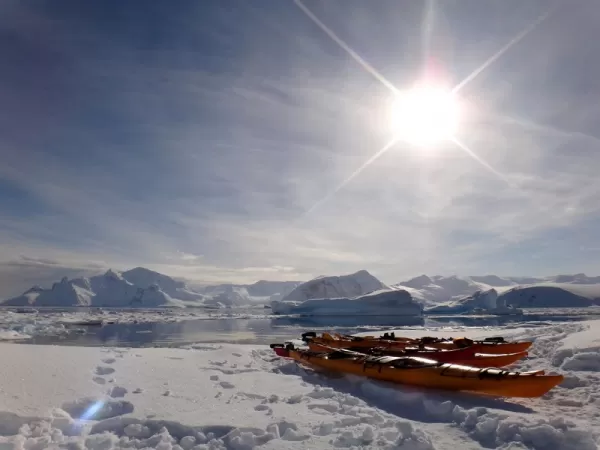
Kayaking in Antarctica (Kassandra Magruder)
14. Is diving available?
Some vessels offer optional diving for experienced divers only. The rich marine life of Antarctica is incredibly diverse: sea slugs, sea cucumbers, fish and marine mammals are abundant. You will need to be a certified to PADI or NAUI Advanced Open Water diver (or equivalent). You must also have dry suit diving experience. Certificates will need to be shown onboard. The Dive Instructors will evaluate your experience and if, for any reason, it is determined that you do not have the appropriate experience for polar waters then you will not be permitted to participate in the dives. There is NO decompression chamber in Antarctica so following safety protocols is essential.
15. What equipment will I need for diving?
Most boats do not have personal equipment available so you will need to bring a waterproof dry suit, mask, fins and snorkel, dry gloves or thick neoprene 3-finger gloves, BCD, pressure gauge, dive torch, dept gauge, watch, and compass. Ask your trip coordinator for boat specific recommendations.
16. What other adventure activities are available?
Many vessels offer optional kayaking, climbing, or even a night of camping on the Antarctic Peninsula. If you have a special adventure interest, please ask your trip coordinator for recommended departures/ vessels.
17. How accurate are the itineraries listed?
The itineraries listed on-line are provided for general information only. Weather (heat, wind, ice) will play a large part in the precise locations of landings and Zodiac excursions. It is not uncommon to discover new landing places that have not been visited before, adding an extra element of surprise. The Captain has the final decision on the itinerary and flexibility is essential for travelers.
18. How many landings will we have each day?
The exact number of landings is largely weather dependent. However, most vessels try to do two landings each day once you reach the Antarctic Peninsula or island group.
19. What is there to do on board?
Each vessel will have a daily schedule of lectures, films, etc that are available that day. On many vessels, the bridge is a popular place for travelers to gather to watch the ship negotiate among polar ice and spot wildlife. Most ships also offer a lounge area, library, and other public gathering places. Exact facilities vary from vessel to vessel. Some of the luxury boats also include a Jacuzzi, pool, gym, etc. Just let us know if you have a specific interest!
20. What are the meals like on board?
Food is plentiful, but typically not gourmet quality on any vessel. Most vessels offer 3-4 course menus that can accommodate vegetarians or other special dietary preferences if notified in advance. The best menus are generally found on the luxury expedition ships. Fresh fruits/ vegetables are likely to be exhausted on any of the longer itineraries. If you have a favorite snack, bring it along.
21. Is there a doctor on board?
Yes. Most Antarctic vessels provide a doctor on board. Access to advanced medical care is extremely limited. Travelers with pre-existing medical conditions should speak with their personal physicians before booking.
22. Are there restrictions onshore?
Yes. For most landings, food and drink is prohibited onshore. Travelers will also be asked to observe a pack it in, pack it out travel philosophy. Every effort is made to minimize our impact on the areas we visit to protect the wildlife and environment.
23. What should I pack?
After you book your tour, you will receive a detailed packing list with your departure packet. In general you will want plenty of layers, comfortable hiking shoes, sunscreen and sunglasses (the ozone layer over Antarctica has a large hole), and a windproof parka. Some vessels include a free parka on your cruise. Bring a plentiful supply of film, personal toiletries and medications, and entertainment options (books, cards) for long journeys. This is one of the few places on the planet where you won't be able to stop and pick up something at the local market if you forget it at home!
24. How rough are the seas? Should I bring medication to prevent seasickness?
Although some cruises experience relatively calm seas throughout, it is best to go prepared for rough seas at least some time during your cruise. Bring seasickness medication just in case.
25. What immunizations are required?
No immunizations are required for entry into Antarctica. Travelers extending their stay in Chile or Argentina should check the immunization/ health recommendations for these respective areas.
26. Do I need a visa/passport?
While there are no visa requirements for visiting Antarctica, there may be visa requirements for certain nationalities traveling through other countries en route to Antarctica (Chile and Argentina are the most popular). All visitors must have a valid passport and proof of onward passage to enter Chile or Argentina. Your passport should be valid for at least six months after your departure date.
Certain travelers entering Chile must pay a reciprocity fee. The cost of this fee varies depending upon your nationality. There is no longer a reciprocity fee required of US citizens visiting Chile. This fee is valid for multiple entries during the validity of the traveler's passport and is due upon arrival to the Santiago international airport.
There is no longer an Argentina reciprocity fee charged to citizens from the United States, Canada, or Australia. For all other nationalities, please consult with your nearest embassy or consulate for information on entry requirements. Entry requirements change with surprising frequency. It is each traveler's responsibility to check with the consulate for the most up-to-date visa information.
27. Is travel insurance recommended?
Absolutely!!! We work with a travel insurance company that provides reasonably priced insurance for trip cancellation, medical expenses, medical evacuation, lost bags, etc. Check out more details at www.adventure-life.com/insurance
By submitting your email address, you are agreeing to opt in to marketing communications. We hold your information private and do not share it with third parties.
Kassandra M.
Antarctica
Chat Antarctica with a specialist
Our team is waiting and ready to talk with you about your next adventure.
So go ahead and book an appointment with one of our specialized trip planners.
Clara took my information and was able to offer my original request and with no hesitation made adjustments to finalize the trip
Carl Holley
1 year ago
Answered our questions
Michael Schneck
1 year ago
Efficient and thorough.
IRWIN G
2 years ago
Adventure Life has a great team. They were very knowledgeable and responsive and helped us choose the right Arctic Expedition for us. We would recommend them.
Kbear
2 years ago
Friendly representative, ease of booking and bountiful information along the way.