USA Today Logo New York Times Logo Outside Magazine Logo Conde Nast Traveler Logo National Geographic Traveler

Classic South Georgia

« All MV Ushuaia cruise options
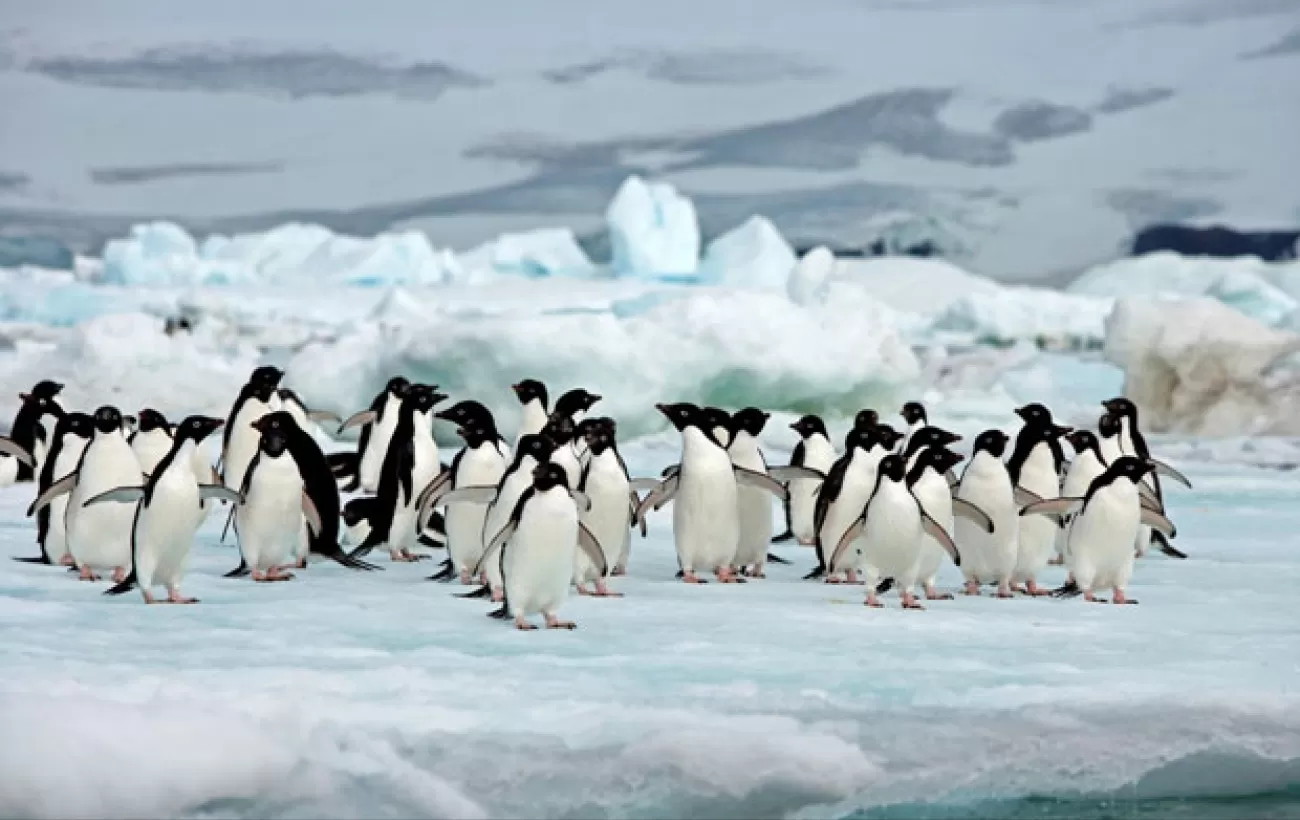
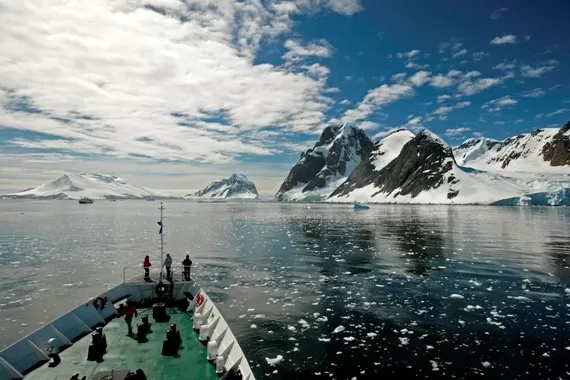
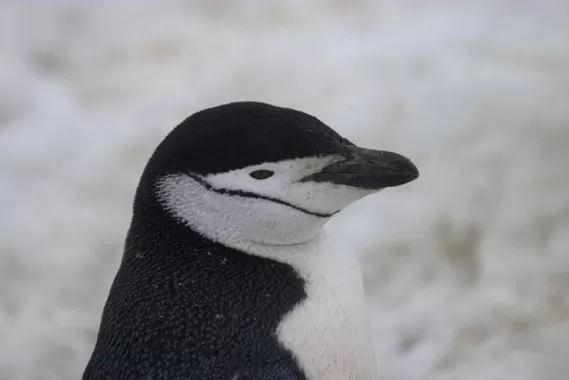
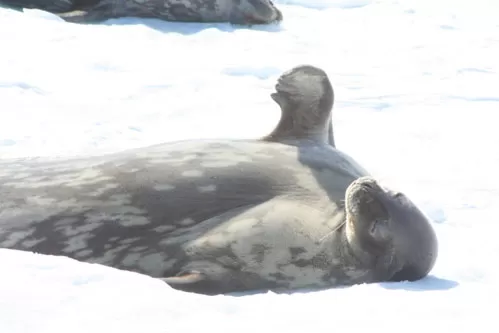
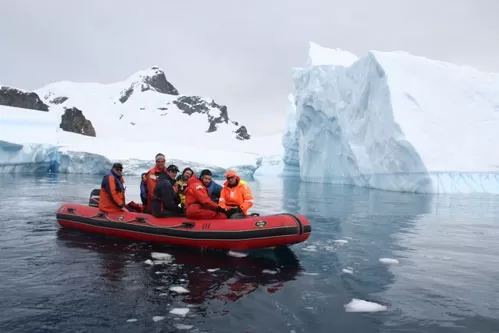
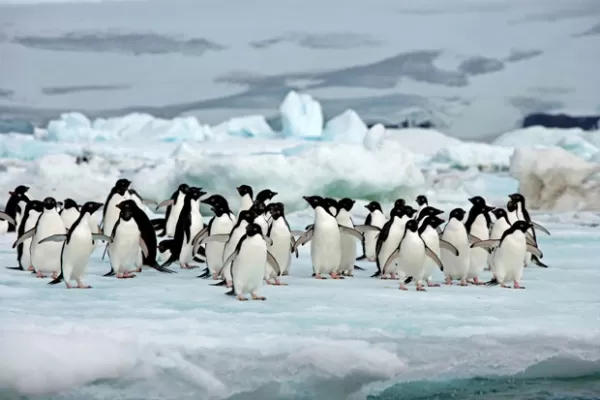
Antarctic waters|^|Claudio SuterElephant Seal|^|Andres ComachoPenguin Colony|^|Claudio SuterZodiac Excursion|^|M. MeyerPenguin|^|Vncent Rivalle
Dates Deck + Cabin Type
Cat C Cat B Cat A Superior Suite
Nov 20 '12
$9,480 $12,290 $15,350 $16,250 $17,080
- Fuel surcharge may vary: no surcharge if the price of the barrel of crude oil is $100 or lower.
- Rates are quoted in U.S. dollars and represent costs per person, double occupancy. Request the Twin Share Program where you are matched with a cabin mate of the same gender. Even if a cabin mate is not found for you, no single supplement will be charged.
-Twin cabins (except suites) are available for single occupancy at 1.5 times the share rate. Suites may be reserved at 2 times the share rate. A third berth (sofa bed) in a few suites maybe occupied at 50% of the published twin share rate.
Deposit & Payment

Request More Information

First & Last Name
Email
Phone
What's your Adventure?

Day 1 Depart from Ushuaia

Embark the USHUAIA in the afternoon and meet your
expedition and lecture staff. After you have settled into your cabins we sail along the famous Beagle Channel on our way to the rugged and beautiful Falkland Islands (Islas Malvinas).

Day 2 At Sea

En route to the Falkland archipelago our expedition team looks forward to greet you during their first introductory lectures and invites you to join them on the outer decks for amazing birdwatching.

Day 3 West Point Island / Carcass Island - Western Falkland Islands (Malvinas)

In the morning we hope to reach West Point Island to visit a spectacular colony of Black-browed Albatross, which nest together with the very energetic Rockhopper Penguins at the cliffside of the island. A gentle slope leads up to the site and on our way we can enjoy the beautiful views of the countryside.

The afternoon might take us to Carcass Island. A dense plantation of tussac grass covers much of the lower ground below Jason Hill to the east of the island. It is this availability of abundant cover, and the absence of cats, rats and mice throughout the Island´s history, which made for a spectacularly large population of small birds. Gentoo and Magellanic Penguins breed here, Striated Caracaras are seen almost everywhere, Cobb´s Wrens are also abundant on the island. Peale´s and Commerson´s dolphins come often close to the shoreline and with a little luck, Rob McGill, the owner of this delightful island might have the kettle on and invite us for an islander´s tea with scones and cake.

Day 4 Stanley - Eastern Falkland Islands (Malvinas)

The quaint little town was established in the early 1840s, but over the last two decades of the 20th century there has been remarkable progress in the islands, which has caused the town to double its size with the latest growth concentrated towards the eastern end of the harbor, stretching its boundary even further. You do not have to go out of the town to enjoy the outstanding wildlife the Islands have to offer. Southern Giant Petrels often fly close to the shoreline, keeping up with local residents driving along the front road. The endemic Falkland Steamer Ducks abound on the shore while Kelp Gulls can often be seen flying up in the air,
dropping mussels on to the roads, so that the shells crack allowing them to eat the contents. Smaller birds to be seen include the Falkland Thrush, the Red-breasted long-tailed Meadowlark and Black-chinned Siskin.

In the afternoon we will leave Stanley and sail East en route to South Georgia. The island group of South Georgia is widely regarded as one of the most beautiful and inspiring places on earth with more wildlife than virtually anywhere else on the planet. Though extremely isolated, South Georgia has amazing scenery ranging from high mountains and mighty glaciers to deep fjords and low-lying grassland.

Days 5-7 At Sea

En route to South Georgia. The open bridge policy on the USHUAIA allows you to join our officers on the bridge and learn about navigation, watch for whales, and enjoy the view. These waters are also home to countless seabirds, which often ride the currents created in the wake of the ship. On board, our extensive lecture program will begin today. Our expert naturalists share their knowledge of the wildlife and unique ecosystems we will encounter throughout our voyage. Our lecture team will accompany you through every step of the journey, offering insight and ready knowledge on this amazing region. With favorable conditions you will experience your first encounter with King Penguins on the afternoon of
November 26.

Days 8-11 South Georgia

Our exact itinerary will be determined by local conditions on sea and land. The following destinations are among those we hope to explore:

GRYTVIKEN
Once a thriving whaling station, the remains of Grytviken stand as a reminder of an era of exploitation that thankfully grows more distant by the day. Grytviken has an excellent natural history museum but also offers possibilities for hikes in the surrounding mountains. A short zodiac ride around King Edward cove brings us to the grave of Sir Ernest Shackleton. Join the USHUAIA’s staff for a graveside toast honoring this remarkable explorer and venerated mariner.

SALISBURY PLAIN
Sometimes called the “Serengeti of the South”, Salisbury Plain is a wildlife site without parallel. Several large glaciers provide a dramatic backdrop for the tens of thousands of King Penguins that breed in the tussock grass of this remarkable ecosystem. The wide beach makes for excellent walking as we visit the colonies, where we are literally surrounded and delightfully outnumbered by throngs of curious, gentle penguins. In November the beaches are a haven for fur seals, which will give birth at this time. Elephant seal weeners will also join into the general concert and some big elephant seal bulls are lazing a bit further away from the waterfront. Southern Giant Petrels and the occasional wandering Gentoo Penguin will also make for great photo opportunities. Prepare for an awe-inspiring experience.

GOLD HARBOUR
Gold Harbour offers some of the most spectacular scenery of the voyage with its alpine landscape and hanging glaciers. We hope to make a landing on the beach, where we will enjoy naturalist-led nature walks and hikes. The surrounding cliffs of Gold Harbour provide habitat for nesting Light-mantled Sooty Albatrosses, which can often be seen
soaring above the beach. A large colony of King Penguins offers a fantastic opportunity to photograph these dramatic birds, and the sandy beach is a favorite haul-out spot for massive Southern elephant seals. There is also a small colony of Gentoo Penguins nesting in the shelter of the tussock grass.

COOPER BAY
We hope to explore two sites at Cooper Bay. The first could be a visit to the main beach, where King Penguins breed in amongst dense tussock grass. We may have the opportunity to make a landing here, or take part in a zodiac tour around rugged bays of volcanic origin to a wonderful Macaroni Penguin colony perched on the rocky cliffs. Southern elephant seals can often be seen lounging among the large clumps of tussock grass in the area as well.

ST. ANDREWS BAY
The surf beaten coastline at St. Andrews Bay runs north-south in a 1.86 miles (3 km) long uninterrupted sweep of fine dark sand, covered in penguins and seals and bounded in the interior by the Cook, Buxton and Heaney Glaciers. The bay hosts the biggest colony of King Penguins on South Georgia. In November the beach is also carpeted with fur and elephant seals. Such a large assemblage of wildlife attracts an entourage of persistent and voracious scavengers. Sheathbills dart in and around the penguin colony, Cape Petrels nest in a small number on the cliffs north of St. Andrews Bay. Leopard seals patrol the rocks at this end of the beach too, hunting penguins along the edge of kelp beds. A few White-chinned Petrels and Light- mantled Sooty Albatross nest on the tussock slopes. Brown Skuas and Antarctic Terns breed on the outwash plain and scree slopes at the north end of the beach, defending their nest sites with their characteristic noise and vigor.

STROMNESS
Stromness is situated in the central harbor of Stromness Bay. It was here that Shackleton finished his epic voyage, walking into the now derelict whaling station of Stromness which stands at the southern end of a long grey sand beach at the head of the harbor. This is an excellent site for reindeer. Behind the station, Shackleton Valley extends inland and westward up to a pass leading over to Fortuna Bay. A picturesque waterfall situated at the head of the valley lies on the route and flows into the large swiftly running river that joins the sea at the northern end of the beach. Mosses, rushes and other mire and bog plants cloak the valley floor in a patchwork of soft, wet swampy areas. There is a small Gentoo Penguin colony located among the hills between the whaling station and the river in breathtaking scenery.

DRYGALSKI FJORD
The 9 miles (14 km) long Drygalski Fjord offers spectacular scenery. Although Drygalski Fjord's glaciers have retreated significantly in recent decades, they remain one of the most striking features of this coastline, particularly the Risting and Jenkins Glaciers. This is also one of the principal breeding areas for Snow Petrels in South Georgia. The birds nest on the cliff buttresses and mountain ridges along the shores and mix with Cape Petrels on the lower ledges. Both species can be seen flying along the cliffs as they come and go from their nest sites. Blue-eyed Shags, Wilson's Storm Petrels and Antarctic Terns are also a common sight as they feed in the plankton-rich upwellings in front of the glaciers.

Day 12 At Sea

For one and a half days we will cross the waters towards the South Orkney Islands offering excellent opportunities to be out on deck or to catch up on your reading and reflect on the amazing experience in South Georgia of the past few days. Lectures and activities will be offered throughout the passage.

Day 13 South Orkney Islands – Orcadas Station

The archipelago comprises four main islands: Coronation, Laurie, Powell and Signy Island. We will try to approach the second largest one, Laurie Island. The seas around these glaciated islands are often ice-covered and surrounded by huge tabular icebergs. But we might get lucky and step ashore to visit the Argentine Station Orcadas, where seals haul out on the beach and we might get a tour through the facilities of the station.
Day 14 At Sea

For another day we will be at sea heading further South towards the Weddell Sea, always on a lookout for wildlife and beautiful icebergs.
Days 15-17 Weddell Sea, Antarctic Peninsula & South Shetland Islands

Our exact itinerary will be determined by local conditions on sea and land. The following destinations are among those we hope to explore:

KING GEORGE ISLAND, SOUTH SHETLAND ISLANDS
King George Island is the largest of the South Shetland Islands. Russia, China, Korea, Poland, Brazil, Uruguay, and Argentina have all built research stations here. We may have an opportunity to visit one of these stations, where researchers welcome us with descriptions of their projects and a firsthand look at life in the Antarctic. King George Island features colonies of nesting Adélie and Chinstrap Penguins, as well as Kelp Gulls, Blue-eyed Cormorants, Antarctic Terns and Southern Giant Petrels. Southern elephant seals can often be found in muddy wallows close to the shoreline. The island is also known for its flora, including luxuriant moss beds, two species of grass which grows in sheltered areas and beautiful brightly-colored orange and green lichens found on coastal rocks. Invertebrates can also be found in tide pools along the shore.

DECEPTION ISLAND, SOUTH SHETLAND ISLANDS
Long ago, volcanic pressure on Deception Island resulted in a tremendous eruption that caused the island’s peak to explode. The resulting caldera flooded with seawater, creating the unique landmass we may visit today. Our Captain will expertly pilot the ship through a narrow gateway in the icy cliffs of the island, taking the USHUAIA into the caldera itself. Hundreds of thousands of Chinstrap Penguins inhabit the outer volcanic slopes of the island at Baily Head, along with nesting Pintado Petrels and Antarctic Terns. Brave souls may don their bathing suits for the unusual opportunity of a swim in the Antarctic, since the waters around Deception Island are usually geo-thermally heated!

ANTARCTIC SOUND
The passage to the east side of the Antarctic Peninsula traverses Antarctic Sound, which is 30 miles (48 km) long and 7-12 miles (11-19 km) wide and runs northwest-to-southeast. This is where huge tabular icebergs roam. All-white, Black-pupiled, and Blackbilled Snow Petrels are likely to be coursing over the scenery, often joined by
Pintado Petrels and early in the spring, by Antarctic Petrels streaming south to nesting territories on slopes fringing the Weddell Sea.

BROWN BLUFF
The spectacular rust-colored promontory on the Tabarin Peninsula, Brown Bluff, is located south of Hope Bay. On its long beach more than 20,000
Adélie penguins and a smaller group of Gentoo Penguins have found their home. There is also a potpourri of Kelp Gulls, Snow Petrels, and Pintado
Petrels swirling above. Esperanza Station – Hope Bay At the northern tip of the Antarctic Peninsula the mighty ice-tongue of the Depot glacier has cut a broad valley into the continent. In the meantime the glacier has retreated and left a large bay, Hope Bay. It is here, where the biggest station of the entire Antarctic Peninsula is situated, the Argentine Station Esperanza. The friendly base personal might give us a tour of their installations, including the little church and the school they maintain open for their children.

ASTROLABE ISLAND
Chinstrap Penguins, Antarctic Fulmars, and Antarctic Brown Skuas are confirmed breeders on the island lying in the Bransfield Strait. Blue-eyed Shags nest on offshore islands. Wilson´s Storm Petrels may be seen. Weddell and leopard seals haul out regularly.

Days 18-19 At Sea crossing the Drake Passage, northbound

We leave Antarctica the evening before and head north across the Drake Passage. Named after the renowned explorer, Sir Francis Drake, who sailed these waters in 1578, the Drake Passage also marks the Antarctic Convergence, a biological barrier where cold polar water sinks beneath the warmer northern waters. This creates a great upwelling of nutrients, which sustains the biodiversity of this region. The Drake Passage also marks the northern limit of many Antarctic seabirds. As we sail across the passage, our lecturers will be out with you on deck to help in the identification of whales and an amazing variety of seabirds, including many albatrosses, which follow in our wake. Join our lecturers for some final lectures and take the chance to relax and reflect on the fascinating adventures of the past days on the way back to Ushuaia.

Day 20 Arrival in Ushuaia

We arrive at the port of Ushuaia in the early morning and disembark the USHUAIA after breakfast.

Itinerary Notes

FUEL SURCHARGE applies if price of crude oil barrel is $100 or higher.

Please note: The above itinerary is a guide only. Our exact route and program will vary to take best advantage of local weather and ice conditions and opportunities to view wildlife. Changes will be made by the Captain and/or Expedition Leader to facilitate the best results from the prevailing conditions. A daily program sheet will be issued on board. Flexibility is the key to success.

Deposit & Payment

Initial deposit is 40% trip cost, and most travelers will call our office and pay the deposit with a credit card. We accept Visa, Mastercard, AmEx, and Discover. Alternatively, you can send a check to our Missoula, Montana, office or register online at: https://www.adventure-life.com/forms/fourways.php

Final payment is due 100 days prior to departure.

Final payment by bank transfer, check or Visa, Mastercard, Discover, or Amex. Credit Card payments subject to 3% convenience fee and maximum $15,000 charge.

Booking last minute? No problem! Please contact one of our trip planners, and we can get you on your way if booking less than 100 days prior to departure.

Click here to see a copy of our Terms and Conditions.

Cancellation Policy

Days Prior to departure Fee
90 days or more $600 per person
0-89 days 100% trip cost

MV Ushuaia

Zodiac Excursion|^|M. MeyerDining Room|^|Niall FolleyLearn from the lecture series on your antarctic tourEnjoy refreshments in the LoungeRelax in comfort in the library|^|Andres Comacho
    Ship Highlights
  • Passengers : 84

The "Ushuaia" is a steel hulled, ice-strengthened vessel built originally for oceanographic research. She was recently converted to passenger voyages. Navigation and communication equipment has been newly upgraded and cabins were refurbished to provide comfortable accommodations for Antarctic passengers.

All cabins include ample storage space. Public areas feature a large dining room (one sitting), an observation lounge and bar, a conference room with modern multimedia equipment, a well-stocked library, a changing room and a small infirmary.

An expert captain, officers and crew are highly experienced in Antarctic navigation and have a great love of nature. A specialist team of international expedition leaders and lecturers, all extremely knowledgeable, are enthusiastic, helpful and dedicated to the protection of the environment. Chefs prepare excellent cuisine including many local specialties and the bar is well-stocked with carefully selected wines and spirits.

Cabins
Category C CabinCat C
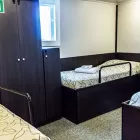
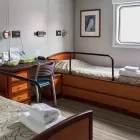
8 Twin inside cabins on D deck with semi-private facilities, upper/lower berths
Category B CabinCat B
14 Twin outside cabins: 12 cabins on E deck with portholes, semi-private facilities, upper/lower berths, and 2 cabins on deck G with portholes, private facilities, and upper/lower berths
Category A CabinCat A
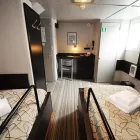
6 Twin outside cabins with windows on G deck, private facilities, 2 lower berths
Superior CabinsSuperior
(308 shown) 8 Twin outside cabins with windows on G deck, private facilities, 2 lower berths. Cabin 301 has 1 double and 1 single bed
Suite AccommodationsSuite
5 outside cabins with windows on G deck, private facilities, lounge, TV, DVD player & fridge. Suite 201: 2 double beds, Suite 202: 1 double bed & sofa bed, Suite 203: 2 lower single, Suite 204 & 207: 3 lower single beds

Request More Information

First & Last Name
Email
Phone
What's your Adventure?

Newsletter

Questions about a tour?
Contact us with your questions.

Technical Problem?
Contact the webmaster
for assistance.

Are you a Travel Agent?
Click here to Contact us.

Call Us
800-344-6118 (Toll-free)
406-541-2677 (Outside US)
406-541-2676 (Fax)

Adventure Life
1655 S 3rd St. W
Missoula, MT 59801