Sea of Okhotsk
« All Spirit of Enderby cruise options


- Day 1 Sakhalin Island
- Day 2 Depart and at sea
- Day 3 Tuleniy Island
- Day 4 Pil'tun Bay
- Day 5 Iona Island
- Day 6 Shanter Archipelago
- Day 7 Mal'minskie Islands & Fedora Bay
- Day 8 Okhotsk Town
- Day 9 Talan Island
- Day 10 Magadan
- Days 11-13 Shelekhova Bay & Cape Yuzhnyy
- Day 14 At Sea
- Day 15 Opala River
- Day 16 At Sea
- Day 17 Petropavlovsk - Kamchatskiy
| Dates | Deck + Cabin Type | |||||
| Heritage Suite | Mini Suite | Superior Plus | Superior | Main deck | Main Deck Triple | |
| Jun 7 '12 |
$11,000 | $10,100 | $9,600 | $9,100 | $8,500 | $7,500 |
| Landing fees: $500 | ||||||
- Single clients are matched with a sharer of the same sex in a twin-share cabin. Payment of a single supplement guarantees a single cabin. The single supplement is 1.8 times the price of the voyage with the exception of the suites which are double the single rate.
- Included in the cruise fare is a pre-departure hotel night, group dinner as well as breakfast the next day prior to embarkation.
Day 1 Sakhalin Island
Arrive on Sakhalin Island and spend the night at a hotel in the nearby town of Yuzhno-Sakhalinsk. Hotel vouchers will be sent to you prior to your departure and transfers from the airport to the hotel can also be arranged.
For those with time to explore, the nearby Gagarin Park, only a few minutes walk from your hotel offers some excellent birding. During the evening, members of the Expedition Team will be at the hotel to meet you and answer any questions.
Day 2 Depart and at sea
After breakfast a coach will transfer you to the Port of Korsakov (approximately 40 minute journey) where you will meet the rest of the Expedition Team and be welcomed on board the Spirit of Enderby. After departing there will be a number of introductions and briefings.
As you cruise southeast across the Sea of Okhotsk your first seabirds could well include Tufted Puffin, Ancient Murrelet, Pelagic Cormorant, Black-tailed Gull and Fork-tailed Storm-Petrel. You are also likely to see huge flocks of Short-tailed Shearwaters as almost the entire world population of this long-distance migrant moult in these waters. You also should start to encounter our first cetaceans of the voyage and these could include Dall’s Porpoise, Northern Minke Whale and Orca (Killer Whale).
Day 3 Tuleniy Island
A tiny island, just over 600m in length, off the coast of Sakhalin, that has become a home to thousands of Northern Fur Seals and Steller’s Sea Lions. It is one of the few islands in the North Pacific region where fur seals form big rookeries; thousands of animals are hauled out on the beach and females give birth to pups while males fight for territory and females. There is always a lot of activity on these rookeries - you can observe for hours and hours. The island is also home to numerous seabirds which nest on the cliffs around the coastline. Just a rock in the ocean, with no trees or fresh water, the island is a wildlife paradise with almost every bit of space occupied by animals and birds. It is a wildlife preserve and an important location for scientific research. You will witness a marvelous abundance of marine mammals and birds as you explore, and will spend some time observing the fur seals in the middle of their reproductive season.
Day 4 Pil'tun Bay
The northeast part of Sakhalin Island especially Pil’tun Bay is a regular feeding ground for Western Grey Whales. Critically endangered, with only about 120 animals left in the wild and many questions still unanswered about their ecology, they were believed to be extinct after heavy exploitation during the 19th and 20th centuries, but miraculously survived. Pil’tun Bay consistently holds the biggest congregation of whales during summer months: they come every year to forage in the productive waters off the shelf. This area has also become a place of collision between oil-drilling companies and conservation organizations, because a lot of seismic work is taking place off the shore of Pil’tun Bay.
Day 5 Iona Island
A small island in the vastness of the Sea of Okhotsk over 200km away from the mainland. Completely uninhabited with only an automatic weather station and a small hut of unknown origin, it is a crucial location for the endangered Steller’s Sea Lion population. There are only a few reproductive sites for the Steller’s Sea Lion in the region and Iona Island is one of them - it is covered with sea lions on almost every rock. Have a wonderful opportunity to observe these sea lions in huge congregations as they haul out on rocks, or swim around, driven by curiosity.
As well as mammals, the island is home to huge colonies of sea birds: auklets (including the attractive Whiskered Auklet), puffins, guillemots and gulls nest in their hundreds of thousands on the cliffs. The sky becomes dark with birds when they fly out to sea in search of food; it is a regional Natural Heritage site and for good reason. Cruise around the island and surrounding rocks, enjoying magnificent birding and watching numerous sea lions all around.
Day 6 Shanter Archipelago
This massive archipelago consists of 15 islands, of which there are four big ones, surrounded by numerous smaller rocks. It covers a vast area in the west of the Sea of Okhotsk and the climate is somewhat harsh. Sea ice gets stuck in the strait for a long time before it melts, so there are only a few months of ice-free sea and ice floes can be seen as late in the season as July. The islands are covered with larch and pine forests and present a wonderful habitat for about 200 bird species. The most spectacular, without doubt, is Steller’s Sea Eagle, the true king of Far East birding and on average the heaviest eagle species in the world. These amazing birds nest on the Shanter islands and look for them as you explore on hikes or zodiac cruises.
Numerous seabirds nest on the cliffs and offshore rocks; have a chance to see Horned and Tufted Puffins, murres, auklets and many Spectacled Guillemots. Further inland, Brown Bears are the biggest terrestrial animals, but many other creatures can also be found. There are rivers, lakes and spectacular waterfalls to explore, and it’s all uninhabited apart from the staff at weather stations.
Seals and whales also favour this area, there is Amur stock of Beluga Whales that migrate to the Archipelago and other regions during the spring/summer season. They form big pods and are easily spotted due to their shining white colour. As you zodiac cruise around the coastline have a fair chance of seeing these magnificent whales, sometimes called ‘sea canaries’ for their impressive underwater vocalizations. Killer Whales also roam these waters in search of prey and Bowhead Whales are occasionally seen in the area. Various seals live in this region too. Bearded, Spotted, Ringed and, the most sought-after the beautiful Ribbon Seals can be spotted, depending on the ice dynamics.
Day 7 Mal'minskie Islands & Fedora Bay
An incredible, wild area on the west coast of the Sea of Okhotsk. Small islands form part of the Dzhugdzhursky Nature Reserve, which is one of the wildest and least-studied reserves in Russia. It covers a huge territory of eight thousand hectares and consists of three parts, with a big marine area attached. The reserve epitomizes the harsh Siberian climate and breathtaking landscapes of the region.
The Mal’minskie islands are home to numerous seabirds; the biggest colony of Spectacled Guillemot is to be found here, along with kittiwakes, Parakeet Auklets, puffins and many other species. There is also a good chance of Steller’s Sea Eagle as you make excursions. On the mainland, taiga fauna is richly represented: Brown Bears roam free, as well as wolves, wolverines, Red Foxes, various species of weasel, Siberian Musk Deer and moose.
Of course there are also marine mammals to be spotted. Four species of seal live in the Sea of Okhotsk along with several whale species, amongst which are the local population of Bowhead Whales and (the most desirable sighting for keen whale-watchers) Northern Right Whales. These areas are very attractive with their wilderness and inaccessibility, little is widely known about the region and few people venture to set foot on the islands. Your activities will depend on the ice conditions, but there are endless opportunities to explore.
Day 8 Okhotsk Town
One of the earliest towns of the Russian Far East, the first settlement was established on this site by Russian Cossacks in 1647. After the famous explorer Vitus Bering visited it on the way to Kamchatka on his first expedition here, he proposed founding a navigation school for young sailors. Since then, and for almost a century, Okhotsk was an important port on the Far East coast, from which many expeditions departed. At the beginning of the 19th century, it fell into decline as nearby Petropavlovsk-Kamchatskiy became the more widely-used sea port, but during the Soviet period it revived with a thriving fish processing factory and the town regained its former status. However, as the Soviet Union collapsed, so did the industry in town. Now it is only a shadow of its former self and much smaller but it remains very typical of the tenacious and proud nature of Russian province towns - some houses still look unchanged from the 19th century. There is also a small museum of local history, culture and wildlife, which is tended with special care, as you only find in small, remote towns.
Day 9 Talan Island
A tiny island in the northern Sea of Okhotsk, it supports an unbelievable diversity of wildlife. Over 140 species of birds can be observed on the island, most of them migratory. However, there are 21 nesting species, and this little scrap of land has one of the biggest seabird colonies in the north of the Sea of Okhotsk. Over 1.8 million birds bring the cliffs alive and obscure the sky as they fly out to sea. Gulls, kittiwakes, Thick-billed Murres, Horned and Tufted Puffins, Crested, Whiskered and Parakeet Auklets, Ancient Murrelets and many other species form a bird-watcher’s paradise. Scientific research has been conducted here for many years, studying migratory birds as well as nesting species.
The island is also inhabited by Red Foxes and they are not as shy as in other places, which presents wonderful opportunities for photography. There are even some birds of prey that nest on the island: Steller’s Sea Eagles are resident and, interestingly, the eagle feeds primarily on seabirds. The island is an absolute birding marvel and a destination of great interest for anyone keen on wildlife.
Day 10 Magadan
As you visit the administrative centre of the Magadaskaya region, have a chance to learn about its tragic past and developing present. Founded in 1929, Magadan officially became a city only in 1939 and for many years was a hub for northeast Siberian gulags (or labour camps). Incredible numbers of prisoners passed through this city (over 800,000) as they were distributed to different camps in the region. Over 150,000 of them died. It was a tragic price to pay the ruling regime for the development of the region. When the enterprise collapsed, Magadan remained an industrial and cultural centre and even though many people left during the 1990s, development is progressing rapidly. There are several major universities, a few institutes (industrial as well as devoted to natural sciences) and several museums. Magadan is the true cultural capital of the region.
There is a moving monument to all those who suffered their sentence here during the Soviet era and the cathedral is the biggest in the Russian Far East and one of the highest in Russia. There is a lot to see and to learn here as you go on excursions and walk around exploring the city.
Days 11-13 Shelekhova Bay & Cape Yuzhnyy
The huge bay in the northern part of the Sea of Okhotsk is covered with ice for half of the year and is famous for its irregular and very high tides. The area is extremely productive. It is home to four true seal species (Bearded, Ringed, Ribbon and Largha) and one eared seal – Steller’s Sea Lion. There are also many whale species that can be seen in the area – Bowhead, Northern Right, Grey, Humpback and Fin. Depending on ice conditions, explore some parts of the bay and visit Yamskie Islands which are yet another wonder of the Russian Far East. Being even more impressive than all that was seen before, this bird colony is the biggest in the Sea of Okhotsk and one of the biggest in the whole North Pacific region - it holds over 10 million nesting birds! Enjoy the sight of murres, guillemots and auklets (including tremendous numbers of Least Auklets nesting), kittiwakes and gulls, as well as over a million Northern Fulmars.
Day 14 At Sea
Taking time to rest and enjoy shipboard life in the bar or library after such busy days, have the chance to learn more about the biology and history of the area and the icy Sea of Okhotsk through informal lectures with your experts.
Day 15 Opala River
Located to the south of the Kamchatka Peninsula, the Opala river offers amazing opportunities for wildlife sighting. Beginning on the slopes of Gorely volcano, it flows for about 160 km down to the Sea of Okhotsk. Many species of salmon swim upriver throughout the summer to spawn, which in turn attracts many predators like Wolverines, Steller’s Sea Eagles and, of course, the King of Kamchatka – the Brown Bear. Bears gather in huge congregations around the riverbanks and take advantage of this annual feast. This will be your best opportunity to observe bears and also enjoy magnificent eagles nesting on the banks of the river. It is also a wonderful example of varied river habitat, which we will explore in the Zodiacs. This true wilderness presents a great opportunity to appreciate the richness of the Kamchatka land and to take many memorable photographs.
Day 16 At Sea
Have a day at sea as you cruise across the Kamchatka Trench towards Avacha Bay and the city of Petropavlovsk-Kamchatskiy, where the expedition will finish tomorrow. The waters you are cruising through are renowned for cetaceans as this is the border between two major tectonic plates and there are deep canyons where these animals feed. Blue, Fin, Humpback, Sperm and Baird’s Beaked-Whales have all been seen here on previous expeditions, as have Dall’s Porpoise and Orca, so there is real potential to end the voyage with some great cetacean sightings. There will, of course, also be birds to watch and whilst you may not see any new species, this will be our last opportunity to see birds such as Tufted Puffin, Ancient Murrelet and Fork-tailed Storm-Petrel. End the voyage with a farewell dinner and expedition recap.
Day 17 Petropavlovsk - Kamchatskiy
During the night the Spirit of Enderby will enter Avacha Bay which is one of the greatest natural harbours in the world. You will disembark the ship mid-morning at Petropavlovsk-Kamchatskiy and there will be a complimentary coach transfer to either a hotel of your choice in the city or the airport.
Deposit & Payment
Initial deposit is 25% trip cost, and most travelers will call our office and pay the deposit with a credit card. We accept Visa, Mastercard, AmEx, and Discover. Alternatively, you can send a check to our Missoula, Montana, office or register online at: https://www.adventure-life.com/forms/fourways.php
Final payment is due 100 days prior to departure.
Final payment by bank transfer, check or Visa, Mastercard, Discover, or Amex. Credit Card payments subject to 3% convenience fee and maximum $15,000 charge.
Booking last minute? No problem! Please contact one of our trip planners, and we can get you on your way if booking less than 100 days prior to departure.
Click here to see a copy of our Terms and Conditions.
Cancellation Policy
| Days Prior to departure | Fee |
|---|---|
| 180 Days or more | $850 per person |
| 179-91 days | Deposit |
| 90 days or less | 100% trip cost |
Spirit of Enderby


- Ship Highlights
- Passengers : 48
- Ice Breaker Ship
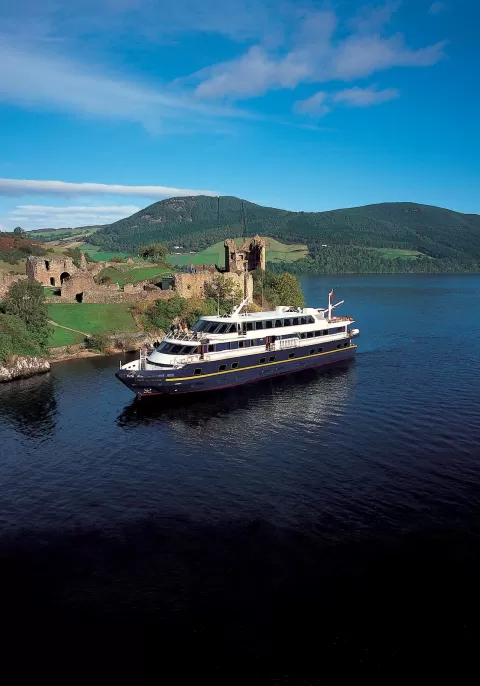
The Spirit of Enderby is perfect for expedition travel. It carries just 48 passengers in very comfortable accommodations with semi-private and private bath facilities. The cuisine is excellent and is prepared by top New Zealand and Australian chefs. The Spirit of Enderby measures 72 meters in length and is fully ice-strengthened. Powered by two 1,560 horse power diesel engines. It is capable of speeds of up to 12 knots.
The real focus and emphasis of every expedition aboard the Spirit of Enderby is getting you ashore as often as possible for as long as possible with maximum safety and comfort. Expeditions are accompanied by some of the most experienced naturalists and guides, who have devoted a lifetime to field research in the areas that you visit. The ship is crewed by a very enthusiastic and most experienced Russian Capitan and crew.
Life onboard Spirit of Enderby
The Spirit of Enderby was designed and built as a Research Vessel and still undertakes some research work when not involved with passenger cruises. Ship amenities and services include:
The Bar: ‘Globe’
Situated on the Middle deck aft (400 level cabins), enjoy the range of beverages available (beers, wines, soft drinks and spirits). Opening hours are variable, depending on the activities of the day onboard (e.g. lectures, landings). Opening hours are indicated on daily program.
Dining Room: ‘Ice Culture’
Australian and New Zealand chefs will delight you with international cuisine, prepared with the freshest products available. The chefs onboard can prepare food according to your special dietary needs (providing this information in advance of departure date, specified on the booking form). The Spirit of Enderby regrets to inform that Kosher, Halal and Vegan meals are NOT available onboard.
Expedition Equipment:
Carried on the Spirit of Enderby is a fleet of RIB’s, (rigid inflatable boats) sometimes referred to as zodiacs. These extremely safe and stable craft will land you at some of the most amazing places. Also, specially designed and built Hovercraft give you unprecedented capability in Antarctica, allowing you to land in places that are inaccessible to other ships.
Library:
A well stocked library is located on the Middle Deck. Guests are welcome to use it at any time. The Library carries card and board games and is equipped with electricity outlets to facilitate the use of laptops, video cameras and digital cameras.
Lecture Room:
This room has seating for all the passengers to attend lectures and films screened during the voyage. It is well equipped for Power Point presentations, slide shows, video films and similar. It is located below the Lower Deck.
Medical Service:
The Spirit of Enderby carries a Medical Adviser and a well-equipped medical clinic situated on the Middle Deck. The medical adviser is available 24 hours a day.
Communications:
The Spirit of Enderby is equipped with the Iridium satellite phone for phone calls and for receiving and sending emails.
Accommodations aboard the Spirit of Enderby
Heritage Suite
Large lounge area, separate bedroom with double bed, single bed in the lounge, writing desk, wardrobe, drawers, and fridge. There is a private bathroom with shower, toilet and washbasin. Large forward and side facing windows with great views.
Mini Suite
A small bedroom with a 3/4 bed and a single bed in the lounge, wardrobe, drawers, a desk and a private bathroom with shower. toilet and washbasin. This suite has windows.
Superior Plus
Cabins have two lower berths, wardrobe, drawers, a desk and a private bathroom with shower, toilet and washbasin. These cabins have windows.
Superior
Cabins have one bunk (an upper and lower – two), wardrobe, drawers, a desk, a private bathroom with shower, toilet and washbasin. These cabins have windows.
Main Deck
Cabins have two lower berths, wardrobe, drawers, a desk, washbasin. The nearby showers and toilets are shared with other Main deck cabins.
Main Deck Triple
This cabin has one bunk (one upper and one lower) and one lower berth, wardrobe, drawers, a desk and washbasin. The nearby showers and toilets are shared with other Main deck cabins.
The History of Spirit of Enderby
The name Spirit of Enderby honors the work and the vision of the Enderby Brothers of London. The Enderby Captains were at the forefront of Antarctic exploration for almost 40 years in the early 1800’s. It also celebrates Enderby Island, arguably the greatest Sub-antarctic Island in the world.
| Cabins | |
|---|---|
![]() | Heritage Suite Upper Deck, large lounge area, separate bedroom with matrimonial bed, private bath facilities and panoramic windows |
| Mini Suite Upper deck, small bedroom with a 3/4 bed and a single bed in the lounge, private bath facilities and windows | |
![]() | Superior Plus Upper and Middle Decks, two lower berth accommodations with private bath facilities and window |
| Superior Middle Deck, upper and lower berth accommodations, private bath facilities and window | |
![]() | Main deck Main Deck, two lower berth accommodations with shared bath facilities. |
![]() | Main Deck Triple Main Deck, triple accommodations with shared bath facilities. |