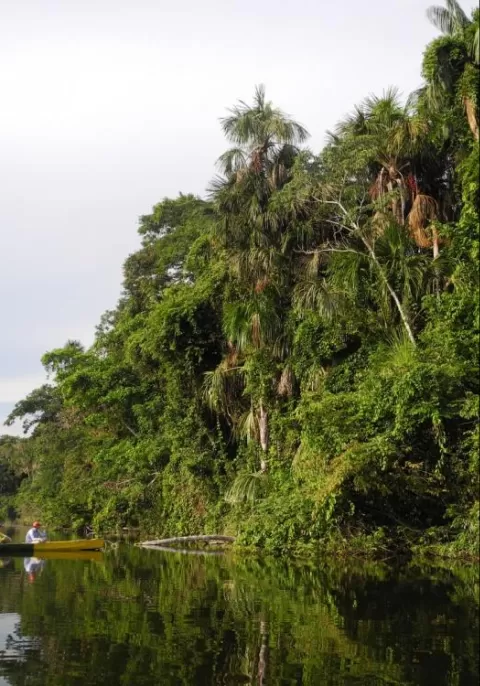
Welcome to Chalalán - the story of a dream come true; a dream that was born in the Bolivian Amazon, in the community of San José de Uchupiamonas. You are invited to share in the jungle heritage here at this Ecolodge built on the shores of the magnificent Chalalán Lagoon, surrounded by magic and beauty in the Madidi National Park. In Chalalán the jungle is your host, the lodge is your guide, all you need is to leave city life behind and get ready to have a wonderful experience in another world. Comfortable boats will take you up the rivers Beni and Tuíchi deep into an enchanted world. The Ecolodge was designed to blend in with its environment using old building techniques and environmentally-friendly local materials. Every little detail was paid attention to so that your adventure would be as comfortable as possible, making it a place to relax and enjoy the warm breeze, the sounds of nature and delicious home cooking. Located on-site is a maze of paths around the Ecolodge so that you can discover the MADIDI National Park. One of the richest protected areas of the planet, known by scientists as a "Biodiversity Hotspot", which is a priority for conservation weakened by the huge demand for development in the area. This tropical Andean hotspot has the highest biodiversity of plants endemic to the planet and is host to some 45,000 different plant species and over 1,000 tropical bird species whose songs will wake you up in the morning. Mission of the Ecolodge The indigenous community is committed to the integral development of ecotourism in the Madidi National Park, aiming their efforts at the sustainable use of natural resources (flora and fauna) in the Chalalán region by offering highly competitive ecotourism services that improve the living conditions of the people of San José de Uchupiamonas, by generating direct and indirect benefits, which will also guarantee the sustainability of the territory and the Quechua-Tacana culture for the wellbeing of future generations. The Ecolodge The CHALALÁN Ecolodge stands on the shore of the magnificent Chalalán Lagoon and combines elegance and comfort using local materials to respect the traditional building styles of the community, San José de Uchupiamonas. The design and distribution of the different rooms making up the Ecolodge were planned down to the very last detail, taking advantage of the knowledge of what the jungle provides. The walls are made from the Copa Palm (Iriartea Deltoidea) and covered with matting, the roofs are woven with asaí palm leaves (Geonoma Deversa) and the floors made of fine hardwood. These details make CHALALÁN Ecolodge one of the most luxurious places to stay in this part of the world. Accommodation in the Ecolodge Comfortable accommodations in traditional Tacana-style cabins can house up to 30 people. The cabins are surrounded by primary forest which resonates with birdsong and the cries of howler monkeys, especially at dawn and dusk, making Chalalán a place of incomparable beauty. The Ecolodge offers you three types of accommodations; 3 luxury cabins with double beds and private bathroom, 7 twin/triple rooms with private bathroom, and 3 twin rooms with shared bath. All are equipped with mosquito nets, bedside tables, wardrobes, comfy armchairs, verandas, balconies and hammocks to relax and read. Dining Options The restaurant service in Chalalán is of the very highest quality available combining local, national and international dishes. Meals are accompanied by the season's fruit juices all carefully prepared. The lodge has a professionally equipped kitchen in which to prepare meals for vegetarians and people with special dietary requirements, as well as a traditional clay oven used to prepare native dishes. There is a large Dining Room which seats up to 40 people either sitting alone or in groups. The dining room has a well-stocked bar where guests can relax with either an alcoholic beverage or a soft drink. Other Facilities Study Room The study room presents a themed exhibition of the local culture and nature. Enjoy interactive games and examine objects gathered from the forest and the community of San José de Uchupiamonas, and learn about the customs and way of life. This is an excellent place to read and research. Bathrooms Here in Chalalán the standards of hygiene in the bathrooms and shower areas are of utmost importance. All bathrooms (unless private) are unisex and cleaned whenever necessary without bothering guests. The bathrooms are either tiled or clad with stones for comfort and as another elegant detail. Activities In Chalalán guests are given the opportunity to plan activities according to their interests with a local guide. Each group contains a maximum of six people. GUIDED HIKES Local guides give expert interpretation as ecotourists traverse the varied forest paths around Chalalán. Each hike has a different theme in which to learn about medicinal plants, hardwood trees, observe the wildlife and experience primary forest. THEME WALKS At the Chalalán Ecolodge explore the maze of theme walks along over 30km of paths that have been meticulously designed to show off the forest, ecological processes, natural history, medicinal plants, hardwood trees, birds, mammals, amphibians, insects and a variety of fungi native to the tropical rainforest. FOREST INTERPRETATION The area around Chalalán is ideal for learning about the tropical rainforest. During a stay in Chalalán hike the different trails with a local guide who will teach you about the forest using his ancestral knowledge and incorporating scientific knowledge. BIRD WATCHING Chalalán is home to over 340 species of birds including parakeets, parrots, toucans, wild turkeys, woodpeckers, etc. Trained guides easily identify their calls and songs. WILDLIFE As you walk along the trails, especially those a little further from the Ecolodge, you will be able to see howler monkeys, spider monkeys, tapirs, deer, capybaras, frogs, lizards and maybe even a jaguar. CANOE TRIPS At dusk the birds and monkeys come down to the shores of Chalalán to drink and then go back into the canopy to look for insects. Once they have fed they gather together in groups to spend the night in the branches of the largest trees. NIGHT CANOE TRIPS While gently paddling along the shores of the Chalalán Lagoon you can see night birds, amphibians and the glowing eyes of the black alligators. NIGHT HIKES Equipped with a torch you can take a short hike at night to look for colorful frogs, mammals and insects that welcome the night with their unique chorus. SWIMMING After lunch take a dip in the lake or simply relax in a hammock reading or listening to the sounds of the forest. INSECT WATCHING The Madidi is a fabulous place to see a large variety of insects, which make up the diet of most of the birds around Chalalán. FUNGUS WATCHING There are many varieties of edible and poisonous fungi of all shapes, sizes and colors to be found in the Madidi tropical rainforest. A NIGHT OF TRADITIONS On the last evening of your stay in Chalalán you can try the traditional “dunucuavi” dinner and then enjoy a night of traditional music, dancing and storytelling. A guide will be with you to explain the traditions and customs of the people from San José de Uchupiamonas.