Have questions? We're here.
| Species | Islands Best Viewed | Class | Characteristics |
|---|---|---|---|
| Galapagos Sulfur Butterfly | Main Islands | Endemic Sub-species | Smaller butterfly with bright yellow wings. |
| Monarch Butterfly | Widespread | Resident | Largest butterfly found in the Galapagos. Became residents of the islands after the introduction of the plant, milkweed. |
| Galapagos Blue Butterfly | Widespread | Endemic | Very small, light blue butterfly. Best found after a rain. |
| Large Tailed Skipper | Main Islands | Endemic | Small brown butterfly with wings reaching up to 2 inches. Found on all main islands, but are uncommon. |
| Green Hawkmoth | Widespread | Endemic Sub-species | Large bright green moth. Commonly found flying around ships' lights at night. |
| Indefatigable Hawkmoth | Santa Cruz | Endemic | Small light brown moth found only in the highlands of Santa Cruz. |
| Fringed Noctuid | Widespread | Resident | Largest moth on the islands with a wingspan reaching up to 6 inches. Most commonly seen at night near lights. |
| Longhorn Ant | Widespread | Introduced | Small ant, distinguished by its very long antennae. |
| Galapagos Greeneyed Horsefly | Widespread | Endemic | Largest fly in the islands. Common pests to tortoises, sea turtles, iguanas and humans. They bite! |
| Galapagos Carpenter Bee | Widespread - save northern islands | Endemic | The only bee in the islands. |
| Yellow Paper Wasp | Widespread - coastal | Introduced | Distinguished by striped black and yellow body. First recorded in islands in 1988, is now widespread. |
| Spotless Ladybug | Main islands | Endemic | Bright red, spotless ladybug. Important little insect that helps control the population of alphids and scale bugs. |
| Giant Long-horn Beetle | Widespread | Resident | Largest beetle in the islands with a pair of large and obvious pinches - nearly a 1/2 inch long. |
| Cockroaches | Widespread | Endemic and Introduced | Out of the eighteen species of cockroaches on the islands, 5 of these are endemic. Are particularly fond of ships. |
| Galapagos Field Cricket | Isabela, Santiago, San Cristobal, Espanola, Floreana, Santa Cruz | Endemic | A large, dark cricket with a sharp, pointed back end. 8 different species of field crickets are found in the Galapagos. |
| Large Painted Locus | Widespread - save Espanola | Endemic | Colorful and large grasshopper. Most commonly found after a heavy rain. |
| Spot-winged Glider | Widespread | Resident | Dragonfly with a bright red abdomen. Large - roughly 3.5 inches. Commonly found hunting over lagoons and ponds. |
| Squeak Bug | Widespread | Resident | Can "squeak" when picked up or threatened. Has very long antennae and back legs. |
| Galapagos Black Widow | Widespread | Endemic | Solid, very dark spider with a blubous abdomen. Lives under logs or in rock crevices. Best to avoid. |
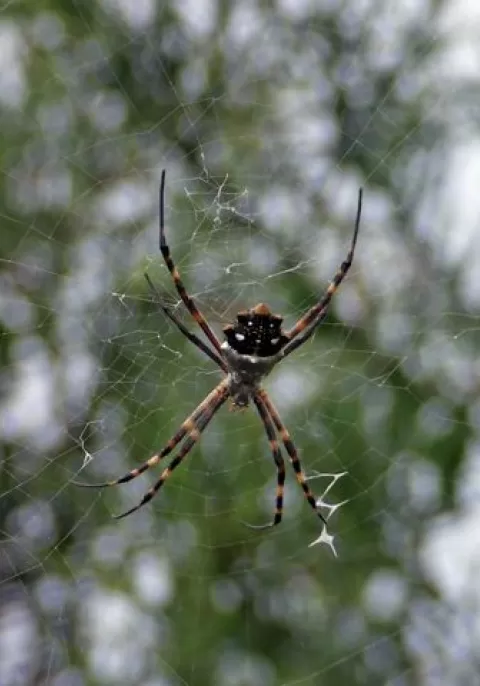
| Zig-zag Spider | Main islands | Endemic | Spider commonly sits in the center of its webs. Has a tendency to build its webs across trails and paths. |
| Galapagos Centipede | Widespread | Endemic | Large centipede, reaching nearly a foot long, with a powerful set of poisonous fangs. Eats other invertebrates, lizards and small birds. |
| Galapagos Scorpion | Widespread - Coastal and Arid Regions | Endemic Sub-species | This small, light brown scorpion is a favorite food of lava lizards. |
| Galapagos flightless grasshopper | Widespread | Endemic | Small grasshopper, without wings. Their brown coloring make them very hard to find. |
| Star Spider | Widespread - coastal regions | Resident | Easily distinguished by its yellow and black shell-like abdomen. Look for this spider in mangroves in coastal regions. |

By submitting your email address, you are agreeing to opt in to marketing communications. We hold your information private and do not share it with third parties.


Our team is waiting and ready to talk with you about your next adventure. So go ahead and book an appointment with one of our specialized trip planners.
Let's Chat