Have questions? We're here.
| Species | Islands Best Viewed | Class | Characteristics | |
|---|---|---|---|---|
| Galapagos Giant Tortoise | Isabela, Santiago, Pinzon, Santa Cruz, San Cristobal, Espanola | Endemic |
|
|
| Galapagos Green Turtle | Widespread | Endemic sub-species | Only turtle to breed on the islands. Nesting is between the months of Dec. and June. Is best seen in shallow lagoons around the islands. | |
| Hawksbill Turtle | Widespread | Visitor | Smaller than the Galapagos Green Turtle, with a much browner shell. Not common in the Galapagos, but seen on a regular basis. | |
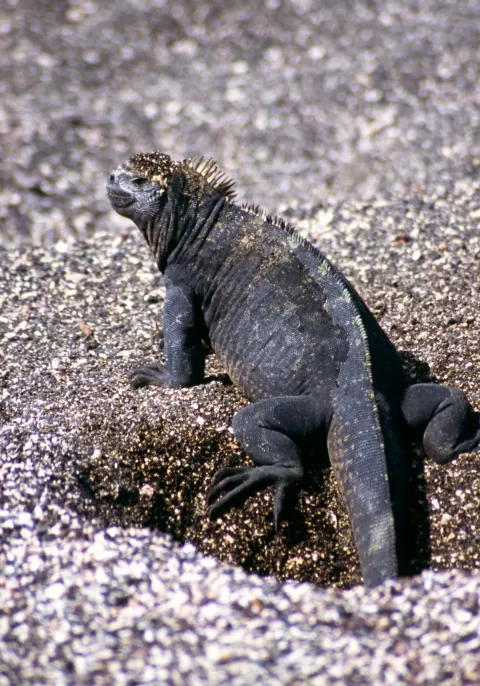
| Marine Iguana | Fernandina, Santa Cruz, Isabela, San Cristobal, Santiago, Pinta, Espanola, Genovesa | Endemic | World's only sea-going lizard. Can stay submerged for up to 10 mins., but are usually found sunning on lava rocks. 7 sub-species of marine iguanas, varying in size and color. | |
| Land Iguana | South Plaza, Santa Cruz, North Seymour | Endemic | Yellowish in color. Average lifespan of 60 years, but population has been jeapordized by introduced cats, dogs and rats. | |
| Santa Fe Land Iguana | Santa Fe | Endemic | Similar to land iguana, but males are a bright yellow. Only found on Santa Fe island. | |
| Lava Lizard | All major islands - save Genovesa | Endemic | 7 sub-speices of lava lizards. They are smaller than iguanas and larger than geckos. Males are larger (up to a foot long) than females and have more patterns and rougher skin. | |
| Galapagos Leaf-toed Gecko | Isabela, Santa Cruz, Fernandina, Santiago | Endemic | Pale with dark brown flecks. Nocturnal and eats mainly insects. | |
| San Cristobal Leaf-toed Gecko | San Cristobal | Endemic | Darker and smaller than the Galapagos leaf-toed. Found only an San Cristobal. | |
| Hood Racer - Snake | Espanola | Endemic | Non-poisonous - a constrictor snake. Only snake found on Espanola. | |
| Banded Galapagos Snake | Fernandina, Isabela, Pinzon | Endemic | Non-poisonous - a constrictor snake. Its bands distinguishes from other Galapagos snakes. Body is cream, with dark brown bands. | |
| Striped Galapagos Snake | Seymour, Rabida, Santiago, Puerto Egas, Santa Cruz | Endemic | Non-poisonous - a constrictor snake. Dark brown with two yellow stripes on the sides, running the snake's entire body. |

By submitting your email address, you are agreeing to opt in to marketing communications. We hold your information private and do not share it with third parties.


Our team is waiting and ready to talk with you about your next adventure. So go ahead and book an appointment with one of our specialized trip planners.
Let's Chat