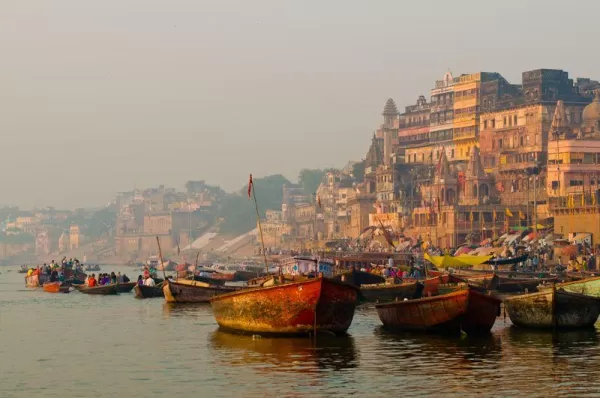
You rise early to catch the Subah or morning Banaras, an experience that is both spiritually enlightening and fantastically photogenic. At the crack of dawn, you take a boat ride along the Ghats, the long stretch of steps leading down to the water on the western bank of the Ganges. This is where Varanasi is at its most vibrant.
The boat ride runs from Assi Ghat to Manikarnika Ghat, offering you a colorful view of the River Ganga in the mellow light. You observe pilgrims performing their morning prayers to the rising sun, witnessing the living traditions of one of the world's oldest religions. The color palette that surrounds you is rich—the red and golden water of the Ganges reflecting the temples, 'ashrams,' and pavilions.
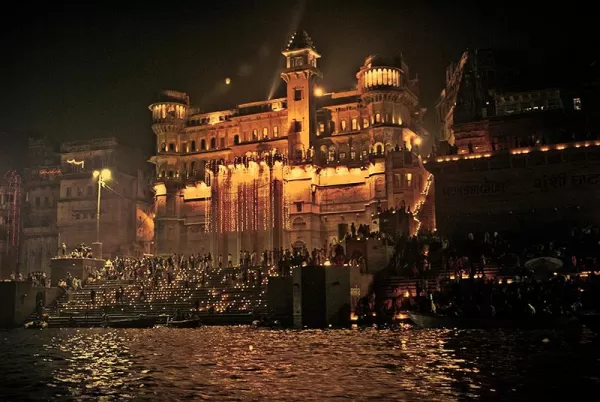
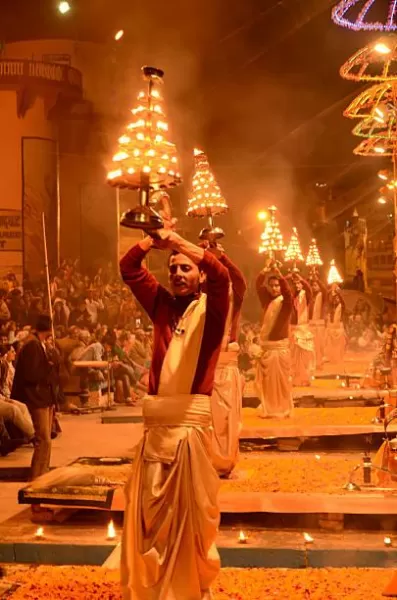
With the sunrise, you venture back down the Ghats, finding them much less crowded than the previous evening. You return to Assi Ghat to witness the morning Aarti (prayer), allowing you to get up close to the priests and hear students of music chanting hymns as the rituals unfold.
You cruise down the river to Kedar Mandir. As Varanasi wakes up, you see priests coming to the banks for their rituals, children taking their morning bath, and many people practicing Yoga. You arrive at Kedar Ghat and visit Kedar Mandir, a temple easily identified by its red and yellow steps, popular among locals. Although thousands of temples exist here, this site provides a great introduction to temple structures.
From the temple, you start walking to explore various other activities in Varanasi, including the Kushti Akharas. Here, in the traditional outdoor 'gymnasiums,' wrestlers continue to practice millennia-old moves. The day begins with a prayer at a small Hanuman shrine, followed by warm-up routines using traditional equipment like stone rings worn as weights around the neck. You see young men lift the heavy mace (Hanuman's gada) and practice throws and maneuvers in the soft mud before disbanding to return to their daily routines.
You return to your hotel for breakfast before continuing your exploration with a walk covering the street markets and the sacred ponds of Varanasi. This Historical Walk takes you through the mystical southern landscape near Assi Ghat, the southernmost embankment of the river. You follow in the footsteps of the 16th-century poet and mystic Pandit Goswami Tulsidas, translator of the sacred Ramayana text. You learn about the history and special culture of Varanasi while visiting the Southern temple established by Tulsidas. The walk concludes with a special darshan, meaning 'taking sight,' of a hidden sun temple behind his home.
Note: During the walk, if you hear bells jingling and yelling, move aside. This may be a body coming through on a stretcher, carried by family down the main street. Though normal here, it may be shocking at first.
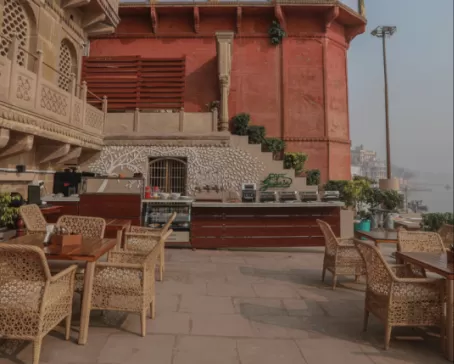
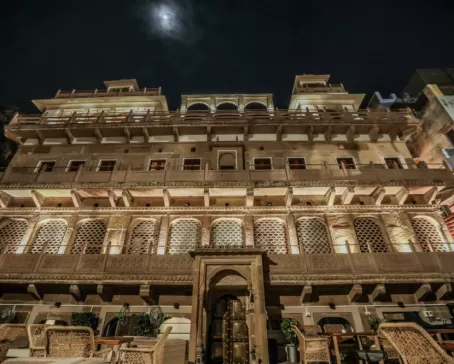
You return to your hotel by lunchtime. You then have time to relax at your leisure before your late evening walk.
In the late evening, you take a walk through the city of learning and burning, seeing Banaras when it is known as ‘Mahashamstana,’ the great cremation ground of Shiva. Here, you traverse from the land of the living to the houses of the dying. You might encounter a black-clothed Sadhu from the Aghor Ashram, offering a taste of death and rebirth. Alternatively, if you choose the daytime version, you participate in a small puja at the Sankata Devi Temple (the goddess of sorrows and a demon slayer). The night walk ends with a visit to the 10:30 – 11:15 PM Sankata Devi ritual worship service.
You stay overnight at Varanasi.