Have questions? We're here.
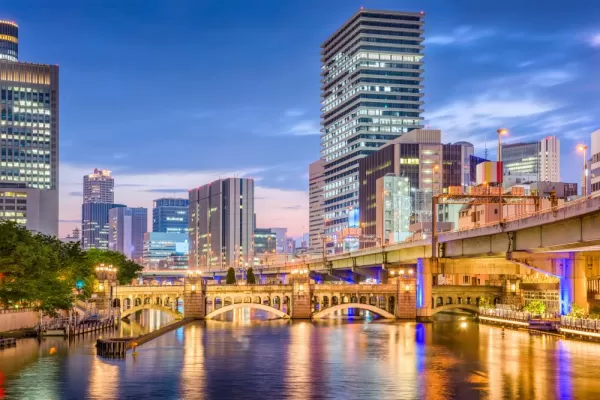
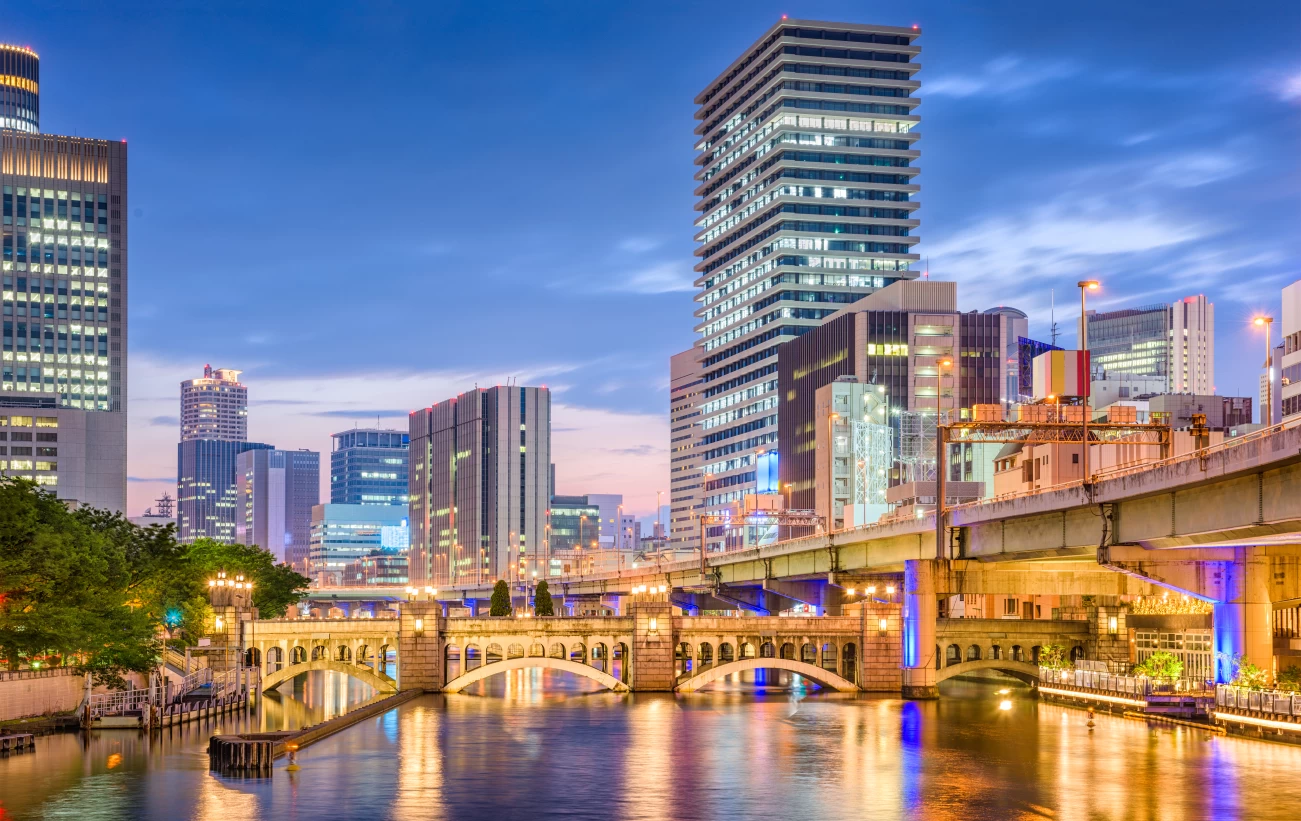
Osaka's city lights after sunset

Authentic Japan

Osaka to Busan - Example 13 Day Cruise aboard Le Soleal
Talk with an expert
Build your ideal Japan trip. Call 1.406.541.2677
Start Planning My Trip
Experience the best of Japan on a 13-day cruise aboard Le Soleal, beginning in vibrant Osaka and concluding in bustling Busan. Visit historic sites like Himeji Castle, Kumano Sanzan shrines, and Hiroshima's Peace Memorial Park. Marvel at iconic landscapes, including Miyajima Island’s vermillion Torii Gate and Beppu's hot springs. Discover hidden treasures in places like Shingu and Miyazaki, from sacred trees to mythical shrines. Stroll through Takamatsu’s Ritsurin Garden and Karatsu’s Nanatsugama Caves. Conclude your adventure in Busan, South Korea’s cultural hub with stunning temples and beaches. Enjoy unparalleled cultural insights throughout this unforgettable voyage.
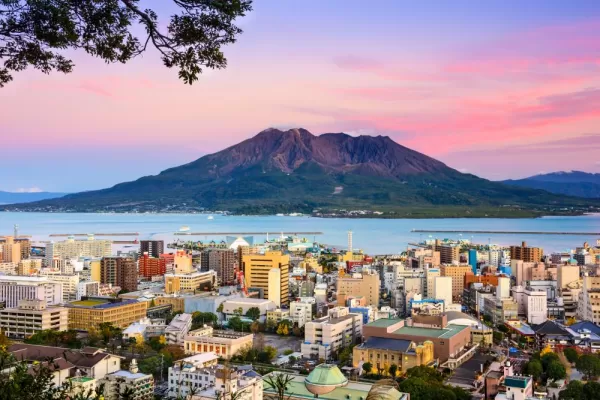
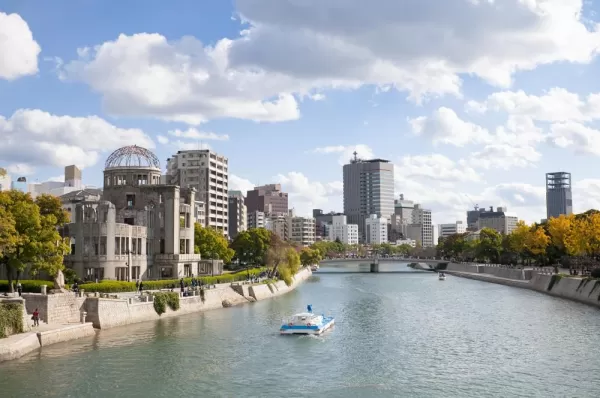
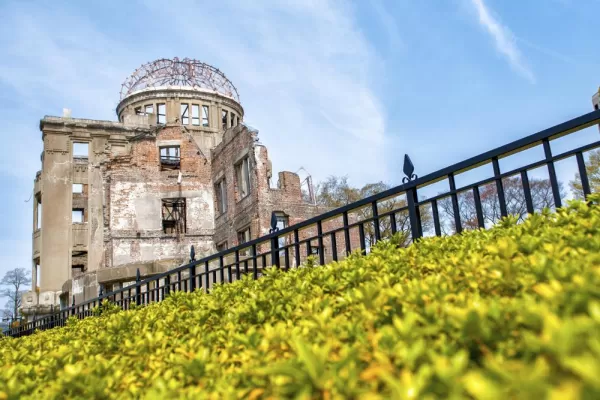
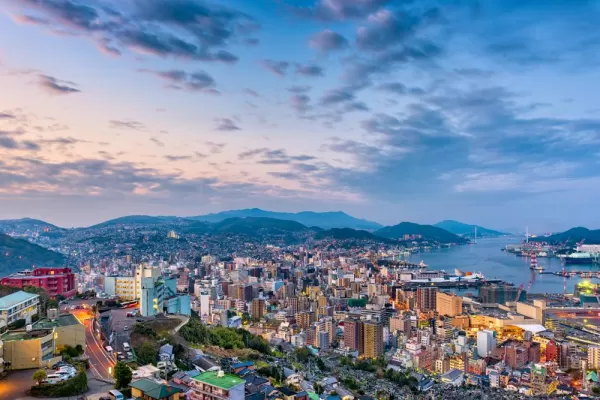
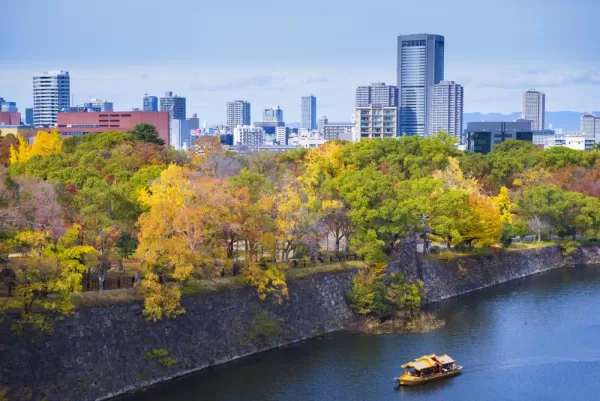
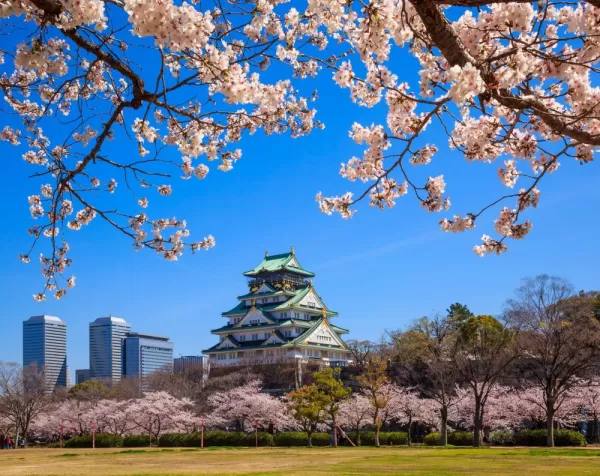
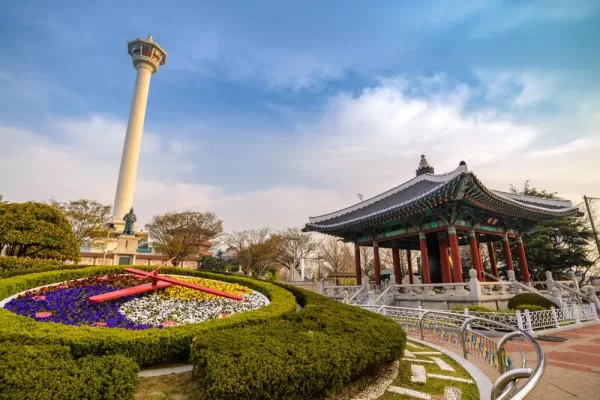
Colorful sunset over Kagoshima, JapanRiverside view of HiroshimaHiroshima Peace Memorial or Atomic Bomb DomeSunset over NagasakiColorful trees in OsakaCherry blossoms frame Osaka castleTemple garden in Busan, South KoreaOsaka's city lights after sunset
Highlights
  • Discover Busan’s Haedong Yonggungsa Temple and vibrant streets
  • Explore Osaka's historic castle and bustling Dotomburi streets
  • Tour Himeji Castle and seasonal Koko-en gardens
  • Relax in Takamatsu’s Ritsurin Garden and shakkei landscapes
Places Visited
Activity Level: Variable
Activity options vary depending on destination and operator. Activity level is determined by the range and intensity of activities you choose to participate in. Discuss with your Trip Planner which options are best for you.
0

Full Itinerary

Expand All

Day 1: Osaka | Embark

Like Tokyo, you experience a city shaped by deep-rooted customs and cutting-edge technology. Even with its massive scale, you feel calm thanks to its setting along Osaka Bay on Japan’s Pacific coast. You encounter the city’s signature historic site, the 16th-century Osaka Castle, rising boldly among modern high-rise towers. You walk through the energetic streets of Dotonbori and explore the eccentric Shinsekai district, both drawing crowds of residents and tourists. You choose from countless eateries that serve local favorites, including takoyaki made with octopus and crispy kushikatsu skewers.

Day 2: Toba

Toba is a coastal city located in Japan’s Mie Prefecture, on the shores of the Pacific Ocean. Situated in the Ise-Shima National Park, Toba has given its name to a majestic bay sheltering a string of small islands, famous for the beauty of their forests and the production of cultured pearls. You will have the possibility of discovering the Ise Shrine, a residence of the Imperial family and venerated by the Japanese people as the “soul of Japan”.

Included Excursions:

Spiritually to the Grand Shrine of Isle - Duration : 3h15
Visit the Ise shrine, Japan’s most prestigious Shinto shrine, dedicated to the Sun Goddess Amaterasu Omikami. More than 1,500 rituals and ceremonies take place there every year, praying for the prosperity of the Imperial family, peace in the country or abundant harvests. Cross the Uji Bridge to enter the compound of the Inner Shrine; you will find yourself in what seems to be an entirely different kingdom.
 
The Inner Shrine, the Kotai Jingu (Naiku), is the most venerated sacred site in Japan. It is dedicated to Amaterasu Omikami, the Goddess of the Sun and the Shinto divinity of the Imperial family. She was consecrated here over 2,000 years ago and is venerated as the ancestral guardian divinity of the Japanese people. You will walk to Okage Yokocho Street, where pilgrims may have something to eat and drink, and buy souvenirs. This excursion involves approximately 5 km (3.1 miles) of walking on cobblestoned or pebble surfaces. There is no visit of the Outer Shrine (Geku).

Mikimoto Pearl Island and Ise Shima Skyline - Duration : 3h00
Discover the Ise Peninsula’s landscapes and the secrets of Japanese pearl farming on the legendary island of Mikimoto.
 
Take the panoramic Ise Shima Skyline road, renowned for its superb views over the peninsula. A stop at the Mount Asama observatory will let you enjoy a short walk and admire the panorama. You will then reach Mikimoto Pearl Island, the cradle of cultured pearls and the property of the jeweler Mikimoto. At the museum, discover pearl farming techniques and their history, before visiting the gallery presenting remarkable creations made with natural pearls. You will also be able to explore the boutique, then watch a demonstration by the ama, the famous female divers who used to gather pearl oysters in the past, before heading back to the ship.
 
This excursion involves walking approximately 700 meters (0.4 miles) and is not suitable for wheelchairs. The order of visits may change. Visibility from the Skyline depends on the weather conditions. Ramps are fitted at the Mount Asama observatory, although certain areas may remain too steep for wheelchairs. We recommend wearing comfortable walking shoes. 

Day 3: Shingu

To the southwest of the Japanese archipelago, Shingu is a port town in the Kansai region. Founded in 1933, it belongs to the peninsula of Kii, the countryメs largest. Take a trip around the Kumano Sanzan religious complex dedicated to three sacred mountains and home to two Shinto temples, Kumano Hong. Taisha and Kumano Hayatama Taisha.ᅠThe latter features the famous sacred nagi tree, said to have been planted around 1159. Pilgrims flock to these two sanctuaries that feature on UNESCO's World Heritage list. Hop on a boat and journey to the Dorokyo Gorge, a natural beauty spot carved out by the emerald waters of the Kumano River.

Included Excursions:

Gomagyo Experience and Seiganto-ji temple - Duration : 4h30
The Mt. Nachi region is a sacred site of the Kumano faith, revered by pilgrims for over 1 000 years.
 
Your will first experience the Gomagyo ritual, an esoteric Buddhist practice of praying for the fulfillment of your wishes. It also symbolizes purification, burning away of inner suffering. The term "goma" originates from the Sanskrit word "homa", which was transcribed into Japanese as "goma", meaning "to burn" or "to cook."  
 
Then you will visit the Kumano Nachi Shrine. Located halfway up Mt. Nachi, it serves as the head shrine for more than 4 000 Kumano shrines across Japan. It is recognized as a UNESCO World Heritage Site under the designation “Sacred Sites and Pilgrimage Routes in the Kii Mountain Range”. The main shrine building is also designated as a National Important Cultural Property of Japan.
 
Near the shrine, the Seiganto-ji Temple awaits you. According to legend, the temple was founded by an ascetic monk named Ragyo Shonin, who traveled to Nachi from India during the reign of Emperor Nintoku (313–399). Finally, you will witness the breathtaking Nachi Waterfall, an awe-inspiring cascade that plunges 133 meters (436 feet) into a 10-meter (33-foot) deep basin. This sacred waterfall is revered as the divine body of Tobitaki Shrine, offering a powerful and mesmerizing natural spectacle.
 
This tour involves approximately 1.9 miles of walking, often on uneven and humid path near Nachi Waterfall, as well as around 1 400 steps. It is not suitable for guests with limited mobility. You will remove your shoes to experience the Gomagyo ritual.

Mandala and Tuna Tasting - Duration : 2h45
During an excursion featuring profound spirituality and marine delicacies, discover the coastal town of Nachi-Katsuura, famous for its Fudarakusan-ji temple and its fresh tuna market, the largest in Japan.

South of Shingu, the coastal town of Nachi-Katsuura will welcome you for a journey blending culture and gastronomy. You will begin by visiting the Fudarakusan-ji, a temple linked to the Kumano faith and the concept of Fudaraku Jodo, the “Avalokiteshvara Pure Land Paradise”. Historically, it was the departure point for the Fudaraku Tokai ritual, during which monks would undertake a perilous sea journey towards Paradise. Accompagnied by a priest, discover Buddhist cosmology and participate in a mandala interpretation, learning about the spiritual path towards enlightenment.
Continue to the Nigiwai market in the port of Katsuura, which is the largest fresh tuna market in Japan, where you will watch an expert demonstration of tuna cutting, followed by a tasting.
 
This excursion involves walking approximately 650 meters (0.4 miles) on mainly flat ground. We recommend wearing comfortable walking shoes. It is not wheelchair accessible.

Day 4: Himeji

You may get the impression that you have already seen Himeji Castle, as it has been featured many times on the big screen. The feudal edifice seems to spread its wings over the town like a white heron in fact, its nickname is the castle of the white heron. Originally started in the 15th century and then rebuilt in the 17th century, it is a UNESCO World Heritage site. At its feet lies the gorgeous Koko-en garden, which has nine different gardens designed to flourish in each of the four seasons.

Included Excursions:

Himeji Castle and Koko-en Garden - Duration : 4h00
Visit Himeji Castle, which is one of the most beautiful in Japan among the 12 to have conserved their original architecture, then walk in the castle’s gardens, where calm and tranquillity reign.
 
After a car journey of around 30 minutes from the port, you will enter the compound of the castle known as the “White Heron Castle” because of its brilliant white exterior. A UNESCO World Heritage Site, it is emblematic of this historic city. The gigantic main keep symbolises the political power of the samurai sovereign, but it is also a robust fortress. Walk around the castle compound and notice the defensive means put in place, in particular the steep and winding path leading to the entrance of the main keep. 
 
You will then be able to visit the Koko-en Gardens. The castle appearing as a backdrop gives the landscape depth. Koko-en consists of nine gardens giving a condensed overview of landscaping art in the Edo period. Stroll around these gardens consisting of a large pond, waterfall, a house dedicated to the tea ceremony, small forests of trees, a reconfiguration of the archipelago’s landscapes and two flower gardens. 
 
Enjoy a break to listen to the noise of the trickling water, and to watch the insects busying themselves around the flowers and the wild birds come to cool down by the ponds.

This excursion involves approximately 3 km (1.9 miles) of walking on a cobblestoned path and 220 steps. The team recommend wearing lightweight clothing and comfortable walking shoes. This excursion is not suitable for persons with reduced mobility. 

Photo at Himeji Castle and Sake Brewery Museum - Duration : 3h00
Make the most of a photo break to admire the surroundings of Himeji Castle, one of the most beautiful in Japan among the 12 fortifications having conserved their original architecture, before discovering the Himeji sake brewery museum.

After a trip of around 30 minutes, you will arrive at Sannomaru Square; from here, you will able to admire Himeji's emblem — its castle — from the outside. A UNESCO World Heritage Site, Himeji Castle, also known as the “White Heron Castle” because of its brilliant white exterior, is a robust fortress whose gigantic main dungeon symbolized the political power of the samurai sovereign.

You will then be able to visit the museum of a local sake brewery. Through an exhibition and a video, discover the history of Himeji sake, one of the oldest and most prestigious brewery areas in Japan. In fact, the region benefits from pure and soft water, as well as a high-quality rice — Yamada Nishiki, nicknamed the “king of sake rice” — particularly prized for the production of premium sake.
 
This excursion involves walking approximately 1.2 kilometers (0.7 miles) on mainly flat ground. It is not wheelchair accessible. We recommend wearing lightweight and comfortable clothing as well as walking shoes. You will only discover the castle from the outside.  

Day 5: Takamatsu

A former fortified city, ruled over by the Matsudaira clan from the Tamamo castle with its seawater moats, the city is home to one of the most beautiful classic gardens in Japan, the Ritsurin. It was created by the barons of the city at the start of the Edo period, during which time gardening became a profession in its own right. Its landscape incorporates Mount Shiun in the background, an example of what is known as the shakkei technique, which uses the surrounding landscapes to increase the beauty of the gardens.

Included Excursions:

Ritsurin Garden and the art of bonsai-Duration : 3h15

Dive into the heart of Japanese landscaping art, between the harmony of the historic Ritsurin Garden and the heritage of bonsai production in Kinashi.

Discover Ritsurin Garden, one of the most beautiful gardens in Japan, landscaped during the Edo era. Its carefully designed ponds, hills and paths reveal a wide variety of viewpoints, testifying to more than a century of landscaping work. Formerly covered by chestnut trees, this vast 185-acre park perfectly illustrates the Japanese art of composing harmonious and soothing landscapes.

You will then continue to Kinashi, the historic cradle of bonsai tree for almost two centuries and the country’s main production centre. At a traditional farm, you will admire the elegance of these miniature trees and discover the precise gestures that transform them into veritable works of art.

This excursion involves walking 1.5 kilometers (less than a mile) on mostly flat ground, with some gravel and uneven surfaces, and 10 to 20 steps in the Ritsurin Garden.  We recommend wearing comfortable walking shoes. 

Shikoku Mura Museum and Yashima Temple-Duration : 3h30
Between ancient traditions and marine panoramas, the Shikoku Mura Village Museum and Yashima Temple invite you on a journey into the heart of history and the daily life of Shikoku.

Visit the Shikoku Mura Village Museum, an open-air architectural park that brings together 27 traditional houses from all over the island of Shikoku and neighboring islands. From a rural kabuki theatre to a papermaking factory to a sugar refinery, each building illustrates the daily life of the past. The museum also exhibits tools and objects that demonstrate the grassroots ingenuity of the Edo era in Taisho.

Then continue onto the Yashima Temple, founded in 754, an emblematic stop on the Shikoku 88 temple pilgrimage. From the Yashimaru Observatory, enjoy exceptional views over Takamatsu town center and the many islands in the Seto Inland Sea.
 
This tour involves walking approximately 2 kilometers (1.2 miles) on uneven ground and steep slopes, with more than 250 steps at the open-air Shikoku Mura Village Museum. This visit is very demanding and is not recommended for persons with difficulties walking. Wheelchair access is not possible. We recommend wearing comfortable flat-heeled walking shoes.

Day 6: Onomichi

Anchored on the northern shores of the Seto Inland Sea, in the Hiroshima prefecture, the historical city of Onomichi extends from the main island of Honshu to certain neighbouring islands, linked by the bridges of the Shimanami Kaido motorway. Before becoming this peaceful town with its charming, sloping little streets, Onomichi established itself in the 7th century as a nerve centre of the rice trade for the entire Japanese archipelago.  Although its activity is diminished today, the port remains at the centre of the town’s culture. Onomichi now stands out for its exceptional heritage. With good reason, since it can boast over twenty temples and shrines, saved from the bombing of the Second World War. Among them are Senko-ji, offering an outstanding panoramic view over the whole town, Saikoku-ji and its three-storied pagoda, and Jōdo-ji and its emblematic eleven-faced statue of the goddess Guanyin.

Day 7: Miyajima Island | Hiroshima

At the heart of the Inland Sea, Miyajima, the “island sanctuary” will reveal its treasures. In the background, you will see the Shinto Grand Sanctuary, whose entrance is guarded by a magnificent vermillion “Torii“. Considered to be one of the most beautiful sites in the Japanese islands, you will be transported by the unique character and the serenity of this sacred site.

Included Excursions:

Itsukushima Shrine and Omotesando Stree - Duration : 2h00

Upon your tender landing, a 20-minute walk will bring you to one of Japan’s most iconic sights: the floating torii gate of Itsukushima Shrine, ranked among the country’s top three scenic views. The shrine was established in 593, the first year of the reign of Empress Suiko, and is today a UNESCO World Heritage Site. The current torii was erected in 1875 after the original one was destroyed. The shrine's torii rises 48 feet (16 meters) above the sea. Its columns, made of camphor, are 30 feet (10 meters) in circumference and are supported by smaller pillars, which are buried in the seabed.
 
The construction of the sanctuary, consisting of structures on piles and pontoons, is owed to the sacred status of the island. Visitors were not allowed to disembark on the island; when they arrived by boat, they passed under the torii and floating dock on the pontoons. The Noh theatre, which also stands on stilts, is located right by the temple.

Your visit will conclude with a peaceful stroll along Omotesando Street, lined with souvenir shops, traditional sweets, and local restaurants.
After your visit to the shrine, you will then return to the pier. This tour is done solely on foot and involves approximately 2.15 miles of walking and 200 steps. Photography of the Shrine altar is not permitted. The torii gate of Itsukushima Island will be partially submerged at high tide.

Visiting Hiroshima is a moving experience. The town spreads along Honshu Island, along the inside coasts of Seto. While firmly focused on the future, Hiroshima doesn't forget its past, and a visit to the Peace Memorial Park and Genbaku Dome is a must. You'll enjoy the city's modern, cosmopolitan atmosphere and effervescent nightlife just as much as the peaceful stillness of its natural parkland areas such as splendid Shukkei-en, the town's historic garden.

Included Excursions:
Hiroshima Museum and Peace Memorial Park - Duration : 3h30

Discover the Hiroshima of past and present by visiting the moving Hiroshima Peace Memorial Museum and Peace Memorial Park.

In the years that followed the explosion of the atomic bomb on 6 August 1945, scientists doubted that Hiroshima would live again one day. However, modern Hiroshima rose from its ashes like a phoenix and, less than five decades after its destruction, is now a dynamic city whose population is growing steadily.
From the pier, you will go the touching Hiroshima Peace Memorial Museum. Made up of two buildings, the museum recounts the history of Hiroshima and the advent of the nuclear bomb. However, it focuses on the events of 6 August 1945: the dropping of the bomb and its consequences in terms of human suffering. The personal details exhibited are deeply moving and a reminder that peace must not be taken for granted.

You will then walk from the museum to the Atomic-Bomb Dome, via the Peace Memorial Park. This large green space, criss-crossed with alleyways and dotted with memorial monuments, is bordered by rivers on either side. The central element is the long Pond of Peace, edged with trees, leading to the Cenotaph. This saddle-shaped concrete monument contains the names of all the known victims of the bomb. To the north of the road crossing the park, there is the Children's Peace Monument, inspired by Sadako Sasaki, who was two years old when the atomic bomb was dropped. When Sadako developed leukaemia aged 11, she decided to fold 1,000 orizuru (paper cranes). In Japan, the crane symbolises long life and happiness and she thought that she would get better if she reached this goal. Her story inspired a national wave of paper crane folding that has continued to this day.

This visit involves approximately 4 km (2.5 miles) of walking. The team recommend you wear comfortable walking shoes. This visit includes sensitive materials, particularly graphic images and presentations of the atrocities of war.

Day 8: Beppu, Oita

A favorite destination for the Japanese, Beppu is now famous throughout the Japanese archipelago thanks to its onsen – volcanic hot springs in which people immerse themselves to relax with family or friends. From Beppu, you will set off to discover a lush, peaceful valley in which sit 60 majestic stone Buddhas are carved out of the cliff face between the 12th and 14th centuries. Exuding a soothing air of serenity, the Mangetsuji site seems to have drifted off to sleep in the heart of a dense bamboo forest surrounded by rice fields. Recognized as a National Treasure of Japan, this set of sacred sculptures offers travelers a unique, wonderful experience.

Included Excursions:
Stone Buddha and Usuki Castle Town - Duration : 4h30

From the pier, board your coach for the one-hour drive to Usuki stone Buddha. These stone images were sculptured from the Heian (794-1192) to the Kamakura (1192-1333) eras. Fifty-nine images were designated as national treasure after undergoing restoration. Don't miss the Dainichi Nyorai, one of the stone sculpted masterpieces of Japan.

Re-board your coach for continuing to the castle town of Usuki, a place steeped in history and charm. The town is distinguished by a row of merchant houses nestled in a valley surrounded by former samurai residences, offering a glimpse into Japan’s feudal past. Here, you will discover the ruins of Usuki Castle perched on a hill in the eastern part of the city. Originally built in 1562 by the feudal lord Otomo Yoshishige, the castle no longer stands, but its grounds have been transformed into a serene park, home to more than 1 000 cherry trees that bloom spectacularly in spring. As you stroll through the town, take in the unique features of Japan’s historic castle towns - towering stone walls, grand tiled roofs, and whitewashed buildings elegantly lining the slopes.

This tour involves 1.5 miles of walking on cobblestone path. There is an 80-yard steep slope to reach the stone Buddha. This excursion is not recommended for guests with walking difficulties. Wear comfortable walking shoes. The order and the duration of visits may vary.

The Hells, Beppu's​ hot spings-Duration : 3h30
Set off for a special immersion in the heart of Beppu, where the natural power of its most emblematic hot springs will reveal itself in a rare cultural experience.

In the heart of Beppu, the Jigoku — literally the “hells” — are among Japan’s most impressive geothermal phenomena. Located at a short distance from each other, these spectacular springs offer a fascinating journey through surprisingly diverse thermal landscapes.

Set off to discover four of them and enjoy a timeless moment. Umi Jigoku, the “sea hell”, unveils a boiling pond of striking blue water, famous for the “onsen eggs” that are cooked in it. Oniishibozu Jigoku, “the shaven head of monks hell”, is distinguished by the bubbles of mud that rise to the surface, making unique organic forms. Chinoike Jigoku, the “blood pond hell”, will fascinate you with the deep red colour of its boiling water, offering one of Beppu’s most photographed panoramas. Finally, the Tatsumaki Jigoku geyser will impress you with its regular eruptions of boiling water and steam, reminding visitors of the raw power of nature.

Although their waters are renowned for their well-being properties, the extreme temperature — exceeding 100 °C — obviously does not permit bathing. However, the observation of these natural phenomenon is enough to make it a unforgettable experience. You will also be able to discover local products such as soaps and salts from these springs.

The team recommend you wearing comfortable walking shoes. Boiling water and fumaroles gush out at regular intervals from Tatsumaki jigoku Hells (waterspout Hell) geyser. If you wish taking a foot spa at the hell, we suggest bring your own towel.

Day 9: Miyazaki

The cradle of Japanese mythology, Miyazaki is a hidden treasure on the southern coast of Kyushu. Known for its climate, its golden beaches, and its spectacular rocky formations, it is an invitation to exploration and contemplation. In the heart of the city, the Miyazaki-jingu Shinto shrine stands majestically, surrounded by ancient forests and peaceful gardens, in which an atmosphere of serenity reigns. Make the most of the authenticity of this city with its fascinating local culture and, during the visit to the Miyazaki Shrine, fall under the spell of the kagura, a dance and song performance by the shrine’s priests and helpers.

Included Excursions:
Shinto ceremony in Miyazaki and Aoshima-Duration : 4h15

Fall under the spell of Aoshima, a sacred island with mythological overtones, before enjoying a unique spiritual experience at the Miyazaki Jingu Shrine.

As you approach Aoshima, a singular atmosphere begins to unfold: the horizon is tinged with tropical greens and the shore reveals the famous rocky strata known as the “devil's washboard”, a natural masterpiece shaped by time.

On the other side of the bridge connecting terra firma to this little island measuring about a mile, the Aoshima Jinja shrine appears, peaceful and shrouded in legends that are deeply rooted in the country’s spiritual memory. According to Japan’s oldest mythological tales, Aoshima is the backdrop of the founding story of the brothers, Umisachihiko and Yamasachihiko, who respectively symbolise the sea and the mountain. It was also on this island that Yamasachihiko is said to have intertwined his destiny with that of Toyotama-hime, a princess from the depths of the sea. This story of love and union is behind the sacred reputation of Aoshima: a place in which encounters and intersecting life paths have been celebrated for centuries. Following your discovery of the shrine, time will seem to stand still, offering the opportunity to stroll among the small stalls and along the shore.

Further north, the Miyazaki Jingu Shrine, a vast haven of serenity nestling in the heart of an orderly and silent forest, will unveil itself. Devoted to the founding Emperor Jimmu, it welcomes visitors in a solemn, almost suspended, atmosphere. For Ponant guests, the doors of its most intimate space will be exceptionally open for a private Shinto ceremony, a moment of prayers and blessings to send you on your way with protection and serenity. Comfortably ensconced opposite the main pavilion — usually inaccessible — you will see a ritual dance performed by a priestess, an ancestral rite for the shrine’s gods.
 
This excursion includes some walking on flat and sandy paths. It is wheelchair accessible, with the exception of the Aoshima Shrine. Discreet and appropriate attire is required for the visit of the shrine.

Day 10: Kagoshima

The seaside city of Kagoshima, south of Kyushu Island, is best known for Sakurajima, an active volcano that faces Kinko Bay. A visit to this busy metropolis will remind you just how much the volcano is part of the inhabitants' everyday life. In the wake of the almost daily eruptions, a delicate layer of ash settles on everything. The top of a buried torii (traditional Japanese gate) measuring three meters that was 'swallowed up' by a giant lava flow in 1914 can still be seen. The power of nature will send a shiver down your spine.

Included Excursions:
Sakurajima Volcano-Duration : 3h30

Discover the fascinating landscapes of Kagoshima and its emblematic volcano, Mount Sakurajiman.

Across from Sakurajima, the volcano whose silhouette dominates Kinko Bay, stands one of the strongest symbols of southern Japan. Once an independent island, it became connected to Kyushu when the 1914 eruption filled in the strait. After a coach journey and a short ferry crossing, you will reach this fertile peninsula where some of the country’s largest radishes are grown.

The road leading to the slopes of the volcano runs along an ancient lava flow. From the Arimura Lava Observatory, a walking trail offers beautiful views of the bay and the crater. The Sakurajima Visitor Centre rounds off this visit with exhibitions on eruptions, the return of vegetation, and the protective measures put in place by local residents. 

This tour involves 0.6 miles (1 km) of walking on uneven ground and some 200 steps to climb. The team recommend wearing comfortable walking shoes.

A trip to Chiran-Duration : 4h15
Board your coach for the one-hour southbound drive to Chiran, sometimes called “Little Kyoto” in reference to all the samurai residences that have been preserved there. Several houses have been preserved alongside their beautiful gardens, all dating back to around 250 years old.
 
The gates to the residences, with the moss-covered stone walls, hedges and black tile roofs help recapture the flavour of the Edo Period. Many of the residences are still being used by descendants of the samurai, although some gardens have remained open to the public. Though small in size, each garden is a fine example of “borrowed landscaping”, in which surrounding mountains and scenery have been made part of the garden design.
 
Not far from the Chiran Samurai Residences is the Peace Museum or Tokko Heiwa Kaikan. Dedicated to the young kamikaze pilots who trained near Chiran before embarking on suicide missions against Allied sea vessels in World War II, the museum commemorates the bravery and sad sacrifice of these young Japanese men, and makes a plea for world peace.
 
Return to Kagoshima and the ship following your detailed visit to Chiran.

This tour involves approximately 1 mile (1.5 km) of walking, mostly over flat terrain. Photography is not allowed inside the Chiran Peace Museum.

Day 11: Nagasaki

Located on the north-west coast of Kyushu, Nagasaki will impress you with its rich heritage. Despite the destruction in 1945, you can visit several ancient sites, including the beautiful 19th-century Catholic Church of Oura and its garden, the sanctuary of Suwa Shrine, or several Buddhist temples. A visit to the Atomic Bomb Museum gives you insight into the extent of the damage caused by the nuclear attack. Close by, a walk in the Memorial Peace Park leads you to a collection of objets d'art offered as a gift from Japan to the world.

Included Excursions:
Ground Zero and atomic bomb museum-Duration : 4h00
From the pier, board your coach for a short drive to the Ground Zero, the hypocentre of the catastrophe marked by a sober black pillar. Then visit the Atomic Bomb Museum, with over 900 artefacts indicative of the city's devastation. But more than just a commemoration, the museum promotes peace by denouncing the abomination of war and by tracing the evolution of the use of atomic weapons.
 
After visiting the Peace memorial site, you will have some leisure time to spend at Hamamachi Arcade, which is one of Nagasaki’s largest shopping areas. See the craft shops, restaurants, and local food stalls.
 
Enjoy the scenic drive through Dejima, a man-made island completed in 1635 that served as the only trading post where foreigners were allowed to exchange goods during the Edo era, when Japan was closed to the outside world. The Dutch, who were permitted to trade at that time, lived on the island. Driving by Chinatown, you will see the Chinese-style gate and various architecture and decorations from the coach (no stop included).
 
This tour is mainly a walking tour and involves approximately 2.5 miles (4 km) of walking over flat terrain (including steps and elevators).

Nagasaki Historical Tour-Duration : 4h15
From the pier, a short transfer will bring you to the Nagasaki Museum of History and Culture, which is one of the few museums in Japan based on "Overseas Exchange". The museum holds approximately 48,000 pieces in its precious collections, including historical documents and arts & crafts that tell the story of how Nagasaki developed as the sole window opened to foreign countries during the period of national isolation.
 
Next, continue to Dejima Island; a Dutch outpost that served as Japan's only contact point with the Western world for over 200 years. Dejima Museum of History portrays the history of Dejima, the manner of daily life for the Dutch who lived there, and how the trading system worked between Japan and the Netherlands.
 
You will then be taken to Oura Catholic Church, which is both the oldest Gothic-style building and oldest church in Japan. It is the only Western artifact designated a National treasure. 
 
Afterwards, visit Glover Garden: situated on a picturesque hillside overlooking Nagasaki Port, you will find a number of late 19th and early 20th century Western-style buildings gathered together. These gardens are said to be the setting for the opera "Madame Butterfly". 
 
Reboard your coach and drive back to your ship.

This tour involves approximately 1.9 miles (3 km) of walking. There are approximately 40 steps to climb during the visit to the Oura Church and many stairs to reach Glover Gardens. Shoes must be removed for the visit of some locations. Appropriate clothing is required to enter religious sites: shoulders and knees must be covered.

Day 12: Karatsu

Karatsu Bay is edged with long sandy beaches and a huge pine forest that was planted over 350 years ago to protect the coast from the winds and tides of the Genkai Sea. From the top of the donjon of Karatsu Castle or Mount Kagami, you will be able to admire magnificent panoramas. In the north of the Higashi-Matsuura Peninsula, the waves have eroded the lava plateau and carved a magnificent natural site, the seven Nanatsugama Caves, out of the basalt. The city of Karatsu is famous for the quality of its pottery, which is influenced by the craftsmanship of nearby Korea. Very fine pieces are displayed in the city’s galleries and at Karatsu Castle, alongside magnificent samurai armor.

Included Excursions:
Highlights of Karatsu-Duration : 2h45

Karatsu is a coastal city on the island of Kyushu that in the past was a major stop for ships making the voyage towards Korea and China, being one of the closest Japanese cities to the Korean Peninsula.
 
A short drive will bring you to the Karatsu Castle, which was built in 1608 and renewed in 2017. The castle faces the sea and houses a museum about the castle's history and Karatsu ceramics. The top floor offers views of the bay, the city and the pine grove. To get to the castle tower, you will need to walk up stone steps and take an elevator.
 
Next, visit Kyu-Takatori-Tei, the former home of Koreyoshi Takatori (1850-1927), a successful coal baron.This well-restored late Meiji Period villa of a local trader is built in a mix of Japanese and Western styles, with lantern-filled gardens, a Buddhist altar room, a wealth of paintings on cedar boards and an indoor no stage.

This excursion involves some extended periods of walking, steep slopes, cobblestones, uneven walkways and numerous steps (231 steps to Karatsu castle, and 112 steps once inside). Elevator is available from parking to castle, but inside castle there are only stairs. Shoes must be removed when entering former Takatori House. Photography is not allowed inside the former Takatori house.

Cultural experience in Karatsu - Duration : 2h30
A short drive will bring you to Karatsu yaki pottery. Karatsu yaki pottery is one of Japan’s 3 types of tea ceramics, alongside Raku-yaki and Hagi-yaki. Also known as Chato (tea ceramics), it has been cherished by tea ceremony masters for centuries.
 
You will observe production process of Karatsu yaki ware and learn them. Admire its traditional climbing kiln and enjoy some free time to explore the boutique.
 
Continue to Kinshoji Temple, where you will experience the authentic art of the Japanese tea ceremony.

This excursion involves light walking on mostly flat path, with some stenuous paths at Kinshoji Temple. We recommend wearing comfortable walking shoes. For the tea ceremony, you will be required to remove your shoes. The Karatsu yaki pottery is not accessible to wheelchairs.

Day 13: Busan | Disembark

  • 1 Breakfast
With around four million inhabitants, Busan is the second largest metropolis in South Korea, after Seoul. This dynamic harbor city, located in the southeast, surrounded by the warm waters of the Sea of Japan, benefits from a mild, pleasant climate. You’ll find it delightful simply to stroll around the lively streets and explore the city’s outstanding cultural heritage of art galleries, museums, and Buddhist sites, such as the Haedong Yonggungsa temple, which elegantly sits on the waterfront. Rich too in beaches and natural landscapes, Busan’s peaceful atmosphere will win you over, as will its inhabitants, whom you’ll have the pleasure of meeting.

Ship/Hotel

Le Soleal

 Le Soleal
The reception area aboard the Le Soleal.
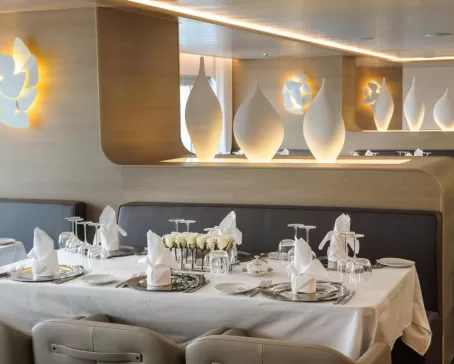
Restaurant aboard the Le Soleal.

Dates & Prices

My Preferred Start Date

Deals

Winter Offer 10% Savings 29765
Book your cruise by January 5, 2026 and take advantage of 10% savings on select 2026 and 2027 voyages. This offer applies to new booking only, is non-retroactive, subject to availability, and cannot be combined with Exclusive offers. Additional restrictions may apply. Please contact us for more details.

OFFER CODE: XMAS25
Applies to May 7, 2026 departure

Per person starting at
$14,130 2-3 travelers
Rates are dynamic and fluctuate based on capacity. Contact us for a specific quote.
Superior Stateroom
Superior Stateroom
The Superior Stateroom has a capacity of up to 3 passengers per cabin, with a king-sized bed or twin beds.
Deluxe Stateroom
Deluxe Stateroom
The Deluxe Stateroom has a capacity of up to 2 passengers per cabin, with a king-sized bed or twin beds and a private balcony.
Prestige Stateroom
Prestige Stateroom Deck 4
The Prestige Stateroom on Deck 4 has a capacity of up to 2 passengers per cabin, with a king-sized bed or twin beds and a private balcony.
Prestige Stateroom
Prestige Stateroom Deck 5
The Prestige Stateroom on Deck 5 has a capacity of up to 2 passengers per cabin, with a king-sized bed or twin beds and a private balcony.
Prestige Stateroom
Prestige Stateroom Deck 6
The Prestige Stateroom on Deck 6 has a capacity of up to 2 passengers per cabin, with a king-sized bed or twin beds and a private balcony.
Deluxe Suite
Deluxe Suite
The Deluxe Suite has a capacity of up to 2 passengers per cabin, with a king-sized bed or twin beds and a private balcony.
Prestige Suite
Prestige Suite Deck 5
The Prestige Suite on Deck 5 has a capacity of up to 4 passengers per cabin, with a king-sized bed or twin beds and an 8m² private balcony.
Prestige Suite
Prestige Suite Deck 6
The Prestige Suite on Deck 6 has a capacity of up to 4 passengers per cabin, with a king-sized bed or twin beds and an 8m² private balcony.
Owner's Suite
Owner Suite
The Owner's suite is situated on Deck 6 with a capacity up to 2 passengers per cabin. With a king-sized bed, it has been decorated by French interior designers and provides you with a breathtaking panoramic sea view.

Notes

Please note:
Fares are based on double occupancy and are capacity controlled. Rates may increase at any time as the ship sells out and are subject to change without notice.

Discounts are available for children sharing a cabin with two adults and third adult passengers in select cabin categories. Please contact us for details.

Single travelers can opt for a solo cabin - supplements start at 50%.
Included
  • 12 Breakfasts, 11 Lunches, 12 Dinners
  • 12 Nights Accommodations
  • Accommodations as listed
  • Ground transportation as listed
  • Activities as listed
  • Meals as listed
  • Access to a 24-7 Emergency line while traveling
  • Unlimited Wifi
  • Onboard Entertainment 
  • Captain’s Welcome Cocktail and Gala Dinner
  • Gratuities to Onboard Crew
  • “Open Bar” (pouring wines, house champagne, alcohol except premium brands...list available upon request)
  • 24h Room Service (special selection)
  • Water sports activities (except scuba diving) using the ship’s equipment, when permitted by local authorities and confirmed by ship Master according to safety and sea conditions onsite. 
  • Butler service in every suite
  • One excursion per person, per port of call is included.
  • Port Fees and taxes
Excluded
  • Travel Insurance
  • Personal Expenses
  • Flight costs (please request a quote)
  • Additional excursions during free time
  • Fuel and transportation surcharges (when applicable)
  • Visa Fees
  • Scuba Diving
  • Optional Excursions - Ponant allows you to pre-book your excursions approximately six to two months prior to the cruise* departure. Please note that this is subject to change. Please contact us for more details.
  • Kayaking
  • Any ground services before and/or after the cruise other than the ones mentioned
  • Luggage Handling 
  • Laundry Services, Hair Salon, and à La Carte Spa Treatments
  • Pre or post cruise programs, overland programs or shore excursions 
  • CDP recommends that every Traveler has full and adequate travel insurance covering the risks of cancellation, assistance being required, repatriation, damages to and loss of baggage, and medical expenses
  • Items from the boutique
  • Premium spirits/cocktails with more elaborate ingredients and high-end wines will have an additional charge

Map

Inquire

* By providing your phone number, you consent to receive direct phone calls or SMS messages from our Trip Planners to get the process started. We do not share your information with third-parties.
Change & customize to make it yours.
Travel Agents

We Love to Talk Travel

Call 1.800.344.6118
or
Chat Now
This was my first experience with Adventure Life - and I couldn't have been more pleased with the trip. The guides and local staff in both Buenos Aires and Uruguay were terrific - extremely helpful and accommodating. I really enjoyed meeting the friendly staff in Buenos Aires in person (I left my bags with them for the afternoon).
Karen Snider

Top Japan Travel Destinations

Japan Trips by Departure Date

Top Experiences in Japan

Japan Trips by Duration

Japan Trips by Activity

More Reasons

Why Travel With Adventure Life

All News

Recognized By