Choosing Your Antarctic Adventure: Fly/Fly, Fly/Sail, or Sail/Sail?
Every trip to Antarctica is unforgettable, but your journey begins long before you reach the ice. Travelers typically choose between sailing across the Drake Passage, the body of water separating South America and Antarctica, or flying directly to the continent. Sailing offers the classic expedition experience, while flying allows you to maximize your time in Antarctica. Understanding the differences can help you decide which option best matches your expectations. Learn more about what to expect when crossing the Drake Passage in our guide, Navigating the Drake Passage: The Drake Shake vs. Flying to Antarctica.
Fly/Fly: The Fastest Route to Antarctica
Aerovias Dap Antarctic Airways (Claudia Corona)
For travelers who want to step onto the Antarctic continent as quickly as possible, the Fly/Fly option offers the most time-efficient journey.
Instead of crossing the Drake Passage, you fly from southern Chile directly to Antarctica, arriving at King George Island, the gateway to many Antarctic expeditions. Most programs operate from Punta Arenas, although some newer itineraries may use other Chilean Patagonian gateways, such as Puerto Natales or Puerto Williams, depending on the operator.
By skipping the Drake Passage, you avoid several days at sea and maximize your time exploring Antarctica’s incredible landscapes, wildlife, and landing sites.
This option is particularly appealing for travelers who are concerned about seasickness, have limited time, or prefer to focus their adventure on Antarctica itself rather than the ocean crossing.
Keep in mind: Because Antarctic flights operate on specialized aircraft with limited capacity, these programs usually have stricter luggage limits than traditional ship-based expeditions. Depending on the operator and itinerary, travelers are often able to leave extra luggage safely in Chile before departure and collect it after returning from Antarctica, allowing them to travel with only the essentials during the expedition.
While flying saves valuable time, Antarctic aviation is highly weather-dependent. Flights operate within narrow windows and can only proceed when conditions are suitable at both the departure point and the Antarctic landing site. This means schedules can change at short notice, and in some cases, delays may affect the amount of time spent in Antarctica.
For this reason, building extra flexibility into your travel plans, including arriving in Chile at least one day before the scheduled departure and avoiding tight connections immediately after the expedition.
Best for: Travelers prioritizing time, comfort, and avoiding the Drake Passage.
For those who want a combination of adventure and efficiency, Fly/Sail and Sail/Fly itineraries offer an excellent balance.
These options allow you to experience part of the legendary Drake Passage crossing while saving time by flying one direction. Depending on the itinerary, you may fly to Antarctica and sail back, or sail south and fly back to Chile.
Flying first is often preferred by travelers concerned about seasickness, as it allows them to reach Antarctica quickly before experiencing the open ocean.
Sailing first appeals to travelers who want the classic expedition build-up: attending onboard lectures, spotting wildlife along the way, and feeling the anticipation grow as Antarctica slowly appears on the horizon.
Another advantage: These itineraries are ideal for travelers combining Antarctica with a longer South America journey. By starting and ending in different locations, you can more easily connect Chile and Argentina without unnecessary backtracking. For example, you may combine the expedition with destinations such as Buenos Aires, El Calafate, Torres del Paine, or Ushuaia, creating a more seamless Patagonia and Antarctica adventure.
Pack light: Unlike Fly/Fly itineraries, Fly/Sail and Sail/Fly travelers generally do not have the option to leave luggage behind and collect it after the expedition. Since these itineraries combine air and sea travel, you should plan to travel with your main luggage throughout the journey. Packing efficiently and bringing only what you truly need will make the experience much more comfortable.
Best for: Travelers who want a taste of the classic expedition experience, reduced time at sea, and the flexibility to combine Antarctica with a broader Patagonia or South America itinerary.
Sail/Sail: The Classic Antarctic Expedition
For many travelers, there is only one true way to reach Antarctica: by ship.
A Sail/Sail itinerary includes a full crossing of the Drake Passage in both directions, following in the footsteps of the great explorers. While it requires more time at sea, the journey itself becomes an important part of the adventure.
The days crossing the Southern Ocean are filled with their own rewards: watching albatross glide alongside the ship, spotting whales in open waters, enjoying expert-led lectures, and feeling the excitement build as the first icebergs appear on the horizon.
Sail/Sail itineraries are also generally the most economical option and offer the most immersive expedition experience. However, they may not be the best choice for travelers who are highly sensitive to rough seas.
Best for: Adventurous travelers who want the complete Antarctica experience and see the crossing as part of the journey.
More Time in Antarctica Means a Better Experience
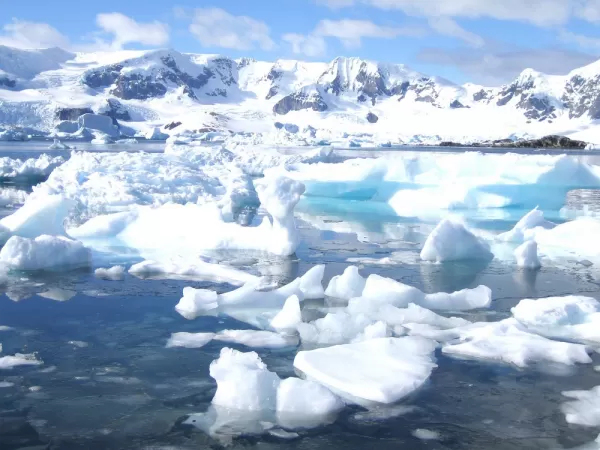
Sea of ice in Antarctica (Claudia Corona)
Regardless of which route you choose, it is strongly recommended to select an itinerary that includes at least four full days exploring Antarctica whenever possible.
Antarctic weather is unpredictable, and conditions can change quickly. Strong winds, poor visibility, or challenging sea conditions can sometimes affect planned landings, zodiac excursions, or even flight schedules.
Having extra time built into your itinerary gives the expedition team more flexibility to adjust the schedule, find the best landing opportunities, and maximize your time exploring the White Continent.
More days on the Peninsula mean more opportunities for incredible wildlife encounters, dramatic landscapes, and those unforgettable moments that make an Antarctic expedition truly special.
Tip: If your schedule and budget allow, prioritize time in Antarctica over choosing the shortest itinerary. A few extra days can make a significant difference.
Which Antarctic Route Is Right for You?
Trip Planner Claudia showing a flag with Antarctica region on it. (Claudia Corona)
Each option offers a unique way to experience the Seventh Continent:
Fly/Fly: Maximum time in Antarctica, minimal time at sea, and the easiest option for travelers concerned about seasickness.
Fly/Sail or Sail/Fly: The best balance of adventure, comfort, and flexibility, combining the thrill of sailing with the convenience of flying. It is also an excellent choice for travelers who want to combine Antarctica with a wider Chile and Argentina itinerary.
Sail/Sail: The traditional expedition experience, offering the greatest sense of adventure and usually the best value.
Whichever route you choose, the reward is the same: a place of extraordinary silence, dramatic landscapes, and wildlife encounters found nowhere else on Earth.
Our team is waiting and ready to talk with you about your next adventure.
So go ahead and book an appointment with one of our specialized trip planners.
Mary is a remarkable source of information and patience. Thank you.
Dr Sack
6 months ago
I just returned from a wonderful 23-day Antarctic expedition cruise that I booked through Adventure Life. I had an outstanding experience with Adventure Life. My trip planner was wonderful. She was very knowledgeable and patient and responded quickly to my emails. Working with her was like having my own personal concierge. I wholeheartedly recommend Adventure Life.
Nancy Peterson
6 months ago
Mary was great! Very responsive and knowledgeable. The process has been surprisingly easy.
Stephen Groze
8 months ago
Responsive communication with knowledgeable and helpful associates who work well together as a team.
A Rochet
9 months ago
Timely, accurate, thorough and helpful information - from the guide/representative and in documents.