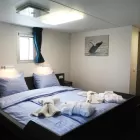
You embark aboard Ortelius for a 14-day Arctic cruise exploring Northeast Greenland, sailing from Akureyri to Spitsbergen. You cross the Arctic Circle, navigate Kong Oscar Fjord, and land on remote islands and peninsulas shaped by glaciers and history. You explore Thule culture sites, historic expedition areas, and little-visited Arctic islands while sailing through alpine fjords, polynyas, and pack ice fringes. Along the way, you observe whales, seals, seabirds, walruses, muskoxen, and possibly Arctic wolves, experience continuous daylight in the high Arctic, and transit the Greenland Sea before arriving in Longyearbyen.
Highlights
Sail north from Iceland and cross the Arctic Circle near Grimsey
Land in Kong Oscar Fjord and explore historic expedition sites
Navigate dramatic fjords with peaks rising over 1,000 meters
Enter the Northeast Water Polynya rich in marine life
Observe whales, walruses, muskoxen, and Arctic seabirds
Activity options vary depending on destination and operator. Activity level is determined by the range and intensity of activities you choose to participate in. Discuss with your Trip Planner which options are best for you.
You start your day in the morning, departing from Akureyri. By request, you can transfer via chartered bus, which picks you up at the meeting point, the Harpa Concert Hall and Conference Center bus stop in Reykjavik, and takes you to the embarkation point, the ship in Akureyri. The drive takes about six hours, passing through northern Iceland’s landscapes. Make sure this transfer is booked and paid for in advance.
In the early evening, the ship leaves the port of Akureyri. You often see whales near the mouth of the fjord. At night, the ship crosses the Arctic Circle near the island of Grimsey.
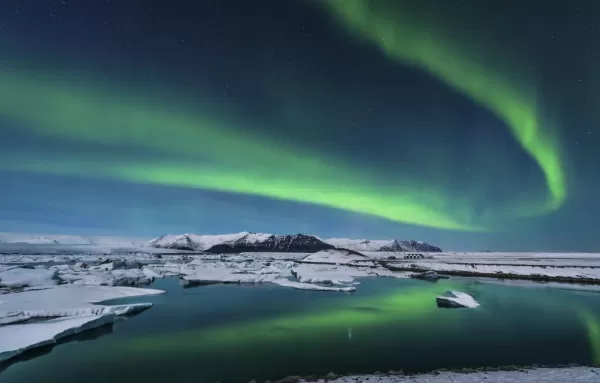
You sail north, moving from warmer waters into colder seas where whales, seals, and seabirds gather. The sea day gives you time to watch for whales and seabirds. At night, you may see the Northern Lights.
In the morning, you find yourself in the mouth of Kong Oscar Fjord in the strait between the island of Isikaja and the mainland. Until 30 years ago, Isikaja was connected to the mainland by a glacier.
On the south side, you land at Wegener Halvöya and pay a tribute to this great explorer. Another possibility is Antarctic Havn, where muskoxen are often spotted. This bay is named for the ship Antarctic, used by Arctic explorer Alfred Gabriel Nathorst in 1899, while searching for the survivors of Salomon August Andrée's failed attempt to reach the North Pole by air balloon.
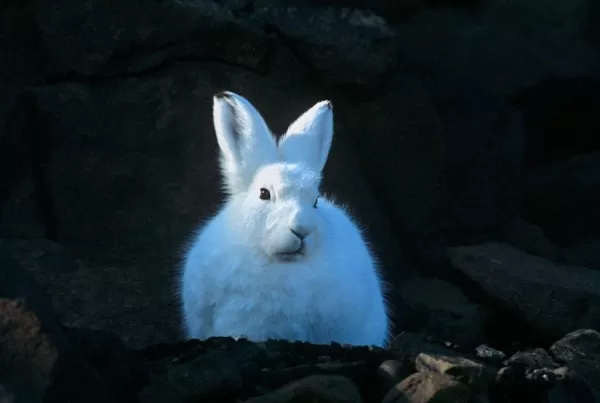
At Ymers O, you aim to land at Karl Jakobsens Bugt, near a historic trapper's cabin. A few hundred meters east, at Botaniker Bugt, ruined dwellings of the Thule culture people from about two centuries ago can be encountered. A walk into Juluts dal provides good chances to a variety of polar fauna, including musk oxen, Arctic hares, and ptarmigans. A spectacular transit through the Antarctic Sund firmly places you in the most Alpine landscapes of the journey, with peaks on either side of the fjord in excess of 1000 meters.
You aim to land in Blomsterbugt (Flower Valley) with excellent walking opportunities, opposite Teufelsloss (Devil's Castle), a spectacular mountain with impressive layered geology, described by Austro-Hungarian explorer Julius Payer as "A cubic rock colossus stretched far out into the fjord."
You hope to land at Eskimonaes on the southern shore of Clavering Ø, where Douglas Clavering met a small group of Thule culture people in 1823. This group represents the only living Thule people ever seen in Northeast Greenland. The remains of their existence can be found across Greenland, including indications that they traded and interacted with Norse settlers in some form.
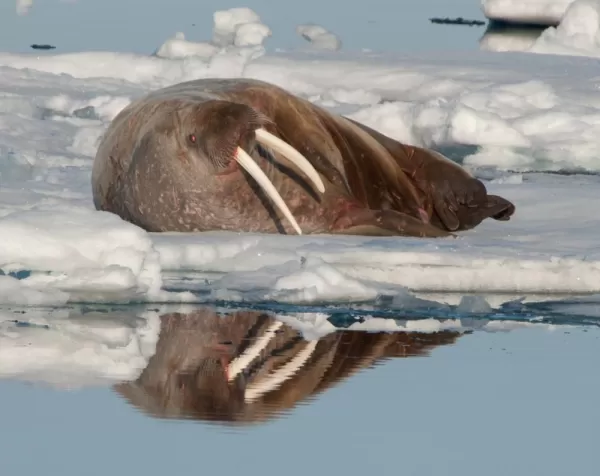
Sir Edward Sabine performed his pendulum experiments on Sabine Ø (formerly Inner Pendulum Island) in 1823. Carl Koldewey built a station there in 1869 at Germaniahavn. On its south side is Hvalros Island, where the population of walruses is increasing again. From this day onward, sailing north, you can experience daylight round the clock.
When sailing into Dove Bugt, you may, depending on the conditions, land at Hochstetter Forland, Store Koldewey, named by the second German Polar Expedition of Carl Koldewey at Kap Alf Trolle, or Kap Ahrend. Kap Bismarck, close to Germania Land, is also a possibility. You are now in Muskox territory, and the southernmost realm of some lonely Arctic wolves in Greenland.
You sail past Danmarks Havn Sirius Patrol Station and land on the east side of Germania Land, for instance, at Thomas Thomsen Naes.
Depotneaset on Stormlandet is another possibility. You are now in muskox territory, and the southernmost realm of lonely Arctic wolves in Greenland, in a region never before visited by this ship.
If ice and weather conditions are favorable, you land at the south side of Isle de France, which was first reached by the Duke of Orleans on the Belgica in 1905. You aim to go ashore at Kap St. Jacques, where, under the guidance of an archeologist from the National Greenland Museum, you can see the remains of the Independence II culture. You may also land at the ice-free area on the north side of the island.
When sailing by Norske Øer, where you possibly land, you sail through territories not previously visited by this ship before. You hope to reach Northeast Water, a semi-permanently open water area in extreme Northeast Greenland, where relatively warm bottom water from the sea rises to the surface. It is a water rich with seals, whales, polar bears, and seabirds. You then try to get to Mallemukfjellet, at latitude 80'11 N', to the northernmost colony of northern fulmars, with young still on the ledges. You are on guard to observe the rare Ross gull, which winters in the central polar seas.
Working your way south-east in the outer fringes of the pack ice, you continue to observe Arctic marine mammals and seabirds, who thrive in this otherworldly habitat.
After leaving the shores and pack ice of Greenland behind, you now find yourselves in the open sea. You sail eastward, across the Greenland Sea, following the northernmost branch of the warm Gulf Stream toward Spitsbergen (Svalbard), along with migrating whales. If time allows, you may land late in the day at the walrus haul-out at Poolepynten.
Day 14: Longyearbyen | Disembark
1 Breakfast
In Longyearbyen, the administrative center of Spitsbergen (Svalbard), you may enjoy strolling through this former mining town, home to the parish church, the Museum of Arctic Exploration, and the Svalbard Museum, all fascinating attractions. Further opportunities for exploring Svalbard and Longyearbyen's surroundings can be found here before you depart for Oslo and continue your onward journey.
Apologies for the inconvenience. Prices for not yet published. Below per person rate based on previous season. Contact us to confirm upcoming season pricing.
Prices for are estimated based on inflation. Contact us to confirm pricing and availability for your desired departure date.
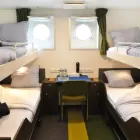
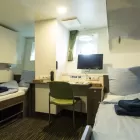
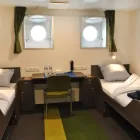
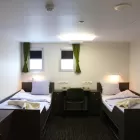
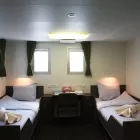
4 quadruple cabins with bunk beds and private facilities (these can also be used as triple or twin cabins). Spacious outside cabins with a minimum of two portholes or windows per cabin
1 suite with 2 windows (minimum), 1 double bed, 1 single (sofa) bed, Private shower & toilet, Desk & chair, Flatscreen TV, Telephone & WiFi (supplemented), Refrigerator, Coffee & tea maker, Hairdryer, ample storage space.
Notes
- Rates are quoted in U.S. dollars and represent costs per person, double occupancy.
- Cabins are available for single occupancy at 1.7 times the double occupancy rate.
- Children between the ages of 3-15 will be discounted 40% in triple or quad cabins, one child per cabin.
- Due to the extreme nature of itinerary destinations, travel insurance is mandatory for all cruises aboard the Ortelius - including medical, accident and repatriation/evacuation insurance.
Initial deposit is 20%, and most travelers will call our office and pay the deposit with a credit card.
Final payment is due 90 days prior to departure by bank transfer, check or credit card. All final payments by credit card may be subject to a surcharge and maximum of $20,000 charge
For full cancellation policy details, please contact us for a quote.
Included
13 Breakfasts, 12 Lunches, 13 Dinners
13 Nights Accommodations
Accommodations as listed
Ground transportation as listed
Activities as listed
Meals as listed
Access to a 24-7 Emergency line while traveling
Program of lectures by noted naturalists and leadership by experienced expedition staff.
All Miscellaneous Service Taxes and Port Charges Throughout the Program
All shore excursions and activities throughout the voyage by Zodiac.
Free use of rubber boots and snowshoes.
All meals throughout the voyage aboard the ship including snacks, coffee and tea.
Comprehensive pre-departure material.
Upon boarding, passengers receive an internet voucher, providing 1.5 GB of free internet per day. This daily allowance resets every 24 hours. Supplementary internet vouchers are available to purchase on board for those requiring additional internet availability.
AECO Fees and Governmental Taxes
Transfers and baggage handling between the airport, hotels and ship only for those passengers on a selection of flights (advised by Oceanwide) to and from Longyearbyen.
Complimentary Dopper water bottle for use during and after your expedition
Complimentary use of waterproof neoprene expedition muck boots and snowshoes
Excluded
Gratuities
Travel Insurance
Personal Expenses
Flight costs (please request a quote)
Additional excursions during free time
Fuel and transportation surcharges (when applicable)
Passport and Applicable Visa Expenses
Government arrival and departure taxes
Pre- and Post Land Arrangements
Fuel Surcharge - to be invoiced separately
Meals ashore
Baggage, cancellation and personal insurance (which is strongly recommended).
Excess baggage charges and all items of a personal nature such as laundry, bar, beverage charges and telecommunication charges.
Medical travel insurance — including emergency medical attention and evacuation coverage — is required, with a minimum of EUR/USD 50,000 per person for Arctic trips, EUR/USD 100,000 per person for Antarctica and the sub-Antarctic islands, and EUR/USD 300,000 per person for the Ross Sea. A comprehensive travel insurance policy should typically meet these requirements.
Transfer supplement for bus shuttle between bus stop Harpa Concert Hall and Conference Centre at Austurbakki, Reykjavik and Akureyri (ship) (approx. 6 hours)
This was our first trip to South America and we were a little nervous. But Adventure Life made things so easy! All our questions were answered before we left, and our guide, Vidal, was amazing! He gave us enough space to explore without rushing us along. He also knew where the best picture taking opportunities were, which was great.