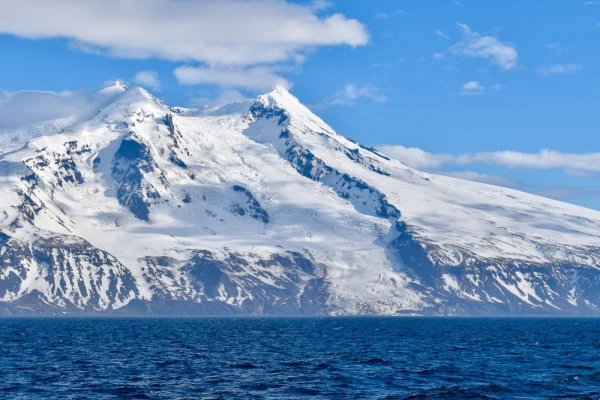
As you reach Greenland’s wild coast, you enter a world shaped by ice and weather. Hope to make daily Zodiac cruises or landings at some of the region’s many remarkable sites. Northeast Greenland National Park is the largest national park in the world and a place that few people have the opportunity to explore. Here, plan to venture into both Kejser Franz Joseph Fjord and Kong Oscar Fjord. The following are examples of places you may visit in Greenland:
Kejser Franz Joseph Fjord
Inside Kejser Franz Joseph Fjord, the silence is almost tangible. The fjord is surrounded by majestic mountains and an almost otherworldly stillness. Here, find some of the most dramatic landscapes in Northeast Greenland National Park.
At Myggbukta, find a historic Norwegian trapping, radio and weather station established in 1922. This remote site played an important role during the period of Norwegian presence in Northeast Greenland, and its buildings still offer a glimpse into life under extreme conditions in this isolated part of the Arctic.
Further into the fjord system lies Benjamin Dal, a vast valley surrounded by impressive mountain formations. Here, open tundra meets rugged mountain scenery, offering magnificent views across the Greenland wilderness.
Kjerulf Fjord is surrounded by high mountains and is often filled with large icebergs slowly drifting through the sheltered fjord landscape. In late summer, it may be possible to explore the area by both ship and Zodiac, depending on the ice conditions. On land, you also keep watch for musk oxen, which inhabit this remote part of Northeast Greenland.
Kong Oscar Fjord
Continue the journey through Northeast Greenland National Park and venture into magnificent Kong Oscar Fjord to visit some of the spectacular places found here. Blomsterbugten, or “Bay of Flowers”, offers fantastic opportunities for hiking and wildlife encounters. The area is surrounded by dramatic cliffs, ice-filled waters and blue-hued icebergs.
You also hope to explore Segelsällskapets Fjord and Maria Ø, an impressive fjord surrounded by high mountains and glaciers. The fjord was named after the Royal Swedish Yacht Club (Kungliga Svenska Segelsällskapet) by Swedish polar explorer Alfred Gabriel Nathorst during his Greenland expedition in 1899. The area is also known for its fascinating geology, where layers of differently coloured sedimentary rock create striking patterns across the steep mountainsides.
Scoresby Sound
In Scoresby Sound, the world’s largest fjord system, you are surrounded by a magnificent landscape where mountain peaks rise to almost 2,000 meters above sea level and enormous icebergs drift slowly through the fjords. At this time of year, the first signs of autumn begin to appear, bringing softer light as the tundra gradually changes colour.
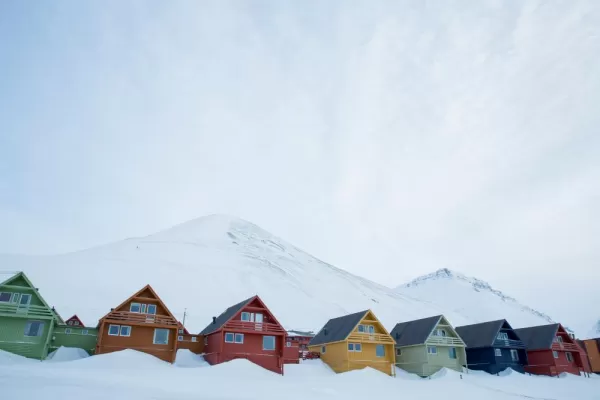
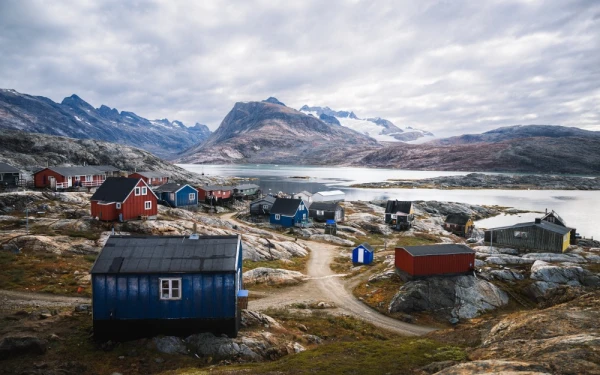
Here, plan to visit Ittoqqortoormiit, a remote settlement of around 350 inhabitants, where you gain an insight into life in one of Greenland’s most isolated regions.
In Hurry Inlet, hope to go ashore and discover traces of the area’s long Inuit history. Here you find remains from the historic Thule culture, ancestors of today’s Greenlandic Inuit, and may have the opportunity to see remnants of ancient dwellings that reveal how people lived and survived in this challenging Arctic landscape.
Björneöer are a small group of islands surrounded by some of Scoresby Sound’s most spectacular scenery. Between the islands, views open up across high mountains, glaciers and enormous icebergs – a fantastic area to explore by Zodiac or on foot.
At Sydkap and Hall Bredning, find ourselves in the midst of one of Scoresby Sound’s most impressive ice-filled landscapes. Enormous icebergs from glaciers deep within the fjord system drift out through Hall Bredning, and many of these icebergs run aground here on their slow journey towards the sea. From Sydkap, you can look out across the vast fjord landscape, where mighty icebergs of every imaginable shape create an ever-changing spectacle.
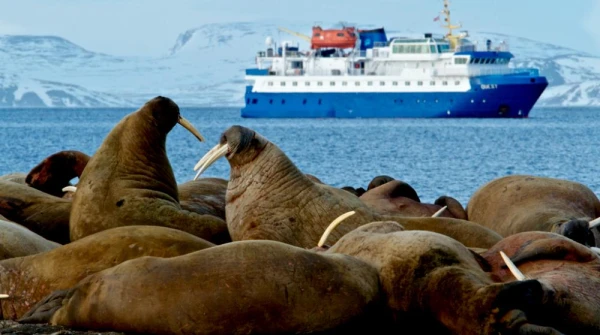
At Vikingebugt, you encounter a landscape shaped by both fire and ice. Impressive columnar basalt cliffs rise along the coast, formed by ancient volcanic activity, while glaciers and drifting ice leave their mark on the fjord. Continue along Volquart Boons Kyst, where some of the steep basalt cliffs rise to over a thousand meters, with glaciers winding their way down between the mountains. Experience this magnificent landscape from a front-row seat on board M/S Quest.