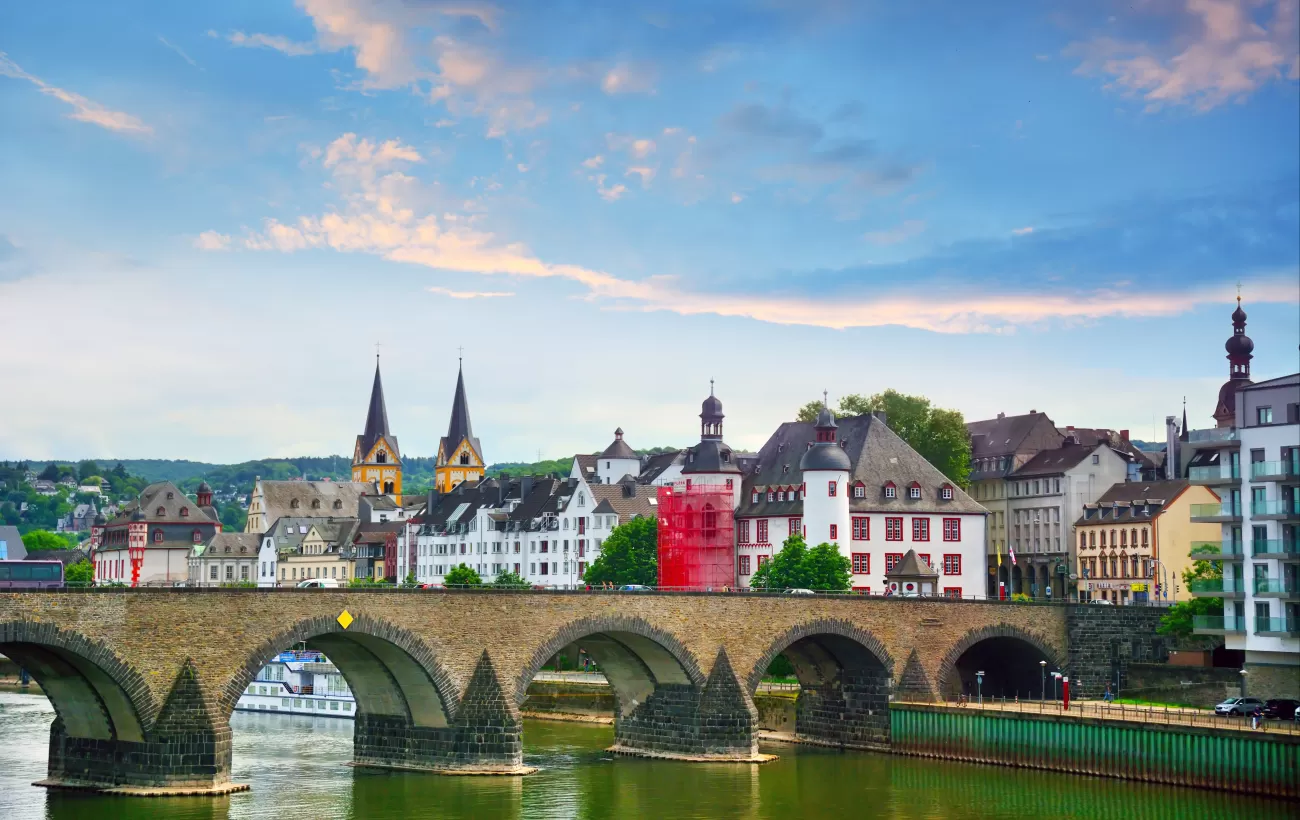
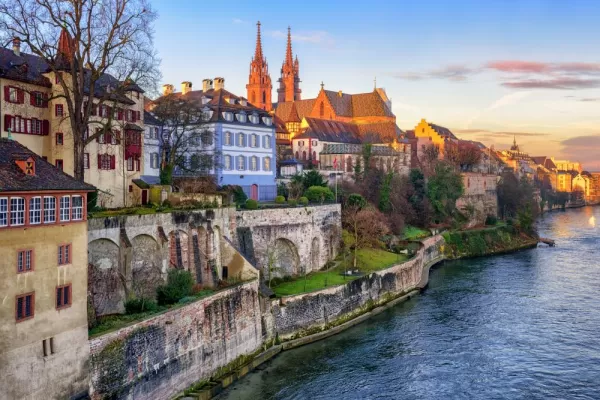
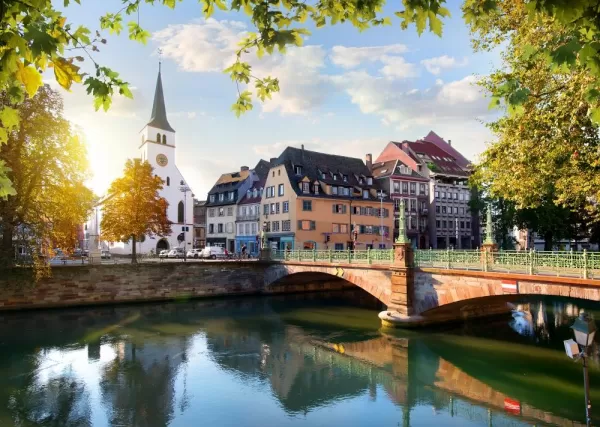
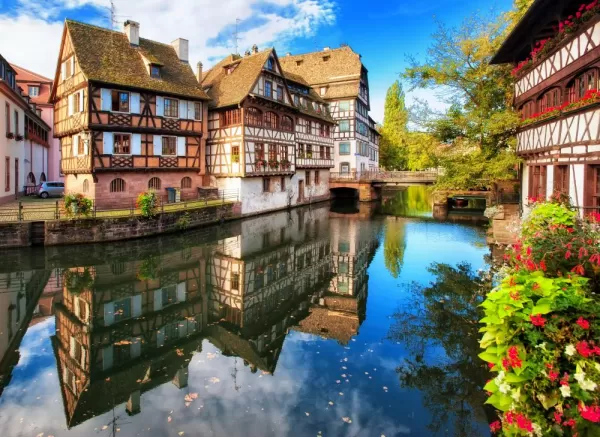
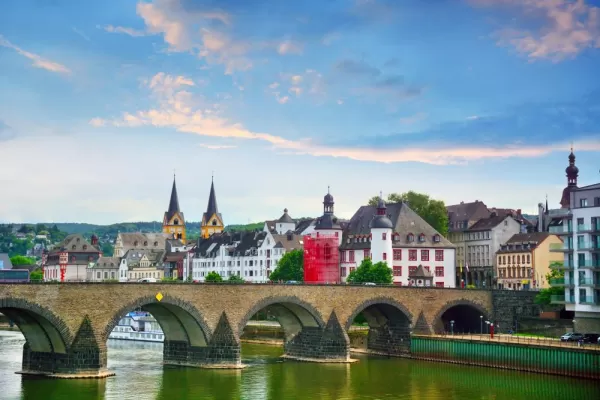
Trier is no stranger to famous landmarks, stunning cathedrals, natural beauty, UNESCO World Heritage Sites, and architectural treasures. See Trier’s Roman heritage and Gallic charm as you stroll to some of the city’s most notable spots. Marvel at the stone Roman gate, Porta Nigra, the Karl Marx house, Imperial Baths, and more. Alternatively, you can choose to visit the small neighboring country of Luxembourg. Experience a healthy dose of history with a visit to the expansive Luxembourg American War Cemetery and Memorial, where General George S. Patton is buried.
Choose between:
Trier Panoramic City Tour
In ancient times Trier was the largest Roman settlement north of the Alps, and six emperors ruled the Western Empire from here. Remnants of that Roman city still stand, despite taking part in centuries of warfare, earning it UNESCO protection. It’s easy to see the shape of the ancient Roman city, since the layout of the Old Town still exists. Start your visit at the Basilica of Constantine, one of two basilicas built by Emperor Constantine in AD 306. The throne room is the largest surviving single-room structure from Roman times in Germany; it features two tiers of windows with high-rising arches that even now show some of the original wall paintings. The other basilica is St. Peter’s Cathedral, home to the Holy Tunic, a sacred relic donated by Constantine’s mother, St. Helena. Your route to Porta Nigra, the great double-arched stone gate that is all that remains of the Roman wall that used to surround Trier, takes you through Market Square.
OR
Luxembourg with WWII Cemetery
Over the course of 900 years, Luxembourg grew into one of the greatest fortified sites in Europe because of its strategic geographical position and ever-changing political affiliations. Your panoramic city tour introduces you to centuries-old battlements as well as to the gleaming high-rises that denote the city’s status as a 21st-century international financial center. To best discover the heart of Old Town, though, you’ll want to walk with a local expert to Notre Dame Cathedral, a fine example of late-Gothic architecture, and the Grand Ducal Palace, where both Louis XIV and Napoleon resided. It has been the official residence of the reigning Grand Duke since 1890.
Your tour ends at Place d’Armes, “the city’s sitting room.” Surrounded by shops and sidewalk cafés, with frequent free afternoon concerts, this is the lively heart of Luxembourg. You’ll have some free time to enjoy yourself on your own there. Or choose to continue to the WWII Luxembourg American Cemetery and Memorial, which lies just within the limits of Luxembourg City. The 50-acre cemetery was established on December 29, 1944, by General George S. Patton’s Third U.S. Army, which liberated Luxembourg. More than 5,000 U.S. military dead are buried here—many of whom lost their lives in the Battle of the Bulge—along with General Patton himself. See the beautiful grounds, white stone chapel, and monument honoring the fallen.