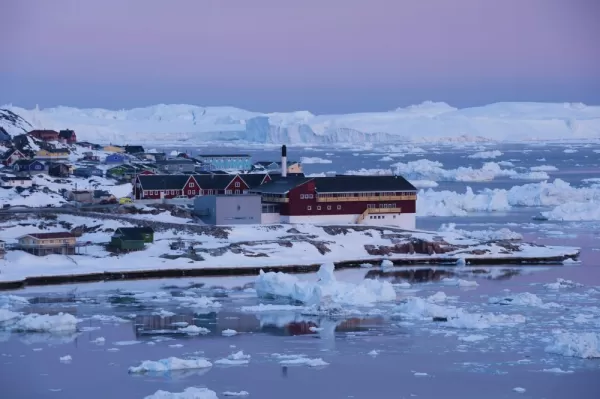
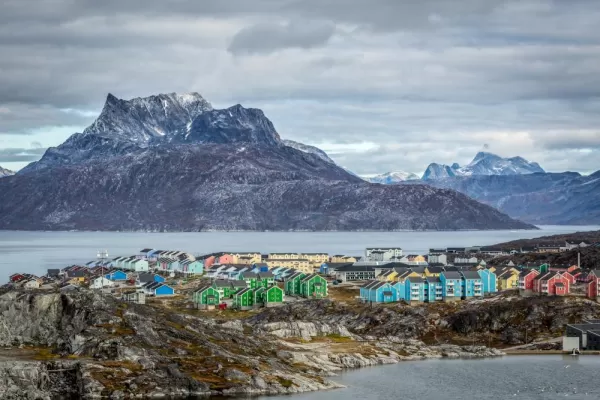
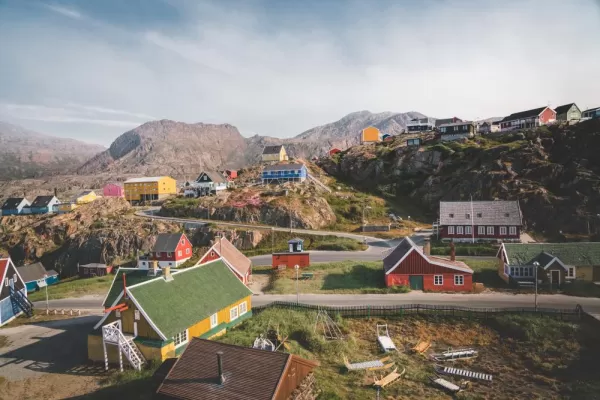
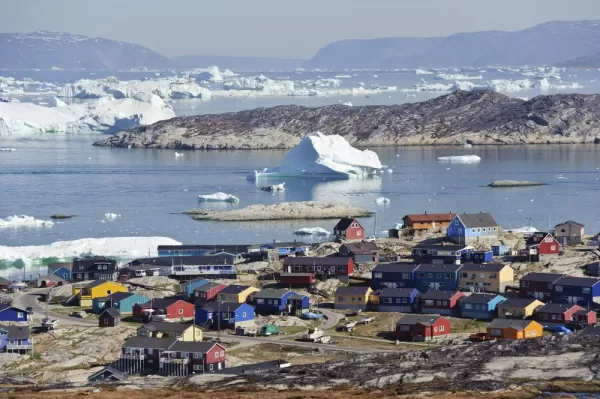
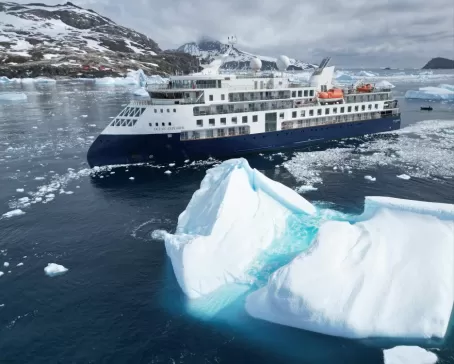
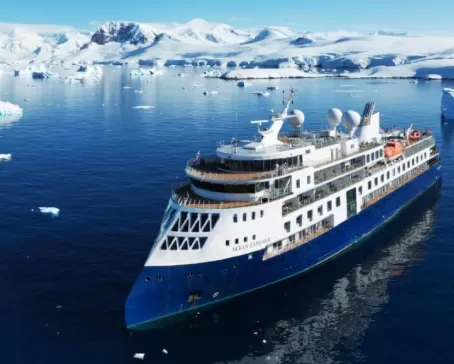
Approaching Qaanaaq (home to fewer than 700 people) along Inglefield Fjord, near the entrance to Smith Sound, you’ll likely encounter large icebergs drifting or resting in the waters around town. The ship navigates through this maze of ice to reach Greenland’s northernmost community—and the second northernmost town in the world (after Longyearbyen, Svalbard). But unlike Longyearbyen, which welcomes tens of thousands of visitors annually, Qaanaaq is far more remote and receives only a small fraction of that number. You’ll reach this community by Zodiac, arriving at the end of the pier where you’ll likely be greeted by smiling children— just as curious as you are about their High Arctic way of life. In town, you’re welcome to wander among the colorful homes, where you’ll meet friendly locals and see many working sled dogs. As mentioned above, always ask before petting these dogs, who spend much of their life out on the sea ice. In town, visit Qaanaaq Katersugaasivia (Qaanaaq Museum), which showcases the ingenious tools of Inuit hunters—including collapsible barbed hooks crafted from ivory, bone and animal hide. Historic photographs offer a glimpse into life at these northern extremes, and the friendly museum staff are happy to answer questions. Locals may also share stories of life on the sea ice, where hunting and fishing remain vital to survival. The legacies of explorers like Knud Rasmussen, Robert Peary, and Peter Freuchen and his Greenlandic Inuit wife, Arctic guide Navarana, are also celebrated in this museum. For those keen to explore outdoors, short hikes above town may be possible, weather permitting, of course. Keep your camera ready to capture the sweeping views of endless landscapes and seascapes. While this itinerary includes several community visits, Qaanaaq often leaves the strongest impression in terms of its deep, ongoing relationship with the surrounding wilderness. Located hundreds of miles farther north than most settlements, Qaanaaq is difficult to reach by boat, helicopter or plane. As a result, the community continues to rely on traditional skills refined over centuries of adaptation to this high Arctic environment. Expect to see a mix of modern conveniences—as well as tried-and-true practices of past generations. For example, while skiffs with outboard motors are anchored off shore, you also see traditional kayaks, propelled by hand-carved paddles, gliding through the water. As you sail south, many travelers leave with a deep appreciation for this remarkable, remote community— wishing they could stay just a little longer.