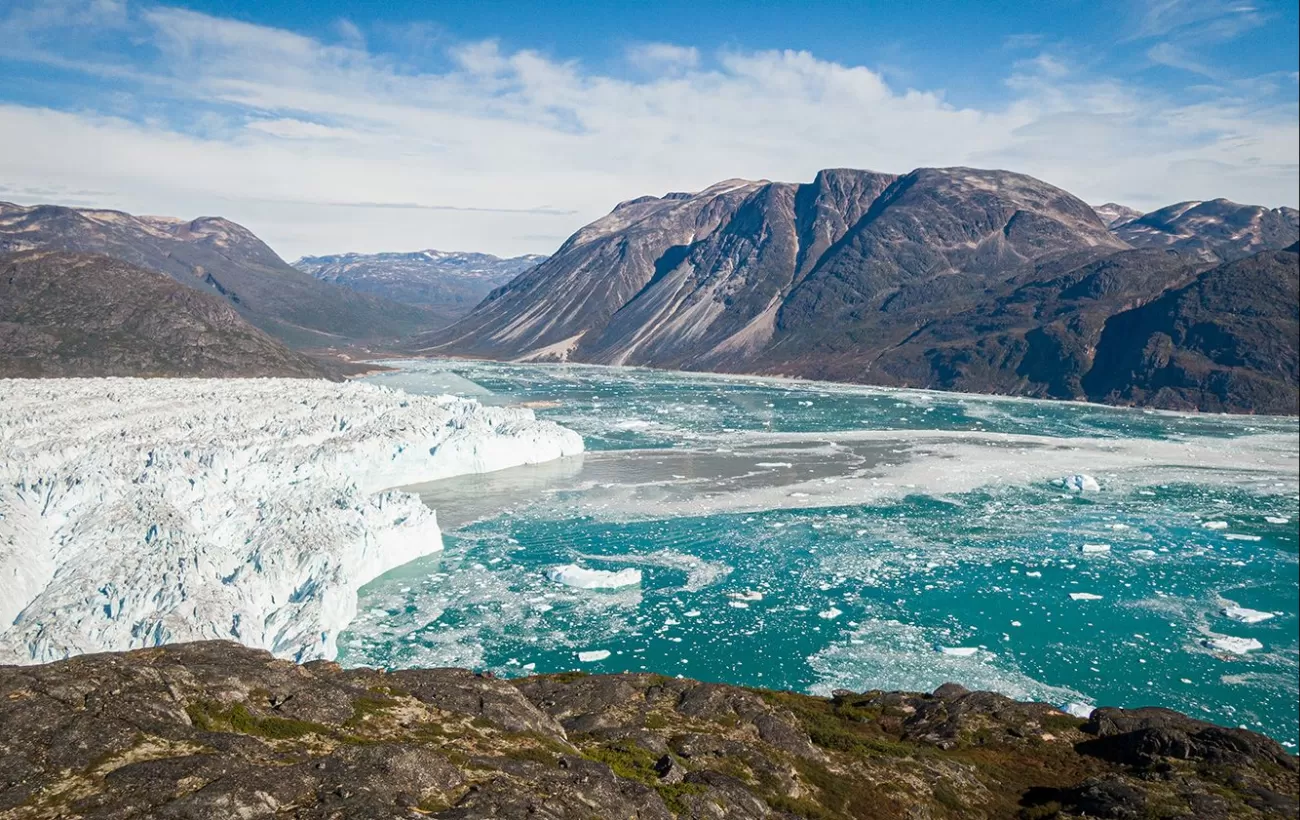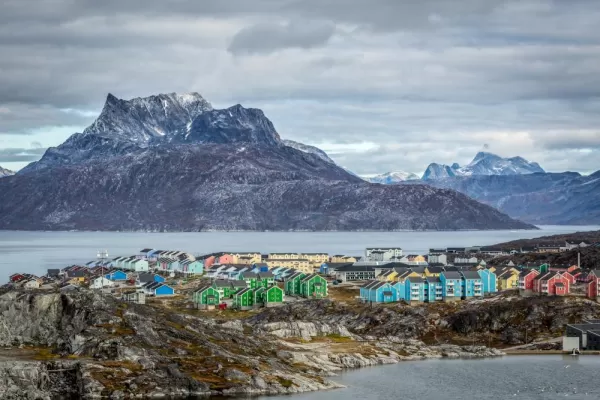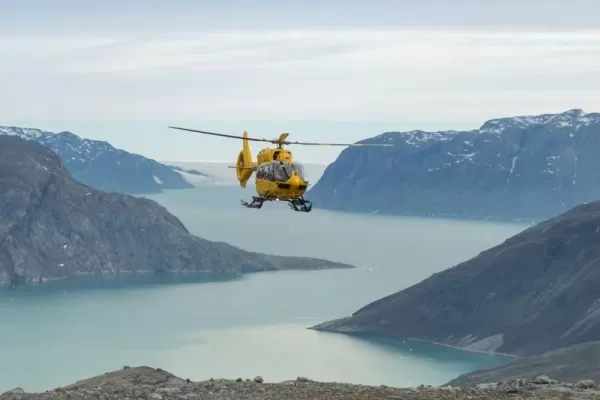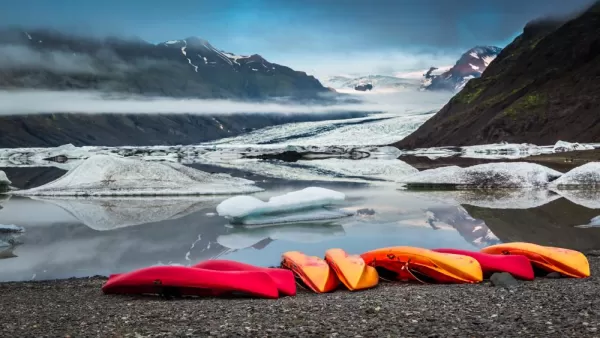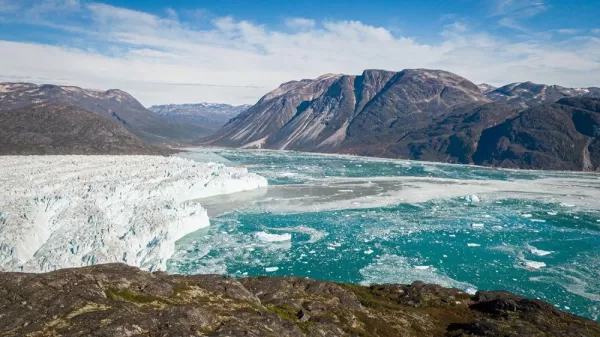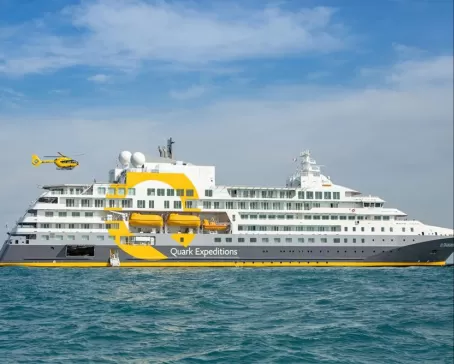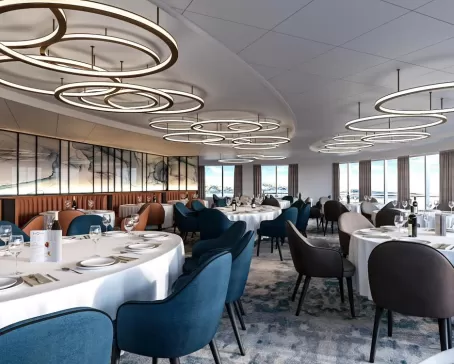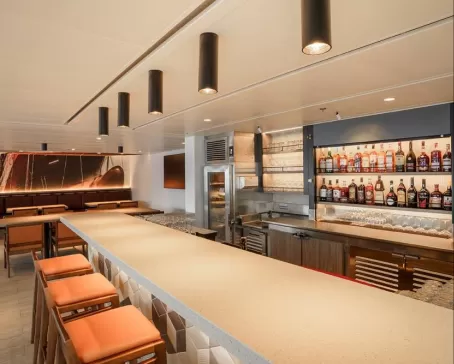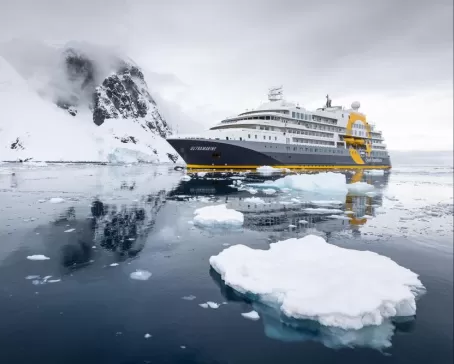
Following in the footsteps of the Greenlandic Norse into the western fjords, it’s easy to see why Erik the Red chose this land and gave Greenland its name. In every direction, blue, ice-strewn waters meet lush valleys and blooming pastures. Warm microclimates deep within the fjords—rare across the Arctic—create surprisingly fertile landscapes. Farming traditions dating back to Viking times continue today, with families tending remote sheep farms and producing seasonal crops along the shores. This quiet, pastoral landscape is a sharp contrast to what comes next: the Greenland Ice Sheet. With an average thickness of 1,673 meters (5,489 feet) and a maximum depth of over 3,488 meters (11,444 feet) at its thickest point, the Greenland Ice Sheet covers approximately 80% of the island. You enjoy sweeping aerial views of the world’s second-largest ice mass from your seat in one of the helicopters—and upon landing, experience something few other humans do: set foot on the Greenland Ice Sheet. Visitors often feel unprepared for the reality and scale of the Ice Sheet, where the absence of edges—as it stretches into the horizon—and the sheer physical presence of this ancient ice crackling underfoot transforms the abstract into something deeply tangible. Tamassa, meaning “Come in everyone” or “You are welcome,” is a unique onboard cultural exchange—offered on the same day as the Ice Sheet Experience—led by South Greenlanders themselves. Moving naturally through shared spaces onboard Ultramarine, local Greenlanders connect with guests through conversation, stories, hands-on workshops, food tastings, and performances. Tamassa, in this instance, invites Greenlanders into your home, the ship. You’ll also explore Kujataa, a UNESCO World Heritage Site that preserves a remarkable legacy of Norse and Inuit farming. There's an opportunity to visit Qassiarsuk, a small settlement across the water from Narsarsuaq, where you can experience true South Greenland hospitality and gain insight into life at the edge of the Ice Sheet. Take time to visit the remains and reconstructions of Brattahlíð, Erik the Red’s estate and once the heart of the Norse Eastern Settlement.