Have questions? We're here.

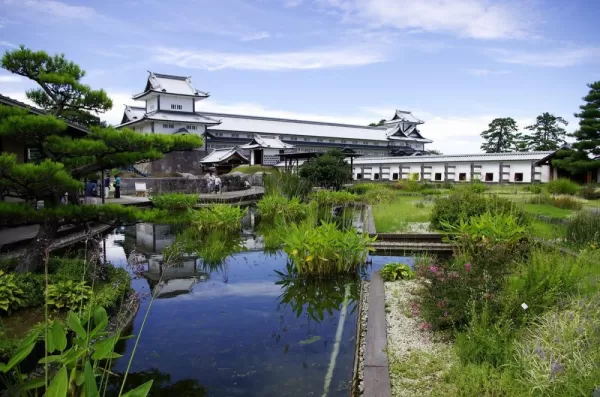
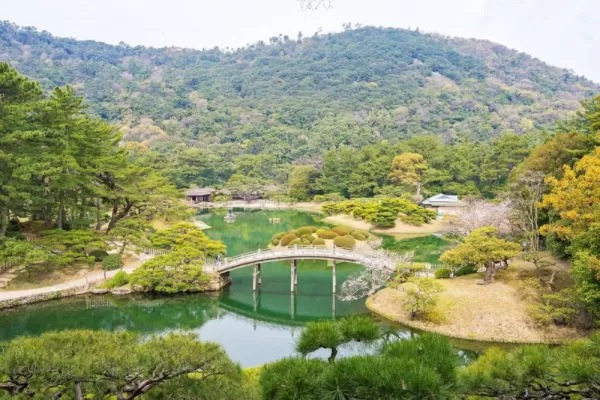
Iconic garden of Ritsurin

Japan's National Parks, Art and Culture

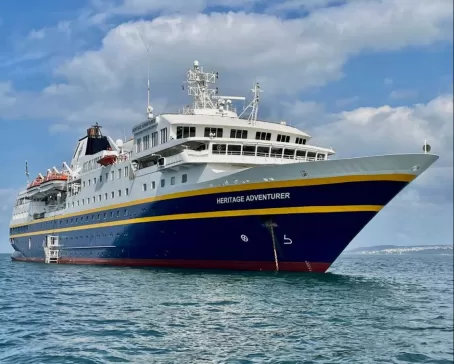
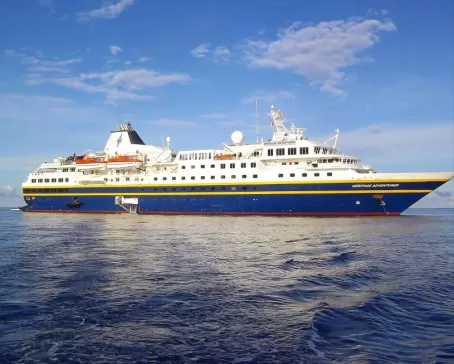
Osaka Roundtrip - Example 16 Day Cruise aboard Heritage Adventurer
Talk with an expert
Build your ideal Japan trip. Call 406.541.2677
Start Planning My Trip
Travel from Osaka aboard Heritage Adventurer on a 16-day expedition through Japan and South Korea. Visit Ise-Shima National Park, Izu Oshima, Ishinomaki, Hachinohe, Muroran, Akita, Sado Island, Kanazawa, Matsue, Fukuoka, Hiroshima, and Takamatsu. Explore Ise Jingū, Osaka Castle, Lake Towada, Kakunodate Samurai District, Shirakawa-go, Matsue Castle, Hiroshima Peace Park, and Miyajima Island. Discover Sado Island’s traditional culture, Kanazawa’s crafts and gardens, and Takamatsu’s bonsai and art. Cross the Sea of Japan to Ulsan and visit historic Gyeongju before returning to Osaka. The journey combines cultural sites, natural landscapes, museums, gardens, wildlife, and local traditions.
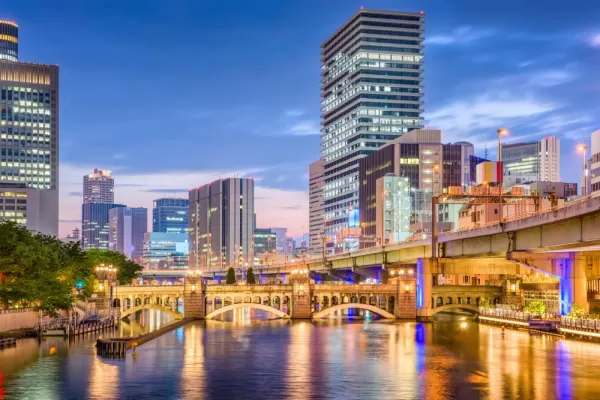
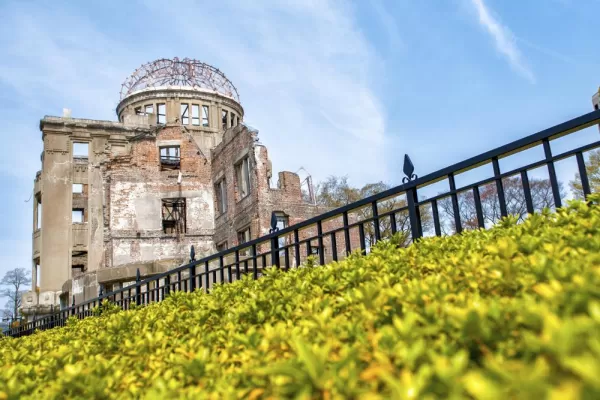
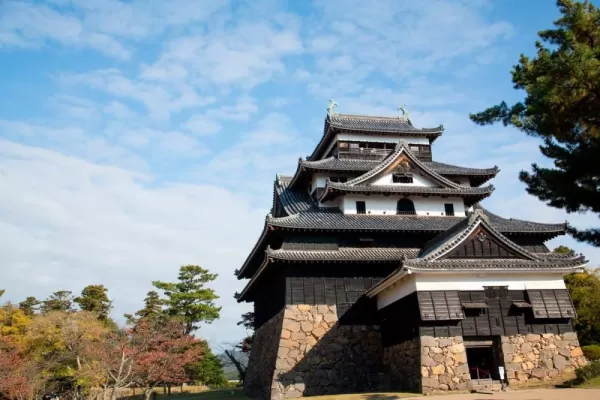
Kanazawa CastleClassical Noh dance-dramaHiroshima, MiyajimaOsaka's city lights after sunsetHiroshima Peace Memorial or Atomic Bomb DomeExploring Omicho fish market in KanazawaMatsue CastleIconic garden of Ritsurin
Highlights
  • Explore Osaka Castle and Minoh Park before boarding Heritage Adventurer
  • Explore Izu Oshima’s forests, volcanic landscape, plants, and birds
  • Discover Ishinomaki’s manga culture and explore nearby Matsushima Bay
  • Visit Hiroshima Peace Park and Museum before traveling to Miyajima
Places Visited
Activity Level: Variable
Activity options vary depending on destination and operator. Activity level is determined by the range and intensity of activities you choose to participate in. Discuss with your Trip Planner which options are best for you.
0

Full Itinerary

Expand All

Day 1: Osaka

Arrive in Osaka, Honshu’s largest port city, and see modern architecture and a busy dining scene alongside the 16th-century Osaka Castle. Transfer to your hotel and settle in for the first night. Join fellow travelers and expedition guides for dinner at the hotel.

Day 2: Osaka | Embark

Start with breakfast at the hotel, then explore Osaka with a choice of Minoh Park or Osaka Castle. Walk through Minoh Park, one of Japan’s smallest national parks, and see the 33-meter Minoh Waterfall, Japanese giant salamanders, and protected Mino monkeys. At Osaka Castle, visit the Main Tower and learn about the city’s history and warlords.

Alternatively, travel to Kyoto and visit the 12th-century Sanjusangen-do temple with its 1,001 statues. Walk through historic lanes associated with geiko and maiko culture, then browse Nishiki Market, known as “Kyoto’s Kitchen.” Later, board Heritage Adventurer and meet the Captain and Expedition Team.

Day 3: Ise-Shima National Park

Expect a day like no other as you explore Ise-Shima National Park. Often likened to a living museum the peninsula of Ise-Shima, or just ‘Shima’ as it is known to the locals, there is much to discover here including endless forests and abundant nature, rich maritime history, incredible coastal scenery, and Japan’s most sacred shrine complex Ise Jingū. Comprising some 125 different shrines hidden among a labyrinth of mossy walls and dating back to the third century Ise Jingū is considered the spiritual home of Shinto cosmology. Explore the grand shrine, Kotai Jingū, made entirely of Japanese cypress where no metal nails or screws have been used in its construction and, in accordance with Shinto practice, is rebuilt every 20 years in order to preserve its purity. Currently in its 62nd iteration, it was last rebuilt in 2013. Shima has been an official source of seafood for Japan’s imperial family since the 5th Century and the iconic amulet-wearing ama divers, female seabed foragers have been responsibly harvesting these waters since Japan’s Jomon era. At Ago Bay gaze out over the fascinating seascape created by more than 60 islands dotting the water and observe Shima’s sacred Meoto Iwa, Wedded Rocks, connected by a shimenawa rope near the Futami-Okitama Shrine.

Day 4: Izu Oshima Island

Izu Oshima is the largest of the Izu Islands, a chain of islands lying to the south of the Japanese mainland, which preserves its own unique natural and human history. Mount Mihara towers over the landscape at the island’s center, to the east a dramatic cliff drops into the ocean, while gently sloping plains extend towards the west. Almost entirely covered by forests, Oshima Island was certified as a Japan Geopark in September 2010 in recognition of its unique status. This morning you explore and discover the unique plants and birds that call the island home as well as meeting the local inhabitants to discover their way of life.

Day 5: Ishinomaki

After a morning at sea with presentations from the onboard experts you arrive in the port city of Ishinomaki. The city is renowned for the Shiogama Seafood Wholesale Market and its colorful urban core showcasing its ‘manga’ culture – the art of Japanese comic books and illustrated novels – thanks to famed pioneer Shotaro Ishinomori and creator of the popular Kamen Rider series. Throughout the city, you can observe artworks and statues celebrating the importance of the artist and the art in Japanese culture. South of the city is Matsushima Bay, studded with more than 200 pine-covered islands and considered one of Japan’s three most iconic views, take the opportunity to explore this beautiful landscape from the shores or discover from the water.

Day 6: Hachinohe | Lake Towada

With a Pacific shoreline of outstanding natural beauty, a clutch of fantastic cultural sights, thronging markets, and delectable seafood, there is a lot to see and experience during a visit to Hachinohe and the Aomori Region. Today there is the opportunity to explore the region’s fascinating connection with contemporary art through visits to two of Japan’s best contemporary art museums – the recently opened Hachinhoe Art Museum and the Towada Art Center. Reflecting a new approach to contemporary art, Hachinhoe Art Museum, also known as an ‘art farm’ offers a dynamic new interpretation of how and where art is created, housed in an innovative design intended to bring the community together to utilize the space. At Towada Art Center, one of Japan’s foremost contemporary art institutions, the striking Ryue Nishizawa-designed building features contemporary artists such as Leandro Erlich, Yayoi Kusama, and Ron Mueck. Alternatively, join a visit to the stunning Lake Towada, a thousand-year-old flooded double caldera some 400 meters above sea level, and its surrounding forest in Towada Hachimantai National Park. Lake Towada is the largest caldera lake on Honshu and is characterized by two large peninsulas which extend nearly a third of the way across the lake. On a clear day, Mt Towada is reflected in the still waters of the lake creating a picture postcard scene. While a short walk brings you to Oirase Stream with its beautiful and dynamic cluster of 30 waterfalls.

Day 7: Muroran

Adventures abound at Shikotsu-Toya National Park, named after its famous twin caldera lakes. Another picturesque natural hot spot, the park’s spectacular scenery including its impressive lakes, hot springs, and volcanic wonderland, are all easily accessible and offer multiple hiking and walking options. Activities here could include riding the cable car to the top of Mount Usu to take in the grand scale views over Lake Toya or visiting the geothermal spectacle of steaming vents and sulfurous streams at Jigokudani aka ‘Hell Valley’ and the Upopoy National Museum of the Ainu which stands on the shores of Lake Poroto where you have the opportunity to see and experience the Ainu culture including cuisine, music, and crafts. This afternoon enjoy free time to explore Muroran at your leisure, visit the scenic cape and lighthouse, or take in the city from above after a walk up Mount Sokuryo.

Day 8: Akita

A key city in the Tohoku region since medieval times, Akita was once a castle town of the Satake clan, but today is a vibrant, prosperous city that seamlessly honors its past while still embracing its young energetic spirit. Noted for its burgeoning art community, there are several fine museums to explore including the Hirano Masakichi Art Museum housing a collection of work by Western and Japanese artists as well as the Akita City Folklore Museum. Venture inland to discover the Kakunodate Samurai District, a living museum that showcases the samurai way of life in a picturesque setting that remains largely unchanged since it was established in 1620. Beyond Kakunodate in the mountainous spine of Honshu is Mount Akita-Komagatake where there are excellent hiking opportunities in sub-alpine and alpine habitats at the southernmost extension of Towada-Hachimantai National Park.

Day 9: Sado Island

Today you will explore remote Sado Island off the coast of Niigata. The entire island is designated as one of Japan’s Geoparks and comprises the mountain ranges of Osado and Kosado flanking the Kokunaka Plain. Once a destination of political exile, it now boasts its own rich cultural and religious life incorporating puppet theater, Okesa folk songs, Ondeko drumming and demon dances. Home to the Japanese Crested Ibis, extinct on the mainland, and the iconic Taraibune Tub Boats, which you will have the opportunity to experience, this island off the beaten path combines stunning natural scenery including Senkakuwan Bay and Ogi Peninsula, and wilderness and wildlife with a rich history including gold and silver mining, Samurai warrior culture and unique agri- and aqua-culture practices. Sado Island is widely considered a perfect miniature version of Japan. Here, you will visit the Shukunegi Village National Important Preservation Area and learn more about traditional taiko drumming at the Sado Island Taiko Center.

Day 10: Kanazawa

Options today include exploring the historic mountain settlement and UNESCO World Heritage Site of Shirakawa-go, high in the remote mountains of the Shogawa River Valley in Hakusan National Park. Take in the sights on mountain walks and experience the unique cultural traditions including the region’s iconic Gassho-zukuri farmhouses, some of which are hundreds of years old, designed to withstand the heavy snow in winter and provide a large attic space for cultivating silkworms. Alternatively, explore the rich art center of Kanazawa discovering some of the unique styles of Japanese art. Kanazawa is rightly famous for its Kutani-style pottery, exquisite lacquerware, gold-leaf workmanship, hand-painted silk, and classical Noh dance-drama performed since the 14th Century. Wander winding cobblestone streets, elegant restaurants, and craft galleries and visit the impressive Edo-period Kenrokuen Garden, one of the Three Great Gardens of Japan, and explore the Omicho Market boasting everything from flowers to crafts and food.

Day 11: Matsue

From the port of Sakaiminato you visit Matsue, the ‘town of water,’ which nestles between a scenic lake and a large lagoon. You visit the cultural attractions of the town, including the 17th-century Matsue Castle, before enjoying a boat ride along the local canals. After lunch on board, spend the afternoon at leisure or visit the Adachi Museum of Art, which is set in a beautiful natural environment. The museum is renowned for its superb Japanese gardens and collection of contemporary Japanese paintings, comprising some 1,500 of the country’s most highly regarded paintings produced after the Meiji period.

Day 12: Ulsan, South Korea

Today you cross the Sea of Japan to Ulsan in South Korea where the plan to visit the UNESCO World Heritage Site of Gyeongju. The capital of the Shilla Dynasty and dating back to the first millennium, Gyeongju is known as ’the museum without walls and is full of ancient Korean history and Buddhist culture. Enjoy strolling through hundreds of excavated monuments, temples, tombs, and pagodas, and experience Korean delicacies, and cultural performances, and visit the National Museum with its gold jewelry, metal weapons, and distinctive pottery. Today provides a perfect taste of the best South Korea has to offer.

Day 13: Fukuoka, Japan

The largest city on the island of Kyushu, Fukuoka is the union of the castle town of Fukuoka on the west bank of the Naka River and the merchant town of Hakata on the east bank. This buzzing metropolis combines an effortless blend of trendy Yatai food stalls (which made Lonely Planet and The New York Times 2023 travel lists) with vibrant art installations, historic ruins and colorful coastal parks. During your time here there may be opportunities to explore the northern city of Kitakyushu and the famed Kokura Castle, TOTO Museum and Kawachi Wisteria Garden or Nanzoin Temple with its reclining bronze Buddha (thought to be the world’s largest bronze statue). At the Dazaifu Tenmangu Shrine, which is built on the gravesite of poet and scholar Sugawara no Michizane, is surrounded by beautiful gardens, ponds and more than 6,000 plum trees.

Day 14: Hiroshima | Miyajima Island

Despite its history including being the site of the world’s first atomic bomb attack on the 6 August 1945, Hiroshima is a vibrant and thriving cosmopolitan community. The plan is to visit the beautiful Peace Park and Museum, with its somber cenotaph containing names of atomic bomb victims, and the permanently lit ‘Flame of Peace’. After visiting the Peace Park, travel to Miyajima Island, considered one of Japan’s most scenic spots, and the location of the Torii Gate and the Daisho-in Buddhist temple. For those after a nature fix, ascend Mount Misen on Miyajima Island by cable car and enjoy a hike, admiring the views below of the Shinto Shrine and Torri Gate.

Day 15: Takamatsu

Shikoku Island’s Takamatsu has had a long history as a port town earning itself the nickname ‘Gateway to Shikoku’, although more recently locals have been calling it ‘Udon Kingdom’. If you have an interest in plants a visit to Ritsurin Park, considered one of Japan’s finest gardens, is sure to be a highlight. Next, you enjoy a visit to Kinashi, one of Japan’s main bonsai production centers, where you learn about traditional methods of growing bonsai. For those interested in history and art you may wish to travel to Naoshima Island for a full-day excursion. Shikoku Island is known for its art and this excursion to Naoshima have you admiring its architecture and art museums, including Chichu Art Museum and Benesse House, featuring work by Japanese and international artists.

Day 16: Osaka | Disembark

  • 1 Breakfast
This morning sail back into Osaka, after breakfast there is a complimentary coach to a central hotel or to the Osaka airport. To allow time for disembarkation procedures and travel from Osaka, it is not recommended booking flights departing before 1300 hours.

Ship/Hotel

Heritage Adventurer

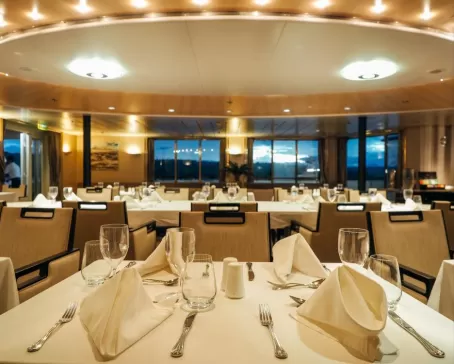
Dining area
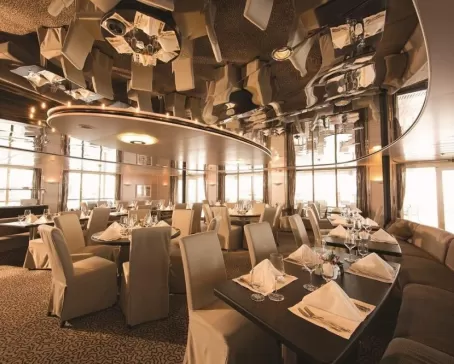
Heritage Adventurer Restaurant

Osaka - Hotels

Dates & Prices

My Preferred Start Date

This site is protected by reCAPTCHA and the Google Privacy Policy and Terms of Service apply.
Per person starting at
$13,450 2-3 travelers
Main deck
Main Deck Triple
Main Deck Triple Cabins on Deck 3 is a spacious 22m2 and feature two porthole windows, two single beds, and one Pullman bed which folds down from the wall, comfortable lounge, writing desk, private en-suite with shower, ample storage, and a flat-screen entertainment system.
Superior Triple
Superior Triple
Superior Triple Cabins on Deck 5 are a spacious 22m2 and feature large panoramic windows, two single beds, and one Pullman bed which folds down from the wall, comfortable lounge, writing desk, private en-suite with shower, ample storage, and a flat-screen entertainment system.
Deck 4 Superior
Deck 4 Superior
Superior Cabins on Deck 4 are a spacious 22m2 and feature large panoramic windows, king or two single beds, comfortable lounge, writing desk, private en-suite with shower, ample storage, and a flat-screen entertainment system.
Deck 5 Superior
Deck 5 Superior
Superior Cabins on Deck 5 are a spacious 22m2 and feature large panoramic windows, king or two single beds, comfortable lounge, writing desk, private en-suite with shower, ample storage, and a flat-screen entertainment system.
Main deck
Main Deck Single
Main Deck Single Cabins on Deck 3 is a spacious 22m2 and feature two porthole windows, king bed, comfortable lounge, writing desk, private en-suite with shower, ample storage, and a flat-screen entertainment system.
Heritage Adventurer - Superior Single
Superior Single
Superior Single Cabins on Deck 5 are a spacious 22m2 and feature large panoramic windows, king bed, comfortable lounge, writing desk, private en-suite with shower, ample storage, and a flat-screen entertainment system.
Worseley Suite
Worsley Suite
Located on Deck 6, Worsley Suites are a spacious 22m2 and feature large panoramic windows, king or two single beds, comfortable chaise-style lounge suite, writing desk, private en-suite with shower, ample storage, and a flat-screen entertainment system.
Heritage Suite
Heritage Suite
Located on Deck 6, Heritage Suites are an expansive 44m2 and feature large double panoramic windows, king bed, large living area with a sofa, coffee table, and chairs, and grand marble bathroom with a double basin, bathtub, and shower, large writing desk, floor to ceiling cabinetry for storage and a flat-screen entertainment system.

Notes

- Included landing fees are not eligible for promotions or agency commission.
- Single clients are matched with a sharer of the same sex in a twin-share cabin. Payment of a single supplement guarantees a single cabin. The single supplement is 1.8 times the price of the voyage with the exception of the suites which are double the single rate.
-Emergency medical evacuation coverage for a minimum of US$100,000 per person required. Contact us for details on arranging travel insurance.
 
Included
  • 15 Breakfasts, 14 Lunches, 15 Dinners
  • 15 Nights Accommodations
  • Accommodations as listed
  • Ground transportation as listed
  • Activities as listed
  • Meals as listed
  • Access to a 24-7 Emergency line while traveling
  • House beer, wine and soft drinks with lunch and dinner
  • Landing fees
  • All expedition shore excursions
  • Programme of lectures by noted naturalists
  • Pre- & Post- Cruise Transfers
  • One night hotel accommodation equivalent to your on board accommodation (incl. dinner/breakfast)
Excluded
  • Gratuities
  • Travel Insurance
  • Personal Expenses
  • Flight costs (please request a quote)
  • Additional excursions during free time
  • Fuel and transportation surcharges (when applicable)
  • Required Visas if applicable
  • Laundry 
  • Drinks
  • Mandatory medical evacuation insurance

Map

Inquire

* By providing your phone number, you consent to receive direct phone calls or SMS messages from our Trip Planners to get the process started. We do not share your information with third-parties.
Change & customize to make it yours.
Travel Agents
This site is protected by reCAPTCHA and the Google Privacy Policy and Terms of Service apply.

We Love to Talk Travel

Call 800.344.6118
or
Chat Now
Everything was amazing! The planning with Adventure Life went smoothly. The actual trip was fantastic! One of the best trips I have experienced. The cruise staff members were knowledgeable and attentive. I will be writing more about this on the blog!
Justin Chappelle

Why Travel With Us?

Advocacy That Matters

You're backed by a team that knows the industry and has strong relationships—helping ensure you're prioritized and well taken care of every step of the way.

Rewards That Go Further

Secure your 5% Past Traveler Rewards across a wide range of ships and destinations - not a single brand and not just cruises.


More Value.

Receive personal attention and concierge-level service for the same cost as booking direct. Gain access to exclusive rates, perks, and insider expertise on how to maximize the value for your dollar.

As Featured In

How it Works

Connect

No cost, no commitment. Talk with our experts about your dream trip.

Plan

Share your travel style—we match you with the right itinerary or create one just for you.

Book

Lock in knowing every detail is handled and you’re fully supported.

Travel

Enjoy a seamless journey—and unlock 5% off your next adventure.