A firsthand guide from someone who just got back — including a few things that didn't go as planned.
New Zealand is one of those destinations where the timing of your trip genuinely changes what you experience. The country spans a wide range of climates and terrain, the North and South Islands behave quite differently from each other seasonally, and some of the most sought-after activities — stargazing at Lake Tekapo, scenic flights over glaciers, the road into Milford Sound — are weather-dependent in ways that no amount of planning can fully control.
I traveled with my husband from mid to late May this year, which put us squarely in shoulder season heading into autumn. Here's what I'd tell a client considering their options.
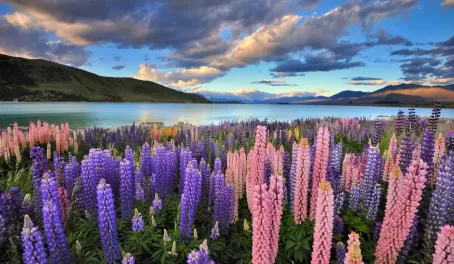
Lake Tekapo (Jess Heuermann)
North Island vs. South Island: Different Countries, Essentially
The North and South Islands have distinct personalities, and that extends to their weather. When you're planning the best time to visit New Zealand, it helps to think about them separately.
The North Island is warmer and more subtropical, especially in Auckland and the Bay of Islands. Rotorua and Taupo sit at higher elevations and can be chilly even in summer. Wellington, at the southern tip, is famously windy and unpredictable year-round — locals call it the 'Windy City' without irony.
The South Island runs colder and drier on the east coast (Christchurch, Tekapo) and dramatically wetter on the west coast (Franz Josef, Queenstown, Fiordland). Milford Sound averages over seven meters of rain annually — it's one of the wettest places on earth, and that's part of what makes it look the way it does.
Wet and Green view of the Milford Sound in New Zealand (Jessica Heuermann)
View of the Milford Sound Fiord in New Zealand (Jessica Heuermann)
December – February: Peak Summer
This is New Zealand's high season, and for good reason. You get long days, the best chance of clear skies for stargazing and scenic flights, and ideal conditions for hiking the great walks — the Milford Track, Routeburn, and Tongariro Alpine Crossing. The Tongariro Crossing in particular is a summer hike; the high-alpine route can be closed or dangerous in other seasons.
The tradeoff is that everyone knows this. Popular accommodation books out months in advance, the Great Walks require ballot or early reservation, and Milford Sound sees its largest crowds. If you're booking peak summer, do it early — Milford cruise operators and top lodges fill up faster than most clients expect.
Christmas through early January is also when domestic Kiwi travel peaks, which compounds availability issues in beach towns and national park areas.
March – May: Autumn Shoulder Season
This is a sweet spot that more travelers should consider. The summer crowds thin out noticeably in March and April, and the South Island in particular is beautiful in autumn — golden leaves in Central Otago wine country; crisp, clear days in the Mackenzie Basin; and the mountains start to get their first dustings of snow on the peaks.
Pricing on accommodation drops, guides and operators are more available, and you get a less rushed version of the experience. In Wellington and Christchurch, autumn is often the most pleasant season — mild, drier than winter, and uncrowded.
What you're trading off: evenings get shorter and cooler as you move through May. Some high-alpine hiking routes (Tongariro, Kepler) start to require more caution or may have restricted access by late April. And weather-dependent activities become less reliable.
I traveled in late May, which is late shoulder — leaning toward early winter in the south. On our trip, the stargazing summit experience at Lake Tekapo was canceled due to cloud cover. The operator offered a museum-style alternative at their facility — genuinely interesting, and we had the option for a full refund if we'd preferred — but it's a good illustration of the tradeoff. That said, I'd still recommend autumn shoulder for the right traveler. When you get a clear day in the South Island in May, it's hard to beat.
June – August: Winter
Winter is underrated for clients who aren't chasing hiking. Queenstown becomes a ski destination, the South Island backcountry is stunningly dramatic under snow, and the North Island stays relatively mild. Auckland in July is roughly equivalent to San Francisco in January — cool and sometimes rainy, but perfectly comfortable.
Milford Sound is actually extraordinary in winter — fewer crowds, more waterfalls from the rainfall, and a moody atmosphere that photographs better than the busy summer version. The road in can be subject to snow closures in extreme weather, but it's passable most days.
What to watch: the Desert Road through Tongariro National Park can close in heavy snow, and the Crown Range between Wanaka and Queenstown requires care in icy conditions. If you're self-driving the South Island in winter — which I'd still recommend — build in flexibility.
Scenic flights over Franz Josef and Fox Glaciers operate year-round, but winter brings more clouds and a lower success rate. On our trip in late May, we were on standby for a scenic flight at Tekapo because we were the only two booked — operators have minimum passenger requirements — and ultimately couldn't get on it. We had the flexibility of a self-drive, so we simply adjusted and drove on. That flexibility matters a lot in winter.
September – November: Spring Shoulder Season
Spring is the other shoulder window, and arguably the better one for activities. Hiking routes start to open up, lambing season makes the countryside particularly scenic, and the weather is improving without yet tipping into summer’s peak pricing and crowds.
September and October can still bring cold snaps and unpredictable weather, especially in the South Island. The Tongariro Alpine Crossing typically reopens for reliable hiking in October. By November, you're essentially getting early summer conditions at late shoulder prices — it's often the best value window of the year.
One consideration: some operators run reduced schedules in early spring and gradually increase departures through October. As a result, guided tours, especially small-group experiences, may offer fewer departure dates in September than later in the season, even though it's already spring.
What This Means in Practice
Build in flexibility for weather-dependent activities.
Milford Sound, scenic flights, and stargazing are all subject to cancellation. The better operators have solid backup options — but you should know going in that these aren't guaranteed. Booking refundable options where possible, and not scheduling a weather-dependent activity on the last day before a flight is just good planning.
Shoulder season works best with a local contact.
Having a local partner on the ground makes a material difference when things shift. On our trip, a morning Dart River jetboat tour was canceled because we were the only ones booked. Our local coordinator had us rebooked on the afternoon departure before we'd even had breakfast. That kind of support is the difference between a disruption and a wasted day.
Self-driving adds resilience.
Whether you're traveling peak or shoulder, self-driving gives you control over pacing in a way that packaged transfers don't. When a flight cancels, or an activity shifts to the afternoon, you can work around it. We had to rebook a Wellington-to-Christchurch flight through Nelson after the original was canceled — a longer day, but manageable. On a fully escorted itinerary, that would have cascaded into more problems.
The South Island is the weather-sensitive island.
The North Island is more forgiving — Auckland, Rotorua, and Wellington are worth visiting in almost any season. If you have limited time and want the maximum chance of good conditions for the South Island highlights, aim for November through March, with October and April as reasonable shoulder bets.
The Short Version
For most travelers: aim for shoulder season. March-April and October-November give you the experiences without the peak-season logistical headaches, and the landscapes are often more striking. Summer (December-February) is the right call for hikers who want the Great Walks in top condition, or families working around school schedules. Be prepared to book a year in advance for summer months
Winter has its fans who want ski season in Queenstown, moody Milford, and a dramatically uncrowded North Island. Just calibrate expectations for weather-dependent activities and make sure the itinerary, and your expectations, have flexibility built in.
Ultimately, there's no single best time to visit New Zealand. The right season depends on the experiences you're looking for. Once you've decided when to visit, plan and book early. Accommodations and popular guided walks, especially during peak travel periods, are often booked months in advance, and reserving ahead gives you the best selection and flexibility for your trip.
Jess Heuermann | Adventure Life | Based on a self-drive research trip, North & South Islands, May 2026
Our team is waiting and ready to talk with you about your next adventure.
So go ahead and book an appointment with one of our specialized trip planners.
This was our second trip using Adventure Life and it was once again fantastic! We live busy lives, and while we can and have planned our own travel, we've found working with Adventure Life to be a huge life improvement! They are able to suggest and coordinate activities we never would have found on our own and the companies/hotels are always top-notch. We have also found we are treated even better at hotels/activities because they know we are working with a travel company and want to maintain a good relationship. Our trips are always on a limited timeframe (school breaks/holidays) and we have found that working with Adventure Life is the best way to make sure we see as much as possible as efficiently as possible!
Amanda Harvey
9 months ago
Our trip planner was keen on understanding our travel dreams. She listened and was able to create a spectacular trip that met all our goals and needs.
Anita Uyehara
1 year ago
I enjoyed working with Jess to put together a private N.Z. trip. Jess has been my go-to person at Adventure Life over the past several years. She listens to what my husband and I want in a trip, and is always responsive to questions. Nothing seems to be too much of a bother for Jess.
DIANNE GRAY
1 year ago
It is invaluable to speak with people that have first hand knowledge about the ship, cruise line or itinerary! Helps select well-informed trip and not be disappointed.