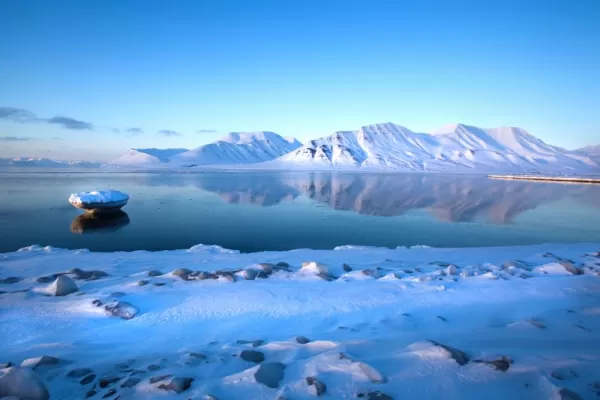
In early June, I ventured to the High Arctic with Quark Expeditions aboard the Ocean Explorer, exploring the dramatic wilderness of Svalbard. Cruising through ice-choked fjords under the midnight sun, we were treated to unforgettable polar bear sightings, hunting from fast ice. It was a true Arctic safari, filled with awe, wildlife, and the raw beauty of one of the planet’s most remote frontiers.
Walrus in Svalbard (Kassandra Magruder) New 2025 Regulations in Svalbard: What You Need to Know
As of January 1, 2025, Svalbard has implemented new environmental protection rules designed to safeguard its delicate Arctic ecosystem:
1. Polar Bear Viewing Distances
Visitors must stay at least 300 meters away from polar bears year-round.
From March 1 to June 30, this increases to 500 meters, when bears are hunting seals from the fast ice.
If a bear comes closer than the allowed distance, you’re required to move away immediately.
2. Cruise Ship & Landing Limits
Ships with more than 200 passengers are no longer allowed to enter Svalbard’s national parks and nature reserves.
Landings are restricted to 43 approved sites across the archipelago, mostly on the western coast. Since there are fewer landing sites, this means more zodiac cruises and cruising from the ship. Also note that shore excursions are hard to do in early June due to snow. It limits the amount of hiking that can be done. If you want to stretch your legs on land every day, go later in the season. I made use of the onboard gym every day due to limited shore excursions.
Only 100 people are allowed ashore at any one time, even if more passengers are aboard. Landings are often done in shifts, which could affect your time on land if the ship is near full capacity.
3. Drone and Boat Traffic Regulations
Drones are now banned in all protected areas and around bird cliffs between April 1 and August 31.
Boats must maintain a 150-meter distance from walrus haul-outs and reduce speed to 5 knots or less within 300 meters of these areas.
A similar slow-speed rule applies within 500 meters of bird cliffs during nesting season.
Gear Tips: Capture Your Own Arctic Wildlife
The increased viewing distances mean that having the right gear is more important than ever:
Bring an 800 mm (or longer) telephoto lens if you’re hoping to get your own quality shots of polar bears, seabirds, and other wildlife.
I traveled with a 300 mm lens, and while it was decent for some closer scenes, I had to rely on the ship photographer for real close-up shots.
A longer lens gives you reach without sacrificing image quality through excessive cropping.
Bring your own binoculars—ideally 10× or 12× magnification.
While the ship had some on board, they weren’t allowed to be taken ashore or on Zodiac rides.
Having a personal pair makes a huge difference when scanning ice floes for wildlife at a distance.
Why It Matters
These new regulations are a big step forward for conservation in the High Arctic. They prioritize wildlife well-being and help preserve this fragile region for future generations. But for travelers, they also mean that you’ll be seeing much of the action from farther away—which can impact how you photograph and experience wildlife.
With the right gear and a little preparation, though, you’ll still have an unforgettable Arctic adventure.
In Summary: What to Bring
800 mm+ telephoto lens – To get close-up photos while keeping legal distance. If you can't afford a super expensive telephoto lens, the ships have photographers on board who share their photos after the cruise.
10× or 12× binoculars – For spotting animals from the ship, shore, or Zodiac. If you don't bring your own, you'll miss out on observing polar bear behavior.
Extra batteries, warm gloves & memory cards – Cold drains power quickly and wildlife moments happen fast
Even with these new restrictions, Svalbard remains one of the most stunning places on Earth. Bring the right gear, respect the rules, and you’ll come home with memories—and maybe even a few jaw-dropping photos—you’ll never forget.
Our team is waiting and ready to talk with you about your next adventure.
So go ahead and book an appointment with one of our specialized trip planners.
Shannon was always quick to reply to my questions and her honest answers helped us identify the right trip for us. Off to a great start!
Lisa Jibson
2 weeks ago
Erin is absolutely THE BEST. She is so knowledgeable and easy to work with. She listens to what we want and taylors her information to suit our needs. She is prompt in replying to my e-mails.
Carla
1 month ago
great travel company. We called for a last minute trip to Svalbard. Kevin gave great advice and worked fast, and emailed promptly. He even got us some last minute discounts. Highly recommend!
We also traveled through Adventure Life on another Arctic cruise, and they supported us through some trying circumstances.
Karen G
1 month ago
It was a great experience arranging our Svalbard wildlife cruise (Around Spitzbergen - in the reals of polar bear and ice, on MV Plancius) with Adventure Life. They are very reliable with information and trustworthy with payment handling. We organised this trip one year ahead and we were kept up to date all the way. Our dedicated travel advisor, Chloe made our travel experience extra convenient and super easy. Very happy with Adventure Life's service and support. Would recommend them 100% to everybody.❤️
Aindrila Chakrabarti
2 months ago
Wonderful and very Memorable trip!
Both me and my wife enjoyed the incredible scenery, excursion and good company or people we met.
Some confusion on Svalbard arrangements but they were eventually resolved.
More than happy to recommend to others