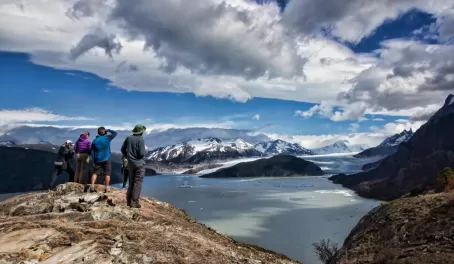
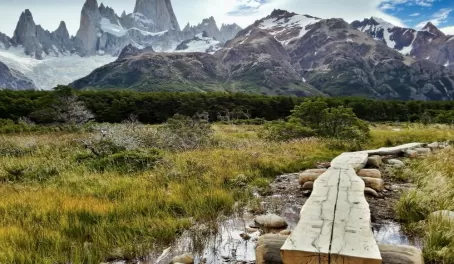
The windswept steppes of Patagonia feature some of the most stunning vistas in all of Argentina and Chile, but during the summer (from late November to early March) is the ideal time to visit this enchanting region. Since it is in a remote corner of the world, even the high season does not imply heavy tourist traffic.
Often more powerful in summer, though strong gusts can occur year-round, and temperatures in the normally chilly Tierra del Fuego and Torres del Paine National Park in southern Patagonia can get as high as a balmy 15-20ºC. Additionally, hiking trails are more accessible during this time of the year. Though not as strong as the summer winds, there are still gusts consistently throughout the winter.
Autumn (late March-April) and spring (October-November), considered the shoulder seasons, are fair alternatives to the summer months, with generally less wind but cooler temperatures than the summer months.
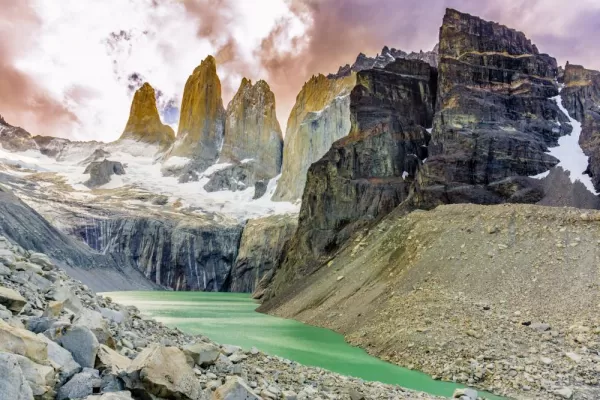
W-Circuit Torres del Paine
When to Go to Patagonia: Season by Season
Patagonia in Spring (September–November)
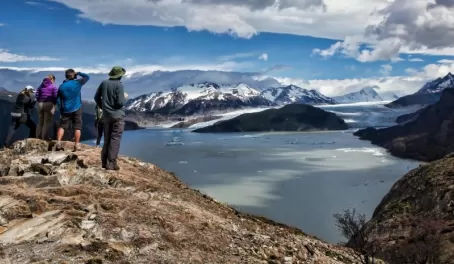
Spring in Patagonia marks the start of the tourist season, with snow beginning to melt and trails reopening after the long winter. Temperatures are still cool, and strong winds are common, but the landscape bursts to life with wildflowers and active wildlife. This is an excellent time for hikers who want fewer crowds compared to the peak summer months. Popular trekking routes in Torres del Paine and Los Glaciares start to become more accessible, though higher-altitude trails may still have lingering snow. Ferry services and excursions are resuming, making it easier to explore remote areas that were cut off during winter.
Patagonia in Summer (December–February)
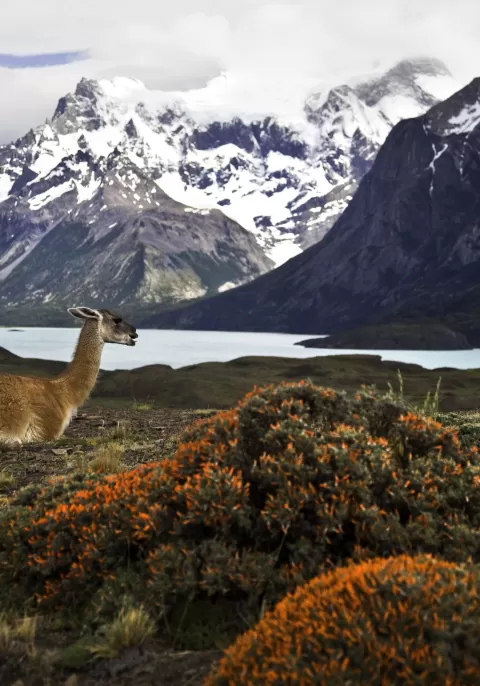
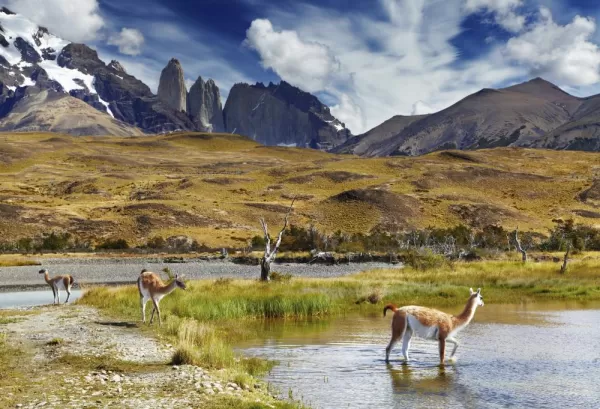
This is Patagonia’s high season, with the warmest temperatures of the year, long daylight hours, and the most stable weather for outdoor adventures. All major attractions, including iconic hikes like the W Trek in Torres del Paine and visits to Perito Moreno Glacier, are fully open. Expect more visitors and higher prices, but also the best chance to enjoy clear skies and extended daylight — ideal for photographers and explorers alike. Wildlife spotting is excellent, especially for guanacos, condors, and even whales along the coast. Book accommodations and tours well in advance, as this is the busiest time of year.
Patagonia in Autumn (March–May)
Autumn transforms Patagonia into a painter’s palette of golden and crimson hues, especially in the lenga and ñire forests. Crowds thin out dramatically compared to summer, and prices start to drop, making this an attractive option for travelers seeking quieter experiences. Daytime temperatures are mild but can drop quickly, and winds tend to calm compared to earlier in the year. This is still a great season for hiking, though some services begin winding down toward May. Photographers will find this season particularly rewarding, with soft light and dramatic contrasts between snow-capped peaks and fall foliage.
Patagonia in Winter (June–August)
For most hikers and many routes this is a difficult and limited period, and many services will be closed — only consider winter travel if you are experienced, well equipped, and comfortable with limited infrastructure. Some say this is a particularly picturesque time to visit, but the severe weather and closure of major trails, especially in Torres del Paine, make it a bad time to visit. The few winter activities available are mainly limited to ski resorts and small towns that cater to local tourism, but for most travelers, this season is best avoided.
The only thing predictable about Patagonia’s daily weather is that it is unpredictable – storms could pop up quickly and weather patterns also tend to change quickly, so you should always be prepared with adequate layers.
No matter when you decide to go, layers and a good windbreaker are essential for an enjoyable experience in Patagonia.
When to Visit Patagonia: A Month-by-Month Travel Guide
Patagonia’s wild beauty changes dramatically with the seasons, making the timing of your trip a key factor in shaping your experience. For most travelers, the best months to visit are December through February, when summer brings warmer temperatures, long daylight hours, and the most accessible hiking trails. These peak-season months are perfect for tackling iconic treks like the W Trek in Torres del Paine or witnessing the immense Perito Moreno Glacier. However, summer also means higher winds, larger crowds, and premium pricing, so booking in advance is essential.
If you’re looking to avoid the busiest season, the shoulder months of October–November and March–April offer a great balance of milder weather, fewer visitors, and lower prices. These periods still provide excellent opportunities for hiking and photography, with the added bonus of spring wildflowers or autumn foliage. On the other hand, winter (May–September) is best reserved for those interested in skiing or capturing Patagonia’s snow-covered landscapes, as many trails and parks close due to harsh weather. Use the month-by-month guide below to decide which time of year best matches your travel goals.
Summer
January
Best time to visit: Warm temperatures & high winds.
February
Best time to visit: Warm temperatures & high winds.
Autumn
March
Good alternative: Shoulder season, lower winds, chillier temperatures, lower prices
April
Good alternative: Shoulder season, lower winds, dropping temperatures, lower prices
Winter
May
Okay for scenery & skiing; Otherwise not a great time to visit.
June
Not ideal: Many trails & parks (including Isla Magdalena & Torres del Paine) are closed or inaccessible due to extreme weather; blue skies, lower winds, bitter cold, impassable conditions.
July
August
September
Spring
October
Good alternative: Shoulder season, lower winds, chillier temperatures, lower prices
November
Good alternative: Shoulder season, lower winds, rising temperatures, lower prices
Summer
December
Best time to visit: Warm temperatures & high winds.
Each season in Patagonia offers a distinct experience, from vibrant spring blooms to summer’s adventure-ready conditions, autumn’s rich colors, and winter’s stark, snowy solitude. The best time for your trip will depend on whether you prioritize optimal hiking conditions, fewer crowds, or unique seasonal scenery.
Ready to plan your Patagonia adventure? Contact us today and let our experts help you choose the perfect season for your trip.
By submitting your email address, you are agreeing to opt in to marketing communications. We hold your information private and do not share it with third parties.
Jess H.
Patagonia
Chat Patagonia with a specialist
Our team is waiting and ready to talk with you about your next adventure.
So go ahead and book an appointment with one of our specialized trip planners.
There were a lot of moving parts in scheduling our itinerary. Franny at Adventure Life responded rapidly whenever I had a question or scheduling update. She did her best in planning what seems to be a wonderful trip within our time window and close to our budget. We had made contact with an representative at another agency at the same time that I contacted Franny. Within 24 hours it was obvious that Franny had outworked the other rep and we remained with her.
JoeJ
3 months ago
The online suggested trips were a great starting point. It was easy to adjust the trip itinerary for our interests and timeframe. Sandra was very responsive to questions and concerns. She answered every question quickly and thoroughly.
Sue D.
3 months ago
Very easy to work out lots of details with Erin as we are coordinating 3 different adventures into 1 continuous trip.
Dear Customer
4 months ago
Communicating in a clear prompt manner
Andrew Warden
5 months ago
Adventure-Life is our sole resource for travel. Kassandra and Neth have proven themselves and taken the time to learn our needs and desires. They take care of us like family.