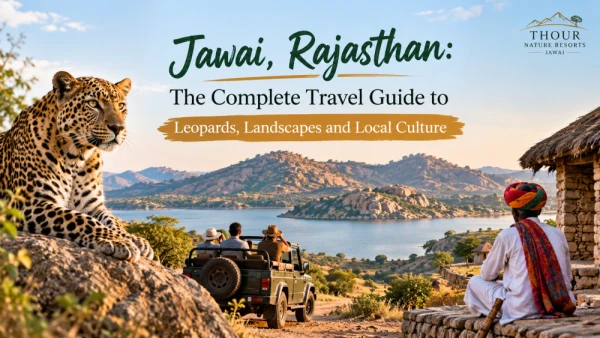
Jawai, Rajasthan: The Complete Travel Guide to Leopards, Landscapes and Local Culture
Discover Jawai, Rajasthan, with this complete travel guide covering leopard safaris, granite hills, Jawai Dam, birdwatching, Rabari culture, nearby attractions, the best time to visit, and how to reach the region. Explore travel tips, accommodation options, and responsible wildlife experiences to plan a memorable trip. For a comfortable stay among Jawai’s natural surroundings, discover Thour Nature Resorts Jawai, offering luxury tents, cottages, a swimming pool, and rooftop dining.
Jawai, Rajasthan: The Complete Travel Guide to Leopards, Landscapes and Local Culture
Oct 29, 2026
Photo by thour nature resorts jawaiJawai, Rajasthan, is a destination where rugged granite hills, open countryside, wildlife and traditional rural life come together. Located in Pali district, the region is widely known for its leopard habitat, Jawai Dam, birdlife and the cultural traditions of the Rabari pastoral community.
Unlike many conventional wildlife destinations, Jawai offers an opportunity to experience wildlife alongside an inhabited rural landscape. Leopards live among rocky hills, while villages, livestock and everyday community life continue across the surrounding countryside.
Whether you are planning a leopard safari, a photography trip, a weekend getaway or a longer Rajasthan itinerary, this guide covers Jawai's landscape, wildlife, history, local culture, best time to visit, transport options and accommodation.
Quick Answer: What Is Jawai Famous For?
Jawai, Rajasthan, is best known for its leopard habitat, granite hills, Jawai Dam, birdlife and the pastoral culture of the region. Located in Pali district, it offers wildlife experiences in a landscape where people and nature share the same environment. Popular activities include leopard safaris, birdwatching, scenic drives and exploring local culture. October to March is generally a popular period to visit because outdoor conditions are often more comfortable.
1. Where Is Jawai Located in Rajasthan?
Jawai is a region in Rajasthan's Pali district, in western India. Its landscape includes granite hills, scrubland, rural settlements, agricultural areas and water bodies. The destination is commonly associated with Jawai Dam and the surrounding leopard habitat.
Jawai Bandh and Falna are useful railway stations to consider when planning a train journey. Road transfers are generally needed to reach individual resorts and safari meeting points. The most convenient airport depends on current flight schedules and your onward road journey.
Before travelling, confirm the exact location of your accommodation and safari meeting point because properties across the wider Jawai region may be some distance apart.
2. What Makes Jawai Different from Other Wildlife Destinations?
Granite Hills and Rocky Terrain
Jawai's granite formations create caves, crevices and elevated rocky slopes. These features form part of the habitat used by leopards and contribute to the area's distinctive scenery.
Wildlife and Rural Life Together
The countryside includes villages, livestock, grazing areas and agricultural land. The relationship between wildlife and local communities is an important part of Jawai's identity.
A Landscape Beyond the Safari
Visitors can explore more than leopard sightings. Jawai Dam, birdwatching, countryside views, local food and traditional village settings add variety to a visit.
3. The History of Jawai and Jawai Dam
Jawai's modern identity is closely associated with Jawai Dam, an important water-storage structure in Rajasthan. The reservoir supports water management in the region and contributes to the surrounding landscape and bird habitats.
The wider history of Jawai is also connected with rural settlements, pastoral livelihoods and the use of local land and water resources. The region is therefore more than a wildlife destination; it is a living countryside where communities and nature have long shared the landscape.
For further research, consult official Rajasthan tourism resources, government publications and wildlife research institutions.
4. Geography and Natural Landscape of Jawai
The landscape around Jawai is characterised by granite outcrops, dry scrub vegetation, open plains, scattered trees and seasonal changes in water availability. These features create a setting that differs from the dense forests commonly associated with wildlife safaris.
The rocky terrain is central to the region's visual identity. Large granite formations rise above the surrounding countryside, creating distinctive viewpoints and silhouettes against the sky.
The climate is generally hot during summer, while winter mornings and evenings can be cool. Seasonal rainfall and water conditions influence vegetation, bird activity and the appearance of the landscape.
5. Leopard Safari in Jawai, Rajasthan
Leopard safari is one of the main reasons travellers visit Jawai. The region is known for leopard habitat among its rocky hills, making it a destination of interest to wildlife enthusiasts and photographers.
What Happens During a Leopard Safari?
Exploring rocky hills and the surrounding countryside.
Observing the landscape and looking for signs of wildlife.
Learning about local wildlife habitats from guides.
Photographing the scenery and animals when sightings occur.
Understanding how wildlife shares the landscape with nearby communities.
Are Leopard Sightings Guaranteed in Jawai?
No. Leopards are wild animals, and sightings cannot be guaranteed. Their movements depend on weather, time of day, disturbance and natural behaviour. A responsible safari should prioritise wildlife welfare rather than close encounters or guaranteed photographs.
What Should You Carry for a Safari?
A camera or binoculars, if available.
A hat, sunscreen and drinking water.
Weather-appropriate, comfortable clothing.
Any personal essentials you may need during the trip.
Follow your guide's instructions and avoid loud noises or behaviour that may disturb wildlife. Confirm safari duration, departure time, meeting point and inclusions before booking.
6. Wildlife in Jawai Beyond Leopards
Although leopards are the region's best-known attraction, Jawai's wider countryside supports other wildlife. Depending on the habitat and season, visitors may encounter or observe signs of animals such as Indian foxes, hyenas, nilgai and wild boar.
The landscape also supports reptiles and a variety of smaller animals. The combination of rocky terrain, scrubland, water bodies and rural habitats contributes to the area's ecological diversity.
Wildlife sightings vary. Visitors should never attempt to approach, feed, chase or touch wild animals.
7. Birdwatching Around Jawai Dam
Jawai Dam and nearby water bodies are important places for travellers interested in birds. The reservoir and surrounding habitats can attract resident and migratory species depending on the season and water conditions.
Early mornings can provide pleasant conditions for observing birds and enjoying the landscape. The actual species present will depend on the time of year and local habitat conditions.
Birdwatching Tips
Carry binoculars if available.
Move quietly and maintain a respectful distance.
Avoid disturbing birds near nesting or resting areas.
Consider visiting with a knowledgeable local guide.
Do not assume a particular species will be present on every visit.
8. Jawai Dam: Scenic Views and Natural Surroundings
Jawai Dam is one of the region's recognisable landmarks. Along with its practical role in water management, the reservoir contributes to the scenery and provides habitat for birds and other wildlife.
The appearance of the landscape changes with the season. Water levels, vegetation and light conditions can influence the views available to visitors. Early morning and late afternoon may provide attractive natural light for photography.
Check local access conditions before visiting and avoid entering restricted areas or interfering with water-management infrastructure.
9. Rabari Culture and Rural Life in Jawai
The Rabari community is an important part of the cultural landscape of the Jawai region. Rabaris are traditionally associated with pastoral livelihoods and livestock herding, although occupations and lifestyles vary between individuals and families.
Across the countryside, pastoral traditions form part of a wider relationship between communities, livestock, grazing areas and local resources. This cultural context is one reason Jawai is more than a wildlife destination.
How to Experience Local Culture Respectfully
Learn about the region through knowledgeable local guides.
Ask permission before photographing people.
Respect private homes, working areas and community customs.
Support local businesses and services where possible.
Avoid disrupting livestock or daily work.
Understanding rural life adds an important dimension to a Jawai trip. The region's identity comes from the interaction of its natural environment, local communities and tourism.
10. Temples and Places to Explore Near Jawai
Parshuram Mahadev Temple
Parshuram Mahadev Temple is a religious site in the broader region, associated with a cave setting in the Aravalli landscape. The journey may involve additional road travel and walking, so check local access information and conditions before planning a visit.
Ranakpur Jain Temple
Ranakpur Jain Temple is a notable architectural and religious landmark in Rajasthan, known for its detailed marble craftsmanship and distinctive temple design. It may suit a wider Rajasthan itinerary, although driving time from Jawai should be checked before including it in a day trip.
Planning Cultural Visits
Check driving distances, road conditions, opening arrangements and visitor requirements. If you have limited time, prioritise the experiences most relevant to your interests.
11. Best Time to Visit Jawai, Rajasthan
October to March: Popular Travel Season
These months are generally more comfortable for outdoor activities, with cooler mornings and evenings than the peak summer period. They are suitable for combining safaris, sightseeing and time at your accommodation. Winter mornings can be chilly, so carrying an extra layer is useful.
April to June: Hot Summer Months
Summer temperatures can become high, particularly during the afternoon. Plan outdoor activities carefully, stay hydrated and follow local advice. Confirm safari schedules before travelling.
July to September: Monsoon Season
Rainfall can change the appearance of the countryside and bring greener scenery. However, weather conditions and road accessibility may vary. Check forecasts, local road conditions and activity availability before departure.
Practical tip: October to March is a useful starting point for planning a first visit, but the most suitable dates depend on your interests, current weather and available activities.
12. How to Reach Jawai, Rajasthan
By Train
Jawai Bandh and Falna are railway stations travellers can consider. Train services and stops differ, so check current timetables and choose the station that best suits your final destination. From the station, arrange a taxi or accommodation transfer, subject to availability.
By Road
Road travel is a practical option for visitors coming from different parts of Rajasthan and neighbouring states. Driving times depend on your starting point, route, traffic and road conditions.
Confirm your resort's exact location and safari meeting point before leaving. Properties described as being in Jawai may be spread across the wider region.
By Air
Travellers arriving by air generally need an additional road journey to reach Jawai. Udaipur, Jodhpur and other airports may be considered depending on current flight schedules, fares and onward transfer times.
Travel Planning Checklist
Confirm your arrival station or airport.
Arrange a road transfer to your accommodation.
Check the distance to your safari meeting point.
Confirm check-in and check-out times.
Verify safari booking details and departure arrangements.
A one-night stay can suit travellers with limited time. You may be able to combine a safari with a meal and some time to enjoy the surrounding landscape, depending on arrival and departure schedules.
Two Nights and Three Days
Two nights offer more flexibility. Travellers can plan more than one wildlife activity, spend time at their accommodation, explore local scenery and avoid making the entire trip dependent on a single safari.
Three Nights or Longer
A longer stay may suit wildlife photographers, birdwatchers and visitors who prefer a slower itinerary. It also gives you more flexibility to explore nearby cultural sites or adapt plans to weather and local conditions.
14. Where to Stay in Jawai
Jawai offers a range of accommodation options, from nature camps and luxury tents to comfortable cottages and resorts surrounded by the region's distinctive granite hills. The right choice depends on your budget, preferred level of comfort and the kind of experience you want during your visit.
Travellers planning a wildlife-focused holiday can consider staying at a property that offers comfortable accommodation while keeping them connected to Jawai's natural surroundings. Thour Nature Resorts Jawai is one accommodation option for visitors exploring the region. The property offers luxury tents and cottages, along with a swimming pool, rooftop dining and spaces to relax after a day exploring Jawai's landscapes and wildlife.
When choosing where to stay in Jawai, consider the distance from your planned safari meeting point, the type of accommodation, available dining facilities and whether safari arrangements can be coordinated with your stay. Booking in advance is advisable during popular travel periods, particularly from October to March.
A safari offers an opportunity to explore the rocky landscape and learn about leopard habitat. Sightings are never guaranteed, so approach the experience with patience.
Explore the Countryside
The granite hills and open landscape create opportunities for scenic drives and photography. Follow local guidance and avoid entering private or restricted land without permission.
Enjoy Birdwatching
Jawai Dam and other water bodies may attract a variety of birds. Binoculars and a local guide can make the experience more informative.
Experience Local Culture
Learn about rural livelihoods, regional food and traditional practices through respectful interactions and locally guided experiences.
Visit Nearby Religious and Cultural Sites
Depending on your itinerary, you may be able to include temples and other regional landmarks in your trip.
Enjoy a Relaxed Resort Stay
Some travellers prefer to balance outdoor activities with time to relax. Depending on the property, this may include dining, swimming, enjoying views or spending time in the natural surroundings.
The most rewarding itinerary is often one that leaves room to appreciate the landscape rather than packing every available activity into a single day.
16. Local Food and Practical Travel Tips
Food is another way to experience Rajasthan's regional culture. Depending on the restaurant or accommodation, visitors may find traditional Rajasthani dishes alongside familiar Indian and other cuisines.
Menus vary, so travellers with dietary requirements should confirm available options in advance. Ask your host or a local guide about regional dishes commonly prepared in the area.
Practical Tips for Visitors
Clothing: Wear comfortable, weather-appropriate clothing and carry an extra layer for cool winter mornings.
Sun protection: A hat, sunglasses and sunscreen are useful for outdoor activities.
Hydration: Carry drinking water and avoid unnecessary exertion during the hottest part of the day.
Footwear: Comfortable footwear is helpful for uneven ground.
Photography: Bring the equipment you need, but do not disturb wildlife to get a photograph.
Connectivity: Mobile coverage can vary by location. Save important booking details before travelling.
Bookings: Confirm accommodation, safari inclusions, transfers and cancellation terms before making final plans.
17. Responsible Tourism in Jawai
Responsible tourism matters in a landscape where wildlife habitats and rural communities exist alongside tourism activity. Visitors can help protect the destination by making thoughtful choices during their stay.
Respect Wildlife
Maintain a safe distance from animals, follow your guide's instructions and never attempt to feed or provoke wildlife. Avoid loud noises and do not pressure drivers or guides to approach animals too closely.
Respect Local Communities
Ask before photographing residents, respect private property and avoid disrupting livestock or daily work. Cultural understanding should come before obtaining photographs or social media content.
Reduce Waste
Carry reusable items where practical, dispose of rubbish responsibly and avoid leaving plastic or food waste in natural areas.
Support Local Livelihoods
Where possible, choose responsible local guides, purchase locally made products and use services that contribute to the regional economy.
Follow Local Guidance
Access rules and wildlife-management practices may change. Follow current instructions from authorised guides and relevant local authorities.
18. Is Jawai Suitable for Families, Couples and Photographers?
For families: A trip can combine outdoor exploration with time to relax at the accommodation. Confirm safari age requirements, vehicle arrangements and relevant safety guidance before booking. For couples: The landscape, scenic drives, wildlife experiences and quiet time away from busy cities can make Jawai an appealing short break. For wildlife photographers: The region's rocky terrain and wildlife offer photographic opportunities. Patience, suitable equipment and ethical wildlife practices are important. For birdwatchers: The dam and surrounding habitats can provide opportunities for observing birds, particularly when seasonal conditions are favourable. For nature-focused travellers: Jawai offers a chance to explore a landscape where wildlife, rural life and natural scenery are closely connected.
19. What Is the Budget for a Jawai Trip?
The cost of a trip to Jawai varies according to the season, accommodation category, number of nights, transport arrangements and activities selected.
Accommodation prices can change between travel periods. Safari charges may vary according to the operator, vehicle type, duration and inclusions. Transport costs depend on your starting city and whether you travel by train, private car or taxi.
For an accurate budget, calculate the following:
Accommodation for the full stay.
Safari and other activity charges.
Train or flight tickets.
Road transfers and local transport.
Meals not included in your booking.
Optional sightseeing and personal expenses.
Request a clear breakdown before confirming a booking. Check whether taxes, meals, transfers and safari arrangements are included in the quoted price.
20. Frequently Asked Questions About Jawai, Rajasthan
1. Where is Jawai located?
Jawai is a region in Pali district, Rajasthan, India. It is known for its granite hills, leopard habitat, Jawai Dam and rural landscape.
2. What is Jawai famous for?
Jawai is especially known for leopard safaris, rocky hills, birdwatching, Jawai Dam and the pastoral culture associated with the Rabari community.
3. Is Jawai worth visiting?
Jawai can be rewarding for travellers interested in wildlife, natural scenery, photography and rural Rajasthan. The experience depends on your interests, travel dates and expectations.
4. What is the best time to visit Jawai?
October to March is generally a popular period because outdoor conditions are often more comfortable. Check the weather and activity availability before travelling.
5. Can I see leopards in Jawai?
Leopard sightings are possible but never guaranteed. Leopards are wild animals, and their movements depend on natural conditions and behaviour.
6. How long should I stay in Jawai?
One night may suit a short trip, while two nights provide more flexibility for safaris, relaxation and sightseeing. Wildlife photographers may prefer a longer stay.
7. How do I reach Jawai by train?
Jawai Bandh and Falna are railway stations travellers can consider. Check current train services and arrange onward transport to your accommodation.
8. Which airport should I use to reach Jawai?
The most suitable airport depends on available flights and the onward road journey. Compare options such as Udaipur and Jodhpur based on your departure city and current schedules.
9. Is Jawai suitable for a family holiday?
It can suit families interested in nature and outdoor experiences. Check activity suitability, transport arrangements and safety guidance before booking.
10. Is Jawai good for wildlife photography?
Jawai's granite hills, open landscapes and wildlife can offer interesting photographic opportunities. Ethical observation and patience are essential.
11. Can I visit Jawai Dam?
Visitors may be able to explore accessible areas around Jawai Dam, subject to local access conditions. Follow signs and instructions, and do not enter restricted areas.
12. What other wildlife can be found around Jawai?
The wider region supports other wildlife, which may include foxes, hyenas, nilgai, wild boar, reptiles and birds. Actual sightings vary by location and season.
13. Can I experience Rabari culture in Jawai?
Visitors can learn about pastoral traditions and rural life through respectful, locally guided experiences. Always ask permission before photographing residents.
14. What should I pack for Jawai?
Carry comfortable clothing, suitable footwear, sun protection, drinking water and a light layer for cool winter mornings. Binoculars or a camera may also be useful.
15. Where can I stay in Jawai?
The region offers different accommodation styles, including camps, tents, cottages and resorts. Thour Nature Resorts Jawai is one option, offering luxury tents, cottages, a swimming pool and rooftop dining. Check current availability and inclusions directly with the property.
16. Is Jawai only a leopard destination?
No. In addition to leopard safaris, visitors can explore birdlife, scenic landscapes, Jawai Dam, rural culture and nearby religious or cultural sites.
17. Is Jawai hot in summer?
Summer can be very hot, particularly in the afternoon. Travellers visiting between April and June should plan outdoor activities carefully and check local weather conditions.
18. Is Jawai worth visiting during the monsoon?
The monsoon can bring greener scenery, but weather and road conditions may vary. Check current conditions and confirm that your planned activities are operating.
19. Can I visit Jawai on a weekend trip?
A weekend trip may be practical depending on your starting city and travel time. Two nights can offer more flexibility than a rushed overnight visit.
20. What should I check before booking a Jawai safari?
Confirm the operator, duration, meeting point, price, inclusions, cancellation terms and current operating arrangements. Remember that wildlife sightings cannot be guaranteed.
Conclusion: Planning Your Jawai, Rajasthan Trip
Jawai offers a distinctive combination of granite landscapes, leopard habitat, birdlife, a reservoir and traditional rural culture. Its appeal lies not only in the possibility of seeing a leopard but also in experiencing a countryside where wildlife and human life share the same environment.
A well-planned visit should balance safari time with opportunities to appreciate the landscape, learn about local culture and relax between activities. Choose your travel season carefully, confirm transport and accommodation arrangements, and follow responsible wildlife practices throughout your stay.
For travellers looking for a place to stay while exploring the region, Thour Nature Resorts Jawai offers luxury tents and cottages, a swimming pool and rooftop dining. Explore the property and accommodation options on the official website.
Our team is waiting and ready to talk with you about your next adventure.
So go ahead and book an appointment with one of our specialized trip planners.
Adventure Life always listens to our wants and is able to translate that into amazing experiences that easily flow from one to the other.
Deb Jewell
2 days ago
We have worked with Kassandra at Adventure-Life for several years. She continues to provide excellent guidance on our trips. This time, we tossed some real challenges - explicit number of days, specific itineraries and limitations on who we would prefer to sail with. She actually gave us choices ! Deposit in place and working on additional details for insurance and extensions. Another success !!
Kathryn Jones
4 days ago
Seamless connections. Excellent guides. Fulfilled every request. Very nice hotels.
Susan Vogel
5 days ago
Its a beautiful country, very friendly people, and everything went like clockwork. The local guide/driver was one of the best we've had: knowledgeable, always on time, had good ideas for what to see. Khiri Travel (the local travel agency) is terrific. Second trip we've taken with them. Recommend them and Adventure Life 100%
LEIGH
1 week ago
Adventure Life organized an incredible trip matching our desired itinerary, with perfect planning and coordination from end to end, including a hand-off of guides and drivers across an international land border. I highly recommend their services.