A journey through Vietnam offers an incredible mix of contrasts, from quiet mountain villages to fast-paced, energetic cities. The pace, food, activities, and interactions can shift dramatically depending on where you are. Embracing all sides of Vietnam gives travelers a fuller understanding of the country, its culture, and its people.
Life in the Rural North
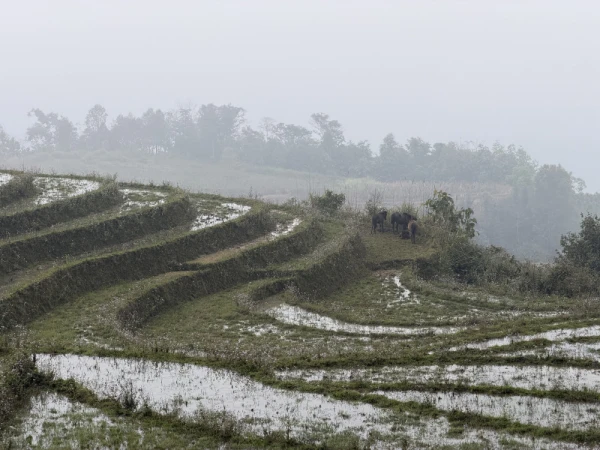
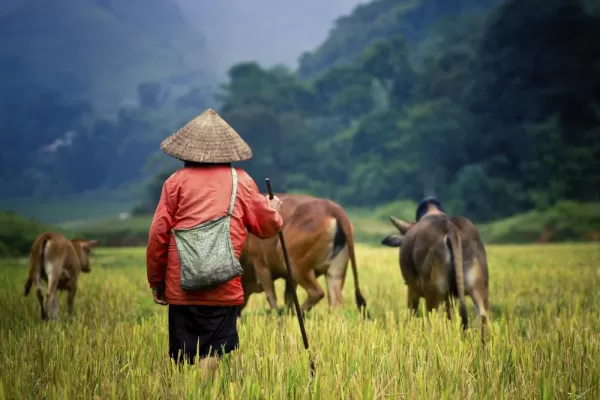
Foggy mountain rice field in Sa Pa, Vietnam (Franny Friesz)
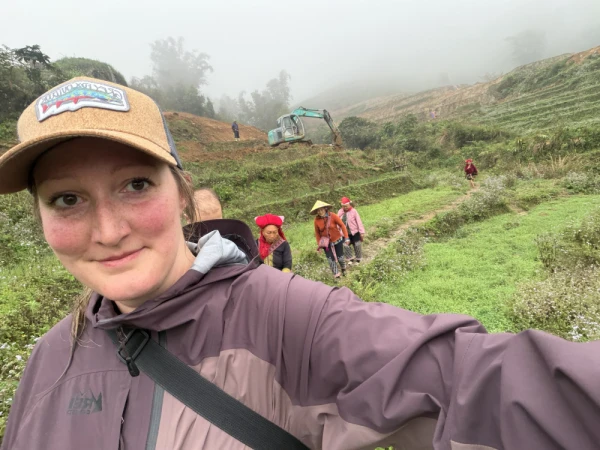
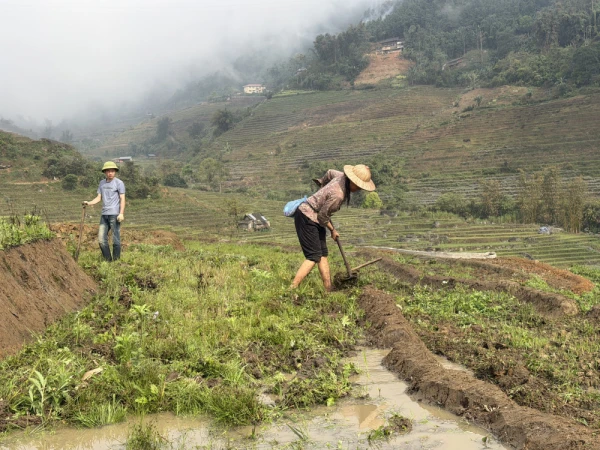
Franny visiting the local rice field village in Sa Pa Vietnam. (Franny Friesz) a local doing the farm work in Sa Pa, Vietnam (Franny Friesz)
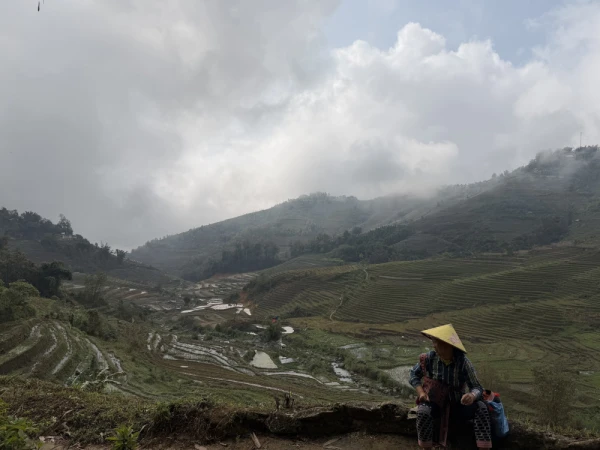
In the northern highlands, particularly around Sa Pa, life moves at a much slower pace. Known for its terraced rice fields, misty mountains, and diverse ethnic minority communities, this region offers a quieter side of Vietnam. Many travelers visit to explore the outdoors, hiking through mountain trails and cascading rice terraces, cycling along scenic countryside roads, and visiting remote villages where traditional customs and ways of life have been preserved for generations.
One of the most meaningful parts of visiting Sa Pa is the opportunity to connect with local communities. We work with trusted local guides, many of whom are from the villages themselves and belong to ethnic groups such as the Red Dao or Hmong. Their firsthand knowledge of the region provides insights into local traditions, farming practices, and daily life that are difficult to experience independently. While many younger guides speak English, conversations are often conducted using basic English, especially in more remote villages. As a result, more detailed cultural discussions may occasionally be limited by language.
The value of traveling with a local guide extends well beyond conversation. There is something powerful about walking alongside someone who points out their home village in the distance or shows you the rice terraces their family has worked for generations. Their connection to the land is unmistakable, adding a level of authenticity and perspective that goes far beyond what you might learn from a guidebook.
Another unique aspect of visiting rural northern Vietnam is the local souvenir culture. Along some hiking routes, women from ethnic communities such as the Red Dao may choose to accompany travelers for part of their journey. They often spend time chatting, pointing out features along the trail, or simply walking alongside visitors before offering handmade textiles, embroidery, or other crafts for sale at the end of the hike. While this may come as a surprise if you're experiencing it for the first time, it is a well-established part of the local economy and provides an important source of income for many families.
Outside of Sa Pa, Ha Long Bay offers a slower pace, where nature takes center stage. Exploring the bay by kayak brings you closer to its towering limestone formations, while cruises venture into quieter, less-visited areas that feel far removed from the crowds. Life on the water moves at an unhurried rhythm, creating the perfect setting to relax and fully appreciate the bay's remarkable scenery.
City Life: Energy and Culture
a local doing the farm work in Sa Pa, Vietnam (Franny Friesz) Rice field scenery on top of foggy Sa Pa, Vietnam (Franny Friesz)
In contrast, Vietnam's cities offer a completely different experience. Places like Hanoi are busy, full of life, and constantly on the move. The pace is faster, the streets are louder, and the energy is ever-present.
Walking tours are one of the best ways to experience the city, offering opportunities to discover historical landmarks and cultural sites, navigate bustling markets and hidden alleyways, and gain a deeper understanding of Vietnam's complex history and modern identity.
One of the most memorable aspects of city life in Hanoi is simply crossing the street. With a constant stream of motorbikes and other vehicles, traffic rarely comes to a complete stop. Rather than waiting for a perfectly clear moment, pedestrians typically step into the street and walk at a steady, predictable pace while drivers adjust their path and flow around them. It can feel chaotic at first, but many visitors quickly discover that it becomes a surprisingly natural part of the experience.
Food as a Cultural Experience
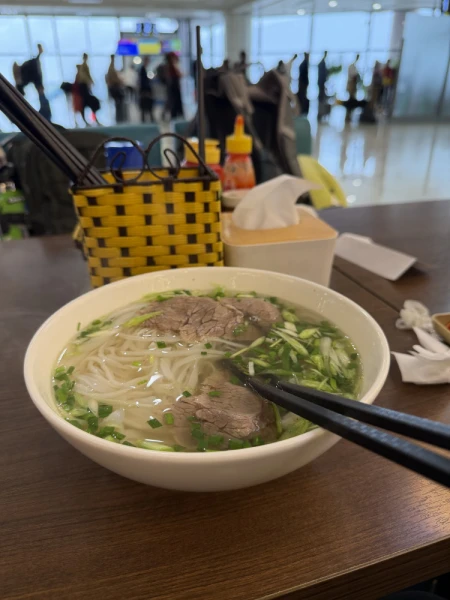
A bowl of Vietnamese Pho (Franny Friesz)
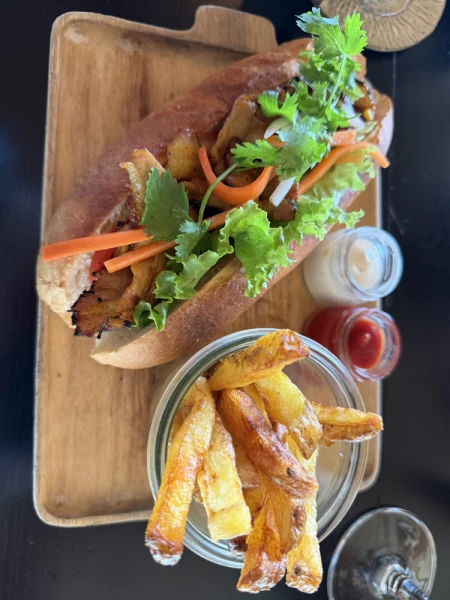
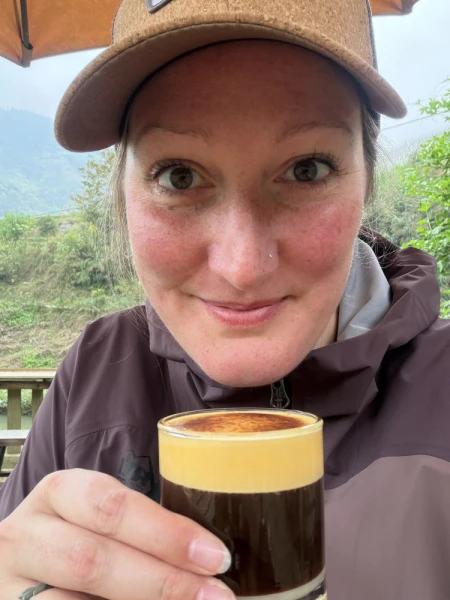
A plate of Vietnam's famous Banh Mi sandwich (Franny Friesz) Franny having a cup of egg coffee in Sa Pa Vietnam (Franny Friesz)
Food is one of the most immersive ways to understand Vietnam, and it varies just as much as the landscapes.
In the cities, dining is often highly specialized in culinary staples, like:
Pho – Vietnam's iconic noodle soup, known for its fragrant, slow-simmered broth, fresh herbs, rice noodles, and a choice of beef, chicken, or other regional variations.
Banh mi – A crisp baguette sandwich filled with a combination of savory meats or pâté, pickled vegetables, fresh herbs, cucumber, and flavorful sauces, reflecting Vietnam's French colonial influence.
Coffee – Vietnam's thriving coffee culture features distinctive brewing methods and drinks, from robusta beans brewed through a traditional metal phin filter to creamy egg coffee, rich coconut coffee, and strong iced coffee sweetened with condensed milk (cà phê sữa đá).
Noodle dishes – Beyond pho, Vietnam offers a wide variety of regional noodle specialties, including bún chả (grilled pork with rice vermicelli), bún bò Huế (a spicy beef noodle soup), cao lầu (Hoi An's signature noodle dish), and mì Quảng (turmeric-infused noodles served with a small amount of rich broth and fresh herbs).
This focus allows each place to perfect its craft, creating incredibly flavorful and authentic meals.
Whether you are enjoying a bowl of noodles on a busy street corner or sipping coffee in a tucked-away café, food lets you transcend beyond being a tourist and embrace the daily culture.
Practical Tips: Cash Is King
No matter where you are in Vietnam, one thing remains consistent: cash is essential. While larger hotels and some restaurants may accept credit cards, many smaller businesses, particularly in rural areas, operate on a cash-only basis. Even when cards are accepted, a surcharge is often added to the transaction. Souvenirs, local meals, transportation, and tips are typically paid in cash, so it's a good idea to carry small bills for everyday purchases. Being prepared with cash will help you navigate both urban and rural destinations with greater ease and avoid unnecessary inconvenience.
The Best of Both Worlds
Seeing both the rural and urban sides of Vietnam is key to truly understanding the country. The peaceful landscapes of Sa Pa and Ha Long Bay offer insight into traditional ways of life, while cities like Hanoi showcase Vietnam’s energy, growth, and modern culture.
Together, these experiences create a well-rounded journey, one that highlights not only the beauty of Vietnam’s landscapes, but also the depth and diversity of its people.
Our team is waiting and ready to talk with you about your next adventure.
So go ahead and book an appointment with one of our specialized trip planners.
This is our third trip with Adventure Life and they make the process so easy. I love the willingness to tailor make a trip for us based on our needs and desires. Thank you Kassandra, Jess and Juliane for always going the extra mile for us. We’ve tried other travel planning companies but always come back to Adventure Life!
Deborah Prosek
3 months ago
Adventure Life helped us plan a 23 day trip to Thailand, Cambodia and Vietnam. The trip was fabulous! Tour guides were knowledgeable, helpful and responsive to our needs. Transportation from point to point went smoothly in all cases. The sites visited were amazing. Adventure Life delivered in a huge way. Thank you Adventure Life!!!
Mary Westphal
3 months ago
You make it easy!
Planning a trip can be daunting and time consuming with all the logistics. I worked with Jeff and he listened to what I wanted and can back with great suggestions. I especially appreciate the ideas for going to less touristed places. Those can be hard to find if you’re on the other side of the world and often aren’t in guidebooks, so getting advice from people on-the ground is invaluable.
Thank you for making it come together quickly and painlessly.
Suzanne.
Suzanne M.
6 months ago
I have traveled with Adventure Life multiple times now. The staff is super friendly and very knowledgeable on the country you are interested in. It is white glove service from start to finish. We have had to use their emergency hotline a couple of times for a missed flight and potential weather problem. You always worry if someone is going to pick up, but not with Adventure Life. Someone answers the phone every time! If you have to have a problem, I know they are there to help. I highly recommend allowing Adventure Life to plan your next adventure. We are thinking about where they will take us next!
Pamela Copeland
1 year ago
As always out planner (Jess) was available and great with suggestions and advice.