Vietnam's diverse geography, culture, and history create pronounced differences between its northern and southern regions. Understanding these distinctions is essential for anyone seeking to appreciate the unique charm of each area, whether you're a traveler, an expatriate, or simply an enthusiast of Vietnamese culture.
Contact us to get started planning your next Vietnamese adventure.
Climate
Northern Vietnam:
The climate in northern Vietnam can be starkly contrasted with that in the south due to the latitude and geographical features. Northern Vietnam experiences four distinct seasons: spring, summer, fall, and winter.
- Winter: Spanning from December to February, can be particularly harsh. Temperatures drop significantly, reaching as low as 10 °C, and mountainous regions such as Sapa may even experience snowfall. The cold can sometimes be damp, particularly challenging for those not accustomed to it.
- Spring: Fom March to April, brings high humidity and frequent fog, alongside a significant amount of light rain, making the surroundings lush and green.
- Summer: From May to August, can be extremely hot, with temperatures soaring above 40 °C, combined with high humidity.
- Autumn: From September to November, is often considered the best time to visit due to its pleasant temperatures and lower humidity levels. It’s a season marked by clear skies and gentle breezes.
Southern Vietnam:
Southern Vietnam enjoys a tropical monsoon climate, with less variation in temperature but significant differences in rainfall.
- Rainy Season: Extends from May to October. During this period, the weather is characterized by heavy, though typically brief, rain showers that often result in localized flooding, especially in urban areas like Ho Chi Minh City.
- Dry Season: This lasts from November to April, marked by lower humidity and relatively cooler temperatures. Daytime temperatures generally range from 25 °C to 35 °C.
Landscapes and Countryside
Northern Vietnam:
The northern terrain is diverse, ranging from towering mountains to fertile valleys.
- Northeast: The Northeast region, including provinces such as Cao Bang and Ha Giang, is known for its stunning, rugged landscapes and rich ethnic diversity. Limestone mountains, deep valleys, and spectacular rivers define the scenery.
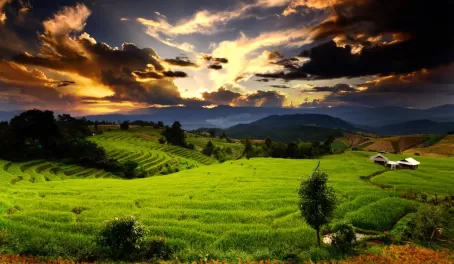
- Northwest: The Northwest, encompassing areas like Sapa and Dien Bien Phu, is famed for its striking Hoang Lien Son mountain range and terraced rice fields. These terraces, especially in Mu Cang Chai, are often seen as a symbol of Vietnam’s rural beauty.
- Red River Delta: The Red River Delta is a densely populated area known for its cultural and historical significance. Key attractions include Ha Long Bay with its iconic limestone karsts, and Ninh Binh, often referred to as “Ha Long Bay on land” due to its similar landscape.
Southern Vietnam:
The landscape in the South contrasts sharply with that of the North, dominated by flatlands and the intricate waterways of the
Mekong Delta.
- Mekong Delta: This region, known as the “rice bowl” of Vietnam, is vital for its extensive agricultural output. It features a vast network of rivers and canals crucial for rice and fruit cultivation. The floating markets of Cần Thơ and the bird sanctuaries of Trà Sư offer a unique glimpse into delta life.
- Urban Centers: Ho Chi Minh City, the economic hub, where colonial architecture exists alongside modern skyscrapers, reflecting the city’s rapid development.
- Beaches and Islands: The South boasts numerous stunning beaches. Phu Quoc Island, Vung Tau, and Mui Ne are popular destinations offering beautiful sandy beaches, clear blue waters, and resorts catering to international tourists.
Cuisine
Northern Vietnam:
Northern cuisine emphasizes the balanced interplay of different flavors: salty, sour, bitter, sweet, and spicy.
- Ingredients: The cuisine heavily utilizes ingredients like fish sauce, shrimp paste, and black pepper. Although fresh herbs and vegetables are used, they are not as prominent as in Southern cuisine.
- Dishes: Typical northern dishes include Pho with its clear, savory broth and minimalistic garnishes, Bun Cha (grilled pork with noodles), and Banh Cuon (steamed rice rolls filled with pork and mushrooms). Dishes tend to be less sweet and more subtly seasoned.
Southern Vietnam:
Southern cuisine, influenced by a variety of cultures and abundant natural resources, is richer and more diverse.
- Ingredients: Known for its sweeter tones, Southern cuisine frequently uses ingredients such as coconut milk and sugar, alongside fish sauce and diverse herbs.
- Dishes: Southern Pho comes with a darker, sweeter broth and is served with a plethora of fresh herbs. Other staple dishes include Hu Tieu (a versatile noodle soup), and Banh Xeo (crispy rice crepes stuffed with pork, shrimp, and bean sprouts). The South’s cuisine is characterized by bold flavors and liberal use of spices and herbs.
Etiquette and Hospitality
Northern Vietnam:
Northern Vietnamese culture places significant importance on formality and social hierarchy.
- Behavior: Emotional restraint, subtlety, and decorum are highly valued in social interactions. Greetings and communication often reflect respect for elders and traditional values.
- Hospitality: Visitors may find the hospitality a bit reserved and formal but equally warm once relationships are established.
Southern Vietnam:
Southerners are renowned for their warmth, open-mindedness, and more relaxed social customs.
- Behavior: Interaction in the South tends to be more informal and lively. There is a noticeable warmth and willingness to engage with strangers.
- Hospitality: Southern hospitality is often exuberant, with hosts going out of their way to make guests feel welcome, frequently involving elaborate meals and social gatherings that might include enthusiastic drinking.
Language and Accent
Northern Vietnam:
The Vietnamese spoken in the north, especially in Hanoi, is considered the standardized form of the language.
- Characteristics: It features clear pronunciation with less tonal variation, often described as having a somewhat nasal quality. The official media and formal education systems use this dialect.
Southern Vietnam:
Southern Vietnamese accents are distinctive, characterized by their melodic nature and pronunciation variations.
- Characteristics: Southern speech can be faster, with more tonal fluctuations. Local dialects feature unique vocabulary, which can differ significantly from the North, presenting challenges for learners of the language.
Road Infrastructure and Driving Etiquette
Northern Vietnam:
The challenging northern terrain impacts road conditions and driving behavior.
- Infrastructure: Roads can be rugged with frequent issues such as landslides and potholes, particularly in mountainous areas.
- Driving: Driving practices can appear chaotic, with widespread honking and less adherence to traffic regulations. Major cities face significant congestion, and rural areas require caution due to uneven road surfaces.
Southern Vietnam:
The flatter geography in the South generally supports better road infrastructure.
- Infrastructure: Road conditions are typically better, with modern highways and fewer disruptions from natural causes. Urban planning in cities like Ho Chi Minh City aims at improving traffic flow and safety.
- Driving: Drivers in the South tend to follow traffic rules more strictly, though urban centers still experience heavy traffic. Rural areas benefit from relatively smoother and well-maintained roads.
Architecture
Northern Vietnam:
Northern architecture retains traditional Vietnamese aesthetics, deeply influenced by historical and cultural heritage.
- Features: Typical elements include pitched roofs, wooden structures, ornate temples, and ancient pagodas. Examples include the One Pillar Pagoda and the Temple of Literature in Hanoi.
- Historical Sites: Many northern villages still preserve ancient communal houses and well-preserved French colonial architecture.
Southern Vietnam:
Southern architecture reflects a blend of influences, prominently featuring colonial and contemporary styles.
- Features: French colonial buildings, such as the Saigon Notre-Dame Cathedral and the Central Post Office, coexist with modern skyscrapers in Ho Chi Minh City.
- Modern Development: The South sees rapid urban development, with new residential and commercial complexes reflecting global architectural trends while incorporating local cultural elements.
Economic Disparities
Northern Vietnam:
The northern economy showcases less visible wealth, often reflecting more traditional economic activities.
- Economy: The region's economy is more conservative, with significant contributions from agriculture, traditional crafts, and small-scale industries.
- Expenditure: People are generally more frugal, reflecting a cautious approach to spending and investments.
Southern Vietnam:
The South, notably Ho Chi Minh City, is the economic powerhouse of Vietnam.
- Economy: With vibrant economic activities driven by manufacturing, services, technology, and trade, the region is known for its entrepreneurial spirit.
- Wealth Display: There are more visible displays of affluence, including luxury cars, high-end fashion, and upscale real estate developments. The economic dynamism attracts a considerable amount of foreign investment and expatriates.
Social and Cultural Life
Northern Vietnam:
The North is steeped in history and tradition, offering a rich cultural experience.
- Cultural Sites: The region is home to ancient temples, citadels like the Imperial Citadel of Thang Long, and numerous cultural festivals that reflect Vietnam’s storied past.
- Heritage: Cultural roots are deeply valued, with an emphasis on maintaining traditional practices and celebrating historical milestones through various rituals and festivals.
Southern Vietnam:
Southern Vietnam is more dynamic, blending historical richness with contemporary vibrancy.
- Cultural Fusion: Ho Chi Minh City’s nightlife, robust food scene, art galleries, and dynamic cultural festivals illustrate the region's blending of old and new cultural influences.
- Modern Living: The South embraces modernity more overtly, with a vibrant social life that includes bustling markets, contemporary entertainment, and diverse cultural activities reflecting both traditional and global trends.