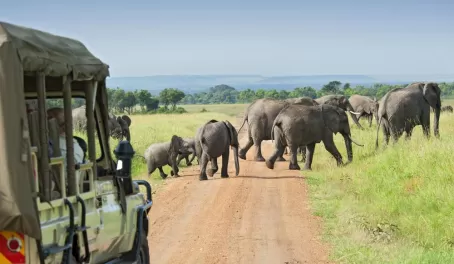
Learning how to plan an African safari comes down to a handful of decisions: when to travel, where to go, how much to spend, which safari style fits you, and how far ahead to book. Each one shapes the wildlife you may see and the comfort you'll have.
Our Trip Planners can help you work through them and match you with
African safari trips built around what you want to see.
1. Choose the Best Time for an African Safari
The
best time to visit Africa depends on where you're headed, since East and southern Africa follow different rainy seasons. In East Africa, roughly June to October brings prime game viewing, plus a second dry window in January and February. In Kenya's Maasai Mara, the migration's river crossings usually happen between July and October.
In southern Africa, the dry season runs about May to October. Kruger and Botswana's Okavango Delta are both at their best in the dry winter months, though October brings the region's hottest, most humid weather, with temperatures that can top 90°F. Across both regions, animals gather around rivers and watering holes in the dry months, and thinner vegetation makes them easier to spot.
The green, or wet, season brings lush landscapes, migratory birds, and newborn animals, along with fewer visitors and lower rates at some lodges. Timing varies by country and park, and this guide to the
best time for African safaris covers what each season looks like on the ground.
2. Select the Right African Safari Destination
The right destination depends on the wildlife and setting you want most. East Africa is known for open savanna and
the Great Migration, while southern Africa pairs strong game viewing with water-based safaris and easier access.
Tanzania's Serengeti National Park hosts the Great Migration, and
Kenya's parks and reserves, including the Maasai Mara, offer chances to see the Big Five across varied landscapes.
In southern Africa,
South Africa's Kruger National Park combines rich wildlife viewing with easy access and comfortable safari lodges.
Botswana's Okavango Delta offers water-based safaris in one of the very few large inland deltas that never reach the sea.
Within each country, you'll also choose between national parks and private reserves. A comparison of
Kenya's private conservancies and national parks explains how the two experiences differ.
You’ll find itineraries in Kenya, South Africa, and Botswana among these
classic African safaris.
3. Set Your African Safari Budget
The
average African safari costs about $5,000 to $10,000 per person for 7 to 10 days, not including international flights. Fly-in itineraries and high-end private camps can exceed $15,000 per person. Prices also vary by country and comfort level: Kenya trips range from roughly $500 to $4,000 per person per day, while Botswana tends to sit at the higher end.
Accommodations make the biggest difference, along with season, transportation, and whether your itinerary includes private guides or charter flights. Knowing your range early makes planning a safari in Africa much easier.
To get the most from your budget, spend more time in fewer places rather than moving between several parks. Many safari packages bundle lodging, meals, game drives, park fees, and transfers, which makes costs simpler to compare.
4. Work With a Safari Specialist
Planning an African safari often involves regional flights, transfers, park fees, permits, and stays at several camps, all timed around wildlife movements. A specialist who knows the region fits these pieces together for you and knows which parks and conservancies suit the season you're traveling.
Specialists also work with vetted camps and lodges, so you can choose options that match your travel style without sorting through them yourself.
5. How Far in Advance Should You Plan an African Safari?
For most trips, start planning 6 to 9 months before departure. For dry-season safaris in Botswana, Tanzania, Kenya, Zambia, or Zimbabwe, 9 to 12 months or more gives you the widest choice, especially in Zambia and Zimbabwe, where lodges are fewer.
Off-peak trips and destinations like Madagascar can often be booked 4 to 6 months ahead. Many lodges and small camps have limited rooms, and popular dates fill first. Booking early also gives you more choice in flights, camps, and guides.
6. What to Know Before Your African Safari: Health and Safety
Depending on your destination, you may need a yellow fever vaccine, and malaria prevention is advised in many safari regions. See a travel health professional at least 4 to 6 weeks before departure for recommendations specific to your itinerary.
Comprehensive travel insurance should include emergency medical evacuation, trip cancellation, and interruption coverage.
On safari, always follow your guide's instructions, stay inside the vehicle during game drives unless directed otherwise, and keep a respectful distance from wildlife. A guide to
what to expect on a South Africa safari offers more practical advice for your first trip.
7. What to Pack for an African Safari
Lightweight clothing in neutral colors such as khaki, olive, or beige blends into the landscape. Pack layers, since mornings and evenings can be cool while afternoons often turn warm.
Bring comfortable walking shoes, a wide-brimmed hat, sunglasses, sunscreen, insect repellent, a camera with a zoom lens, and any personal medications. Binoculars make a real difference, and this
guide to wildlife viewing on safari charts where you’re most likely to see specific animals.
Amenities differ between
safari lodges and camps, so it helps to know what your accommodations provide before you pack.
Every safari balances season, destination, and comfort, and the right mix looks different for each traveler. Adventure Life Trip Planners have traveled these routes themselves and can talk those choices through with you, which is often where a plan starts to feel like yours.