Antarctica, a land of stark beauty and extreme conditions, presents a world of biting winds and below freezing temperatures. Yet, despite these challenges, penguins thrive in this icy remote environment. Their thick layers of blubber, waterproof feathers, and specialized feet allow them to navigate the harsh environment with remarkable agility. The abundance of krill, fish, and squid in the surrounding waters provides a rich food source, making Antarctica a penguin paradise.
Types of Penguins
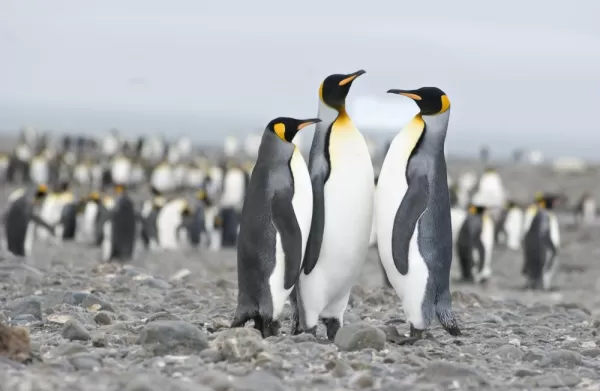
King penguins on South Georgia
There are seven species that inhabit Antarctica and its surrounding islands.
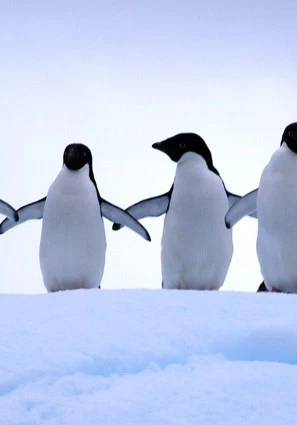
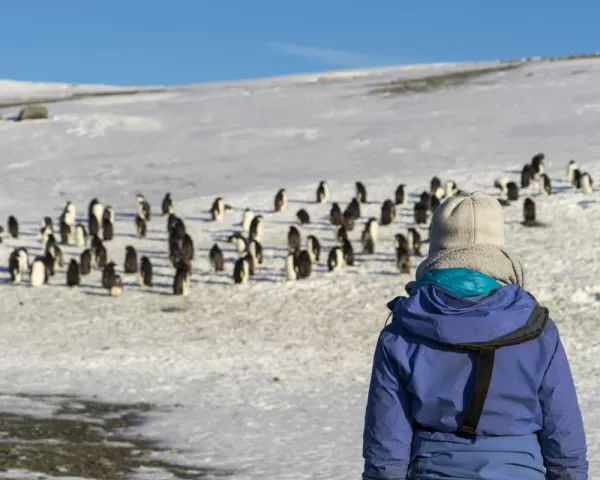
Adelie penguin - standing at 70 cm and weighing 5 kg
Found in coastal Antarctica. Known for large breeding colonies and forming long lines when traveling to feeding areas.
The Chinstrap penguin - standing at 68 cm tall and weighing 4.5 kg
Can be seen in ice-green slopes and rocky coasts. Aggressive defenders of their nesting territory.
Emperor penguin - the southernmost species, standing at 1.15 m and weighing 30 kg
Known for enduring harsh winters and for their unique breeding cycle on the ice. **Important Note: Antarctic cruise passengers can visit emperor penguin colonies on Snow Hill Island only.**
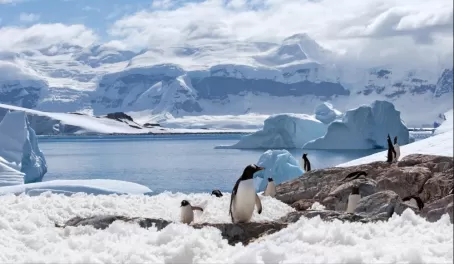
The Gentoo penguin - standing at 71 cm and weighing 5.5 kg
Found in ice-free areas and sub-Antarctic islands. Swift swimmers, known for their loud trumpeting calls.
Rockhopper penguin - standing at 55 cm and weighing 2.5 kg
Not native to Antarctica, but can be spotted on sub-Antarctic islands like the Falkland Islands, South Georgia, and Macquarie Island.
Macaroni penguin - standing at 68 cm and weighing 4.5 kg
A common sight in sub-Antarctic islands, though they also breed on the outer Antarctic Peninsula. Known for their variety of calls and displays to attract mates and establish territory.
King penguin - standing at 95 cm and weighing 15 kg
Large colonies of king penguins reside on sub-Antarctic islands such as South Georgia. Notable for their long breeding cycle and vibrant plumage
Each penguin species has adapted uniquely to the harsh Antarctic environment. The Emperor is the largest and heaviest, while the Rockhopper is one of the smallest. These penguins vary in size, weight, and specific adaptations, allowing them to thrive in the diverse conditions of the Antarctic region.
For travelers venturing to this remote continent, the opportunity to see penguins in their natural habitat is truly an unforgettable experience. Close encounters with these creatures can be magical, but it's crucial to remember that travelers are also privileged guests in their habitat.
To Do's and Don'ts for Respectful Encounters:
Maintain a Safe Distance: The International Association of Antarctica Tour Operators (IAATO) recommends keeping a minimum distance of 5 meters (16 feet) from penguins. This prevents stress and disruption to their natural behaviors.
Observe Quietly: Avoid loud noises or sudden movements that could startle the penguins. Let them approach you, rather than the other way around.
Stay on Designated Paths: Follow the guidance of your expedition leaders and stay on marked paths to minimize disturbance to nesting sites and surrounding vegetation.
Respect Nesting Sites: Penguins are particularly vulnerable during breeding season. Never approach or disturb nesting penguins or their chicks.
No Feeding or Touching: Do not feed or touch the penguins. Human food is harmful to their health, and physical contact can transmit diseases.
Leave No Trace: Pack out everything you pack in. Ensure that no trash or debris is left behind.
Traveler Responsibility:
Admiring Adelie penguins (Anna Zlotnicki)
Despite their resilience, penguins face increasing threats in their population, primarily due to climate change. Rising temperatures are causing sea ice to melt, reducing their breeding and foraging grounds. Changes in ocean currents are affecting the availability of krill, their primary food source. Additionally, increased tourism, while generally well-managed, carries the potential to further stress penguin populations.
Travelers to Antarctica have a crucial role to play in protecting these vulnerable creatures. Even in this seemingly untouched wilderness, travelers’ actions may have consequences.
Choose Responsible Tour Operators: Select Adventure Life and tour operators that adhere and follow IAATO guidelines and prioritize environmental sustainability.
Be Mindful of Your Footprint: Minimize your impact by following the guidelines mentioned above and practicing responsible travel habits.
Educate Others: Share travel experiences and raise awareness about the challenges facing penguins and the importance of their conservation.
By respecting their space and taking responsible actions, we can ensure that future generations can also experience the wonder of close encounters with Antarctica's charismatic creatures.
Our Trip Planners ensure all Antarctica programs we offer adhere to guidelines that protect penguin welfare and conservation. Contact us today to plan your responsible Antarctic experience.
By submitting your email address, you are agreeing to opt in to marketing communications. We hold your information private and do not share it with third parties.
Clara T.
Antarctica
Chat Antarctica with a specialist
Our team is waiting and ready to talk with you about your next adventure.
So go ahead and book an appointment with one of our specialized trip planners.
Clara took my information and was able to offer my original request and with no hesitation made adjustments to finalize the trip
Carl Holley
1 year ago
Answered our questions
Michael Schneck
1 year ago
Efficient and thorough.
IRWIN G
2 years ago
Adventure Life has a great team. They were very knowledgeable and responsive and helped us choose the right Arctic Expedition for us. We would recommend them.
Kbear
2 years ago
Friendly representative, ease of booking and bountiful information along the way.