The best time to visit the Arctic is from May through September, when the sea ice retreats enough for expedition ships to reach the region, though the season starts later in some areas. The right month for you depends on what you're most hoping to see, whether that's wildlife, open passages, or the northern lights.
When Is the Arctic Cruise Season?
Arctic cruises sail from about May through September, and the season opens region by region: Svalbard in May, Greenland in June, and the Canadian Arctic in July.
Each region follows its own calendar. Svalbard's boat season runs from early May to mid-September, Greenland's main season is summer, from June through August, and cruise ships sail the Canadian Arctic from July to late September. Our guides to the
best time to visit Svalbard and the
best times to visit Greenland cover each in more detail, and
Northwest Passage voyages sail during the Canadian Arctic's late-summer window.
Sea ice sets this calendar. It melts from March through September and shrinks to its smallest extent in September, clearing routes for expedition ships. In winter, ice and darkness close the region to cruising.
The month you choose shapes what you'll see, so it helps to weigh timing as you compare
Arctic cruises.
At a glance:
- High season: mid-July to mid-August, when most cruise ships visit Greenland
- Shoulder season: May and August–September, with chillier temperatures and fewer insects
- Northern lights: late August through autumn, with cruise viewing through September
- Migrating animals: autumn, with caribou also moving north in spring
- Winter: December–early April, when frigid temperatures and short, dark days end the cruise season
Arctic Seasons by Month: May to September
Each part of the season offers something different, so the right month depends on your priorities.
May and June
Cruises in late May and early June come before the main insect season, which starts building by mid-June in places like Labrador. Spring is a good time to look for polar bears hunting on the sea ice and caribou migrating to their summer ranges, all under the long light of the midnight sun.
On land in Alaska and northwestern Canada, grizzlies are active again after leaving their winter dens.
July
July is the high season in many Arctic destinations. It's also peak time for mosquitoes and black flies on shore in some regions, particularly on mainland tundra.
August and September
Late summer offers fewer insects and prime wildlife viewing. Humpback whales may be seen off Alaska and Greenland from summer into early autumn, and caribou may be seen moving in large herds toward their winter feeding grounds. Watch, too, for shaggy muskoxen, Arctic foxes, walruses, and several types of seals.
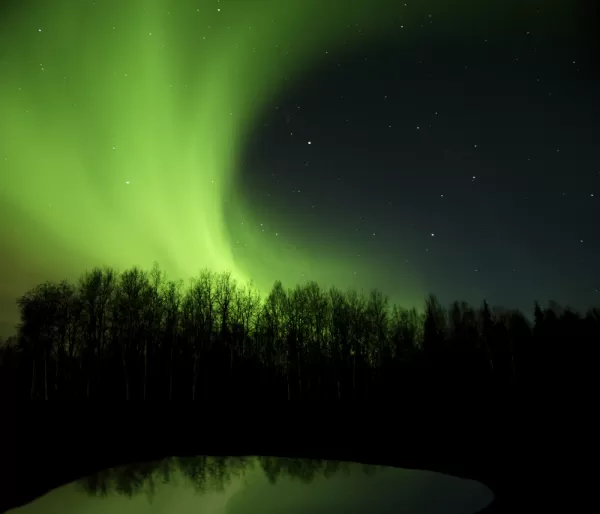
Late summer is also when passages such as the Northwest Passage may open for a short time. Once the midnight sun ends in late August, darker nights bring the first chances to see the northern lights.
Best Time for a Cruise to See Polar Bears and Other Arctic Wildlife
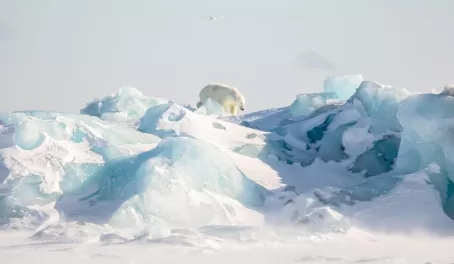
Timing depends on the animal. Spring and early summer suit polar bears, which hunt on the sea ice in those months, while summer into early autumn is prime season for whales.
The Arctic summer is brief, but it's when tundra plants bloom, and wildlife becomes active after the long winter.
Wildlife-focused Arctic trips include Arctic wildlife cruises to Svalbard and East Greenland, where polar bears and walruses may be seen, and lodge stays near Hudson Bay. Polar bears, walruses, and narwhals are among the
polar region animals found only in the far north.
Polar Bears
Season: Spring and Summer
Polar bears are elusive, but their prime feeding months on the sea ice give you a chance to spot them. If you're planning a polar bear cruise, look at spring and early summer departures to Svalbard and East Greenland or at Canadian Arctic itineraries; Hudson Bay lodge trips offer another way to see them.
They may also be seen in the Canadian High Arctic around Grise Fiord, in the Russian Arctic on Wrangel Island, and along Alaska's northern coast.
Whales
Narwhals, belugas, and bowheads are a focus of Canadian Arctic itineraries, and Northwest Passage and Greenland cruises include time for whale watching.
- Humpback whales (summer into early autumn): the coasts of Alaska, southern Greenland, Iceland, Svalbard, and the Bering Sea
- Narwhals: northern Hudson Bay, the shores of northeast Canada, East Greenland and Svalbard, and the western Russian Arctic
- Belugas: Alaska's Bristol Bay and Cook Inlet, northeast Canada, West Greenland, Svalbard, northern Russia, and the Bering Sea
- Bowhead whales: the Bering, Chukchi, and Beaufort Seas; Baffin Bay, Davis Strait, and Hudson Bay; the Sea of Okhotsk southeast of Russia; and the North Atlantic between Svalbard and Greenland
- Orcas: the coasts of Alaska, northeast Canada and West Greenland, Baffin Bay, northern Norway and Svalbard, the Norwegian and Barents Seas, and eastern Russia and the Bering Sea
Walrus and Seals
Season: All Year
Walruses may be seen on Svalbard and East Greenland cruises. Their range takes in the coasts of northeast Canada, West and East Greenland, Svalbard, western Russia, and the Laptev, Chukchi, and Bering Seas off Russia and Alaska. Ringed seals and several other seal species live in these waters too.
Caribou, Muskoxen, and Arctic Foxes
On shore, you may see Arctic foxes along with:
- Caribou (spring and autumn): found throughout the Arctic, heading north to calving grounds in spring and south in autumn. Reindeer, the same species as caribou, are herded in northern Scandinavia and Russia, while Svalbard is home to its own wild reindeer.
- Muskoxen (all year): Alaska, northwestern Canada, and Greenland
Moose, Wolves, and Grizzlies
These animals are more likely on land-based trips than on a cruise. Hudson Bay lodge trips offer chances to see moose and wolves alongside polar bears, and grizzlies are found in Alaska, where
Alaska trips are another way to look for them.
- Moose (all year): Alaska and northwestern Canada
- Wolves (all year): rare, but may be seen on the islands and mainland of northern Canada and Alaska
- Grizzly bears (summer): Alaska and northwestern Canada
Seabirds
About 200 bird species breed in the Arctic each summer, including fulmars, puffins, guillemots, and eagles. Svalbard and Greenland cruises may pass bird cliffs busy with nesting seabirds.
When Can You See the Northern Lights on an Arctic Cruise?
You can see the northern lights from late August into September, once the midnight sun ends and nights grow dark again. On late-season departures, the aurora can become a highlight of the evening and nighttime hours on board.
The aurora season continues through autumn as nights lengthen, after most cruises have ended, and our guide to the
best places to see the northern lights covers where and when to look on land.
The month sets the stage, but the itinerary decides what you'll actually see. Two ships sailing the same week can spend their days in very different waters, which is why we look at the route, not just the calendar, when matching travelers to a departure.