Belize sits just above the equator on the Caribbean coast of Central America, and its climate follows a clear two-season rhythm: a dry season that draws beach seekers and snorkelers, and a wet season that coaxes out wildlife and turns the jungle a vivid green. Neither season is off-limits for a great trip. Understanding what each one offers helps you pick the right window for what you want to do and see.
Belize Climate at a Glance
Belize has a subtropical climate, warm year-round, with average temperatures hovering between 24 and 32 degrees Celsius (75 to 90 degrees Fahrenheit) depending on the month and region. The coast and cayes stay breezy and a bit cooler; the jungle interior runs hotter and more humid, and the Mountain Pine Ridge area sits at enough elevation to feel noticeably cool on December and January nights. The far south around Placencia and the Toledo District receives significantly more rainfall than the north year-round, so expect rain on any southern visit regardless of season. Two seasons shape the calendar for the rest of the country:
Dry Season: December through May. Wet Season: June through November.
The Belize Barrier Reef, the second longest in the world, sits just offshore and makes the country one of the top diving and snorkeling destinations in the Western Hemisphere. Water visibility and sea conditions vary noticeably by season. Hurricane season overlaps with the second half of the wet season, running June through November, with September and October carrying the highest risk.
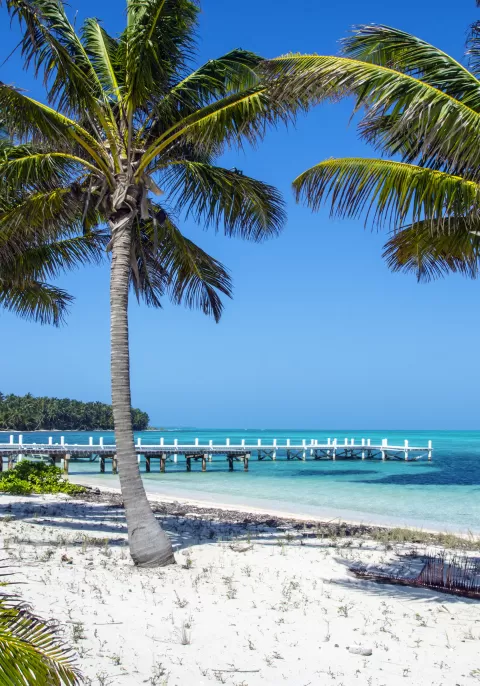
A fish-cleaning shack on the beach (Kim Clark)
Dry Season: December through May
The dry season is Belize's peak travel period, and it earns that title. Skies stay clear, humidity drops to more comfortable levels, and the Barrier Reef delivers some of the best underwater visibility of the year, often stretching beyond 30 meters (100 feet) in calm conditions. Trade winds keep the coast and cayes pleasantly breezy, making this the most comfortable time to explore outdoors from sunrise to sunset. December and January: Cool and Busy
These are the coolest months in Belize, with temperatures averaging around 24 to 27 degrees Celsius (75 to 80 degrees Fahrenheit) on the cayes. The holiday period brings a surge of visitors, so popular spots like Ambergris Caye and Placencia fill up quickly — booking well in advance pays off. The calm Caribbean Sea makes this the prime window for reef diving, sailing, and snorkeling the Hol Chan Marine Reserve. It's a great time for reef and coast travel, though you'll share the water with the largest crowds of the year. February and March: The Sweet Spot
Many seasoned Belize travelers consider February and March the most balanced months to visit. Peak-season crowds begin to thin while conditions remain outstanding. The sea stays flat, the skies are clear, and the Barrier Reef and three offshore atolls — Turneffe, Lighthouse, and Glover's — are at their most accessible. Whale sharks gather around Gladden Spit from late March through June, and migratory birds join resident species at Crooked Tree Wildlife Sanctuary. This is Belize at its most versatile: reef, jungle, and ruins all reward a visit. April and May: Warmth and Good Value
April and May bring Belize's warmest and driest conditions, with inland temperatures pushing toward 32 to 35 degrees Celsius (90 to 95 degrees Fahrenheit) — though sea breezes keep the coast more forgiving. Visitor numbers ease off, prices dip from holiday highs, and the Maya ruins at Caracol and Xunantunich are most comfortable in the early morning before heat peaks. Whale shark season at Gladden Spit is in full swing, and nesting sea turtles begin appearing on southern beaches. May is a shoulder month that's often underrated: dry-season conditions with noticeably fewer crowds.
Wet Season: June through November
Belize's wet season gets a worse reputation than it deserves. Rainfall comes in concentrated afternoon bursts most days rather than all-day downpours, and mornings are often clear and warm. The jungle turns an electric green, rivers run full, and wildlife concentrates around water sources. Rates drop significantly, crowds thin out even at the most popular spots, and you'll find the country in a quieter rhythm. June and July: The Rains Begin
June marks the gradual shift into the wet season. Early mornings stay sunny and afternoon showers tend to be brief and intense. Tarpon and snook fishing peaks along coastal flats and river mouths, and jaguar activity in the Cockscomb Basin Wildlife Sanctuary picks up as the cats move more freely near water. Nesting sea turtles reach peak numbers on southern beaches. The sea is generally still navigable, though conditions are less predictable than in the dry season. Good for fishing and wildlife; less reliable for reef-focused trips. August: Lush and Affordable
August sits squarely in the wet season and sees consistent afternoon rain, but the jungle is at its most lush and alive. Birding is excellent throughout the country, with toucans, trogons, and parrots easy to spot in forests around the Cayo District and Mountain Pine Ridge. Manatees gather in the Southern Lagoon near Gales Point in reliable numbers. Prices are at their annual low, making August the best month for budget travelers who don't mind building their itinerary around inland and wildlife experiences. September and October: Hurricane Season Peak
September and October carry the highest hurricane risk. Storms make direct landfall infrequently, but tropical systems can bring heavy rain, rough seas, and disrupted travel. Liveaboard dive boats and water taxis often reduce operations during active weather windows, so a coast-and-reef itinerary is a real gamble. Inland is a different story: the Maya ruins are nearly empty, the jungle is dramatically green, and the cave systems run at their fullest. Travel insurance is essential. November: Transition Back
November is an underrated month. Rainfall tapers off toward month's end, the Caribbean Sea begins to calm, and island destinations start reopening and restocking ahead of the December rush. Reef visibility recovers, manatees remain active in the Southern Lagoon, and crocodiles are easy to spot along the New River near Lamanai as water levels drop. You get solid value, manageable crowds, and the sense of a country easing back into its stride.
Our team is waiting and ready to talk with you about your next adventure.
So go ahead and book an appointment with one of our specialized trip planners.
Questions were answered quickly and calls were available for scheduling.
Lisa Dorn
1 month ago
Jess was great! She seemed to be one step ahead of me, anticipating my next question. Her experience and thoughtfulness are unmatched.
David Herr
2 months ago
I am booking a trip to Belize. We are staying at more upscale resorts and my standard AAA travel team was not able to access and book. Adventure Life has been responsive, fair in price and extremely helpful in booking a trip at the preferred resorts, provided excellent knowledge and experience for Belize and put together all our transportation so we can relax and enjoy!
Kris Mathison
4 months ago
Kassi Magruder -
Sandi Costa
6 months ago
The trip booking process was smooth and easy due to the trip planners' courteous, quick assistance. I made inquiries at pretty much the 11th hour for a particular trip date, and the planners were able to respond promptly with a customized itinerary that alleviated a concern I had about a particular day trip. Thank you, Adventure-Life trip planners for your help!