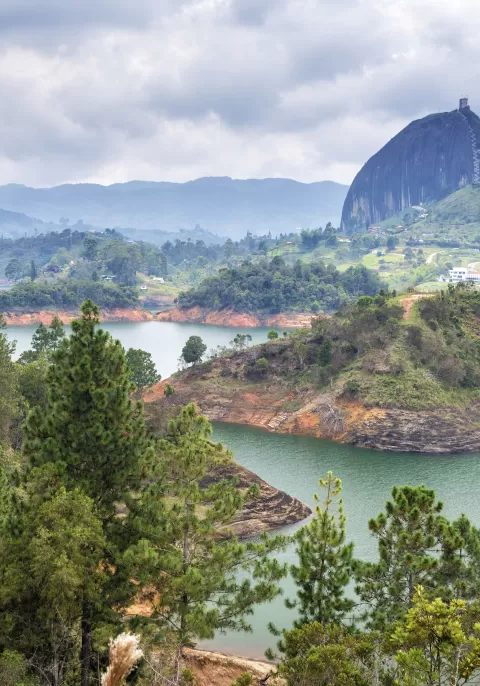
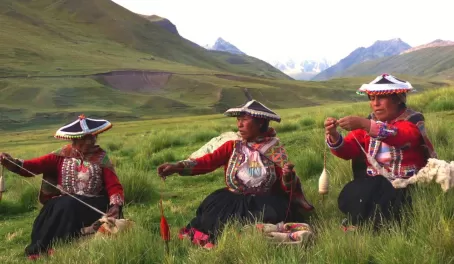
Colombia, is a colorful, vibrant, Spanish speaking country located in northern South America. Colombia tours open up a destination which has remained largely undiscovered for many years. Colombia has some of the last few truly wild areas remaining in the world. From sunsets on the pristine beaches, to lost ruins buried in tropical jungle and the cool highlands of the Andes mountains the range of natural landscapes create an ideal destination for Colombia adventure travel enthusiasts. Officially the Republic of Colombia, it is one the most bio-diverse countries in the world; fauna and flora thrive across the different regions. Diversity is also reflected in the people of the country; from thriving cities rooted in colonial history to indigenous Indian villages where traditions have been preserved in near isolation for centuries. A Colombia vacation takes you to another world; a world noted for and defined by the friendliness of the people and the diversity found in both the land and the culture. Colombia is divided into thirty-two departments. The Capital District of Bogota is considered to be a separate department although it is surrounded by the department of Cundiamarca.
History
Colombia Ancient History
Indications that hunter-gatherer societies lived in Colombia in around 1200 BC has been discovered near Bogota (at El Arbra and Tequendama) however evidence of human habitation of South America has been dated as far back as 43, 000 BC. The earliest known inhabitants of Colombia were Mesoamericans who migrated from the north and later Arawak people arrived from the south. The Inca Empire arose in the early 13th century and by the early 14th century had incorporated some parts of modern day Colombia. In the first millennium AD the cacicazgo political system was developed in which Amerindian groups organized themselves into pyramidal power structures each headed by a cacique or chieftain.
The most prominent groups of indigenous people were the Chibchan nations. Of the Chibchan groups the Muiscas and the Tairona had the most intricate and advanced societies. The Muiscas occupied the central highlands of the Eastern Range and the area around present day Bogota. The Taironas occupied the Sierra Nevada de Santa Marta and la Guajira until around 1000 AD when war-like Caribs arrived in the region and forced them further into the Sierra. Evidence of other cultures such as the Guane permeates modern Colombia even though the people who left these marks have disappeared. The Guane mixed heavily with Spanish conquerors and lost prominence as a culture even though their descendants are among the mestizo population. The modern day descendants of the Taironas are the Kogi people who occupy the high-lands of the Sierra Nevada de Santa Marta. Their relative isolation in this location is thought to have contributed to their well preserved customs and traditions. Around the Sierra’s mid-lands the Arhuaco people, also descended from the Tairona, can be found. The Wiwa people live in the north-eastern part of the mountain. The low-land areas are occupied by the Kankuamo who have integrated extensively with the general population.
Colombia has over eighty distinct indigenous cultures within its borders although many of these groups are threatened and struggling to preserve their land and way of life. A notable ethnic group in Colombia are the Wayuu Indians in La Guajira Peninsula who are descended from the Arawk people. The Wayuu fought extensively with invading Spanish and were never conquered. The Wayuu led a large movement against the Spanish, the Guajira rebellion, by which they regained control of captured territories and avoided assimilation.
Colombia's Modern History
After the discovery of the new world by Christopher Columbus the first settlement on Colombian territory was founded by Alonso de Ojeda in 1502. The colony was abandoned three months later. The first European to set foot on Colombian territory was Juan de la Cosa, a member of Ojeda’s expedition party. From 1509 to1510 Alonso de Ojeda founded the settlement of San Sebastian de Uraba which was also ultimately abandoned. The first permanent Spanish settlement was established in 1525. In 1513 Vasco Nunez Balboa claimed the Pacific Ocean and adjoining lands for the Spanish Crown. In 1537 Gonzalo Jimenez de Quesada founded the city of Santa Fe de Bogota. Quesada’s forces took advantage of a division between the Musica Zipa in Bogota and the Zaque in Tunja to attack and subdue their confederation. The Muisca were assimilated into the Encomienda system and their villages destroyed or abandoned. Some Tairona were able to retreat higher into the Sierra Nevada de Santa Marta but many other groups such as the Caribs were wiped out. Most of Spanish occupied South America originally came under the organization of the Viceroy of Peru.
The New Kingdom of Granada arose in the 16th century and corresponded more specifically to modern day Colombia with the addition of parts of Venezuela. It was governed by the president of the Audiencia of Bogota. This territory became part of the Viceroy of New Granada in 1717 and then permanently in 1739. The Viceroy of New Granada included modern day Colombia, Ecuador, Venezuela, Panama (which became independent in 1903) and parts of north-western Brazil, northern Peru, Costa Rica and Nicaragua.
In the 19th century the Spanish American wars of independence took place in opposition to Spanish rule. Instability in Spain after the invasion of Napoleon spurred the liberation efforts on. Internal struggles and vying autonomous juntas created chaotic conditions in the country. Colombian Independence Day is celebrated annually on July 20th in commemoration of the day in 1810 when the citizens of Bogota established a local ruling council; the first step towards independence. The independence of South America from Spain is attributed to Simon Bolivar. In 1819 Venezuelan born Bolivar set out to cross the Andes hiking; a journey which took him and his men through some of the harshest extremes of nature. The image of this journey is frequently represented in South American art. Bolivar’s plan to surprise his enemies worked and after victory in battle he successfully took control of New Granada. Bolivar declared the lands of Venezuela, New Granada, Ecuador and Panama to be Gran Colombia. Bolivar was named president of the republic and Franciso de Paula Santander was made Vice-President. Bolivar continued to be involved in anti-Spanish military action. He is known as the liberator of South America and countless public buildings, monuments, inscriptions and artworks are dedicated to him. He is seen as a visionary, leader, military strategist and patriot. He has come to represent the ideals of liberty and revolution in the Latin America culture.
Colombia Politics
Colombia today is a presidential democratic republic with a growing number of political movements. While the Liberal and Conservative parties remain part of its political history, newer groups such as the Democratic Center (Centro Democrático), the Historic Pact (Pacto Histórico), and the Green Alliance (Alianza Verde) now play major roles. The country’s constitution allows presidents to serve a single four-year term without immediate re-election, a rule reinstated after 2015 reforms.
Security and stability have improved substantially since the early 2000s, especially in cities like Bogotá, Medellín, and Cartagena. However, travelers should still exercise caution in some rural or border regions, where occasional conflict and illegal activities persist.
Colombia Weather Overview
Colombia’s weather varies widely across its regions, but temperatures remain fairly steady year-round due to its proximity to the equator. The main dry seasons run from December to March and June to August, which are ideal for travel in most parts of the country. The Pacific Coast sees heavy rainfall throughout the year, while the Amazon remains humid and wet almost continuously.
Average temperatures on the Caribbean coast range from 82–90°F (28–32°C) with high humidity. In Bogotá, which sits high in the Andes, the average temperature is about 57°F (14°C), with cooler nights around 48–50°F (9–10°C). Travelers should plan their itineraries around these regional variations, especially for hiking, rafting, or visiting national parks.
The best time for a Colombia tour is during the drier seasons from December to February and June to August. Wetter seasons are March to May and September to November, but that being said, it is still fine time for a Colombia vacation for those not adverse to the typical afternoon rainfall. Colombia has a tropical climate on the coast, a hot zone in lowland areas (the majority of the country), a temperate zone and a cooler zone in the higher reaches of the Andes and cities at a high elevation. The city of Cartagena is warmer than Bogota, for example, since Cartagena is not as far above sea level. Greater altitudes also result in more pronounced differences in temperature as day transitions to night. The lowlands show little difference between day and night time temperatures whereas in the highlands warm days can give way to very cold nights. Temperatures on the Caribbean Coast remain at a fairly constant 86F all year around but in Bogota temperatures can hover around 68F and dip down below 50F at night.
Rain falls more frequently and heavily on the Pacific Coast and in the Andes. In the Guajira and Tatacoa deserts the temperatures are high and little rain falls. The Llanos experiences a tropical savanna climate as do parts of the Magdalena and Cauca River valleys. Typically rainforest areas are hot and humid year-round.
Land of Colombia
Colombia coastlines lie along the west to the Pacific Ocean and north to the Caribbean Sea. To the northwest is Panama, to the east is Venezuela, to the south east is Brazil to the southwest is Peru and to the west is Ecuador. Colombia contains five natural regions; the Andean region, the Caribbean Region, the Pacific Coastal Region, the Amazon Region and the Eastern Plains or Orinoquia Region named for the Orinoco River which crosses it. The Caribbean Region is located in the north of the country along the Caribbean Sea. Within the boundaries of the Caribbean Region one notable landmark is the isolated mountain range Sierra Nevada de Santa Marta where the Tayrona National Park is located. Inland from the Caribbean Region is the Andean Region. West of the Andean region lies the Pacific Coast and to the east is the Orinoquia. The southern part of Colombia comprises the Amazon Region. Colombia’s government also claims territories and several islands including those of the San Andres Archipelago and Gorgona Island.
The beauty of the landscapes and natural features provide a perfect paradise for anyone seeking a Colombia adventure holiday. Outdoor pursuits like rafting, hiking and biking can be enjoyed in various regions within the country. The Chicamocha River Canyon in Santander Department is one area with huge appeal for those on a Colombia tour. The Chicamocha River runs along the bottom of the canyon fault and is an ideal location for sports and adventure pursuits. The exhilaration of sports combined with the scenic beauty creates a wonderful sense of freedom; some of the joy of living that is so central to Colombian culture. The Cauca River flows like a ribbon through the Cauca Valley with gently rising slopes either side of the water. The setting in this area is close to perfect. The nearby Rio Buey (Ox River) is a Mecca for Colombia rafting because of the waterfalls and class three, four and five rapids which offer up a challenge in a stunning setting for many Colombia adventurers. Rafters often head to Suarez River in Santander for class five rapids and Suarez Canyon itself is ideal for biking and hiking.
The colonial town of Barichara takes its name from a Guane Indian word meaning “a good spot for a rest” which visitors find very apt as they spend a well earned break absorbing the majestic vista of the Suarez Canyon and river below them. Close to Barichara is the town of Guane, accessed by the “Camino Real” trail and close by is the town of San Gil, known as the adventure sports capital of Colombia. Other geographic highlights include Serrania de Las Baldias cloudforest and the Tequendama waterfall. Serrania de Las Baldias is a little known gem just outside Medellin. The trail here starts at over 3,000 meters and the surrounding reserve is home to White-Tailed Hawks, Collared Incas, bromeliads and thousands of orchids including many rare species. Excellent views of the Central and Occidental Cordilleras are possible in this reserve.
Colombia Cuisine
The diversity of Colombian geography gives rise to a wide variety of ingredients, the rich indigenous heritage has produced a range of traditional dishes and the long history of immigration has resulted in fusion dishes. Varied ingredients and preparation methods are used from region to region, depending on the preferences of the local people. A typical Colombian dish is Bandeja Paisa which is popular all over the country. This dish originated in the Paisa Region in the Andes and comes served on a tray or oversized plate. Ingredients include red beans, white rice, ground meat, pork rind, fried eggs, plantain (patacones), sausage, hogao sauce, black pudding and avocado. Staple ingredients found with most meals include, (you are more likely to find coconut rice if your Colombia vacation takes you to the coastal regions), beans, hogao or criollo sauce (round onions, long, green onions, tomatoes, garlic, cumin, salt and pepper). Achiote oil is often used as a colorant.
Fresh tropical fruits such as avocados, mangos and guavas abound. Other available fruits which are rare outside of Colombia include zapote, curuba, granadilla and mamoncillo. Fresh juice stands are ubiquitous in cities and on beaches. Empananditas, arepas and tamales are extremely common. An arepa is a patty made of corn dough or sometimes flour. Arepas can be boiled, baked, grilled or fried. The styles of making arepas and the typical fillings vary from region to region. In Medellin arepas are drizzled with condensed milk to add sweetness. Tamales are also popular and usually served wrapped in the plantain leaves which they were cooked in. Tamales Tolimenses from the Tolima region are a well known variety filled with peas, carrots, potato, rice, chicken and pork. In Bogota and towards the savannas of the eastern plains many barbequed meat dishes have risen out of the cowboy culture. Coastal areas excel at fish dishes such as Red Snapper.
The departments of Caldas, Quindio and Risaralda are often referred to as the Coffee Triangle or the Coffee-growers Axis and the majority of Colombian coffee is produced in this area. Many people believe that Colombian coffee is the best in the world. Many Colombians enjoy hot chocolate, especially for breakfast, and this can also be consumed con queso (with cheese). A common Colombian breakfast is hot chocolate or coffee, arepas, eggs, cheese and Colombian cheese bread. A staple Colombian drink is Agua de Panela (water and boiled down sugar cane). Sugar cane is also used to make something a little stronger; aguardiente. This is an anise flavored liqueur popular in Colombia especially in the Andean region.
An exotic ingredient you may come across is roasted ants. If you visit San Gil during the spring and summer months you will see quite a few vendors with these for sale. The consumption of ants in the Santander region is said to have begun with the Guane Indians.
Colombian Culture
Colombians have an eclectic and mixed cultural tradition, difficult to summarize or describe in word. The majority of the Colombian population is mestizo. The next most prominent group is white Colombian followed by zambo or afro-Caribbean, followed by various Amerindians tribes. Although only one per cent of Colombians consider themselves to be indigenous the country has over eighty culturally distinct groups, many with a population of less than one thousand. Some of these groups have extremely well preserved traditions and language. Typically the cities have a high concentration of white and mestizo ethnicity and further out towards rural areas more indigenous populations are encountered.
The differing climatic regions of Colombia have also affected diversity, one example of this is the Llanero culture of the Llanos grasslands in eastern Colombia where the ideal ranching territory gave rise to a cowboy culture. The people in this area are descended from the original Amerindian settlers, Spanish colonizers and African slaves who escaped captivity and made a life on the plains. The Llanero version of a rodeo is called a coleo and these people have a traditional dress, dance (joropo) and musical style. Visitors to Tayrona National Park in Sierra Nevada de Santa Marta who encounter the Kogi people will be able to recognize their white robes and the lime gourd carried by men of the tribe. The Guambiano people who live near the town of Silva are a small community instantly recognizable for their distinctive and colorful style of dress. The presence of such strong indigenous cultural traditions gives Colombia a national identity rooted in diversity. From the lingering sense of ancient civilizations that shrouds the Tayrona ruins of Chairama Pueblito and Ciudad Perdida to the vibrant warmth of the modern day inhabitants Colombia vacations open up a wealth of cultural experiences.
Colombia is predominantly Christian but many indigenous tribes have their own religious beliefs and customs.
Dance and music are central to Colombian culture, but the article’s earlier mention of samba and tango should instead highlight traditional Colombian rhythms such as cumbia, vallenato, mapalé, and Cali-style salsa.
The Barranquilla Carnival, held each February or early March, is one of the largest festivals in Latin America and has been recognized by UNESCO as a Masterpiece of the Oral and Intangible Heritage of Humanity. The Cali Fair (Feria de Cali), which runs from December 25–30, continues to celebrate the country’s rich salsa culture through parades, concerts, and dance marathons that attract performers from around the world.
Only a fraction of the diversity and culture can be experienced on a Colombia tour. See recreated petroglyphs in the village of Guane, view pre-Columbian gold artworks in Bogota’s Museo del Oro or pick up a copy of One Hundred Years of Solitude, the universally acclaimed novel by Noble Prize winner Gabriel Garcia Marquez.
Colombia Wildlife
Colombia remains one of the world’s most biodiverse countries, home to roughly 10% of all known species on Earth. However, environmental challenges such as deforestation and habitat loss, especially in the Amazon region, are increasing. Despite these threats, wildlife thrives in many protected areas like Tayrona National Park and the Sierra Nevada de Santa Marta, where visitors may encounter howler monkeys, toucans, sloths, and the endangered spectacled bear.
Whale watching continues to be one of Colombia’s most extraordinary wildlife experiences, with humpback whales migrating near Gorgona Island from June to November. Conservation efforts are ongoing to protect threatened species like jaguars and brown woolly monkeys, which are still found in some of the country’s remaining cloud forests.
Our team is waiting and ready to talk with you about your next adventure.
So go ahead and book an appointment with one of our specialized trip planners.
Mary Curry is great at finding travel that fits our style and needs. Adventure Life has many resources at her disposal for travel virtually anywhere! Mary and Mai, are a fantastic team! Mai keeps us on track with all the details once we have booked a trip. Highly recommend.
Beth Vance
1 year ago
Awesome company - I work with Mary Curry. Knowledgable, fast and thorough responses to questions, and best prices
Jeff
1 year ago
I love that all of their travel planners have had personal experiences in the countries they specialize in and can give honest opinion in what works best for our lifestyle.They listen to what you want and deliver. This will be our 4th trip with them.
Maria Beck
1 year ago
Another amazing adventure. Personalized itinerary, with experts to guide you each day and who are available to ensure plans go off as expected. Great daily excursions with attention to the details. A company rep is always available to assist. The excursions are meaningful and a lot of fun. I've learned so much about yet another culture.
Chris Robinson
1 year ago
I have been working with the wonderful professionals at Adventure Life for many years and keep coming back because of the friendly, courteous, professional expertise I always receive. I've looked for travel agencies here at home but nothing compares to the service I receive with Adventure Life.