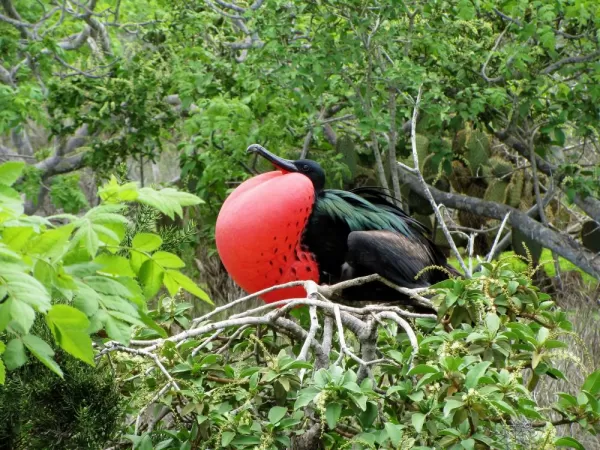
Arriving at Gunung Api, which sits alone in the middle of the Banda Sea, and encounter an enormous, noisy colony of seabirds, predominantly frigate birds and gannets. The birds may circle and swoop towards the ship expressing protectiveness of their habitat. There are many volcanoes in Indonesia named Gunung Api, which quite simply means ‘fire mountain.’ This Gunung Api is a huge, four-kilometer-high volcano, but almost all of it is submerged, and you only see the top 300 meters above the sea. The volcano is active, however, with smoking vents around the crater. The volcano is home to an amazing variety of seabirds including red-footed boobies, brown boobies and masked boobies (all of which are tropical gannets), shearwaters, terns, frigates, brown noddies, and red-tailed tropic birds to mention but a few, and for some reason this island in the middle of nowhere is home to a multitude of banded and olive sea snakes. Brown boobies breed under vegetation and red-tailed tropicbirds breed under trees and in the crevices of rocks. Masked boobies breed only on bare ground, and they are disappearing due to the increasing vegetation, which is covering the bare rock. Gunung Api is really inaccessible; it still has no introduced rats, and as a result it is pristine and unspoiled with a biodiversity that is unique in Southeast Asia, so it has to be strictly protected. There is no beach or suitable landing spot, so you circumvent the island in the tenders. The two days spent here are very relaxing, a time for swimming, snorkeling, as well as reading and, of course, bird watching and bird counting.