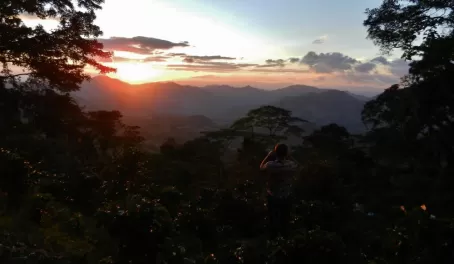
Nicaragua is a country of dramatic contrasts: steaming volcanoes, glassy crater lakes, colonial cities baked in sunshine, and Pacific and Caribbean coastlines separated by entirely different climates. Understanding how the seasons work here makes the difference between showing up at the right moment and missing the best of what the country has to offer. The good news is that Nicaragua rewards travelers year-round -- you just need to know what to expect.
Understanding Nicaragua's Climate
Nicaragua sits between 11 and 15 degrees north of the equator, which means it stays warm to hot throughout the year. Average temperatures across the Pacific lowlands range from about 27 to 33 degrees Celsius (80 to 91 degrees Fahrenheit), while the cooler highlands around Matagalpa and Jinotega sit several degrees lower. The Caribbean coast runs warmer and much wetter than the Pacific side, with rain spread more evenly across the year.
The country divides neatly into two seasons. The dry season runs roughly from November through April, and the wet season runs from May through October. This is a tropical climate, and even during the dry season, temperatures are warm and the landscape stays green in many areas. During the wet season, mornings are often clear and beautiful, with afternoon showers that tend to be heavy but brief.
Quick Seasonal Reference
Dry Season (November to April): Best for beaches, surfing, hiking volcanoes, colonial city exploring, and traveling through rural areas. Crowds and prices peak around Christmas, New Year, and Semana Santa.
Shoulder/Early Wet (May to June): Good value, lush green landscapes, manageable rain, and far fewer tourists. Mornings are generally clear.
Mid Wet (July to August): Canicula in July offers a brief dry spell. Excellent for Caribbean coast travel, river trips, and jungle exploration.
Peak Wet (September to October): Wettest months, but dramatic scenery and olive ridley turtle nesting on the Pacific coast. Best suited to flexible travelers and those with a sense of adventure.
The Dry Season: November through April
Nicaragua's dry season is the most popular time to visit, and for good reason. Skies stay clear, roads are accessible, and the Pacific coast is at its most reliably sunny. This is prime time for beach holidays, volcano hikes, and exploring colonial cities like Granada and Leon without worrying about afternoon downpours. November and December
November marks the transition into dry season -- it's a sweet spot for travelers who want fewer crowds and greener landscapes without the full force of the rainy months. The vegetation is still lush from the wet season rains, waterfalls are running full, and wildlife is active. Temperatures are comfortable and evenings cool pleasantly. December sees the land begin to dry out and visitor numbers climb toward the holiday peak. Birdwatching, hiking, and lake exploration are at their best, with lush post-rain landscapes and waterfalls still running strong.
January and February
These are two of the driest and most reliably sunny months across the Pacific coast and the central highlands. The Pacific surf picks up, making the beaches around San Juan del Sur and the Tola coastline a draw for surfers and sun-seekers alike. Inland, the landscape is increasingly golden and dry -- the volcanoes stand out sharply against cloudless skies. Prime time for surfing, beach travel, and volcano hiking -- conditions are reliable and the Pacific coast is at its most accessible.
March and April
March and April are the hottest and driest months. The Pacific lowlands and León can feel genuinely scorching, with temperatures pushing well above 35 degrees Celsius (95 degrees Fahrenheit) during the middle of the day. The upside is that beaches are at their most uncrowded and beautiful. Semana Santa (Easter week) in April draws Nicaraguans to the coast in large numbers, so popular beach towns fill up -- book ahead if you're traveling during that window. Coffee farm visits and highland escapes offer welcome relief from the heat; beach towns and volcanic landscapes are at their most dramatic.
The Wet Season: May through October
Nicaragua's wet season gets a bad reputation that it doesn't entirely deserve. Yes, the rains can be heavy and some roads become impassable. But for travelers who embrace it, the wet season offers a completely different side of the country: dramatically green landscapes, rushing waterfalls, far fewer tourists, and lower prices across the board. The typical pattern is a clear, warm morning followed by an afternoon storm that clears by evening -- leaving behind cooler temperatures and golden light.
The Caribbean coast has a slightly different pattern, with rainfall spread more evenly year-round and a drier spell between February and April. The heaviest rainfall there tends to arrive in June through August and again in November. May and June
The rains begin in earnest in May, usually arriving first on the Pacific side. The countryside transforms quickly: rivers fill, waterfalls appear, and the dry golden hills go green almost overnight. May and June are excellent months for travelers who want the lush beauty of the tropics without committing to the wetter months of September and October. Birdwatching peaks as breeding season gets underway, and the greening landscape makes this one of the most photogenic times to explore the highlands and crater lakes.
July and August
July often brings a brief dry spell known as the canicula or veranillo -- a short pause in the rains that lasts a few weeks across parts of the Pacific coast and the central highlands. This makes July a surprisingly good time to visit, with green landscapes from the early rains but drier windows for getting around. August tends to be wetter, though mornings are typically clear enough for outdoor activities. Jungle and river travel on the Caribbean side is excellent, and the canicula window in July opens up highland hiking and volcano access on the Pacific side.
September and October
These are the wettest months across much of Nicaragua, with the heaviest rains falling in September and October on the Pacific side and through the central highlands. River levels are high, some rural roads flood, and the northernmost departments can experience tropical weather events during peak hurricane season. That said, this is also when Nicaragua is at its most dramatically beautiful -- waterfalls cascade from every hillside, lakes are full, and the country feels alive.
Travel requires more flexibility in these months, but those who visit are often rewarded with an intimate view of the country at its most lush. Sea turtle nesting on the Pacific coast peaks during this period, and wildlife viewing in the rainforest reaches its yearly high.
A Note on the Caribbean Coast
Nicaragua's Caribbean coast runs on a different weather schedule from the Pacific side and operates almost as its own world. It receives significantly more annual rainfall -- upward of 4,000 mm (157 inches) in some areas -- and the landscape is dense, jungle-green lowland rather than the open volcanic scenery of the Pacific. The main towns of Bluefields, Pearl Lagoon, and Puerto Cabezas are accessed by boat or small plane, and the Corn Islands sit offshore in the Caribbean Sea.
The relatively drier months on the Caribbean side are February through April and a window around August and September. If you're combining a Caribbean visit with Pacific travel, the dry season on the Pacific (December through April) generally aligns reasonably well with more manageable conditions on the Caribbean coast too.
Our team is waiting and ready to talk with you about your next adventure.
So go ahead and book an appointment with one of our specialized trip planners.
If you go to the Galápagos, ask for James Sanchez as your guide he was fantastic! Very nice and extremely knowledgeable
Bob
4 days ago
Fabulous service for booking a cruise. Prompt response. Very satisfied
Christine Pavel
6 days ago
We have had excellent results when working with Adventure Life. We've just set up out third trip with them because the first two were great! Adventure Life has always listened, worked with us, and set up trips the way we've wanted. They've also found experiences we wouldn't have known about otherwise, that have been some of the highlights of the entire trip.
SA
6 days ago
Mary goes the extra mile to ensure smooth travel booking and trips! She recommends amazing journeys at a great value!
Beth Vance
1 week ago
Shannon was always quick to reply to my questions and her honest answers helped us identify the right trip for us. Off to a great start!