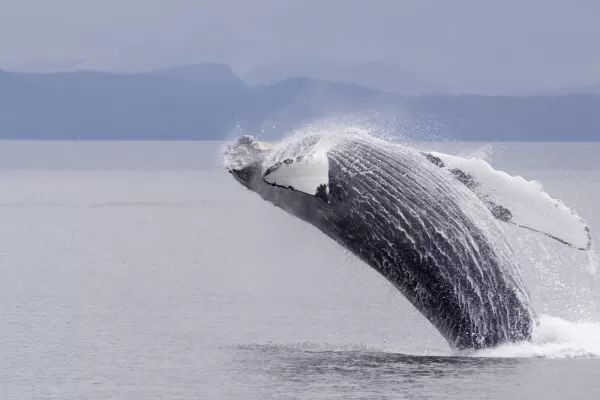
Many of the world’s great whales travel thousands of miles each year between cold, food-rich feeding grounds and warmer waters where they mate and give birth. Because those journeys follow the seasons, the right place to see whales depends on the time of year. Gray whales fill the lagoons of Baja California in late winter, humpbacks gather around Hawaii in winter and feed off Alaska in summer, and Costa Rica hosts humpbacks from both hemispheres. Here’s when and where to go.
Whale Watching Seasons at a Glance
| Destination |
Main Species |
Season |
Best Months |
| Baja California, Mexico |
Gray whales |
January–April |
Mid-February to March |
| Hawaii |
Humpback whales |
November–May |
January–March |
| Alaska |
Humpback whales, orcas |
May–September |
June–September |
| Costa Rica (Pacific coast) |
Humpback whales |
July–October and December–March |
September–October; December–March |
| Antarctica |
Humpback, minke, and orca |
November–March |
February–March |
Gray Whales in Baja California: January to April
Gray whales make one of the longest migrations of any mammal, about 10,000 to 12,000 miles round trip between their summer feeding grounds in the Arctic and the warm, sheltered lagoons of Baja California. The first whales reach the lagoons in late December and January, and the lagoons are at their fullest from mid-February to late March, when mothers nurse newborn calves. Mothers with calves are the last to leave, usually from late March into April.
The main calving lagoons, including Laguna San Ignacio, Laguna Ojo de Liebre, and Magdalena Bay, are protected, and whale watching there is done in small boats with local guides. In some lagoons, curious gray whales often approach the boats. With coastline on both the Pacific and the Sea of Cortez,
Mexico also offers chances to see other species on the same trip.
Humpback Whales in Hawaii: November to May
Each winter, thousands of humpback whales travel from Alaska and other northern feeding grounds to the warm waters around the Hawaiian Islands to mate, give birth, and nurse their young. The Hawaiian Islands Humpback Whale National Marine Sanctuary describes the season as running from November through May, with the most whales from January through March.
Humpbacks gather in relatively shallow water around the islands, so they’re often seen close to shore and from boats. A
Hawaii small-ship cruise during peak season offers many days on the water, increasing your chances of seeing breaching, tail slapping, and mothers with calves.
Humpbacks and Orcas in Alaska: May to September
In summer, humpback whales return to
Alaska to feed in its nutrient-rich coastal waters. They’re present from about May through September, with the most whales from June through September. In places like Frederick Sound in the Inside Passage, groups of humpbacks sometimes bubble-net feed together. Orcas, Dall’s porpoises, sea lions, and sea otters are also commonly seen.
Small ships are well suited to whale watching here, since the captain can slow down or stop when whales appear. For more on timing and species, see our guides to the
best time to take an Alaskan cruise and
wildlife in Alaska.
Costa Rica's Two Humpback Seasons
Costa Rica is unusual because humpback whales from both hemispheres visit its Pacific coast. Southern Hemisphere whales arrive from about July to October, with September and October often the strongest months. Northern Hemisphere whales, traveling south from feeding grounds off Alaska and North America, arrive mainly from December through March. Marino Ballena National Park near Uvita and the Golfo Dulce are the best-known areas for sightings. See our guide to the
best time to visit Costa Rica for more on combining whale season with the rest of the country.
Whales in Antarctica: February and March
The
Antarctica expedition season runs from November to March, and whale sightings increase as the season goes on. February and March are generally the best months, when humpback, minke, and orca are feeding actively in the krill-rich waters. Expedition ships use Zodiacs, so whales are sometimes seen from small boats at water level.
Tips for Whale Watching
- Time your trip to the peak. Whales are present across a range of months, but the peak weeks offer the best odds.
- Choose a small ship or small boat. Smaller vessels can change course or linger when whales appear, and they get you closer to water level.
- Bring binoculars and a zoom lens. Whales are often seen at a distance, and a good pair of binoculars makes a large difference.
- Plan for the sea. If you’re prone to seasickness, ask your doctor about remedies before you go, and choose itineraries in sheltered waters where possible.
- Respect viewing rules. In U.S. waters, federal law prohibits approaching humpback whales closer than 100 yards. Reputable operators follow local guidelines in every destination.
How an Adventure Life Trip Planner Helps
Whale watching depends on being in the right place at the right time. An Adventure Life Trip Planner can match your travel dates to the destinations where whales will be present, recommend small-ship cruises and tours that spend the most time in whale habitat, and combine whale watching with other wildlife and destinations on the same trip. Browse our
whale watching trips,
small ship cruises, and
wildlife trips to see the options.