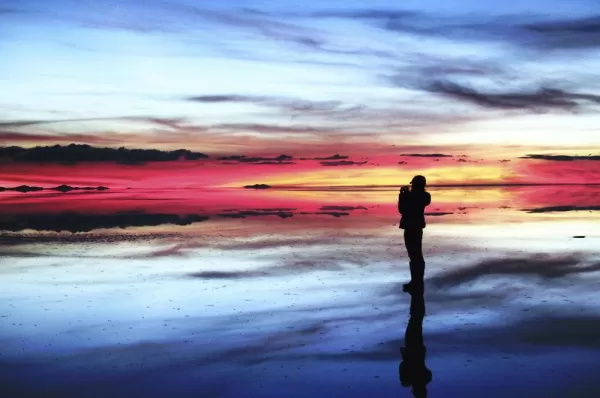
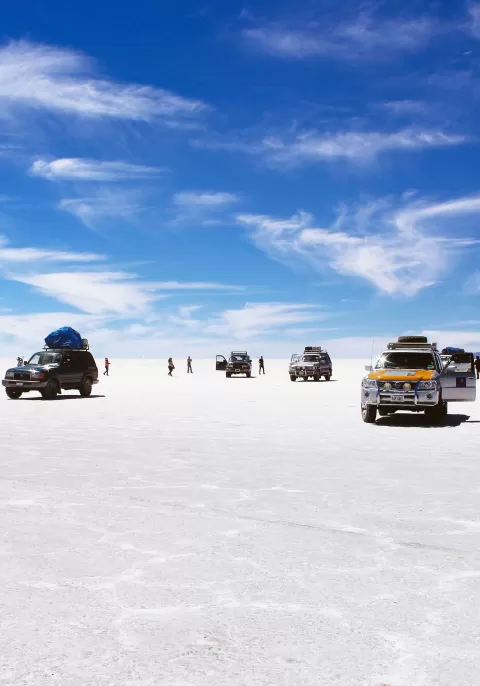
Salar de Uyuni is one of the most extraordinary destinations on the planet. This 9,000 km² (4,680 sq mi) salt desert, located at an elevation of 3,650 meters (11,970 feet) above sea level, is the largest salt flat in the world. This surreal landscape stretches to the horizon in every direction, creating a natural mirror during the rainy season and a dazzling white expanse during the dry season.
This stunning geological wonder was once part of a prehistoric salt lake that covered most of southwestern Bolivia. Over time, the lake evaporated, leaving behind a thick crust of salt. Today, this crust covers an estimated 10 billion tons of fine salt. Local campesinos continue to harvest it using only picks and shovels, preserving traditional techniques in a place that feels like another world. Travelers exploring Salar de Uyuni are captivated by the stark beauty and unusual silence of this remote region. Its seemingly endless white plains make it a dream for photographers and adventurers alike. Situated in a semi-arid climate, Salar de Uyuni receives only about 10 inches of rainfall annually. This means the landscape transforms dramatically between seasons. Salar de Uyuni, Bolivia
Whether you're interested in stargazing, landscape photography, or experiencing one of South America's most unique environments, Salar de Uyuni is an unmissable highlight. Its lunar-like surface and incredible reflections offer travelers a once-in-a-lifetime visual experience.
From its ancient origins to its present-day beauty, Salar de Uyuni continues to inspire awe and wonder in all who venture across its shimmering terrain.
What Is Special About Salar de Uyuni?
World’s largest salt flat
Mirror effect during rainy season
Unique hexagonal salt patterns
Isolation and surreal landscapes
Exceptional stargazing conditions
Whether you're interested in stargazing, landscape photography, or experiencing one of South America's most unique environments, Salar de Uyuni is an unmissable highlight. Its lunar-like surface and incredible reflections offer travelers a once-in-a-lifetime visual experience.
From its ancient origins to its present-day beauty, Salar de Uyuni continues to inspire awe and wonder in all who venture across its shimmering terrain. Salar de Uyuni, Bolivia
Geography and Formation of the Uyuni Salt Flat
Ancient Lakes and Natural Evolution Salar de Uyuni was once part of a massive prehistoric salt lake. Over thousands of years, water evaporated, leaving behind the vast salt crust that exists today. Uyuni Desert Climate & Altitude
Located at 3,650 meters (11,970 feet) above sea level, the Uyuni Desert experiences semi-arid conditions, with temperatures ranging from cool nights to warm daytime sun. Salt Crust and Minerals
The crust contains vast quantities of salt and rich lithium brine beneath the surface, making it a valuable mineral resource.
Top Things to See at Salar de Uyuni
1. Mirror Effect (Wet Season Reflections)
During the rainy season, the salt flats transform into a giant mirror reflecting the sky, creating a surreal visual experience. 2. Isla Incahuasi (Cactus Island)
This cactus-covered island rises from the flat expanse, offering panoramic views of the surrounding desert. 3. Train Cemetery
Located just outside Uyuni, the abandoned locomotives provide a striking photo opportunity and insight into Bolivia’s railway history. 4. Ojos de Sal (Salt Springs)
Natural salt springs dot the desert, adding unique textures and small pools to explore. 5. Salt Hotels
Hotels built entirely of salt blocks provide a one-of-a-kind accommodation experience on the flats. 6. Dakar Monument & Flag Plaza
Memorials and monuments mark the salt flats’ connection to the famous Dakar Rally and Bolivian heritage.
Things to Do at the Uyuni Salt Flat
1. Perspective Photos on the Flats
Create fun optical illusions using the flat, reflective surface. 2. Stargazing and Milky Way Viewing
The remote location offers minimal light pollution, ideal for astronomy enthusiasts. 3. Sunrise and Sunset Viewing
Catch breathtaking colors as the sun rises or sets over the salt crust. 4. Multi-Day Uyuni + Altiplano Tours
Red/Green Lagoons
Flamingo Lakes
Geysers and Hot Springs
These tours provide an immersive experience into Bolivia’s high-altitude desert landscapes.
Is Salar de Uyuni Worth Visiting?
Exceptional landscapes unlike anywhere else
Accessible iconic natural wonder
Unique photography opportunities
Adventure routes into the Altiplano
Safe, well-organized tours
Best Time to Visit Salar de Uyuni
Rainy Season (December–March): creates the mirror effect with water up to 25 cm deep.
Dry Season (April–November): exposes polygonal salt crystal patterns for striking geometric landscapes.
Visitors can explore the flats by 4x4, stopping at landmarks such as Isla Incahuasi and the Train Cemetery.
How to Visit Salar de Uyuni
Getting to Uyuni
Accessible from La Paz, Sucre, or Chile (San Pedro de Atacama). Tour Types
1-day salt flat tour
2-day volcano + salt flat tour
3-day Altiplano expedition
Where to Stay Around Salar de Uyuni
Uyuni Town Basics
Small town serving as the gateway to the flats, with restaurants, shops, and accommodations. Salt Hotels
Unique lodging made entirely of salt, often offering immersive sunset views. Budget and Luxury Options
Options range from basic hostels to full-service hotels.
Practical Tips for Visiting the Salt Flats in Bolivia
Altitude Sickness Advice: Acclimate gradually and stay hydrated.
What to Pack: Wet season – waterproof gear; dry season – sun protection and warm layers.
Safety and Weather Considerations: Travel with experienced guides and 4x4 vehicles.
Photography Tips: Bring a wide-angle lens, tripod, and polarizing filter for mirror effects.
Talk to our Trip Planner to plan your visit to Salar de Uyuni and see the stunning landscapes, local communities, and explore the world’s largest salt flat with expert guides.