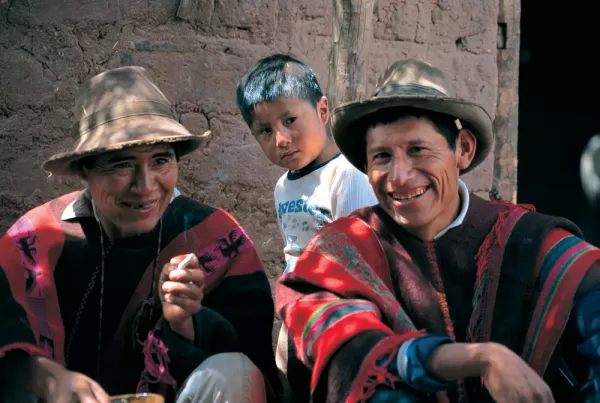
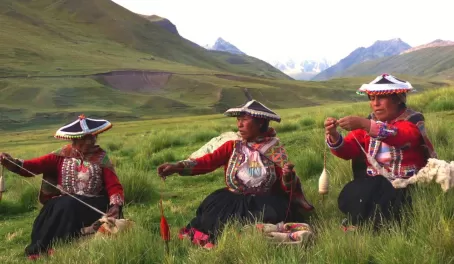
Bolivian people are known for their strong Indigenous roots, long-standing traditions, and close ties to their land and communities. If you want to understand Bolivia, you need to look at everyday life, local customs, and the spiritual beliefs that shape Bolivian religion. Culture and faith are still a big part of daily life, especially in rural areas. Bolivia is home to more than 30 Indigenous groups, and each one keeps its own language, crafts, and rituals alive.
Bolivia History
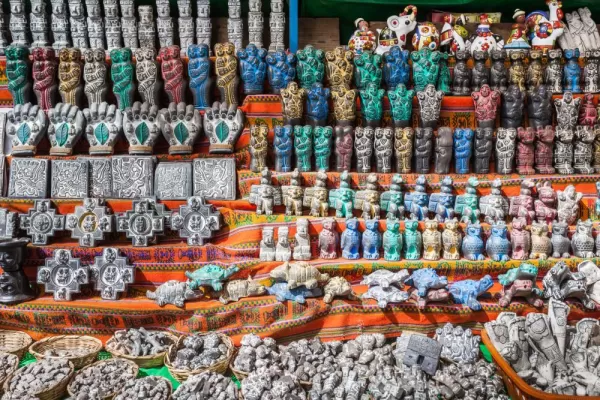
Witches' Market of La Paz
Bolivia’s culture is shaped by colorful festivals, traditional music, Indigenous customs, and strong Spanish colonial influence that you can still see in everyday life. The country’s earliest people were nomadic hunter-gatherers who migrated from Asia across the Bering land bridge during the last Ice Age.
Many historians believe these early groups reached South America around 12,000 BC, laying the foundation for the diverse Indigenous communities that still play a central role in Bolivia today.
This initial settlement period lasted until about 1400 BC, when a more highly advanced culture of the Chavin began spreading its influence from coastal Peru throughout the Andes. Around 300 BC, the Chavín inexplicably disappeared, and in their place, the Tiahuanco culture of the Bolivian Altiplano rose to dominance.
During the next 1,000 years, the Tiahuanaco culture prospered and advanced in art, agriculture, and architecture, eventually reaching a level of development comparable to that of ancient Egypt. Eventually, the Tiahuanaco civilization began to fade, too, giving way to the Incas of Peru.
Theories abound about what happened to Tiahuanaco, including one that says the Inca royalty were the descendants of the crumbling Tiahuanco culture. The Incas quickly grew to dominate an immense region stretching from Colombia to Argentina, and including all of the Bolivian highlands.
The Spanish arrived in 1531, and Francisco Pizarro and Diego de Almagro made their way inward, looking for wealth and land. They returned to Spain to look for reinforcements to return to the New World. He returned, marching into Cajamarca, in northern Peru, where he captured, ransomed, and executed the Inca emperor, Atahualpa, in 1533.
Modern-day Bolivia was referred to as Alto Peru by the new Spanish governors. Bolivia was so far away from the new capital of Lima on the coast that most indigenous Bolivians were initially unaffected by the conquest. This all changed, however, with the discovery of silver in Potosi. The mines of Cerro Rico, or the Rich Hill, would make the Spanish crown richer than even a king could dream.
Thousands of fortune hunters from Europe poured into Bolivia, and Potosi became the largest city in the Americas overnight. In the following centuries, millions of conscripted Indians would die in the atrocious mines of Potosi. The Spanish soldiers, administrators, adventurers, and settlers became a strong landed aristocracy, and the indigenous people of Bolivia were reduced to tenant farmers and slaves.
With such wealth and poverty living side by side, it was only a matter of time before rebellion ignited in Bolivia. It was in Sucre that the first call for independence in Spanish America sprang. After independence in 1824, Alto Peru became the Republic of Bolivia. With its vast territory, Bolivia was a highly prized target for invaders seeking land. This became obvious when Chile attacked in 1879, igniting the War of the Pacific. Chile, in the end, triumphed and took the only coastline Bolivia ever had. In the following years, Peru, Brazil, Argentina, and Paraguay each carved away at Bolivia.
Bolivia has undergone 191 governments since its independence. It has been ruled by corrupt officials and hard-line military juntas. Finally, in 1982, a leftist civilian movement called the Movimiento de la Izquierda Revolucionario won the election against the military. This government began the difficult job of reforming the government into a true democracy.
Bolivian Geography & Culture
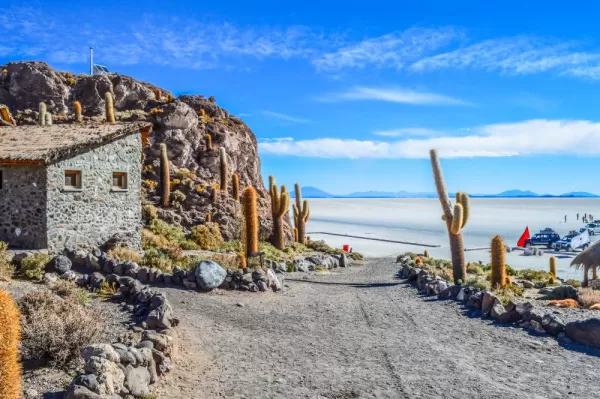
Isla del Pescado at Salar de Uyuni in Bolivia
Nicknamed the Tibet of the Americas, landlocked Bolivia is the highest and most isolated country in the Americas. With elevations ranging from sea level to over 21,000 feet, the Bolivian landscape offers a mind-blowing array of complex ecosystems and stunning scenery.
Bolivia is also home to the largest indigenous population in the Americas.
With over 50% of its population maintaining traditional lifestyles & beliefs, Bolivia is a cultural treasure that is only now being appreciated, discovered, and studied.
Approximately the size of France and Spain combined, Bolivia can be broken into five geographic regions: the stark Altiplano, the lush Yungas, the fertile highland valleys, the scrubland of the Chaco, and the impenetrable Amazon Basin. Most of the population lives in the Altiplano and highland valleys. It's on these windswept plains and high valleys where the birth of Andean culture can be found.
In archeological sites like Tiahuanaco near La Paz and Quechua villages like those near Hacienda Candelaria, visitors can feel the ancient spirits of the Andes and begin to understand the rich cultural heritage that is Bolivia. The wild places of the Yungas, Chaco, and Amazon have their own draw. These places offer some of the best opportunities to see South American wildlife. It's still possible to see vicuña, spectacled bear, condor, jaguar, capybara, and others in these wild places.
Bolivia's Colonial heritage is among the longest in the Americas. Ornate buildings line the cobblestone streets of crumbling Potosi, and the White City, Sucre, still lives up to its name with whitewashed buildings and red clay rooftops stretching out in all directions. Bolivia's cultural heritage and stunning natural beauty lie waiting to be discovered. Understanding Bolivia's culture and religion offers deeper insight into the country’s identity, where spiritual practices remain deeply rooted in tradition.
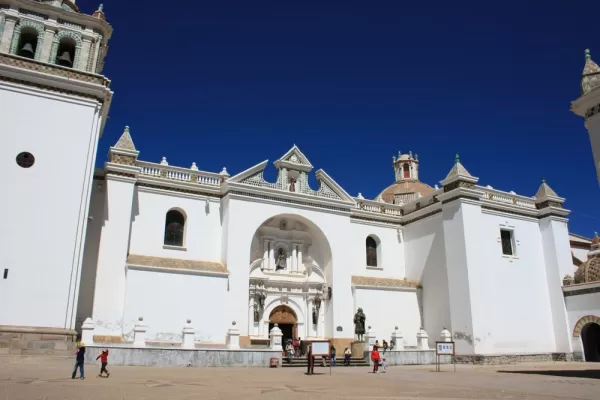
Church of Copacobana (Jodi Teeple)
Bolivia Religion
The predominant religion in Bolivia is Roman Catholicism, with a scattering of Protestant groups also present. Indigenous Bolivians have blended Catholic practices with their traditional spiritual beliefs. One of the most fascinating aspects of Bolivian religion is this fusion, particularly the worship of Pachamama (Mother Earth), which is often unified with the figure of the Virgin Mary in traditional religious artwork, a syncretism that dates back to the time of the Spanish conquest.
Bolivia Traditions
Bolivia tradition is a mix of Indigenous roots and Spanish influence that you can still see in everyday life. Across the country, people take part in long-standing customs such as the Alasitas fair, where miniature goods are bought as symbols of hopes for the year, and the colorful Carnaval de Oruro, filled with traditional dances like the Diablada. Many families also honor Pachamama (Mother Earth) by making small offerings, especially in rural Andean communities.
In places like Tarabuco, locals still wear traditional clothing during market days, keeping old weaving styles alive. These traditions are not only for tourists as they are part of daily life, passed down from grandparents to children, and continue to shape how Bolivians celebrate, pray, and gather as a community.
Bolivia Languages
Bolivia officially recognizes 37 languages, reflecting its rich Indigenous heritage and cultural diversity, and this makes it one of the most linguistically inclusive countries in the world. While Spanish is the most widely spoken, many Indigenous languages of Bolivia are still used today.
Spanish is the main language in schools, cities, and the media.
Quechua and Aymara are common in the Andes region.
Guarani is widely spoken in southeastern Bolivia.
Other languages spoken in Bolivia include Chiquitano, Moxeño, and Uru.
Bolivian Food
Bolivian food consists mainly of meat, potatoes, corn pancakes, rice, eggs, and vegetables. Local specialties include pique a lo macho, grilled beef, sausage, lechón, suckling pig, and cuy, whole roasted guinea pig, however, some delicacies may only be for the most adventurous stomachs.
Explore Bolivia and Chile on this 10-day adventure tour revealing an extreme geography of deserts, mountains, canyons, and lagoons. Visit Salar de Uyuni, Lake Titicaca, and the Atacama Desert while viewing breathtaking landscapes every step of the way! Starting in La Paz, Bolivia you'll journey to Tatio Geysers, the Valley of the Moon, and more.
This 11-day Bolivia trip begins in La Paz with a city tour, then flies to Uyuni for the world's largest salt flat and a 4WD adventure to lagoons and geothermal areas. Next, visit Cochabamba and Torotoro National Park to see dinosaur footprints, caves, and canyons. The trip concludes with a visit to Copacabana on Lake Titicaca and the Sun Island.
The 14-day Bolivia trip starts in La Paz, explores Santiago de Okola, Uyuni's salt flat, ventures to Cochabamba and Torotoro National Park for dinosaur footprints, and includes a stop at Copacabana by Lake Titicaca, visiting the Sun Island.
Enjoy a remote 5-day Bolivia trekking adventure on this expedition in the Cordillera Real, in the majestic Andes Mountains. This trek features remarkable views of glacier-clad peaks and high altitude lakes. You'll visit La Paz, Moon Valley, and the Tihuanaco ruins as well. Enjoy camping, horseback riding, and market visits too!
Some common traditions in Bolivia include Carnaval de Oruro, a large festival with colorful costumes and folk dances, Día de Todos Santos, when families honor loved ones who have passed away, and Alasitas, where people buy miniature items for good luck.
Many traditions also include Indigenous ceremonies, music, and dances that are still practiced today.
What is Bolivia known for?
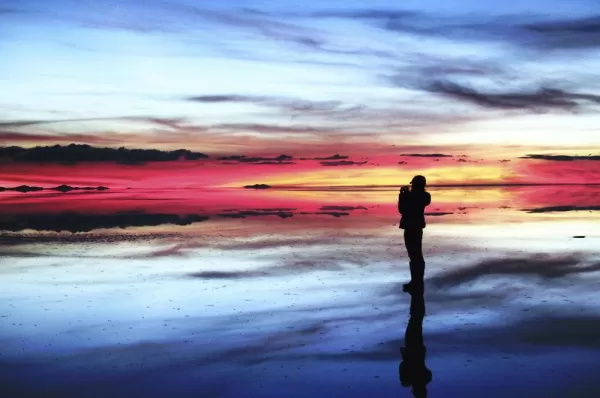
Bolivia is best known for the Salar de Uyuni, the world’s largest salt flat, which turns into a giant mirror during the rainy season. It’s also famous for its high-altitude capital, La Paz, one of the highest cities in the world.
The country has strong Indigenous roots, and you’ll see that in the traditional clothing, colorful markets, and everyday life. Bolivia is also home to part of Lake Titicaca, the highest navigable lake in the world, and the Andes Mountains.
In short, Bolivia is known for its dramatic landscapes, deep Indigenous culture, and unique places you won’t find anywhere else.
Clara T.
Bolivia
Chat Bolivia with a specialist
Our team is waiting and ready to talk with you about your next adventure.
So go ahead and book an appointment with one of our specialized trip planners.
What a gift to experience Bolivia's Cordillera Real in such a guided and supported way. From the buzz of La Paz to the staggering heights of Huayna Potosi, we were well taken care of. With our guide, we had access to remote and untouristed trails, and for most of the trek, it felt like we had the world to ourselves. Would definitely recommend this to big mountain lovers who are prepared for some serious altitude and startling beauty.
Cynthia
1 year ago
Amazing follow-through by Eric!!! Quick to response to all my questions and concerns. Made me feel this coming journey is safe at the same time exciting! Looking forward to this new adventure with (yes, Adventure Life!) Eric you are definitely an asset to the company and thank you 🙏
COSIO/MARIATHERESA DELAPENA
1 year ago
I had to reschedule my trip due to a running injury, and Ghezzel and Claudia worked with me.
Katie Dahlman
1 year ago
Claudia Corona was very helpful and professional. She answered all my many questions in a very timely manner and really worked with me to taylor-make my trip. Very good experience.