Bolivia is a year-round destination, and the best time to visit really depends on what kind of experience you’re looking for. Some travelers plan their trip around major festivals, specific spots they want to visit, while others prefer quieter months with fewer visitors.
Here’s a simple month-by-month guide to help you decide when to go, including major events and the popular shoulder seasons travelers often consider.
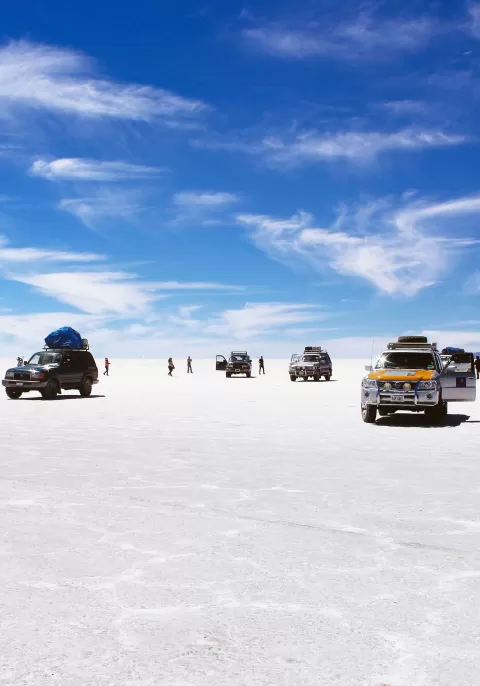
Salar de Uyuni, Bolivia January
The year begins with community celebrations across the country. Día de Reyes (Three Kings’ Day) is celebrated in early January, especially in smaller towns. And later in the month, Alasitas Festival in La Paz takes place. During this unique event, people buy miniature versions of items they hope to receive in real life: homes, cars, money, even tiny passports, and have them blessed for good fortune.
January is a quieter month for international tourism in Bolivia, making it a good time for travelers who prefer fewer crowds.
February
February is one of the most exciting months to visit Bolivia because of Carnival. The most famous celebration is the Oruro Carnival, recognized by UNESCO. Expect traditional dances, elaborate costumes, brass bands, and large street processions. Other cities like La Paz, Santa Cruz, and Cochabamba also host their own Carnival festivities.
If witnessing one of Bolivia’s biggest cultural events is on your list, February is the month to plan around.
March
Carnival sometimes extends into early March, depending on the calendar. After that, travel slows down slightly, which can mean fewer visitors at major attractions. The month of March is often a more relaxed time to visit if you want to enjoy popular destinations without peak-season demand.
April
April marks the beginning of one of Bolivia’s shoulder seasons, from April to June. These months are popular with travelers seeking a balance between accessibility and fewer crowds.
During April, Semana Santa (Holy Week) is observed across the country. Cities such as Sucre and Potosi host religious processions and special church services that reflect Bolivia’s strong spiritual traditions.
Explore the Salar de Uyuni May
May continues the shoulder season and is a favorite month for many travelers. National Labor Day (May 1) is celebrated throughout the country. May is also a popular time to visit destinations such as Salar de Uyuni and Lake Titicaca, so booking tours and accommodations in advance is still recommended.
June
June is culturally significant. And on June 21, Bolivia celebrates the Aymara New Year (Willkakuti), especially in Tiwanaku near Lake Titicaca, where visitors can witness traditional sunrise ceremonies welcoming the Andean New Year.
The month of June is still part of the April to June shoulder season, offering a good balance between activity and manageable visitor numbers.
July
July begins to feel busier as the country prepares for Independence Day celebrations. During July, schools and communities organize parades and cultural programs leading up to August 6, so it’s an exciting time to be in Bolivia, particularly in major cities.
August
August is one of the busiest travel months, and August 6, Bolivia’s Independence Day, is celebrated nationwide with parades, patriotic events, and public festivities. In Andean regions, August is also associated with traditional offerings to Pachamama (Mother Earth).
Because August is a peak travel month, it’s best to secure tours and accommodations well in advance, especially for high-demand destinations.
September
September marks the beginning of the second shoulder season from September to November. This period is often ideal for travelers who want fewer crowds while still enjoying active local events. And the month of September is also the Festival of the Virgin of Guadalupe in Sucre, which is one of the highlights, featuring parades, music, and traditional dancing.
October
October continues the September to November shoulder season, wherein many towns host regional fairs and religious celebrations, offering a more local and community-focused experience. This month can be a great time to visit if you prefer cultural events without the scale of Carnival or Independence Day.
November
November 1 and 2 are dedicated to Día de los Muertos (Day of the Dead), when families gather to honor loved ones with offerings, traditional foods, and cemetery visits. November also remains part of the shoulder season, making it appealing for travelers who want meaningful cultural experiences with fewer visitors.
December
December brings Christmas celebrations across Bolivia, blending Catholic traditions with local customs. Town squares fill with lights, nativity scenes, and community gatherings.
From December into the early months of the year, travelers visiting Salar de Uyuni may sometimes witness the famous mirror-like reflections on the salt flats. This natural phenomenon draws photographers from around the world, though accessibility can vary depending on conditions.
Salar de Uyuni, Bolivia
Visiting Bolivia
If you want major national celebrations, plan your trip around February (Carnaval) or August (Independence Day).
If you prefer fewer crowds and a more flexible travel experience, the shoulder seasons: April to June and September to November are often ideal.
In the end, the best time to visit Bolivia depends on whether you’re coming for grand parades, spiritual traditions, or a quieter cultural experience, because every month offers a different experience.
Are you ready to start planning your trip? Contact us today and let our expert trip planners help you choose the month when to go to Bolivia.
For most travelers, 7 to 10 days is ideal. That’s enough time to see highlights like La Paz, Salar de Uyuni, and Lake Titicaca without rushing.
If you want to add Sucre, Potosi, or Amazon, plan for 12 to 14 days.
If you're short on time, even 4 to 5 days works if you focus on one or two main destinations.
When not to go to Bolivia?
There’s no truly bad time to visit Bolivia, but some months may not be ideal depending on your plans.
If you want to avoid large crowds and higher prices, skip February (Carnival) and early August (Independence Day). These are peak celebration periods, and hotels and tours can fill up fast.
It’s also not ideal to visit during major national holidays if you’re on a tight schedule, since transportation and accommodations can book out quickly.
In short, avoid the busiest festival months if you prefer a quieter and more flexible trip.
Tilly P.
Bolivia
Chat Bolivia with a specialist
Our team is waiting and ready to talk with you about your next adventure.
So go ahead and book an appointment with one of our specialized trip planners.
What a gift to experience Bolivia's Cordillera Real in such a guided and supported way. From the buzz of La Paz to the staggering heights of Huayna Potosi, we were well taken care of. With our guide, we had access to remote and untouristed trails, and for most of the trek, it felt like we had the world to ourselves. Would definitely recommend this to big mountain lovers who are prepared for some serious altitude and startling beauty.
Cynthia
1 year ago
Amazing follow-through by Eric!!! Quick to response to all my questions and concerns. Made me feel this coming journey is safe at the same time exciting! Looking forward to this new adventure with (yes, Adventure Life!) Eric you are definitely an asset to the company and thank you 🙏
COSIO/MARIATHERESA DELAPENA
1 year ago
I had to reschedule my trip due to a running injury, and Ghezzel and Claudia worked with me.
Katie Dahlman
1 year ago
Claudia Corona was very helpful and professional. She answered all my many questions in a very timely manner and really worked with me to taylor-make my trip. Very good experience.