
Have questions? We're here.


La Paz Highlights
While La Paz, Bolivia is perhaps best known for being the highest capital city in the world, it's not actually the capital! Sucre is the official national capital and La Paz is the home of the executive and legislative branches of government.
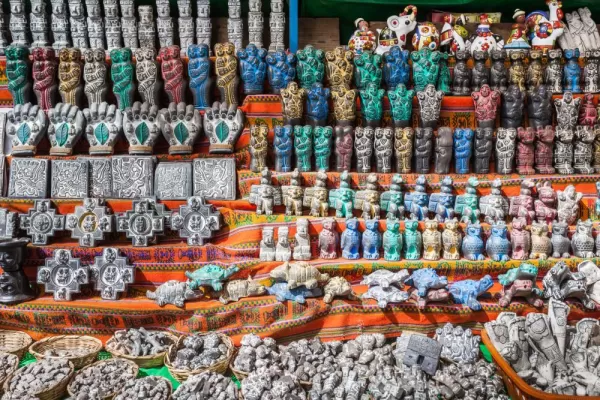
The friendly people, the stunning mountain landscapes, and the historical buildings are just a few of the attractions that await anyone lucky enough to include a La Paz, Bolivia tour on their South American trip. Here are some of the other highlights that this city has to offer:

Our team is waiting and ready to talk with you about your next adventure. So go ahead and book an appointment with one of our specialized trip planners.
Let's ChatMost travelers find that three to fourteen days is ideal for a La Paz tour. This allows time to acclimate to the altitude, which sits over 11,900 feet, while still exploring the city’s highlights. A typical La Paz, Bolivia tour often includes the Witches’ Market, Plaza Murillo, and nearby sites like the Moon Valley. With an extra day, a La Paz tour can also include a visit to Tiwanaku or a transition toward Lake Titicaca.
La Paz is absolutely worth visiting and stands out as one of the most distinctive cities in South America. A La Paz tour immerses you in dramatic Andean geography, indigenous traditions, and daily life unfolding across steep hillsides. Unlike other capitals, a La Paz, Bolivia tour offers a raw, lived-in feel that many travelers find compelling. Exploring the city reveals contrasts between colonial architecture, modern cable cars, and centuries-old customs. While wildlife sightings are not guaranteed, condors are sometimes spotted in nearby valleys, especially during the dry season. This adds another layer of interest to an experience on a La Paz tour.
The best months for a La Paz tour are generally May through October, during the dry season. These months offer clearer skies, cooler temperatures, and more reliable conditions for walking tours and day trips. A La Paz, Bolivia tour during this period is ideal for exploring outdoor markets and panoramic viewpoints. November through March is the rainy season, which can bring afternoon showers, but also fewer crowds and greener landscapes. Regardless of timing, a La Paz tour benefits from year-round cultural activity, festivals, and local events that give each visit a distinct character.
In La Paz, the main language spoken is Spanish, which is used in everyday communication, business, and tourism. Many locals also speak indigenous languages, especially Aymara and Quechua, reflecting Bolivia’s strong cultural heritage. In tourist areas, you’ll find some people who speak basic English, but Spanish is by far the most widely used.
In La Paz, the official currency is the Bolivian Boliviano (BOB). It’s commonly written as Bs and used for all everyday transactions like food, transport, and tours. While some tourist services may accept US dollars, you’ll generally need bolivianos for local purchases.
La Paz is a city, not a town. It is one of Bolivia’s urban centers. Despite its rugged setting in the Andes, it’s a large, busy city with millions of residents in its greater metropolitan area.

With deep destination expertise, we advise on what's worth your time, what to skip, and how to avoid common travel pitfalls.
You'll work with a team of humans who get to know you, answer every question, and support you until you return home—we're always just a call or text away.
Secure your 5% Past Traveler Rewards on your next trip, applicable across a variety of operators, brands, and worldwide destinations.









No cost, no commitment. Talk with our experts about your dream trip.
Share your travel style—we match you with the right itinerary or create one just for you.
Lock in knowing every detail is handled and you’re fully supported.
Enjoy a seamless journey—and unlock 5% off your next adventure.