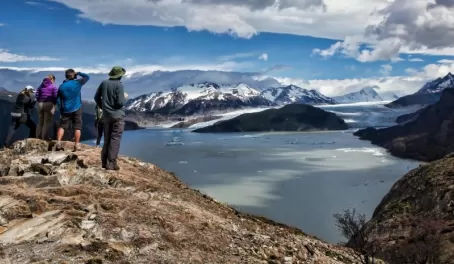
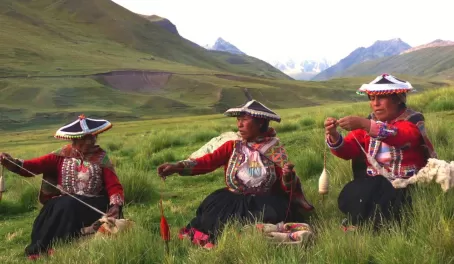
What makes the Atacama Desert the driest desert in the world? Its extreme aridity results from several natural factors. Large, stable high-pressure systems, like the Pacific Anticyclone, push storm systems away and create persistent dry winds. The Humboldt Current carries cold water north from Antarctica, cooling coastal breezes, reducing evaporation, and creating a temperature inversion that traps cold air below warm air. Finally, the Andes Mountains and Altiplano plateau block moisture from the Amazon Basin and capture any incoming humidity. The combination of these conditions has created an incredibly dry desert with highly specialized ecosystems, including cacti, succulents, and other drought-adapted plants. Atacama Desert at the Atacama to Uyuni Salt Flat Crossing trip
Where Is the Atacama Desert?
Northern Chile, between the Andes and Pacific Ocean – The desert stretches over much of the northern region of the country, creating a dramatic contrast between mountains and coastal plains. Its unique location shapes its extreme climate and unusual landscapes.
Covers approximately 41,000 square miles – This makes it one of the largest deserts in the world. Its vast size includes salt flats, valleys, volcanoes, and high-altitude plateaus.
Borders Peru, Bolivia, and Argentina – The desert’s northern reaches touch these neighboring countries, creating shared ecological and cultural zones. Travelers can easily access cross-border tours that explore desert regions in multiple countries.
Geography contributes to extreme dryness – With the Andes blocking moisture from the east and cold coastal currents from the west, almost no rain reaches the interior. This combination has allowed some areas to remain almost completely dry for centuries.
Unique Atacama Desert Facts
Driest non-polar desert on Earth – Rainfall in some regions is less than 0.04 inches per year, and some weather stations have never recorded measurable precipitation. This extreme dryness is a natural laboratory for scientists studying desert climates.
Some areas haven’t seen rain in centuries – In places like Arica, historical records suggest no rainfall for over 400 years. Despite this, life persists through specially adapted plants and microbes.
NASA tests Mars equipment here – The desert’s rocky terrain and arid climate closely resemble Martian conditions. Engineers use the Atacama to prepare rovers, instruments, and astronaut training missions.
Home to the world’s largest salt flat: Salar de Atacama – This vast, white expanse stretches over hundreds of square miles. It is also home to flamingos and other wildlife adapted to the high-salinity environment.
El Tatio geyser field has 80+ geysers – Located at 14,000 feet in northern Chile, the geysers erupt with dramatic steam columns, particularly at sunrise. The geothermal activity provides a glimpse into the region’s volcanic past.
Atacama sky is among the clearest in the world – The combination of high elevation, dry air, and minimal light pollution makes it ideal for stargazing. Observatories in the region attract astronomers and tourists alike.
History and Culture of the Atacama Desert
Ancient Atacameño people – These indigenous communities have lived in the desert for thousands of years. They developed irrigation systems and adapted to the harsh climate, leaving behind significant archaeological sites.
Pre-Columbian trade routes and petroglyphs – The Atacama served as a trade corridor connecting coastal regions with the Andes. Stone carvings, burial sites, and artifacts provide insight into their spiritual and daily life.
San Pedro de Atacama as a cultural hub – Today, this small town preserves the desert’s heritage. Visitors can explore traditional crafts, colonial architecture, and modern desert tourism experiences.
Huaso cowboys of Atacama Chile (Lynessa Nelson)
Atacama Desert in Chile: Best Things to Do
Explore Valle de la Luna (Moon Valley)
Otherworldly sand dunes and rock formations – The valley looks like a lunar landscape, with jagged rocks and sweeping sand dunes. Walking or driving through this terrain feels like entering another planet.
Stunning sunsets – As the sun sets, the valley glows red and orange, offering spectacular photo opportunities. This daily phenomenon draws travelers from around the world.
Visit El Tatio Geysers
One of the largest geyser fields in the world – Over 80 geysers erupt from the ground, creating steaming vents across the desert plateau.
Best viewed at sunrise – Early morning is when the steam columns are most dramatic, illuminated by soft sunlight. It’s a magical experience that combines heat, mist, and a chilly desert atmosphere.
Stargazing in San Pedro de Atacama
World-class astronomy location – The high altitude, dry air, and minimal light pollution allow visitors to see the Milky Way and planets with exceptional clarity.
Guided tours with telescopes – Expert astronomers provide telescopes and insights into celestial events. Night sky tours can include meteor showers and planetary alignments.
Float in the Salt Lagoons
Cejar and Tebinquinche lagoons – These lagoons have incredibly high salt content, allowing visitors to float effortlessly.
Experience similar to the Dead Sea – The buoyancy and mineral-rich waters create a relaxing and unique desert activity.
Discover Salar de Atacama
Largest salt flat in Chile – White salt crusts stretch across the horizon, creating surreal desert landscapes.
Wildlife spotting – Flamingos nest in specific lagoons, and the flat provides habitat for other desert-adapted species.
Hike Through Rainbow Valley (Valle del Arcoiris)
Multicolored mineral deposits – The valley’s rock formations display vibrant reds, yellows, and greens caused by volcanic and mineral activity.
Ideal for photography and short treks – Easy hiking trails make it accessible for most travelers while offering incredible photo opportunities.
See the Atacama Desert Bloom (Desierto Florido)
Rare desert event – After unusual rainfall, thousands of wildflowers bloom across the desert floor.
Spectacular seasonal transformation – The normally barren desert bursts with color, creating a short-lived but unforgettable natural display.
Visit High-Altitude Lagoons
Miscanti and Miñiques lagoons – Located at 13,000 feet, these lagoons are surrounded by volcanoes and snow-capped mountains.
Scenic views and wildlife – Visitors can observe flamingos and other birds while hiking along the lagoons’ edges.
Sandboarding in the Dunes
Adventure in Valle de la Muerte – Sandboarding allows travelers to slide down steep dunes at high speeds.
Popular with thrill-seekers – This activity is especially favored by younger travelers and those seeking an adrenaline rush.
Explore the Atacama Caves
Lava tubes and salt caves – Formed over centuries by volcanic activity and erosion, the caves offer unique geological insights.
Guided tours available – Experienced guides lead visitors safely through the caves near San Pedro de Atacama, explaining their history and formations.
Enjoy a good book and relax in the library.
How to Visit the Atacama Desert: Travel Tips
Where to Stay in the Atacama Desert
San Pedro de Atacama options – Boutique hotels, eco-lodges, and hostels cater to a variety of budgets.
Our team is waiting and ready to talk with you about your next adventure.
So go ahead and book an appointment with one of our specialized trip planners.
They were recommended to me and I can see why. Very professional, efficient, friendly and easy to work with.
Michael and Nancy
3 months ago
I received an offer from the company running a tour, I chose the date and booked via Adventure Life.
JMT
4 months ago
Sandra and Arvin have been helpful. They answer questions and concerns promptly. They modify excursions and adjust for physical conditions.
Jan Bake
6 months ago
We have been using Adventure Life for over 20 years. I guess that about says it all. This most recent trip to central and southern patagonia was spectacular. What beautiful, vast, varied landscape. We saw it from kayaks, white water rafting, boats, hiking trails and on horseback.
Lodges and guides were top notch.
Carol Thuerbach
1 year ago
With somewhat "last minute" planning, Mary was able to put together a rather complicated trip to Chile and Patagonia. Experts, for sure! This will be our 12th trip with AL. I guess that speaks volumes.