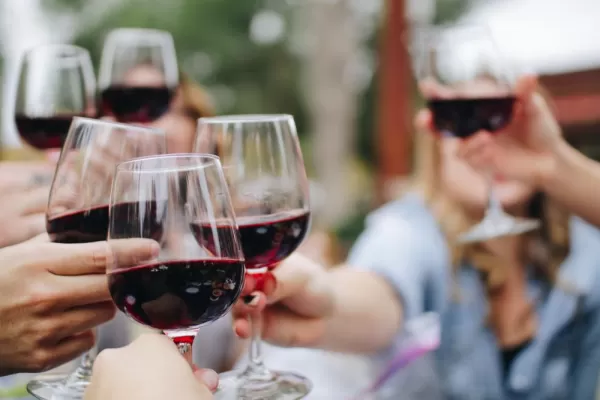
In recent years, the world has begun to take notice of Chile's wines. In 1998, Chile exported $502 million in wines to some 85 countries, and was third in total imports to the US, after France and Italy. Still more telling are the results of the VinExpo 99, in which some 40 countries presented their finest export wines. With a total of 67 medals and 3 out of 23 double gold medals, Chilean wines as a group ranked second only to France, the host country. Recent studies also indicate that Chilean wines boast the world's highest levels of flavanol, a natural antioxidant, boding well for a health-conscious future.
This recent success caps over 400 years of wine-making tradition, but it is natural conditions - climate, soils, and rootstock - that are responsible for the quality of Chilean wines. A mild Mediterranean climate, with long, dry summers, a daily fluctuation in temperature exceeding 60° F, and a relative humidity of 55-60%, promotes healthy root formation and the accumulation of sugars, aromas, and colors over a long ripening season.
Most soils in Chile's wine growing region are alluvial or volcanic in origin. Variations in nutrient content, porosity, and other soil characteristics within and between valleys contribute to regional wine qualities.
Most of Chile's finest rootstock was imported from France in the 1800's - just in time, as it turned out, to avoid the disastrous phylloxera plague, which destroyed some 2.5 million acres of vineyards in Europe and across the world. Isolated by its imposing geography, Chile is now home to the only remaining strains of these original vines. Grapes for white wine grown here include Sauvignon Blanc, Chardonnay, Riesling, Gewürztraminer, Chenin-Blanc, and Semillón. Grapes for reds include Cabernet Sauvignon, Merlot, and Pinot Noir.
Chile's wine region, from 30°-40° south latitude, includes eight separate valleys, each with its own characteristics and wines. The Casablanca Valley is generally considered the finest producer of whites, principally Chardonnay but with a growing reputation for Sauvignon Blanc. The Maipo valley, meanwhile, is Chile's most traditional wine region and producer of the country's finest Cabernets and Merlots.
Chilean Wine, the flavor of a privileged geography. ¡Salud!
Thanks to the Tourism Promotion Corporation of Chile : 202-530-4109
Our team is waiting and ready to talk with you about your next adventure.
So go ahead and book an appointment with one of our specialized trip planners.
They were recommended to me and I can see why. Very professional, efficient, friendly and easy to work with.
Michael and Nancy
2 months ago
I received an offer from the company running a tour, I chose the date and booked via Adventure Life.
JMT
4 months ago
Sandra and Arvin have been helpful. They answer questions and concerns promptly. They modify excursions and adjust for physical conditions.
Jan Bake
6 months ago
We have been using Adventure Life for over 20 years. I guess that about says it all. This most recent trip to central and southern patagonia was spectacular. What beautiful, vast, varied landscape. We saw it from kayaks, white water rafting, boats, hiking trails and on horseback.
Lodges and guides were top notch.
Carol Thuerbach
1 year ago
With somewhat "last minute" planning, Mary was able to put together a rather complicated trip to Chile and Patagonia. Experts, for sure! This will be our 12th trip with AL. I guess that speaks volumes.