When Spanish explorers reached the region in the early 1500s, they found a small, dispersed indigenous population organized into autonomous chiefdoms rather than a single large empire — part of why Spain gained outsized influence here compared to Mexico or Peru, and part of why disease and colonization reduced the indigenous population so sharply in the centuries that followed. Some accounts trace the name "Costa Rica," or "Rich Coast," to early Spanish encounters with gold ornaments worn by local people, though the full story behind the name is debated.
Cartago, founded in the late 1500s, became Costa Rica's first colonial settlement, built inland in the fertile central highlands rather than along the coast. By the 1700s, new towns — San José, Heredia, and Alajuela — had grown up around it, and a major eruption of Irazú Volcano in 1723 buried Cartago in ash before it was rebuilt.
Coffee took root in the early 1800s and became the backbone of the economy in the decades after Costa Rica gained independence from Spain in 1821, shaping both the country's wealth and its early class structure. In 1856, Costa Rican forces under President Juan Rafael Mora repelled an invasion led by the American filibuster William Walker, who was attempting to seize control of Central America. The battle site, La Casona in Santa Rosa National Park, is now a museum and a well-known piece of national history.
That history still shapes the country today. Costa Rica abolished its military in 1948, redirecting the budget toward education, healthcare, and — eventually — one of the world's most extensive national park systems.
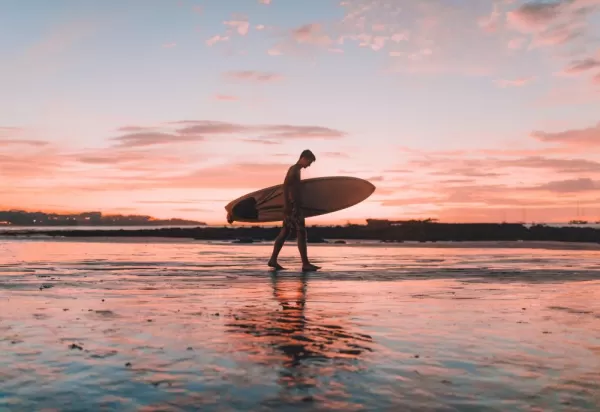
Surf the waves of Costa Rica's pristine beaches
Costa Rica Culture Facts
The cultural activity in Costa Rica has only begun to flourish in the last 100 years, due to a historical European influence erasing most of the indigenous culture. This leads to the country being noted more for its natural beauty and friendly people than for its culture. However, its diverse coastal topography offers a multitude of outdoor activities for everyone, such as:
These experiences blend nature and adventure, making Costa Rica a top destination for outdoor lovers.
Shore of Drake Bay, Costa Rica (@drinkteatravel)
Costa Rica Traditions & Customs
Many Costa Rica traditions blend Catholic religious observance with pre-Columbian and Spanish colonial roots, and travelers who visit during a festival week often see a different side of the country than those who come strictly for the outdoors.
Religious Festivals
Semana Santa, or Holy Week, is the country's most widely observed religious holiday: processions move through town streets in the days before Easter, and many businesses close, particularly on Thursday and Friday. Christmas blends religious tradition with community celebration — posadas re-enact Mary and Joseph's search for shelter, nativity scenes (portales) go up in homes, and families gather for tamales made from recipes passed down for generations. On August 2, thousands of Costa Ricans take part in the romería, an overnight pilgrimage on foot to the Basilica of Our Lady of the Angels in Cartago, honoring La Negrita, the small stone statue that has been the country's patron saint since the 1600s.
National Celebrations
Independence Day, September 15, marks Costa Rica's 1821 independence from Spain. The Independence Torch arrives from Nicaragua on September 13 and is carried in relay by students across the country, and the evening before, cities light up for the Desfile de Faroles, when children carry handmade paper lanterns through the streets — a tradition that traces back to a Guatemalan woman who carried a lantern through the streets of Antigua the night before independence was declared. Beyond the national holiday, most towns hold their own local fiestas at some point in the year, combining carnival rides, food stalls, and, in Guanacaste especially, rodeo-style events tied to the region's cowboy heritage.
Traditional Clothing and Folk Dances
Guanacaste is the center of Costa Rica's folk dance tradition, home to the Punto Guanacasteco, the country's national dance. Women dance in long, flared skirts called golas with flowers in their hair, while men wear white shirts, straw hats, and scarves they wave during the dance's more flirtatious turns. It's typically performed to marimba music, at folk festivals held throughout Guanacaste and, in a more polished form, at some cultural performances arranged for visitors.
Family and Hospitality Customs
Family is central to daily life in Costa Rica, and multiple generations often live near each other or gather regularly for meals. Hospitality runs alongside that: guests are welcomed warmly, and the phrase "pura vida" — literally "pure life" — comes up constantly, used as a greeting, a way of saying things are good, or simply an expression of the unhurried, community-oriented outlook that shapes so much of daily life.
Religion in Costa Rica
In principle over 90% of the Costa Rican population is of Roman Catholic faith. The Caribbean coastal population, consisting mostly of people of African descent, is primarily Protestant, and there are several other religious communities in San José, including a small Jewish community. Costa Rica's religion is a lasting influence from Spanish colonization that shaped the country's religious traditions and festivals.
City of La Fortuna, Costa Rica (@drinkteatravel)
What language is spoken in Costa Rica?
Spanish is the main language throughout Costa Rica. On the Caribbean coast, many people also speak Creole, and Bribri is one of the few languages still spoken in remote areas, understood by roughly less than 10,000 people. English is understood in most tourist destinations.
Photo by Jessica Heuermann
What to Eat on a Costa Rica Tour
Costa Rican cuisine is not so much spicy and hot as it is tasty. Most dishes are centered around beef, chicken, and fish/seafood dishes, served with rice or beans and fresh fruit as supplements or dessert.
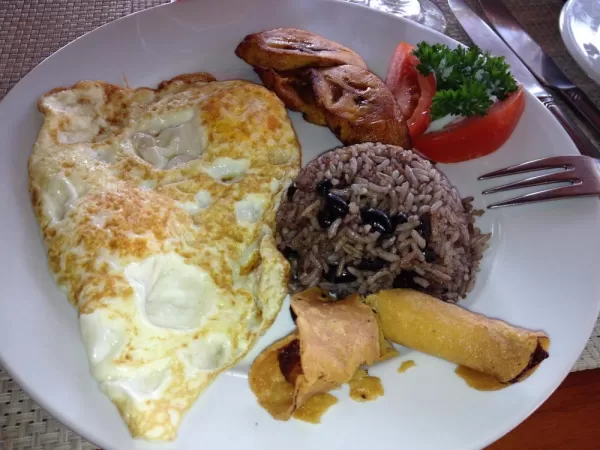
When on a Costa Rica tour, food is a big part of the experience. One of the top foods to eat when in Costa Rica is gallo pinto, a flavorful rice and beans dish often served with eggs for breakfast. Another must-try is casado, a traditional lunch plate with rice, beans, plantains, salad, and your choice of meat. Don’t miss trying empanadas, tico tamales, and olla de carne, a hearty beef and vegetable stew. Many local dishes are enhanced with Salsa Lizano, a tangy and mildly spicy sauce that’s a staple in Costa Rican kitchens. Fresh seafood in Costa Rica is also popular, especially along the coasts, where dishes like grilled fish and ceviche shine. Exploring these local flavors will make your Costa Rica trip even more memorable.
Costa Rica adventures (Jenny Johnston)
How Costa Rica's Culture Shapes Travel Experiences
Costa Rica's culture isn't separate from its landscapes — the two shape each other, and travelers who take a little time to understand local customs tend to have a noticeably better trip. Modest dress and quiet, respectful behavior go a long way at religious sites and during observances like Semana Santa or the August pilgrimage to Cartago's Basilica, when processions and crowds fill the streets. A few words of Spanish and basic courtesy — Costa Ricans place real value on politeness — open doors that a purely transactional approach to travel doesn't.
San José's museums are a practical way to get that context before heading into the rainforest. The National Museum, housed in a former military fortress, covers Costa Rican history from pre-Columbian times through the present and displays the stone spheres of the Diquís, an archaeological find recognized by UNESCO. The Jade Museum holds close to 7,000 pre-Columbian artifacts a short walk away, and the Pre-Columbian Gold Museum, beneath the Plaza de la Cultura, adds a third stop covering the same era from a different angle. Outside the museums, the Mercado Central and the local fiestas described earlier in this article offer a more everyday look at Costa Rican life — produce stalls, street food, and the kind of small talk that doesn't happen on a packaged tour.
Costa Rica's eco-tourism reputation and its cultural traditions aren't really two separate things to see — the same commitment to conservation that protects its rainforests and national parks shows up in how many communities protect their own traditions too. A rainforest hike paired with a visit to an indigenous community, a coffee farm tour, or a local artisan workshop tends to leave travelers with a fuller picture of the country than wildlife-watching alone.
Costa Rica's history — shaped by indigenous roots, Spanish colonization, and more than two centuries as an independent nation — still shows up in daily life, from the place of Catholicism in Costa Rica religion to family gatherings and the August pilgrimage. Travelers curious about Costa Rica traditions and culture generally find a country that's easy to talk to and genuinely proud of its identity.
FAQs About Costa Rica's Religion, Culture, and Traditions
What is Costa Rica's main religion?
Roman Catholicism is Costa Rica's main religion, and it holds a distinction few countries share: it's the only nation in the Americas with an official state religion, written into Article 75 of the constitution. In practice, that designation carries less weight than it once did — roughly half the population identifies as Catholic today, evangelical and other Protestant denominations have grown to represent close to a third, and the constitution guarantees religious freedom for everyone else. Catholic tradition still shapes the calendar, though, from Semana Santa processions to the August pilgrimage honoring the Virgin of Los Angeles.
What are some famous Costa Rican traditions?
Semana Santa processions, the Christmas season's tamales and tope horse parade, and the August 2 pilgrimage to Cartago's Basilica to honor La Negrita, the country's patron saint, are among the most widely observed. On the more festive side, Independence Day's lantern parade on September 14 and the Punto Guanacasteco, Costa Rica's national folk dance, are the traditions most visitors are likely to encounter or hear about.
What is Costa Rica best known for culturally?
Outside of its rainforests and wildlife, Costa Rica is best known for pura vida — a phrase that translates to "pure life" but functions as a greeting, a philosophy, and a general stand-in for the country's relaxed, community-oriented outlook. It's also known for having abolished its military in 1948, a decision that redirected national spending toward education and conservation and still shapes how Costa Ricans see their country's identity today.
What are some interesting culture facts about Costa Rica?
A few that surprise visitors: Costa Rica is the only country in the Americas with a constitutionally established state religion, even though it also guarantees religious freedom and has a fast-growing non-Catholic population. It's had no standing army since 1948. And despite covering a tiny share of the planet's land area, the country is home to close to 5% of the world's known species — a fact that shapes everything from its national park system to how central conservation is to its national identity.
By submitting your email address, you are agreeing to opt in to marketing communications. We hold your information private and do not share it with third parties.
Kevin M.
Costa Rica
Chat Costa Rica with a specialist
Our team is waiting and ready to talk with you about your next adventure.
So go ahead and book an appointment with one of our specialized trip planners.
I have worked with Jess in the past and enjoyed working with her again on a fun adventure. We were able to create a custom itinerary that worked within our timeline and budget.
Suzy Horvath
2 months ago
Kassandra is so knowledgeable and makes appropriate recommendations for what is suitable to our needs.
customer
4 months ago
Erin is super at helping with travel, this is the second trip she has arranged for us.
BBachmayer
4 months ago
Karilyn was very helpful with suggestions and very easy to work with. She was able to combine two different trips in Costa Rica into one that seems to be just perfect for us. I recommend her highly and will hopefully do another trip she puts together for us!
David Strommen
5 months ago
It was easy and quick Love working with everyone here.