For many travelers to
Patagonia, the towering walls of ice are among the most awe-inspiring natural sights. But before setting out to explore these frozen giants, it helps to understand the
glacier meaning and the different types that exist across the region.
What Are Glaciers?
At its core, the
definition of glacier is a massive, persistent body of dense ice that moves slowly under its own weight. They form over centuries as layers of snow accumulate, compress, and turn into ice. When people ask,
“what are glaciers?”, the simplest answer is that they are rivers of ice, constantly moving and reshaping the landscapes around them.
It is often said that a glacier is a
river of water in a solid state—a mass of ice in constant movement with a certain speed depending on the slope and volume. The glacial ice itself, a bluish transparent mass, is the product of snow accumulation over centuries. Under pressure, the air trapped between the intergranular spaces is released, leaving behind the dense crystalline structure we see today.
The essential conditions for glacier formation include abundant snowfall and a mean annual temperature low enough to preserve the ice consistency year-round.
What's a Glacier in Patagonia?
So,
whats a glacier in
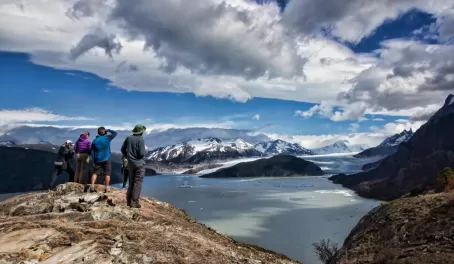
Patagonia specifically? These glaciers are part of the Southern Patagonian Ice Field, the third-largest freshwater reserve on Earth. They are dynamic, living systems—growing, retreating, and carving valleys as they interact with climate and geography.
Kinds of Glaciers Found in the Zone
Patagonia is home to a variety of glacier types, each with distinct characteristics:
- Indlansis – Enormous horizontal ice sheets, such as the Continental Icefield, which spans 17,000 km².
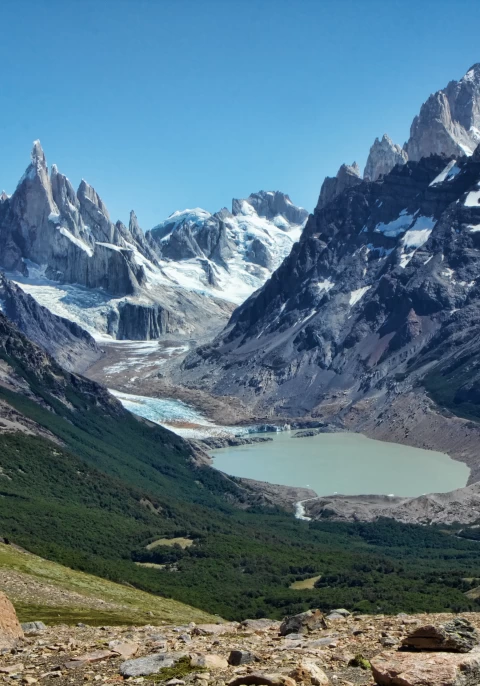
- Cirque Glaciers – Found at the tops of mountain ranges, often nestled in hollows.
- Valley Glaciers – Flowing along well-defined valleys, such as Fitz Roy’s iconic ice flows.
- Piedmont Glaciers – Valley glaciers that broaden at the lowlands, spreading like a fan.
- Compound Glaciers – Formed when several smaller lateral glaciers converge into a single larger course.
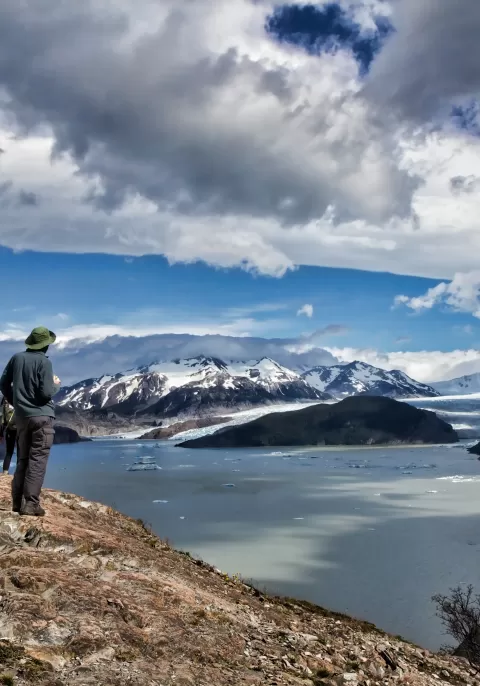
- Calving Glaciers – Those that meet lakes or fjords, shedding massive ice chunks. Famous examples include Upsala, Moreno, and Spegazzini Glaciers on Lago Argentino, and Viedma Glacier on Lake Viedma.
Related Aspects of Glaciers
- Moraines – Accumulations of rocks, sand, and clay carried by glaciers. Their position marks a glacier’s advance or retreat and can be lateral, central, end, or terminal.
- Erratic Boulders – Rocks of different sizes carried and deposited by glaciers, often scattered in valleys once the ice retreats.
- Icebergs – Spectacular ice blocks of various sizes and shapes that calving glaciers release into lakes and fjords. Only about one-eighth of an iceberg is visible above the water, with the vast remainder hidden below the surface.
Why Glaciers Matter
Understanding the
glacier meaning goes beyond admiring their beauty. Glaciers store fresh water, regulate ecosystems, and serve as vital indicators of climate change. In
Patagonia, they also offer unforgettable experiences—whether trekking across ice, cruising among icebergs, or simply standing before their massive, glowing walls.
Want to see
Patagonia’s glaciers up close and truly experience
what are glaciers beyond the textbook definition?
Contact us today to start planning your journey!