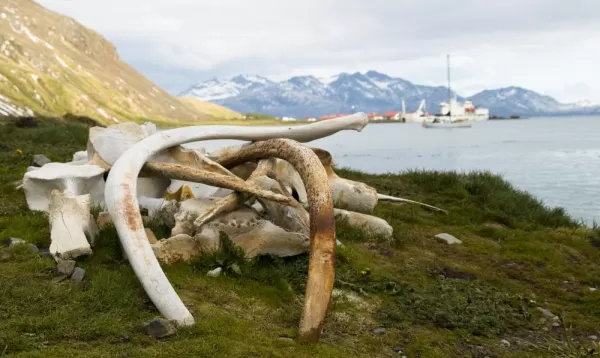
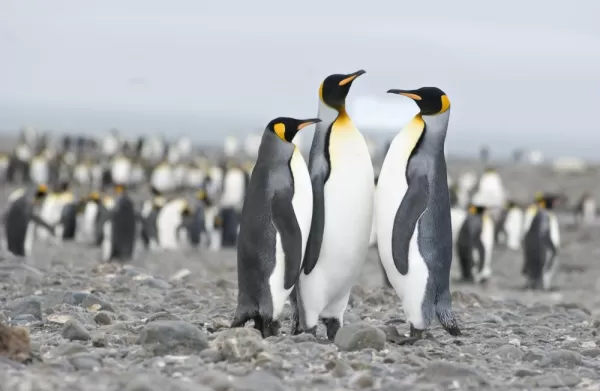
With extended time in the Falklands, you’ll seek opportunities to visit seldom explored sites renowned for birdlife and beauty. The destinations depend entirely on weather and marine forecasts, as the outer Falklands are exposed to oceanic swells. You’ll choose locations that offer the best—and safest—conditions for exploration. One such site is the small, slender Steeple Jason, one of the most northwesterly islands in the Falklands. Difficult to access, it has been featured in numerous wildlife documentaries for its prolific black-browed albatross colony—the largest in the world, with an estimated 100,000 to 180,000 breeding pairs. It’s truly a sight to behold. Their closely packed nests stretch for hundreds of meters along the shoreline, just beyond dense tussock grasses. Looking west to sea, you’ll likely see albatross riding the wind. The walk to the colony crosses uneven terrain and impressive tussock grass, which provides critical habitat for many other bird species. These vivid green grasses, rooted in rocky soil, create a striking contrast with the sharp ridgeline in the background. Largely untouched by humans, Steeple Jason is home to a small shepherd’s outpost and a research field station— overshadowed by vast wilderness. Steeple Jason offers a rare chance to feel truly remote amid a vast ecosystem alive with countless animals. The explorations may also take you to New Island, just over thirty nautical miles south of Steeple Jason. A paradise for birders, this small island boasts coves with white sandy beaches sheltered from the open ocean, and is considered one of the most beautiful in the Falklands. Around 25,000 to 30,000 black-browed albatross nest here, joined by Magellanic, gentoo, and southern rockhopper penguins—each with its own distinct nesting style. Other common sightings include songbirds and the formidable striated caracara. Dolphins, including those in shallow waters, are frequently seen in the area, adding to the island’s remarkable wildlife encounters. Other wilderness destinations may include bird-rich West Point and Saunders Islands in the western Falklands. Saunders Island amazes you with its long white-sand beaches, the northern shore stretching for kilometers and facing the open sea. It’s almost surreal—particularly if you’ve encountered penguins in ice-and snowladen Antarctica on previous voyages— to watch gentoo, Magellanic, and southern rockhopper penguins making their way to the water along sandy stretches. There’s also a smaller colony of black-browed albatross nests on a nearby cliff, sharing the gently sloped, grassy island with grazing sheep tended by the warm-hearted Saunders family. Look for Commerson’s dolphins, often spotted in the shallow waters near Saunders’ sandy beaches. West Point Island is another Falkland gem, with vibrant green vegetation and blooming spring flowers. From the rocky beach, a gentle walk (with slight elevation) leads through a picturesque meadow to a cliff where black-browed albatross nest. West Point Island is home to 2,000 breeding pairs. You’ll visit a small section of the colony for intimate views of albatross in their nests and soaring above the waters. The walk passes through grassy fields dotted with wildflowers, blending the domestic with the wild. Energetic hikers may tackle Mt. Ararat for sweeping views, while others can travel by 4X4 to the colony and overlooks. Peale’s dolphins, Falkland steamer ducks, and striated caracara are often seen here. Carcass is another excellent destination. Like Saunders and New islands, Carcass boasts stunning white-sand beaches meeting the cold, blue waters of the South Atlantic. Magellanic and gentoo penguins nest here, and the tussock grasses are especially impressive. Look overhead for peregrine falcons soaring high above. No visit to the Falklands is complete without a stop in its largest community— Stanley. Highlights include the museum (admission covered) and the striking arch monument built from the jaws of blue whales. Pop into a local restaurant or traditional British pub for Falkland f ish and chips, or a pint while chatting with locals about life on this windswept sub-Antarctic island. Stanley has a distinct boundary—where residential streets end and open wilderness and sheep meadows begin to stretch into the horizon. You’ll set sail in early afternoon, allowing plenty of time to cover the 700+ nautical miles to the next destination: South Georgia.