Bolivia stands apart in South America for its dual capitals, deep Indigenous roots, and extreme geography that stretches from the Andes to the Amazon.
It is one of the world’s most culturally diverse countries, with dozens of living languages and landscapes that feel almost otherworldly. The following interesting facts about Bolivia reveal why it remains one of the continent’s most surprising and rewarding destinations.
Geography & Natural Wonders of Bolivia
Bolivia’s geography is defined by contrast. Snow-capped peaks rise above high-altitude plains, while tropical rainforest covers nearly half the country.
Few places on Earth pack this much diversity into one landlocked nation.
Two Capitals: La Paz and Sucre
Let’s start our list of Bolivia's interesting facts with something most people wouldn’t know: La Paz is the highest capital city in the world, sitting at roughly 11,975 feet (3,650 meters) above sea level. Government offices and ministries operate here, and the city spills dramatically down canyon walls into the Altiplano. Sucre, by contrast, is lower, warmer, and known for its white-washed colonial architecture and role in Bolivia’s independence movement.
Together, the two capitals reflect Bolivia’s layered history:
Indigenous heritage, Spanish colonial rule, and modern political life existing side by side.
Lake Titicaca & the Altiplano
Some of our favorite Bolivia facts deal with one of the world’s most famous bodies of water. Straddling the border between Bolivia and Peru,
Lake Titicaca is the highest navigable lake in the world. Sitting at over 12,500 feet (3,800 meters), it has been central to Andean life for thousands of years.
According to Indigenous origin stories, the Inca civilization emerged from these waters. Today, Aymara and Quechua communities still live along the shores, maintaining traditions tied to fishing, farming, and reed-boat building.
The lake lies within the Altiplano, a vast high-altitude plateau that defines western Bolivia. Life here moves at a slower pace, shaped by thin air, strong sun, and ancient customs.
Salar de Uyuni — The World’s Largest Salt Flat
Here’s another one of the most interesting facts about Bolivia: it’s home to the
largest salt flat on Earth. Covering more than 4,000 square miles,
Salar de Uyuni was formed from the evaporation of prehistoric lakes, it is one of Bolivia’s most iconic natural wonders.
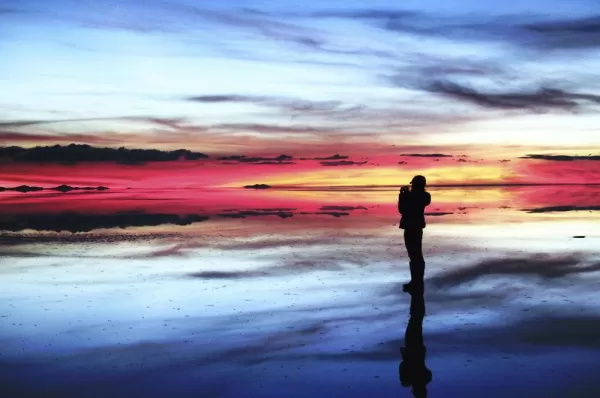
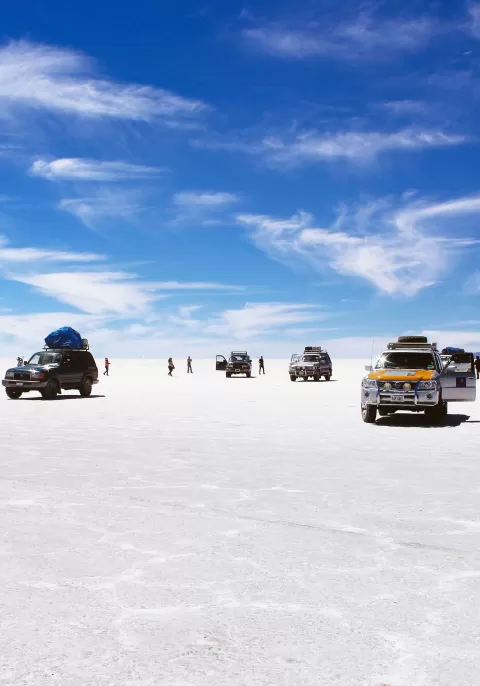
During the dry season, the surface becomes a blinding white expanse of hexagonal salt patterns. In the wet season, a thin layer of water transforms the salt flat into a perfect mirror, reflecting the sky so cleanly it blurs the horizon.
Beyond its beauty, Salar de Uyuni holds one of the most interesting facts about Bolivia as the location of the world’s largest lithium reserves. It’s increasingly important in global discussions around renewable energy and battery technology.
Biodiversity From Andes to Amazon
In terms of top Bolivia fun facts, the country is considered one of the most biologically diverse countries in the world.
Despite being landlocked, it contains ecosystems ranging from glaciers to lowland rainforest.
Nearly half the country lies within the Amazon Basin, home to jaguars, macaws, giant river otters, and the rare pink river dolphin. The eastern lowlands contrast sharply with the western
Andes, where high-altitude wildlife like vicuñas and Andean condors thrive.
This range of environments allows travelers to experience rainforest exploration, mountain trekking, and wildlife viewing in a single trip.
Fun Facts About Bolivia Culture & Society
We can’t write an article about Bolivia interesting facts without discussing culture.
The country is shaped first and foremost by its Indigenous majority. Traditions are not preserved in museums, but are lived daily.
37 Official Languages
One of our favorite Bolivia fun facts is that it
recognizes 37 official languages. Spanish is the most widely spoken, but 36 Indigenous languages hold equal legal status.
The most common are Quechua, Aymara, and Guaraní, spoken across different regions of the country. This linguistic diversity reflects Bolivia’s identity as a “Plurinational State,” a term adopted to acknowledge its many nations and cultures within one border.
Road signs, official documents, and education systems increasingly reflect this multilingual reality.
Indigenous Traditions & Everyday Life
Indigenous customs remain deeply woven into daily life. One of the most well-known fun facts about Bolivia Indigenous culture is the chewing of coca leaves, a traditional practice used for centuries to reduce altitude sickness, hunger, and fatigue.
While coca is internationally linked to cocaine production, the leaf itself holds cultural, medicinal, and spiritual meaning in the Andes.
There are also some interesting facts about Bolivia Indigenous people and their approach to fashion. Cholitas—Indigenous women known for their layered skirts, shawls, and bowler hats—are a visible symbol of cultural pride rather than costume.
Witch Markets (Mercado de Hechicería)
In La Paz, visitors can find the famous Mercado de Hechicería, or
Witches’ Market. One of the top fun facts about Bolivia is that vendors at this market sell herbs, charms, amulets, and offerings used in Aymara spiritual practices.
Among the most striking items are dried llama fetuses, traditionally buried under new buildings to bring protection and good fortune.
While unusual to outsiders, the market reflects a living belief system that blends Indigenous spirituality with Catholic influence.
Cholita Wrestling
One of the most unexpected Bolivia fun facts we’ll cover in this article is the cultural experience of cholita wrestling.
These events feature Indigenous women in traditional dress competing in theatrical wrestling matches.
What began as entertainment has grown into a symbol of empowerment. Cholitas, once marginalized, now take center stage, literally challenging stereotypes and reclaiming visibility through performance and strength.
History & Political Identity
Bolivia’s history is marked by wealth, loss, and resilience.
Potosí and the Silver Empire
In terms of Bolivia interesting facts, the city of
Potosí was once one of the richest places on Earth. In the 16th century, silver from
Cerro Rico fueled the Spanish Empire and reshaped the global economy.
Millions of Indigenous and enslaved African laborers died extracting silver under brutal conditions. Today, Cerro Rico still looms over the city, a reminder of both immense wealth and deep exploitation.
A Landlocked Country in South America
Here’s another one of our favorite Bolivia fun facts:
the country was not always landlocked. It lost its Pacific coastline to Chile during the War of the Pacific in the late 19th century. Today, Bolivia and Paraguay are the only two landlocked countries in South America.
The loss of sea access remains a powerful part of Bolivia’s national identity and political discourse, commemorated each year with Día del Mar (Day of the Sea).
Bolivia Granting Rights to Nature
In 2009, Bolivia adopted a new constitution, followed by laws in 2010, that granted legal rights to nature itself.
Under this framework, ecosystems have the right to exist, regenerate, and be protected.
This approach places Bolivia among a small group of countries recognizing nature as a legal entity rather than a resource, an idea that continues to influence global environmental debates.
Adventure, Quirks & Fun Facts About Bolivia
Bolivia is full of experiences that feel both thrilling and unexpected. These lesser-known details are some of the most memorable Bolivia fun facts,
revealing the country’s humor, resilience, and creativity.
Death Road (Yungas Road)
Once considered the world’s most dangerous road, the Yungas Road connects the Andes to the Amazon lowlands.
Narrow, steep, and often shrouded in fog, it earned its nickname from frequent accidents.
Today, most traffic uses a safer alternative route, while the original road has become a popular mountain biking destination, offering adrenaline, views, and a controlled sense of risk.
The Backward Clock in La Paz
Out of all the Bolivia interesting facts we’ve covered so far, this one is the most unique. On the Bolivian Congress building in La Paz, visitors may notice something odd
: the clock runs backward. Known as the “Clock of the South,” it symbolizes a rejection of Northern Hemisphere norms and a statement of cultural independence.
It often leaves first-time visitors doing a double-take.
Other Quick Bolivia Fun Facts
- Bolivia has some of the highest cities in the world, where everyday life unfolds above 12,000 feet.
- Pink river dolphins appear in Amazonian folklore as shape-shifting spirits.
- Indigenous festivals blend Catholic saints with pre-Columbian rituals, filling streets with dance, masks, and music.
Why Bolivia Is Unlike Any Other Country
As you can see from this list of interesting facts about Bolivia, it is a truly unique destination. Bolivia’s landscapes challenge scale and altitude, its cultures resist simplification, and its history demands attention. From salt flats that mirror the sky to cities shaped by ancient belief systems, Bolivia offers travelers something rare: a sense of discovery that feels real.
For travelers drawn to meaningful encounters, bold geography, and living cultures, Bolivia stands alone in South America.
Ready to Experience Bolivia for Yourself?
Bolivia is a place you don’t just visit, you feel it. From walking across the endless white of the Salar de Uyuni to meeting Indigenous communities in the Andes or exploring the edge of the Amazon, every journey here is shaped by culture, nature, and perspective.
We design trips that go beyond the highlights, connecting you with Bolivia’s landscapes and people in a thoughtful, responsible way. Our Bolivia trips offered during the
best times to year to visit are built around meaningful experiences.
Contact us today to start planning your Bolivia adventure!