Have questions? We're here.
Panama Canal

Costa Rica and The Panama Canal

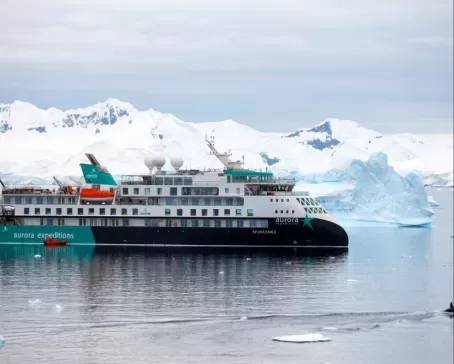
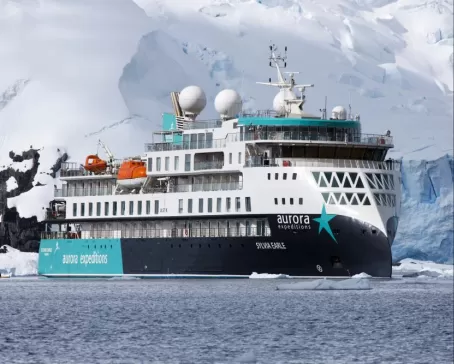
San Jose - Panama - Example 12 Day Cruise aboard Sylvia Earle
Talk with an expert
Build your ideal Costa Rica trip. Call 1.406.541.2677
Start Planning My Trip
Explore the diverse ecosystems of Central America on this 12-day cruise to Costa Rica and Panama aboard the Sylvia Earle. Costa Rica serves as a global sanctuary for biodiversity, offering opportunities to observe nature. Hike through lush tropical rainforests to spot indigenous wildlife, including sloths, monkeys, and dazzling bird species. In Panama, the adventure shifts to the water. Explore untouched coral reefs teeming with marine life, ideal for snorkeling. The voyage culminates with a bucket-list experience: a guaranteed daylight crossing of the historic Panama Canal. Watch the locks in action as your ship transits from the Pacific Ocean to the Caribbean Sea, providing a unique perspective on this engineering masterpiece. This itinerary blends wildlife observation, jungle exploration, and maritime history.
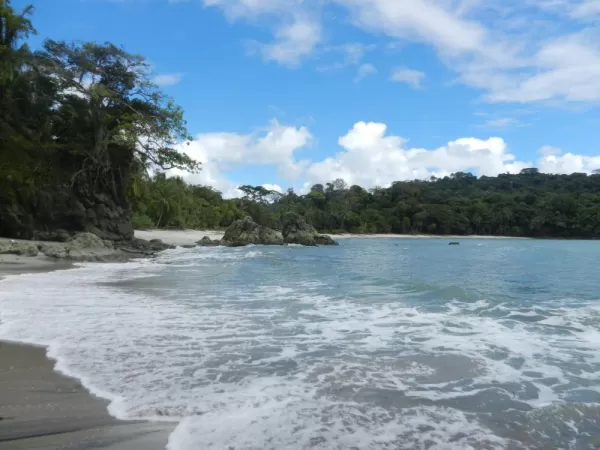
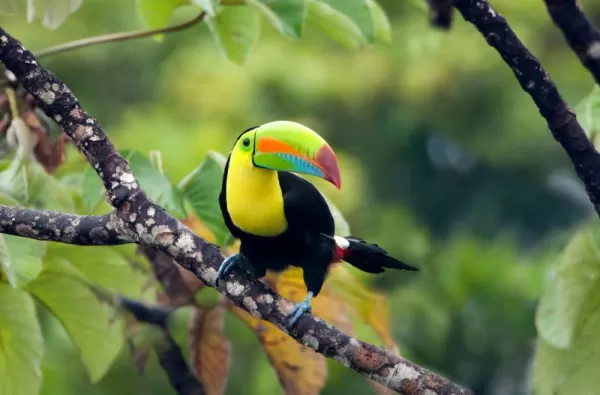
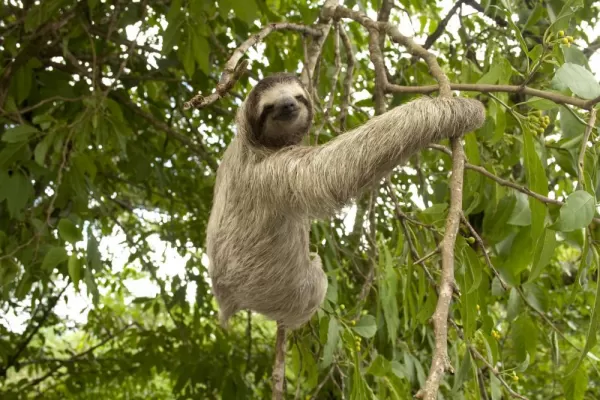
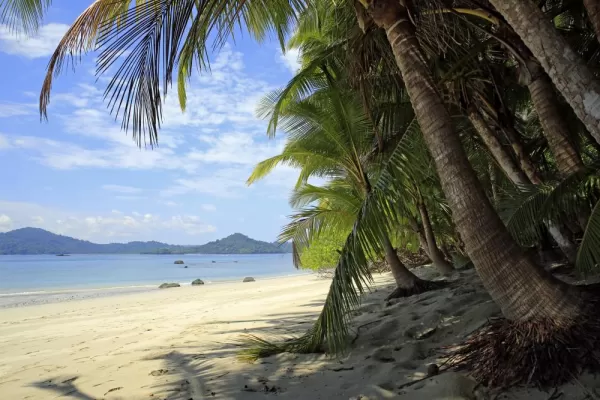
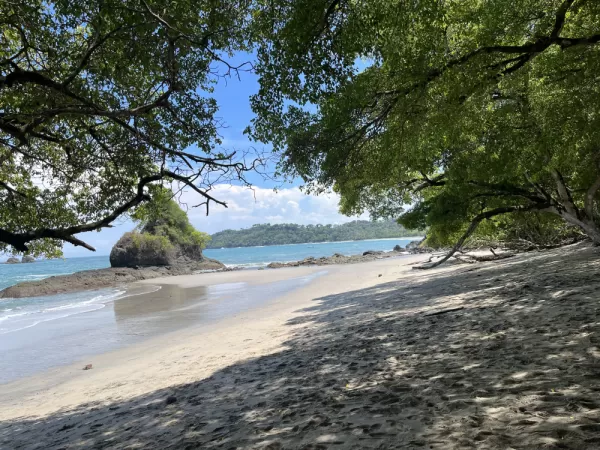
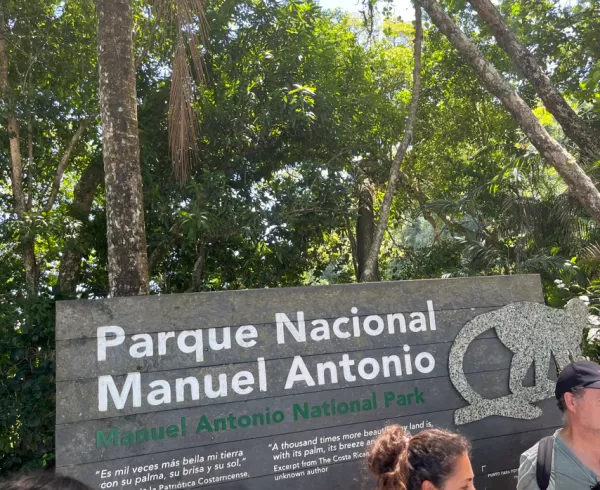
Manuel Antonio National ParkKeel-billed ToucanSloth sighting on a Costa Rica tourExplore Coiba National ParkOne of the shorelines in Manuel AntonioManuel Antonio National Park EntrancePanama adventurePanama Canal
Highlights
  • Experience the unforgettable crossing of the extraordinary Panama Canal
  • Explore one of most biodiverse rainforests on Earth and encounter wildlife
  • Visit Coiba National Park in Panama, a UNESCO World Heritage site
  • Encounter the indigenous wildlife of Manuel Antonio National Park
Activity Level: Variable
Activity options vary depending on destination and operator. Activity level is determined by the range and intensity of activities you choose to participate in. Discuss with your Trip Planner which options are best for you.
0

Full Itinerary

Expand All

Day 1: Arrive San Jose

Upon arrival in San Jose, meet the Aurora Expeditions representative for a transfer to the assigned hotel. Please visit the hospitality desk to collect cabin luggage tags and consult the ground operations team regarding pre-embarkation procedures or recommendations for dining, withdrawing cash, and purchasing last-minute items. The remainder of the day offers free time to explore, with dinner this evening at personal expense.

Day 2: Embarkation

This morning, luggage is collected from the hotel and transferred directly to the port for sanitization and clearance, ensuring delivery to the cabin prior to boarding. Take time to settle in before attending the mandatory safety briefings. Enjoy the thrill of departure as the ship casts off, setting sail on this exciting tropical adventure.

Day 3: Curu National Wildlife Refuge

Curú National Wildlife Refuge is a privately-owned nature reserve offering visitors outstanding eco-tourism experiences. The refuge is the first privately-owned refuge in Costa Rica, encompassing more than 3,700 acres of tropical forests, mangroves, and well-marked paths. 17 hiking trails wind through the varied terrain within the reserve, where you may see white-tail deer, armadillos and iguanas. Various monkey species are prolific within refuge including native capuchin, spider, and howler monkeys. Located on the southern Nicoya Peninsula of north-western Costa Rica, the refuge is brimming with wildlife and hosts one of the most beautiful beaches and protected bays on the Nicoya Peninsula, a great place to enjoy water activities.  

Day 4: Manuel Antonio National Park

Boasting over 100 species of mammals, 184 species of birds and an impressive variety flora, Manuel Antonio National Park understandably attracts wildlife enthusiasts from all over the world. Costa Rica’s star attractions - two and three toed sloths, as well as white-faced monkeys, toucans, agoutis, armadillos and coatis are a few of the exciting animals that you may encounter within the park. Explore the park in the cool, early hours of the morning before returning to the vessel for lunch. In the afternoon, you have the option to explore Quepos town or enjoy some water activities.  

Day 5: Rio Claro Wildlife Refuge

The untamed Osa Peninsula is considered by National Geographic to be ‘one of the most biologically intense places on earth’. You plan to hike the trails at Rio Claro Wildlife Refuge, a sanctuary that encompasses 500 hectares of tropical rainforests, making it one of the most important natural preserves in Central America. Rio Claro is one of the last refuges for pumas, ocelot, jaguarundis, tapirs, white-lipped peccaries and a host of other rainforest animals. The high plateau forests, with trees towering over 43 m (140 ft), supports hundreds of species of ferns, bromeliads and orchids, and creates a biological corridor between palm swamps and mangroves. It is an extension of Corcovado National Park, the country's largest and one of the most remote parks in Costa Rica.  

Day 6: Gulfo Dulce

Golfo Dulce, or Sweet Gulf, is a large bay that hugs pristine beaches, rivers and tall evergreen forests - a protected area known as the Golfo Dulce Forest Reserve. As one of the wettest places on Earth with over 5,000 millimeters (200 inches) of rainfall per year, the Golfo Dulce Forest Reserve features some of the world’s tallest trees.  

The warm tropical waters in the gulf are a great place to enjoy aquatic activities, where spinner dolphins are often seen frolicking in the bay. There are ancient coral reefs to explore, where you can see enormous coral gardens and the creatures that inhabit them. On land, there are more pristine rainforest trails for you to explore, where you can marvel at the extraordinary flora and fauna that contributes to Costa Rica’s biodiversity.

By Zodiac, you shuttle ashore to Saladero Ecolodge and explore the gardens and walking trails filled with flowering plants. Keep a watch for birds including toucans, scarlet macaw, caracara and woodpeckers.  

In Golfo Dulce, you exit Costa Rica and continue your journey as you sail to Panama.  

Day 7-8: Coiba National Park, Panama

Continue to Coiba Island, a National Park and a UNESCO World Heritage site, located off the southwest coast of Panama. The national park includes the main island of Coiba and 38 smaller islands in the surrounding marine areas within the Gulf of Chiriquí. Protected from the cold winds and the effects of El Niño, the Pacific tropical forest if Coiba Island features exceptionally high levels of endemic mammals, birds and plants. It is the last refuge for a number of threatened animals including the crested eagle.

On Coiba Island, spend the morning in the area of Granito de Oro islet, a unique place that allows snorkelers to encounter a diversity and volume of marine life that is usually reserved for scuba divers. This is one of the world’s most sought-after diving destinations. The local ranger will provide guidance on the optimal places where you can enjoy water activities.  

The following morning, you plan to land at Punta Clara, which served as a penal colony from 1919 to 1996, where Panama’s most notorious criminals and political prisoners were incarcerated. At the peak of its operations, the prison housed up to approximately 3,000 inmates in about 30 camps spread around the islands. You can visit the dilapidated penitentiary buildings or walk along the beach looking for scarlet macaws, yellow caracara and various seabirds. Back on board, enjoy lunch as you set towards the Pearl Islands. 

Day 9: Pearl Islands

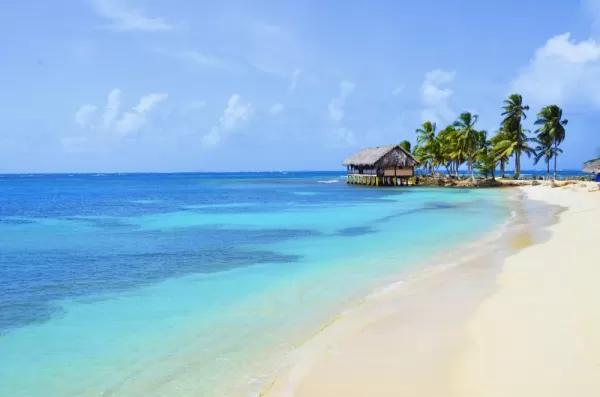
After a morning at sea, you reach the Pearl Islands of Panama, an archipelago located in the North Pacific Ocean in the Gulf of Panama, covering around 250 small islands. The Spanish Conquistadors discovered the islands in 1503 and gave the Islands its name due to the great amounts of pearls found on them. The Pearl Islands were originally named by the Spanish explorer Vasco Nuñez de Balboa due to the bountiful pearls that were harvested off the islands’ shores. The Pearl Islands are most famous for their spectacular and tranquil white sand beaches, untouched forests, and colorful coral reefs offshore. You plan to visit one of the islands to enjoy some paddle boarding, paddling in kayaks and snorkeling in the warm, turquoise waters.

Day 10: Gatun Lake | Embera Village

Three million years ago, the Isthmus of Panama emerged from the sea and changed the world forever. It divided an ocean and joined two continents together, triggering one of the most important natural evolution events in the history of the world. Today, this narrow land bridge in Central America is home to more species of birds and trees than the whole of North America. Panama is of course world-famous for its 77 km (48 mi) canal that connects the Pacific Ocean with the Atlantic Ocean.  

Panama’s history has been formed by a rich pre-Columbian era for more than 12,000 years. Early cultures in Panama were the Monagrillo, the Cueva and the Conte, particularly famous for their pottery, which was the first in the Americas. The first European claiming the territory of today’s Panama was Rodrigo de Bastidas, coming from Colombia’s Atlantic coast in 1501. In 1513 Vasco Nuñez de Balboa became the first Spaniard to see the Pacific Ocean from the top of a hill. Four days later he and his men stood at the shores of the Pacific Ocean. In 1519, Panama City was founded and became an important hub for seized goods making its way from Peru to Spain.  

Visit Gatun Lake, a large artificial lake with a unique ecosystem that forms a major part of the Panama Canal, carrying ships for 33 km (20 miles) on their transit across the Isthmus of Panama. At the time it was created, Gatun Lake was the largest artificial lake in the world. The vegetation at Gatun Lake offers ideal habitats for a large number of bird species.

The excursion starts with boat trip that heads north on the canal for 25 minutes where you may get close to some of the larger ships that transit the canal daily. Enjoy a leisurely cruise along the forested banks of Gatun Lake looking for wildlife such as capuchin monkeys, howler monkeys, three-toed sloth, various kinds of toucans and other bird life. This is a place to observe the raw regenerative power of the forest as it struggles to claim what was once wild. 

Later this morning, visit an Emberá village, an indigenous tribe who have inhabited this region for centuries. There are about 33,000 Emberá living in the Darién, Panama, and 50,000 in Colombia. On your visit to one of the Emberá villages near Panama City, be warmly welcomed by the local villagers and enjoy a presentation to learn about their history, culture and way of life. On a guided walk through their village, meet more villagers who may show you inside their home, sample local snacks and learn about their medicinal plants. The Emberá are renowned for their exquisite handmade jewelry and woven handicrafts, and you can have the chance to appreciate and to purchase their work.  

Day 11: Daylight Crossing of the Panama Canal

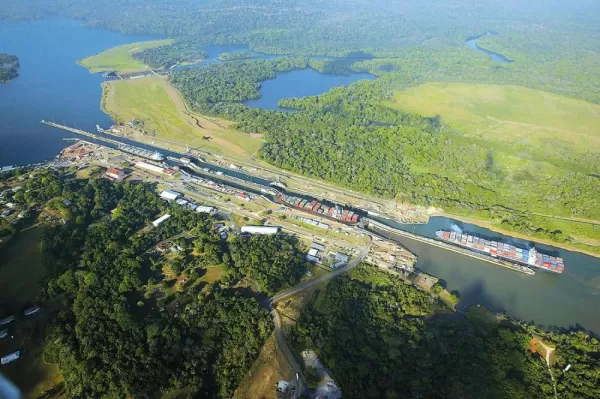
Crossing the Panama Canal will surely be a highlight for many travelers. Each year, over a million people visit the canal to witness this engineering marvel at work. Starting in the Pacific Ocean, admire the Bay of Panama and Panama City’s splendid skyline before passing under the ‘Bridge of the Americas’. The vessel will then transit through the first set of locks, the Miraflores Locks, where it will be lifted 16 meters (52 foot) in two distinct steps. Next, your ship will enter Miraflores Lake, which is a small artificial body of fresh water that separates Pedro Miguel Locks from Miraflores Locks.  
The vessel will transit through Pedro Miguel Locks, which is one of the two sets of locks on the Pacific side, and here the vessel is lifted 9 meters (29 foot) in one step. After exiting Pedro Miguel locks, your boat will travel through the Gaillard Cut, where the Chagres River flows into the canal. The Gaillard Cut (also known as Culebra Cut because its curves resemble a snake) is one of the main points of interest for visitors because it was carved through the Continental Divide and this section of the canal is full of history and geological value.  

As you transit the cut you can see dredging occurring to control the sediments entering the canal because of the terrain’s susceptibility to landslides. Sail through Gatun Lake, which was formed by erecting the Gatun Dam across the Chagres River, and during your transit through the lake, pass the Smithsonian Research Station at Barro Colorado. The last of the three locks is the Gatun Locks, the only set of locks in the Atlantic sector of the canal. At Gatun Locks, the vessel will be lowered a total of 26 (85 foot) meters in three distinct chambers.  

The complete crossing from the Pacific to the Atlantic Ocean takes approximately 10 hours, a journey that once took almost two weeks to complete, when vessels were forced to sail around the notoriously rough seas around Cape Horn at the bottom of South America to reach the Pacific coast. 

This evening, celebrate a memorable journey at Captain’s Farewell reception.

Day 12: Colon | Disembark | Panama City

  • 1 Breakfast
Disembark in Colon, on the Caribbean side of the Panama Canal, where you farewell your expedition team before transferring to Panama City.  

Note: At the conclusion of the voyage, it is not recommended to book flights departing Panama City prior to 2.00 pm. Please advise your departure flight information to your reservations consultant. 

Ship/Hotel

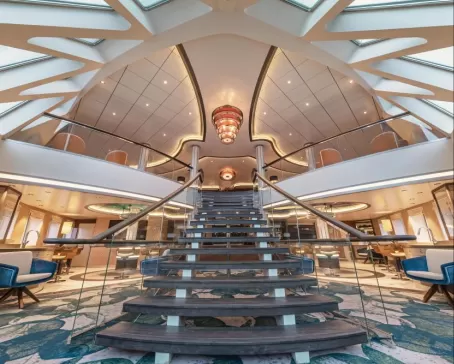
Sylvia Earle

Sylvia Earle
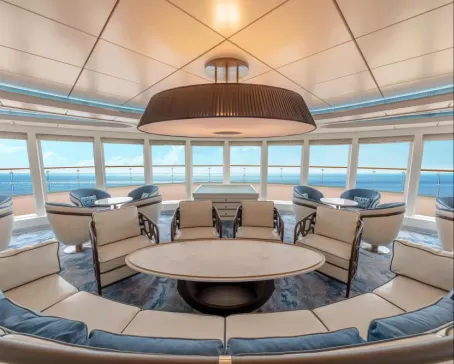
Sylvia Earle Observation Deck
Sylvia Earle Library

San Jose - Hotels

Dates & Prices

My Preferred Start Date

Per person starting at
$12,795 2-3 travelers
Aurora Stateroom Triple
22.67m2 (244ft2) - There are two Aurora Stateroom Triple cabins featuring portholes, all with private en-suites. Located on Deck 3, they're close to the mudroom and loading platforms.
Aurora Stateroom Superior
19.9m2 - 20.8m2(214.2ft2 - 223.9ft2) - Located on Deck 7, the Staterooms feature french balconies, floor to ceiling windows, en-suite bathrooms and a comfortable desk area. Perfect for polar adventurers who travel with plenty of gear.
Balcony Stateroom C
Balcony Stateroom C
19.5m2 - 28.7m2 (209.9ft² - 308.9ft2) - 11 Balcony Stateroom C cabins - most economical, fitted with all the necessities and comfortable for up to 2 people. These cabins are scattered throughout Deck 6.
Balcony Stateroom B
Balcony Stateroom B
19.5m2 - 28.7m2 (209.9ft² - 308.9ft2) - 17 Balcony Stateroom B Cabins - standard cabin, many fitted with interconnecting features making them great for families or groups. These cabins are located at the fore and aft of Deck 4 and 6.
Balcony Stateroom A
Balcony Stateroom A
19.5m² - 28.7m² (209.9ft² - 308.9ft²)- 23 Balcony Stateroom A cabins - premium cabin, and the most abundant on board. These cabins are located in preferred positions on Deck 4 and 6 which provides easy access between Decks via the internal stairs or elevator.
Balcony Stateroom Superior
29.2m2 - 35.2m2 (314.3ft2 - 378.9ft2) - Located on Deck 4 and 6, the Staterooms feature floor to ceiling windows, en-suite bathrooms and a comfortable desk area. Some of these rooms are equipped with wheelchair accessible bathrooms.
Junior Suite
Junior Suite
Up to 41.6m2 (447.8ft2)- 4 Junior Suites take in some impressive scenery from their vantage points on Deck 7. When you aren't enjoying a landing, you can relax in the suites' separate lounge area, or just watch the world float by from the private balcony.
Captain's Suite
Captain’s Suite
43.8m2 (471.5 ft2) - Captain's Suite - the largest of all our rooms, will take you to the polar regions in ultimate style and comfort. Complete with large lounge area, balcony, walk-in wardrobe and en-suite, you'll need to get in early to secure this suite.
Included
  • 11 Breakfasts, 9 Lunches, 10 Dinners

Map

Inquire

* By providing your phone number, you consent to receive direct phone calls or SMS messages from our Trip Planners to get the process started. We do not share your information with third-parties.
Change & customize to make it yours.
Travel Agents

We Love to Talk Travel

Call 1.800.344.6118
or
Chat Now
Our guide and driver were very good with their knowledge and were very helpful with our questions. It was a very pleasant visit that would have been impossible to do on our own. Hotels and restaurants were fantastic. The special places we got to go to, like the kitchens, were great. Enjoyed the entire trip!
Meyer Smolen

Costa Rica Travel Guide

Favorite Costa Rica Costa Rica All Trips

Top Costa Rica Travel Destinations

Costa Rica Trips by Departure Date

Top Experiences in Costa Rica

Costa Rica Trips by Duration

Costa Rica Trips by Activity

More Reasons

Why Travel With Adventure Life

All News

Recognized By