Tikal is one of the most spectacular Mayan sites in the world. Nestled in the northern Petén rainforest of Guatemala, it’s a city that flourished during the Classic Maya period. The site covers about 500 acres (200 hectares) and contains at least 3,000 structures, including towering temples, palaces, and plazas connected by causeways. Walking through Tikal is a journey back in time, and the surrounding jungle adds to the adventure, where we can spot howler monkeys, spider monkeys, toucans, and even jaguars. At its peak around 1,500 years ago, Tikal may have been home to up to 100,000 Maya. Like other southern lowland cities, it experienced decline between 600 and 800 AD, likely due to warfare, overpopulation, or environmental changes. While some cities fell, Tikal and other northern lowlands continued to thrive during the Late Classic period.
In Which Country Is the Mayan City of Tikal?
Country: Guatemala
Region: Northern Petén rainforest
Context: Tikal is one of the largest and best-preserved Mayan ruins in Guatemala, giving us a glimpse into the power and sophistication of the ancient Maya civilization.
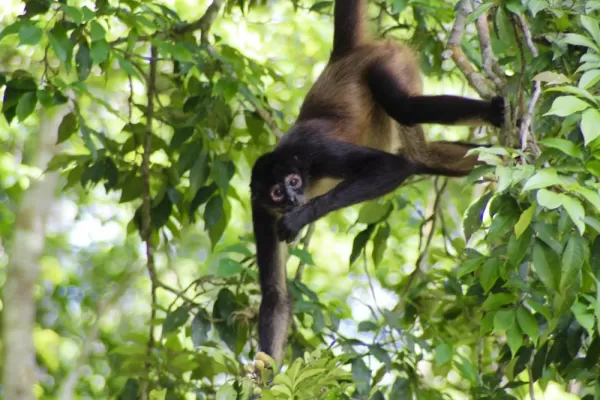
Spider Monkeys hide in the trees at Tikal (Kate Boyd)
Why Is Tikal So Famous?
Tikal is a must-see destination for several reasons:
UNESCO World Heritage Site: Recognized for its historical and cultural significance
Scale: One of the largest Mayan cities ever discovered
Iconic temples: Including Temple I (Great Jaguar) and Temple IV (the tallest)
Media appearances: Featured in documentaries and popular culture
Biodiversity: Surrounded by rainforest, offering unique wildlife encounters
Archaeological significance: Rich artifacts, tombs, and ceremonial structures
Overview of Tikal, Guatemala
Located in northern Guatemala, Tikal sits within the Tikal National Park
The Maya culture spanned parts of Mexico, Belize, Honduras, and El Salvador
Tikal represents the northern reaches of Mesoamerica, showing how Maya society adapted to dense rainforest ecosystems
Exploring the temples at Tikal (Kate Boyd)
History of the Mayan City of Tikal
Early Settlement: Small communities existed by 600 BC, gradually evolving into a regional center. Rise During the Classic Maya Period: Between 200–900 AD, Tikal became a major political, economic, and ceremonial hub. Political Power & Conflicts: Inter-city warfare was common; Tikal often competed with neighboring centers like Calakmul. Abandonment and Rediscovery: After the Late Classic collapse, Tikal was reclaimed by the jungle. Rediscovered in the 19th century, it remains a symbol of Maya resilience and ingenuity.
Architectural Highlights of the Tikal Mayan Ruins
Maya architecture is distinct for its limestone construction, multi-roomed palaces, temples built over older structures, and tombs encased within buildings. Key highlights include:
Temple I – Temple of the Great Jaguar: Iconic pyramid for ceremonial purposes
Temple II – Temple of the Masks: Faces the Great Plaza and Temple I
Temple IV – The Tallest Temple: Offers panoramic views of the rainforest
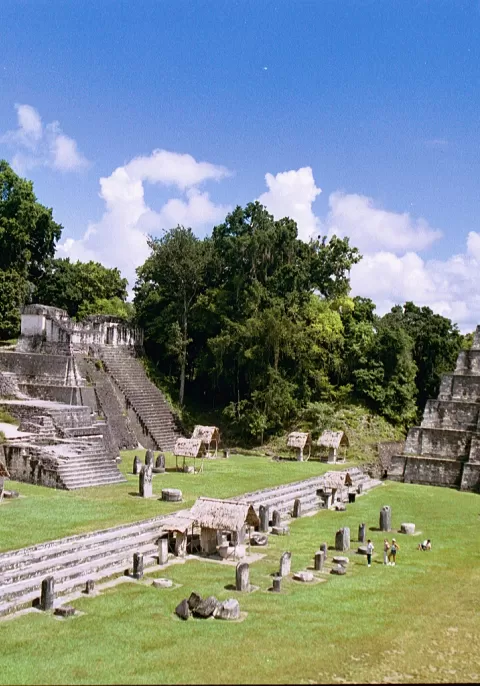
Great Plaza: Central hub for rituals and public gatherings
Acropolises (North & Central): Palaces, administrative spaces, and ceremonial platforms
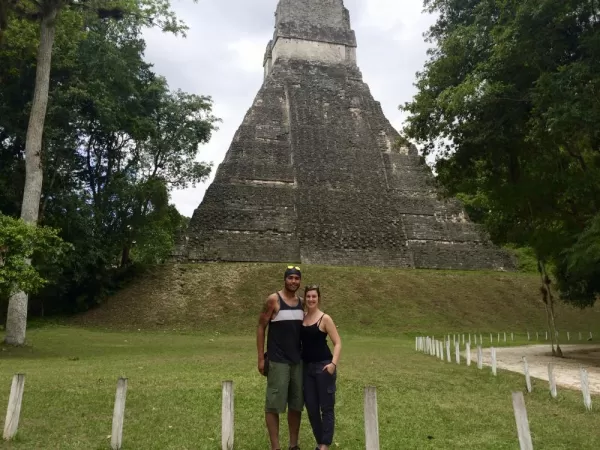
Visitors explore the Mayan ruins of Tikal (Monika Sundem)
Can You Climb the Pyramids at Tikal?
Temple I: Not open to climbing
Temple II: Restricted for safety and preservation
Temple IV: Visitors can climb to the top for the best rainforest and sunset views
Reason for restrictions: Protect fragile structures, ensure visitor safety
Tikal’s Surrounding Ecosystem
Rainforest Wildlife: Howler and spider monkeys, toucans, coatis, and jaguars
Maya Biosphere Reserve: Protects Tikal and surrounding wildlife
Natural Soundscape: The jungle comes alive with birdsong, monkey calls, and insect choruses, enhancing the mystical atmosphere
Visiting Tikal: What Travelers Need to Know
Getting There: Flores is the main gateway; Guatemala City and Belize offer flights and road access
Entrance Fees & Hours: Fees support park maintenance; best visited early morning
Best Time to Visit: Dry season (Nov–Apr) for clear skies and sunrise tours
Tours vs Self-Guided: Guided tours provide historical context, but self-guided walks let us explore at our own pace
Is Tikal Worth It in Guatemala?
Tikal stands out among Mayan ruins in Guatemala for its scale, jungle setting, and biodiversity
Compared to other sites, Tikal offers:
Sunrise temple views
Rich wildlife encounters
Immersive history with well-preserved architecture
Sunrise tours provide a magical combination of light, mist, and wildlife sounds
Sculptures at Tikal (Jonathan Brunger)
Travel Tips for Exploring the Mayan Ruins of Tikal
What to Pack:
Sturdy walking shoes for uneven paths
Water, snacks, and insect repellent
Lightweight clothing for humid conditions
Weather Considerations:
Hot and humid, especially in the lowlands
Rainy season may bring sudden downpours; carry a poncho
Photography Tips:
Sunrise at Temple IV offers iconic shots
Great Plaza and Temple I are best photographed mid-morning
Tikal is more than a ruin; it’s an immersive experience where we can connect with history, nature, and the remarkable Maya civilization. Exploring these ancient pyramids surrounded by lush rainforest shows why Tikal remains a top destination in Guatemala and a highlight among Mayan ruins in Guatemala.
Our team is waiting and ready to talk with you about your next adventure.
So go ahead and book an appointment with one of our specialized trip planners.
The company was easy to work with and planned my trip as I requested. Transportation from the airport to my hotel was without any issues. My hotel was wonderful. The 2 guides I had were exceptional. I have no complaints.
Mary Russell
7 months ago
I had a certain trip i wanted to do. I called Adventure Life and told them what I wanted. The trip was arranged within 2 days per my itinerary and the cost was very reasonable. The person who assisted me was knowledgeable, competent and friendly.
Mary Russell
9 months ago
Our trip to Guatemala was the third time we booked with Adventure Life and once again they did not disappoint. The itinerary, transportation, hotels and especially the guides we perfect.
We will definitely book with Adventure Life again in the future.
Maritta Renz
1 year ago
Agent (Tess) worked closely with me to help work out a custom itinerary for us in Belize. Since we had several specific requirements she made several recommendations then modified the itinerary when we wanted to bring another couple with us. Nice job!
Robert Riley
1 year ago
Everything about our Guatemala trip was amazing. Everything was on time. The guides were personable, knowledgeable on all aspects of history, culture and nature. The destinations were great. It was truly a great week in a wonderful destination.